
AI Agents & Automation
Browsing page 346 of AI Agents & Automation. Sorted by confidence score — our independent quality rating.

Wally: AI Assistant GPT Widget
Smart Web Assistant is a powerful Chrome extension designed to integrate advanced AI technology directly into your browsing experience. It provides real-time, context-aware insights on any web page you visit, leveraging either OpenAI's cloud API or local AI models like Llama or Mistral. This tool significantly boosts productivity and enhances understanding of web content across multiple languages. Key features include instant insights, multi-language support, customizable API settings, and secure storage of configurations within Chrome’s local storage. With up to five customizable shortcuts, users can quickly access frequently used queries, streamlining their workflow. It's an ideal tool for professionals, students, and anyone looking to make their internet experience more informative and productive.
FinGLM
FinGLM is an open-source project dedicated to building a robust and sustainable financial large language model. Its primary goal is to foster the integration of AI with finance through open collaboration and shared resources. The project offers a comprehensive framework for deep analysis of listed company annual reports, transforming complex financial texts into expert-level insights using AI. It addresses the significant challenges in real financial interactive scenarios by providing data preparation workflows, model fine-tuning processes, and a question-answering system. FinGLM also includes extensive datasets, such as 70GB of annual reports and 10,000 manually annotated evaluation data points, along with learning tutorials for data preprocessing, database usage, GLM, prompt writing, and model fine-tuning.
Elook.AI
Elook.AI is an AI-powered platform designed for social mention monitoring and lead generation. It enables users to discover relevant discussions on Reddit, score potential leads based on engagement, and generate AI-powered response drafts to streamline communication. The tool aims to help businesses identify new opportunities, engage with their target audience effectively, and automate parts of their sales and marketing outreach. By focusing on social listening and AI-assisted lead nurturing, Elook.AI provides a comprehensive solution for enhancing customer engagement and driving growth.
OneClick Technologies
OneClick Technologies provides AI-powered solutions designed to boost customer service efficiency and enhance customer experiences. Their suite of products, including OnePulse, Replic8, and OneInsight, offers advanced conversational and knowledge resolution tools. These tools help businesses reduce Average Handle Time (AHT), cut agent training and query escalation costs, optimize operations, and improve first-call resolution rates. OneClick Technologies focuses on delivering personalized and simplified customer interactions through AI-driven solutions, enabling seamless information transfer, automating query resolution, and increasing overall business productivity. Their offerings are tailored to transform customer engagement and operational efficiency for enterprises globally.
Aki
Aki is an AI-powered executive assistant designed to enhance personal and team productivity by streamlining task management and automating daily routines. It proactively supports users with tasks and calendars, allowing for instant planning by forwarding emails to Aki. The tool automates workflows, enabling users to delegate processes with simple prompts. Aki is built on top of Akiflow, a comprehensive productivity suite, and offers features like a meeting assistant, AI workflows, and a memory layer for a limitless second brain. It aims to improve life by acting as a proactive productivity coach and can even handle conversations on your behalf via phone, text, and emails.
BOND v1
BOND v1 is a Chrome extension designed to optimize meetings by automating key tasks. It provides real-time transcription of discussions, generates smart notes, and drafts follow-up emails, allowing users to concentrate fully on the conversation. This tool streamlines post-meeting workflows by capturing important information and facilitating effective communication. With customizable email templates, BOND v1 helps users manage team meetings, client interactions, and brainstorming sessions more efficiently, ensuring that key decisions and action items are documented and communicated promptly.
llm_related
llm_related is an open-source GitHub repository dedicated to the implementation and study of various algorithms and concepts related to large language models (LLMs). The project serves as a learning record and a practical resource for developers and researchers interested in LLM development. It includes implementations for diverse topics such as DPO, GRPO, PPO, knowledge distillation, agent frameworks (langgraph_agent, llm_agent_zero), RAG demos, and training LLMs from scratch, including multimodal models and MoE architectures. The repository is primarily written in Python, making it accessible for those looking to understand and replicate advanced LLM techniques.
Paravision
Paravision is a leader in trusted Identity AI, offering a suite of ethically developed AI building blocks designed for the next generation of identity verification. Its core products include ultra-accurate face recognition, capable of performing across diverse environments, demographics, and user angles. The platform also features advanced liveness detection to confirm user authenticity and detect spoofs, alongside deepfake detection to combat fraud and misinformation in identity and media. Additionally, Paravision provides age estimation for applications in age verification, retail, gaming, and digital media. The solutions are optimized for various deployments, including cloud, edge, mobile, or hybrid, and are trusted by world-leading service and solution providers across sectors like air travel, government programs, payments, and physical security.
EmailCrafted
EmailCrafted is an AI-powered email writing tool designed for professionals to generate personalized and professional emails in seconds. It allows users to customize the tone, structure, and brand voice of their communications. The platform offers flexible email solutions for diverse needs, including business communication, client outreach, and follow-up messages. EmailCrafted streamlines hiring processes, ensures consistent customer support responses, and helps build a strong brand presence through polished email communication. Users can register their brand voice by uploading an existing email or inputting key details, then simply enter recipient information and desired tone to generate a ready-to-send email.
ChillTrip - AI Travel Planner
ChillTrip is an AI-powered travel planner designed to simplify trip organization and sharing. It transforms your travel ideas into detailed, customizable itineraries, allowing you to plan, share, and explore trips with friends instantly. The platform focuses on a calm and structured planning experience, enabling users to input dates, budget, and desired vibe to generate a day-by-day plan. Users can then reorder days, pin activities, add notes, and share a trip link that opens directly in the app. ChillTrip also facilitates calm collaboration, keeping everyone aligned with clear timing, costs, and quick tips, and allows for previewing shared trips before importing them into the app.
Reclaim
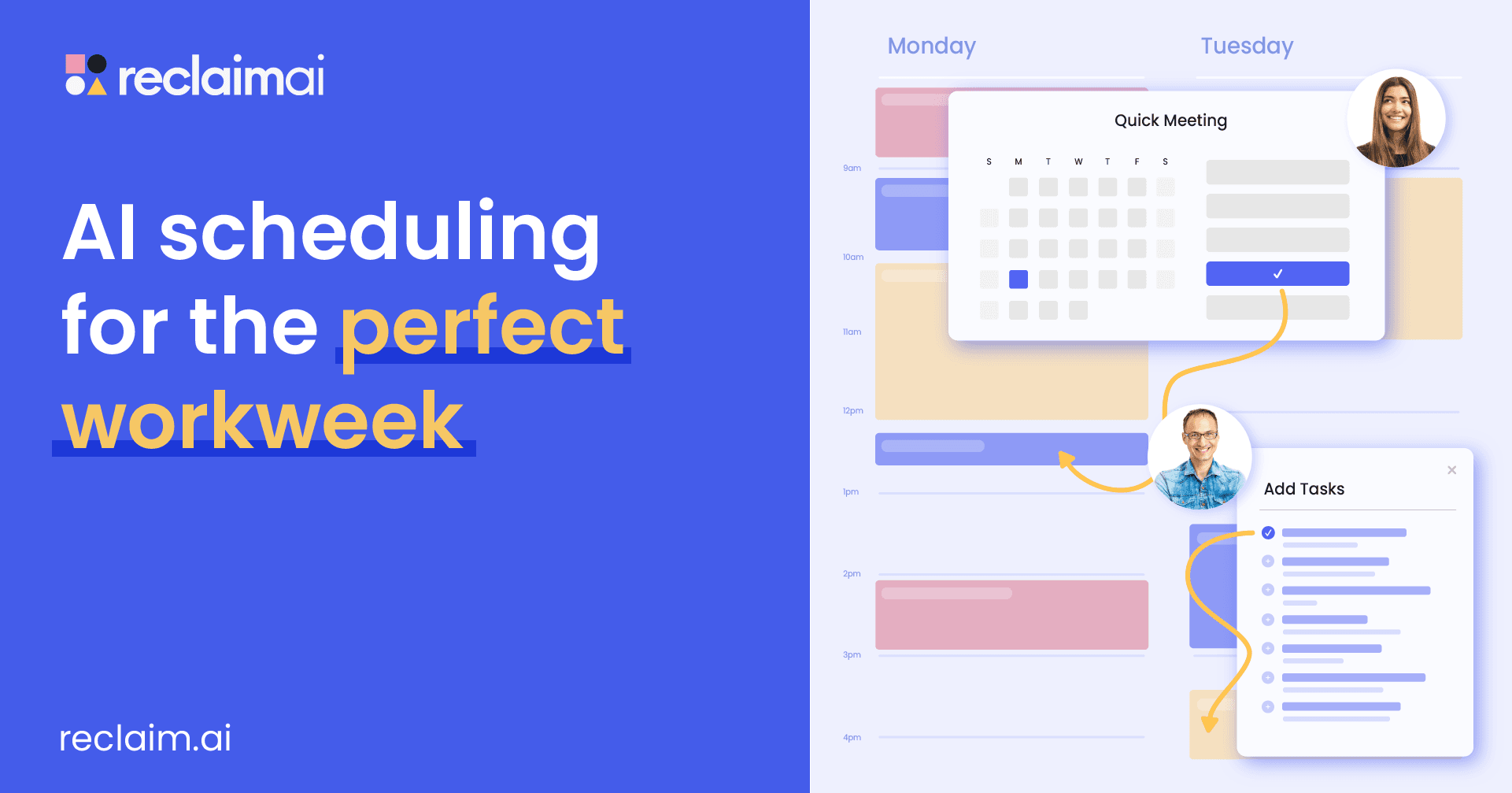
Reclaim is an AI-powered calendar application designed to optimize individual and team schedules by intelligently managing focus time, meetings, and breaks. It integrates seamlessly with Google Calendar and Outlook, offering features like AI Focus Time to defend dedicated work blocks, AI Habits for recurring routines, and AI Smart Meetings to find optimal times across attendees. The tool also provides AI Scheduling Links for sharing availability, AI Buffer Time for breaks and travel, and AI Time Tracking for analyzing productivity. Reclaim is suitable for individuals, teams, and organizations, with pricing plans tiered by team size, and offers integrations with popular tools like Slack, Asana, ClickUp, Todoist, Jira, Linear, and Zoom.
AutoDL
AutoDL is an open-source project designed for automated deep learning, aiming to eliminate human intervention in the deep learning process. It provides a universal algorithm flow for multi-label classification across various modalities, including images, videos, audio, text, and tabular data. The tool addresses common challenges such as resource constraints, data imbalance, small datasets, feature engineering, model selection, network structure optimization, and hyperparameter search. AutoDL boasts excellent performance, having won the AutoDL Challenge@NeurIPS, and can produce high-performing classifiers in as little as ten seconds, with real-time feedback on model performance. It includes a robust model library supporting both traditional machine learning and state-of-the-art deep learning models like ResNet, MC3, DNN, and BERT.
awesome-3D-vision
awesome-3D-vision is a comprehensive, open-source curated list of resources dedicated to 3D computer vision. It encompasses a wide array of topics including Simultaneous Localization and Mapping (SLAM), Visual SLAM (VSALM), Deep Learning, Structured Light, Stereo Vision, and Three-dimensional Reconstruction. The repository serves as a valuable hub for researchers and developers, offering links to relevant papers, datasets, and code examples. It also features sections on camera technology, calibration methods, 3D vision companies, and detailed resources for computer vision and machine learning, making it an essential reference for anyone working in the field.
awesome-DeepLearning
awesome-DeepLearning, powered by PaddlePaddle, serves as a comprehensive online encyclopedia for deep learning, designed to make the innovation and application of deep learning technologies more accessible. It features a wide array of learning materials, including introductory and advanced courses, specialized curricula, academic case studies, and practical industry examples. The platform also provides a deep learning knowledge base and an interview question bank, catering to both beginners and experienced practitioners. Materials are presented in various formats, such as online notebooks, videos, and books, ensuring a rich and flexible learning experience. The project is actively maintained with real-time updates to code, aligning with the latest PaddlePaddle versions, and regularly shares insights on cutting-edge research and paper implementations.
proton
Proton is a powerful SQL pipeline engine designed for high-speed stream processing and real-time analytics. Built as a single C++ binary, it offers efficient performance for demanding data workloads. The tool is well-suited for observability applications, allowing users to monitor and analyze system behavior in real-time. Furthermore, Proton supports AI/ML applications, enabling the integration of machine learning models into data pipelines for advanced analytics and predictive capabilities. Its focus on real-time data analysis makes it an ideal solution for scenarios requiring immediate insights and rapid response to evolving data streams.
react-agent
react-agent is an open-source React.js library designed to facilitate the creation of autonomous LLM agents. It provides a flexible and customizable framework for developers to build AI-powered applications directly within the React.js ecosystem. The tool emphasizes extensibility, allowing users to tailor agents to specific needs and integrate them seamlessly into existing React projects. This makes it suitable for both AI research and development, enabling rapid prototyping and deployment of intelligent agents. Its open-source nature fosters community collaboration and continuous improvement, providing a robust foundation for building sophisticated AI solutions.
Standalone-DeepLearning
Standalone-DeepLearning is an open-source GitHub repository that serves as a comprehensive resource for the 2019 KAIST Deep Learning seminar. It offers a structured curriculum covering fundamental and advanced deep learning topics, including Machine Learning Basics, Linear Regression, Logistic Regression, Artificial Neural Networks, CNNs, RNNs, GCNs, and Generative Models like VAE and GAN. Each lecture includes slides, video recordings, and practical coding exercises, often with assignments. The repository also provides helpful resources for Python, Numpy, Pandas, and data visualization with Seaborn. It's an excellent resource for students and developers looking to deepen their understanding of deep learning through a combination of theoretical knowledge and hands-on practice.
QCraft AI
QCraft AI is a world-leading self-driving technology company dedicated to bringing autonomous driving into real life. Founded in 2019, QCraft offers full-stack solutions for autonomous driving, emphasizing efficient deployment and iteration. Their technology includes "Driven-by-QCraft" solutions with more reliable perception, utilizing China's first large model for Joint Multi-Modality and Temporal Fusion. They also feature smarter planning and control with a Joint Spatio-temporal Algorithm, creating flexible and efficient driving strategies. QCraft streamlines the entire data cycle from selection and labeling to training and simulation, ensuring efficient data flow and closed-loop validation. Their "Chengfeng" High-Level Driver Assistance Solutions provide Urban and Highway NOA, aiming for affordable and user-friendly driving assistant systems. QCraft develops multiple product solutions for complex urban environments, catering to mass-produced models, urban public transportation, and ride-hailing services.
WELearnHelper
WELearnHelper is an open-source tool designed to assist students with WE Learn online courses. It provides solutions for course questions, supports class tests, and offers automated answering capabilities, including answer generation powered by ChatGPT. The tool also helps users manage their study time by automating course progression. It integrates with browser extensions like Tamper Monkey/ScriptCat and is built on TypeScript and Vue, allowing for community contributions and plugin development. While primarily focused on displaying answers and automating certain tasks, it also includes features for collecting and uploading answers for class tests, contributing to a community-sourced answer database.
punctuator2
Punctuator2 is an open-source tool designed to restore missing inter-word punctuation in unsegmented text using a bidirectional recurrent neural network model with an attention mechanism. The model can be trained in two stages: the first stage focuses on restoring punctuation based purely on textual features, while an optional second stage can incorporate pause durations from speech data to adapt to specific target domains, such as automatic speech recognition system outputs. This allows for more accurate punctuation restoration by combining textual and prosodic features. The tool provides pretrained models and detailed instructions for data preparation, training, and usage, making it a valuable resource for researchers and developers working with text processing and speech-to-text applications.
Janus Pro 1b
Janus Pro 1b is a versatile AI tool hosted on Hugging Face Spaces, designed for both understanding and generating multimodal content. Users can upload an image and pose questions to receive answers, leveraging its image comprehension capabilities. Additionally, the tool enables the creation of multiple images from detailed text prompts, offering robust image generation functionalities. This unified approach makes it a powerful resource for tasks requiring both visual analysis and creative image synthesis, all within a single platform.
Omegle: Talk to strangers!
Omegle Chat is a platform designed to replicate the classic Omegle experience, allowing users to engage in free, anonymous video and text conversations with strangers worldwide. It offers instant matching without any sign-up or personal information required, ensuring privacy. The platform includes both AI-based moderation and human supervision for a safer environment, particularly with its Mixichat option. Users can easily connect, skip, or leave conversations, and the service is accessible on mobile, desktop, and tablets. It also provides access to third-party chat services with their own moderation and premium features, catering to those seeking diverse interaction options.
Caelus AI
Caelus AI is an AI agent designed to streamline social media management. It provides features for social media monitoring, allowing users to keep track of their online presence and engagement. The platform also offers automated replies, helping users to efficiently manage interactions and respond to comments or messages. Furthermore, Caelus AI assists with user acquisition, aiming to expand a user's online reach and grow their audience. By automating various aspects of social media interaction, Caelus AI helps individuals and businesses enhance their digital footprint and manage their social media activities more effectively.
deep-learning-from-scratch
deep-learning-from-scratch is a comprehensive GitHub repository designed to support individuals learning deep learning with Python. It offers a wealth of resources, including the complete source code and high-definition PDF notes (with bookmarks) from the book "Deep Learning from Scratch - Theory and Implementation Based on Python." Additionally, the repository compiles relevant materials from the imooc course "Deep Learning Neural Network (CNN-RNN-GAN) Algorithm Principles - Practical" and provides all courseware and source code for "Cai Cai's Machine Learning sklearn," which guides users through practical machine learning applications using scikit-learn. This makes it an invaluable resource for students and developers looking to deepen their understanding and practical skills in deep learning and machine learning.