
AI Agents & Automation
Browsing page 379 of AI Agents & Automation. Sorted by confidence score — our independent quality rating.

planetoid
Planetoid is an open-source implementation of a graph-based semi-supervised learning method, as detailed in the ICML 2016 paper "Revisiting Semi-Supervised Learning with Graph Embeddings." It provides both transductive and inductive models for learning with graph embeddings. The tool is designed for machine learning researchers and data scientists who work with graph data, enabling them to perform tasks such as node classification and link prediction. It includes preprocessed datasets for Citeseer, Cora, and Pubmed, and offers clear examples for running both transductive and inductive versions of the model. The codebase is primarily in Python, making it accessible for those familiar with the language.
Awesome-Agent-Papers
Awesome-Agent-Papers is a curated repository offering an extensive collection of research papers focused on Large Language Model (LLM) agents. It systematically organizes these papers into key categories such as agent construction, collaboration mechanisms, evolution, tools, security, benchmarks, and applications. This structured framework helps users understand the rapidly evolving field of LLM agents, from their architectural foundations to practical implementations. The repository aims to bridge fragmented research threads by highlighting connections between various agent design principles and emergent behaviors, making it an invaluable resource for researchers and practitioners alike who seek to stay current with the latest advancements in LLM agent technology.
ControlLLM
ControlLLM is a framework designed to augment large language models (LLMs) with multi-modal tool utilization capabilities. This allows LLMs to tackle complex real-world problems by leveraging various tools and searching on graphs. The framework aims to enhance the automation and content generation potential of LLMs, enabling them to perform tasks that require more than just text-based understanding. While the live website currently indicates a maintenance message due to network issues, the underlying technology focuses on expanding the functional reach of LLMs through advanced tool integration.
Drift Detector
Drift Detector is an AI chatbot application hosted on Hugging Face Spaces, designed to facilitate the generation of chat responses using various AI models. Users can interact with the tool by inputting a message and then selecting a preferred AI model from a dropdown menu to receive a response. This functionality makes it suitable for experimenting with different AI agents and observing their conversational outputs. The tool is built using Gradio and is licensed under MIT, making it free to use and accessible for educational purposes and general experimentation within the AI community. The application also supports searching, though specific details on this feature are not provided.
Cohere Chat UI
Cohere Chat UI is an application that provides an interactive chat interface for engaging with AI assistants powered by Cohere's chat models. Users can have conversations with the AI by entering text messages, making it suitable for testing and interacting with large language models. The tool offers customizable chat settings, allowing users to tailor their experience. A key feature is the ability to upload documents, which the AI assistant can then reference during conversations, enhancing the relevance and accuracy of its responses. Users can also save or clear their chat history, providing flexibility in managing their interactions. This platform is hosted on Hugging Face Spaces, making it accessible for those interested in exploring Cohere's AI capabilities.
RAG_Techniques
RAG_Techniques is a comprehensive repository dedicated to advanced techniques for Retrieval-Augmented Generation (RAG) systems. It offers a dynamic collection of tutorials, each presented with a detailed notebook, to enhance the accuracy, efficiency, and contextual richness of RAG systems. The repository covers a wide array of methods, from foundational RAG concepts and query enhancements like HyDE and HyPE, to context enrichment techniques such as contextual chunk headers and relevant segment extraction. It also delves into advanced retrieval strategies, iterative techniques, and architectural patterns like Graph RAG and Self-RAG. The project aims to be a community-driven knowledge hub, fostering collaboration and innovation in the RAG field for researchers and practitioners alike.
pytorch-image-classification
pytorch-image-classification offers a comprehensive set of tutorials for implementing various image classification architectures using PyTorch and TorchVision. The repository guides users through building models from a basic multilayer perceptron (MLP) to more advanced convolutional neural networks (CNNs) such as LeNet, AlexNet, VGG, and ResNet. Each tutorial details specific aspects like data loading, augmentation, model definition, training, visualization, and parameter initialization. It also covers advanced techniques like transfer learning, discriminative fine-tuning, adaptive pooling, batch normalization, and learning rate schedulers, including the one-cycle policy. The tutorials are designed for Python 3.8 and utilize PyTorch 1.7, torchvision 0.8, matplotlib 3.3, and scikit-learn 0.24.
Danbooru Tags Transformer V2 with WD Tagger & Florence 2 Flux Captioner
Danbooru Tags Transformer V2 with WD Tagger & Florence 2 Flux Captioner is an AI tool designed to assist users in creating detailed prompts for AI art generation. By uploading an image, users can leverage the power of WD Tagger and Florence 2 Flux Captioner models to automatically generate relevant tags and captions. The tool offers customization options for these generated prompts, allowing users to fine-tune them to their specific needs. Once satisfied, the prompts can be easily copied to the clipboard for use in various AI art generation platforms. This tool is hosted on Hugging Face Spaces, making it accessible for those looking to enhance their AI art creation workflow.
Dimple 7B
Dimple 7B is a discrete diffusion multimodal large language model designed for image-text-to-text tasks. This application enables users to upload images and type questions or prompts, receiving informative answers and detailed responses. Built upon Dream-org/Dream-v0-Instruct-7B, Dimple 7B has been trained on extensive datasets such as LLaVA-CC3M-Pretrain-595K and Lmms-lab/LLaVA-NeXT-Data, ensuring robust performance in multimodal understanding and generation. It provides a platform for advanced AI interactions, bridging the gap between visual and textual information to deliver comprehensive outputs.
reflexion
Reflexion is a powerful tool designed for language agents, leveraging verbal reinforcement learning to enhance their capabilities. Associated with the NeurIPS 2023 paper, this repository offers comprehensive code, demos, and log files for various applications. It supports reasoning tasks, particularly with the HotPotQA dataset, allowing users to experiment with different agent types like ReAct and CoT, and various reflexion strategies. Additionally, it facilitates decision-making experiments using AlfWorld and programming tasks. While rerunning experiments with GPT-4 might be resource-intensive, the tool provides extensive logs from the paper's runs, making it an invaluable resource for researchers and developers in the AI agent space.
reggaetonBeGone
reggaetonBeGone is an experimental Raspberry Pi device designed to detect reggaeton music using machine learning and subsequently disrupt nearby Bluetooth speakers. The project focuses on edge ML, audio classification, and RF experimentation. It captures audio input, classifies the genre with an ML model trained on Edge Impulse, and triggers a Bluetooth interference routine when reggaeton is identified. The tool has evolved through versions, with v3.0 including on-device scanning, a strike system to reduce false positives, and an improved ML model. It requires hardware components like a Raspberry Pi, OLED display, push button, and Bluetooth audio receiver. The project is open source and provides instructions for building the device.
Djrango Qwen2vl Flux
Djrango Qwen2vl Flux is a Hugging Face Space designed for text-to-image generation. Users can enter a text description, and the application will generate a corresponding image. This tool is ideal for visualizing creative ideas, prototyping designs, or simply generating unique art pieces from textual prompts. It leverages the Qwen2vl model and is built with Gradio, providing an interactive interface for experimentation. The platform is hosted on Hugging Face, making it accessible for testing and exploring the capabilities of AI-driven image generation.
Doc To Dialogue
Doc To Dialogue is an innovative AI tool designed to convert PDF documents into dynamic interview audio. Users can upload any PDF report or document, and the application will generate an engaging audio interview that summarizes the key insights. This tool offers the flexibility to choose the language for the interview, making it versatile for various users and content types. The output is a convenient audio file, perfect for quick consumption of document content. It's an ideal solution for anyone looking to transform static text into an interactive and easily digestible audio format, enhancing accessibility and engagement with information.
boxmot
BoxMOT is an open-source tool designed for multi-object tracking workflows, offering a unified command-line interface (CLI) and Python API. It provides pluggable, state-of-the-art tracking modules with support for both axis-aligned and oriented bounding boxes. The tool streamlines direct tracking, cached benchmark evaluation, tuning, research loops, and ReID export, eliminating the need to rebuild detector and tracker stacks for each experiment. It supports Python versions 3.9 through 3.12 and includes swappable trackers with shared detector and ReID plumbing. BoxMOT is particularly useful for benchmark-oriented workflows, allowing for reusable detections and embeddings, and offers a public Python API for integration into applications and notebooks.
Castello.ai
Castello.ai is an AI-powered platform designed to provide retail investors with comprehensive portfolio analysis and personalized investment insights. The tool leverages deep technical analysis to simplify complex financial data, making it accessible even for those with limited investing experience. It aims to be a 'trading best friend' by offering stock insights and tailored news, helping users make informed decisions and manage their portfolios more effectively. Castello.ai focuses on empowering individual investors with AI-driven intelligence to navigate the stock market.
browser-extension
TaxyAI browser-extension is an open-source tool designed to automate browser interactions using advanced AI models like GPT-4. It enables users to provide ad-hoc instructions, allowing the AI to control the browser and perform repetitive actions. While currently in a research preview phase, it aims to support saved and scheduled workflows in the future. The extension operates locally, ensuring privacy by not sending page contents or instructions to external servers. It simplifies the DOM, identifies interactive elements, and uses an LLM to determine actions like clicking or setting values, making it a powerful tool for browser automation and task execution.
ralph-loop-agent
Ralph-loop-agent is an experimental package designed to bring continuous autonomy to the AI SDK. It implements the "Ralph Wiggum Technique," where an AI agent repeatedly attempts a task, receives feedback, and iterates until successful completion. Unlike traditional agentic workflows that stop after initial tool calls, Ralph-loop-agent wraps the AI SDK's `generateText` in an outer loop, allowing for verification, persistence, and feedback-guided retries. Key features include iterative completion, full AI SDK compatibility, flexible stop conditions (iterations, tokens, cost), built-in context management for long-running loops, streaming support, and feedback injection to guide subsequent attempts. This makes it ideal for complex, long-running tasks like code migrations or multi-file changes.
ReAct
ReAct is an open-source tool designed to provide GPT-3 prompting code, enabling the synergy of reasoning and acting in language models. Based on the ICLR 2023 paper, this tool is instrumental for developers looking to implement ReAct agents. While ReAct offers core functionalities for agent development, LangChain's zero-shot ReAct Agent is recommended for broader task applications, suggesting a complementary relationship between the two. It serves as a foundational framework for building intelligent agents that can reason and perform actions effectively within various AI applications.
Talk To Qwen Webrtc
Talk To Qwen Webrtc is an AI tool designed for real-time voice interaction with the Qwen2Audio model, leveraging Gradio and WebRTC technologies. Users can speak into a microphone, and the application will transcribe their speech into text. Following transcription, the tool processes the audio input and generates a text-based response, enabling dynamic communication with an AI. This platform is hosted on Hugging Face Spaces, making it accessible for experimentation with AI-driven audio processing and voice agents. It offers a straightforward interface for those looking to explore speech-to-text and AI response generation capabilities.
DeepSeek OCR Demo
DeepSeek OCR Demo is an interactive application built on Hugging Face Spaces, showcasing the capabilities of the DeepSeek-OCR model for optical character recognition. Users can upload various image types, including documents, charts, and scenes, and select from several processing tasks. These tasks include standard plain OCR for text extraction, conversion of document content into Markdown format, and specialized figure parsing. The tool also offers the ability to locate specific items within the uploaded content, making it versatile for different analysis needs. This demo provides a practical way to experience advanced OCR functionalities, catering to those interested in document analysis and data extraction from images.
BMTools
BMTools is an open-source repository designed for tool learning in large language models, providing a platform for the community to build and share tools. Users can easily create plugins by writing Python functions and integrate external ChatGPT-Plugins. The project is inspired by LangChain and optimized for open-sourced tools, aiming to be an academic version of ChatGPT-Plugins. It supports using single or multiple tools, developing customized tools locally, and contributing them to the BMTools repository. The platform also offers guidance on optimizing tool prompts for better AI model understanding.
emteq labs
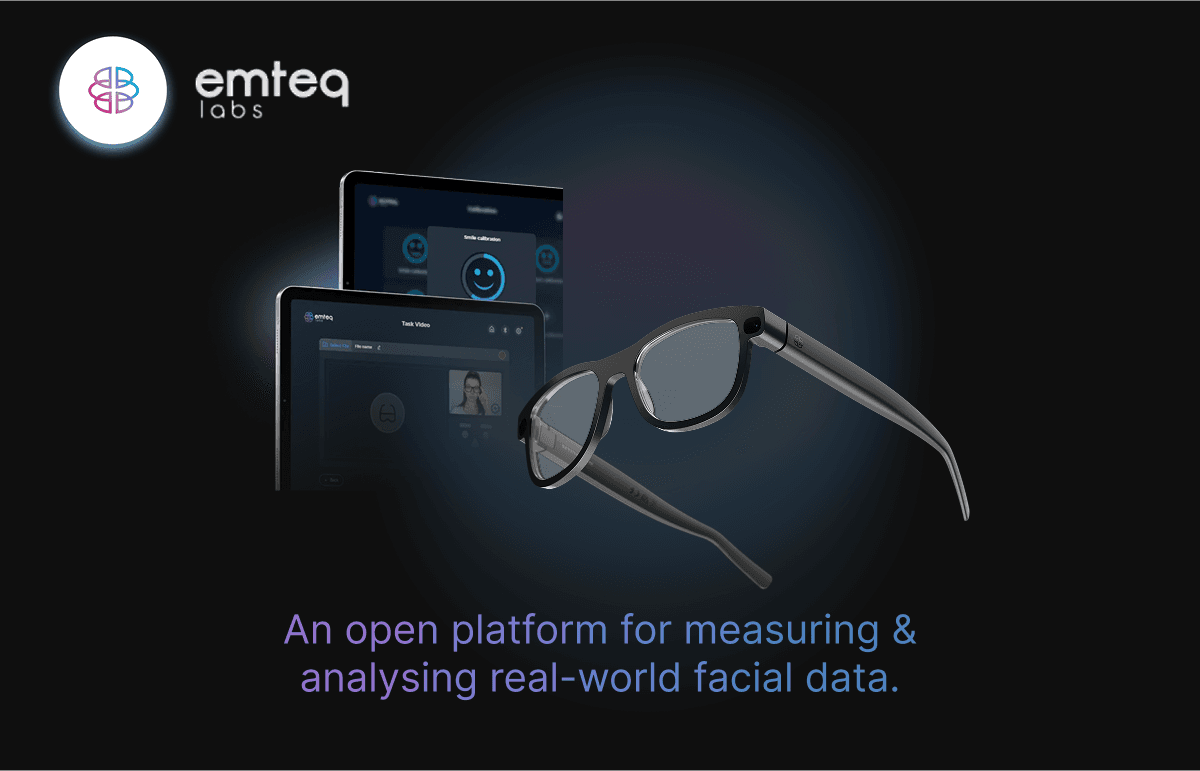
emteq labs provides innovative eyewear equipped with wireless non-contact sensors and a machine learning platform, enabling real-time emotion sensing and analytics. This technology allows for effortless collection and analysis of facial data and activities, offering unparalleled behavioral insights. The proprietary OCO™ Optomyography (OMG) sensors track facial muscle activation, providing precise three-dimensional facial movement mapping. The system includes a 9-axis inertial measurement unit (IMU), an altimeter for behavioral understanding, and an outward-facing camera to synchronize context with responses. Data can be streamed in real-time to a mobile app, allowing for monitoring, annotation, and analysis of various metrics like eating behavior, attention, engagement, and facial expressivity. Applications span research, healthcare, content creation, gaming, corporate training, and human-computer interaction.
Emu2
Emu2 is a generative multimodal model developed by BAAI, designed for in-context learning and capable of processing both image and text inputs. This application, hosted on Hugging Face Spaces, enables users to generate various forms of content and engage in interactive chat experiences. By providing a combination of text and images, users can receive generated responses or participate in conversations, making it a versatile tool for multimodal AI research and experimentation. The model aims to push the boundaries of AI's ability to understand and create content across different modalities.
claude-code-hooks-multi-agent-observability
claude-code-hooks-multi-agent-observability offers a comprehensive system for real-time monitoring and visualization of Claude Code agents, particularly useful for multi-agent orchestration with Claude Opus 4.6. By tracking hook events, the system provides deep observability into agent behavior, including tool calls, task handoffs, and agent lifecycle events. It features a robust architecture that captures, stores, and visualizes events in real-time, supporting multiple concurrent agents with session tracking, event filtering, and live updates. The system includes a Bun-powered TypeScript server for event processing and a Vue 3 client for interactive visualization, complete with a dual-color design, multi-criteria filtering, and a live pulse chart. Developers can easily integrate the observability hooks into their projects to gain insights into their Claude Code agent operations.