
AI Agents & Automation
Browsing page 700 of AI Agents & Automation. Sorted by confidence score — our independent quality rating.

TabHub
TabHub is a dedicated tab manager designed to streamline the process of handling browser tabs and sessions. It provides users with tools to effectively organize and manage numerous open tabs, preventing clutter and improving workflow. The platform also assists in tracking online productivity, offering insights into browsing habits. It is particularly useful for individuals who frequently work with many tabs open, such as professionals and students, helping them maintain focus and efficiency.

Sparknets
Sparknets operates as an AI agency, focusing on forging collaborative partnerships between businesses and specialized AI development teams. Their core mission is to thoroughly understand the unique needs of each partner to ensure the delivery of highly tailored AI solutions. Sparknets emphasizes building trusted relationships as a fundamental aspect of driving successful outcomes for their clients. They offer comprehensive AI solutions, guiding projects from the initial ideation phase all the way through to successful implementation.
Single Purpose AI Interfaces
Single Purpose AI Interfaces is a curated collection of AI tools, each designed to address a specific, individual task. This platform aims to provide focused AI assistance for a variety of needs, ranging from creative interpretations like dream decoding to practical applications such as meal planning. Users can easily navigate and explore different AI capabilities through its intuitive, task-oriented interface, making AI accessible for distinct, everyday problems without the complexity of multi-functional platforms.
AutoGPT on Mobile
AutoGPT on Mobile is an autonomous AI application specifically designed for mobile devices. This tool empowers users to automate a variety of tasks, facilitating learning and adaptation through advanced AI technology. Its primary focus is to deliver an accessible and intuitive AI experience across different mobile applications, making sophisticated AI capabilities readily available on smartphones and tablets. The application aims to bring the power of autonomous AI to the convenience of mobile platforms.
polyrnn-pp-pytorch
polyrnn-pp-pytorch is a PyTorch-based re-implementation of the Polygon-RNN++ model. This tool provides the functionality to train new Polygon-RNN++ models, allowing researchers and developers to leverage its capabilities for various tasks. It also supports running demonstrations directly on local machines, which is beneficial for testing and development. The primary focus of polyrnn-pp-pytorch is to facilitate efficient and interactive annotation of segmentation datasets, streamlining the process of preparing data for machine learning models.
Quickliner Keyboard
Quickliner Keyboard is a specialized keyboard application designed to streamline the process of composing professional emails on mobile devices. It integrates directly into the user's mobile keyboard, allowing for the quick generation and insertion of email content. The primary goal of this tool is to enhance efficiency and productivity for users who frequently write emails on their phones, providing a convenient way to craft professional messages without leaving their current application.
MM-Vet Evaluator
MM-Vet Evaluator is an AI evaluation tool specifically developed for assessing the accuracy and performance of various AI models. It provides functionalities that help users identify weaknesses within their models, allowing for targeted improvements. This tool is particularly suitable for AI researchers, machine learning engineers, and data scientists who are focused on enhancing the performance and reliability of their AI systems.
MMBench Leaderboard
MMBench Leaderboard is an AI evaluation tool designed to benchmark and compare the performance of various AI models, with a particular focus on multimodal models. It provides a standardized platform for assessing model capabilities, allowing users to track advancements and identify leading solutions in the AI landscape. This tool is suitable for AI researchers, machine learning engineers, and data scientists who need to evaluate and understand the performance characteristics of different AI models.
chainerrl
chainerrl is a Python library designed for deep reinforcement learning, leveraging the Chainer framework. It offers a collection of advanced deep reinforcement learning algorithms, enabling researchers and developers to efficiently experiment with and apply these techniques. The library aims to facilitate the development and deployment of reinforcement learning solutions across various applications.
SmartBookmark
SmartBookmark is a browser extension specifically designed to enhance and optimize your bookmark bar experience. It intelligently analyzes your browsing history and habits to provide personalized suggestions for the most relevant bookmarks. This functionality aims to help users quickly access their frequently visited websites, thereby significantly improving overall browsing efficiency and organization. The tool focuses on making your digital navigation smoother and more intuitive.
AskWiki.Ai
AskWiki.Ai is a question-and-answer platform that aims to facilitate critical thinking and knowledge exploration. It provides a dedicated space where users can engage in inquiry-based learning. The platform's core objective is to foster a deeper understanding of various topics by encouraging thoughtful questioning and providing a structured environment for Q&A interactions.
openwhispr
openwhispr is a versatile voice-to-text dictation application designed for transcribing audio into text. It offers users the flexibility of choosing between local processing, utilizing models like Nvidia Parakeet and Whisper, or integrating cloud models through a Bring Your Own Key (BYOK) approach. A key focus of openwhispr is user privacy, ensuring that sensitive information remains secure during transcription. The application is built to be cross-platform, making it accessible across different operating systems and devices.
optimization-engine
Optimization Engine (OpEn) is a powerful solver specifically engineered for embedded optimization tasks, delivering both speed and accuracy. Its primary application lies in next-generation robotics and autonomous systems, where efficient and reliable optimization is critical. The tool facilitates code generation, enabling real-time optimization capabilities, and offers robust integration with ROS (Robot Operating System). OpEn is particularly well-suited for tackling nonconvex optimization problems, providing a versatile solution for complex control and decision-making scenarios in advanced robotic applications.
FantasyGF.ai
FantasyGF.ai provides an AI girlfriend platform designed for users seeking virtual companionship. The service allows individuals to create and customize AI companions to their specific preferences, fostering interactive experiences. It focuses on delivering a personalized virtual relationship, enabling users to engage with AI characters that align with their desired traits and personalities.
OpenRLHF
OpenRLHF is an open-source framework specifically designed for reinforcement learning from human feedback (RLHF). It emphasizes scalability and high performance, leveraging a distributed architecture that integrates Ray and vLLM. The framework also incorporates an agent-based design, making it suitable for developing and deploying production-ready applications that require robust and efficient RLHF capabilities.
OwlAI Email Companion
OwlAI Email Companion offers a voice-activated solution for managing email on Android devices without needing to touch the screen. It is specifically designed to help users triage new and unread messages in situations where hands-free operation is essential, such as while driving or during other activities. This tool focuses on productivity by providing a convenient way to stay on top of email without being a full inbox replacement. It caters to individuals who need to manage their email efficiently while mobile.
Mood AI
Mood AI is a digital solution designed to provide personalized support for mental health. It offers a range of resources and therapeutic tools specifically tailored for individuals dealing with anxiety and addiction. The platform aims to connect users with professional guidance and emotional support, ensuring that the assistance provided is personalized based on individual needs. Mood AI focuses on delivering a supportive environment for mental well-being.
OpenGpt
OpenGpt is an open-source platform that empowers users to develop their own customized ChatGPT applications. It offers a suite of tools and resources specifically designed to facilitate the creation of AI projects. The platform's primary goal is to help users build AI solutions tailored to solve particular problems. Being open-source, OpenGpt encourages community contributions and allows developers the flexibility to customize their applications to a high degree.
agency-agents
Agency-agents provides a collection of AI specialists aimed at transforming various workflows. This open-source project features a range of AI agents, each endowed with specialized expertise and distinct personalities. The primary goal is to offer users a complete AI agency, making advanced AI capabilities readily accessible. Each agent is meticulously designed to deliver specific results, catering to diverse operational needs and enhancing efficiency across different tasks.
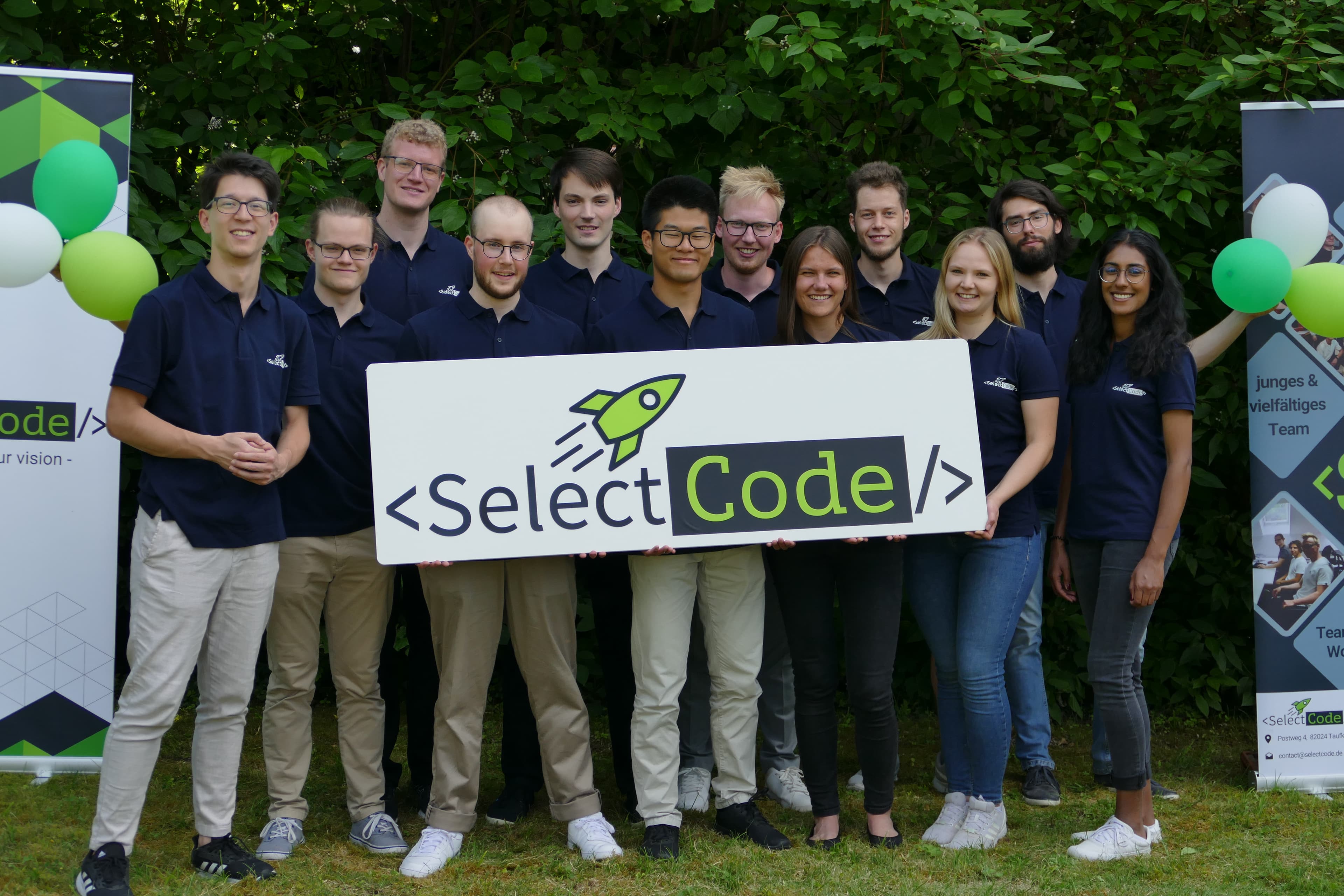
SelectCode GmbH
SelectCode GmbH operates as an AI partner and product studio, dedicated to developing and implementing AI applications. Their core focus is on generating added value for clients by crafting customized AI solutions that precisely meet individual business requirements. SelectCode's service offerings span from initial strategy development to practical training and comprehensive support for AI integration. Their flagship product, meinGPT, exemplifies their commitment to delivering specialized AI tools.
TheAlgoCave
TheAlgoCave is a consulting firm dedicated to digital transformation and innovation. They assist organizations in effectively leveraging their data by integrating it seamlessly with existing business processes and technological infrastructures. A core focus is on delivering tangible commercial value from the data products they help develop. The firm provides both strategic and operational consultation, guiding clients through every stage of their data journey, from initial strategy formulation to implementation and optimization.
BenchMARL
BenchMARL is a specialized library designed for benchmarking Multi-Agent Reinforcement Learning (MARL) algorithms. Its primary function is to facilitate rapid comparisons across various MARL algorithms, tasks, and underlying models. The tool places a strong emphasis on ensuring reproducibility and promoting standardization within MARL research, making it a valuable resource for those working in this complex field.
HotTalks.ai
HotTalks.ai provides a platform where users can create and customize their own AI companions. The service allows for the design of virtual partners, offering options to personalize both their appearance and personality. Users can choose from a diverse range of AI characters, including female, male, and transgender options, to suit their preferences. The primary functionality involves engaging in chats and immersive experiences with these custom-designed AI characters.
GupShap AI
GupShap AI is a platform designed for engaging in unlimited AI chats. A core feature is the ability to interact with custom characters, allowing for a personalized experience. The service emphasizes providing unfiltered conversations, aiming to give users a unique and unrestricted AI interaction environment. This tool caters to individuals looking for open-ended and customizable AI communication.