
Coding & Development
Browsing page 26 of AI tools for DevOps & Infrastructure in Coding & Development. Sorted by confidence score — our independent quality rating.

Model-Optimizer
NVIDIA Model Optimizer is an open-source library designed to accelerate deep learning models through various state-of-the-art optimization techniques. It supports quantization, pruning, distillation, speculative decoding, and sparsity to compress models and enhance inference speed. The tool accepts Hugging Face, PyTorch, or ONNX models as input and provides Python APIs for composing optimization techniques. Optimized checkpoints can be seamlessly exported for deployment in frameworks like SGLang, TensorRT-LLM, TensorRT, and vLLM, making it a crucial component within the NVIDIA AI software ecosystem for efficient model deployment.
Let Me Know When
Let Me Know When is an AI-powered website monitoring tool designed to help users stay informed about changes on any website. It offers comprehensive tracking for various elements, including price changes, competitor updates, stock availability, and new content. The platform provides notifications via email or Slack, making it easy to receive alerts for critical updates. Key features include design change detection, SEO performance tracking, product launch monitoring, and alerts for job postings or event tickets. With flexible pricing plans, Let Me Know When caters to individuals and businesses looking for an efficient way to monitor online information and react quickly to market shifts.
traceml
traceml is an open-source engine designed for comprehensive ML/Data tracking, visualization, explainability, drift detection, and dashboards, specifically integrated with Polyaxon. It enables machine learning engineers and data scientists to effectively monitor their experiments, visualize key metrics, understand model behavior, and detect data drift. The tool supports offline usage and offers integrations with popular deep learning and machine learning libraries such as Keras, PyTorch, TensorFlow, Fastai, PyTorch Lightning, and HuggingFace. Additionally, traceml provides robust artifact tracking for various chart types (Matplotlib, Bokeh, Altair, Plotly) and detailed DataFrame summaries for data profiling and quality checks.
LeFlow
LeFlow is an open-source tool-flow designed to bridge the gap between TensorFlow deep neural networks and synthesizable hardware, specifically FPGAs. It achieves this by integrating Google's XLA compiler with the LegUp high-level synthesis tool, enabling the automatic generation of Verilog code from TensorFlow specifications. This facilitates the deployment of deep neural networks on FPGAs, offering a flexible approach to hardware acceleration. The tool includes a testing framework with 15 building blocks to verify installation and functionality, ensuring that generated circuits match original TensorFlow results. It also provides examples ranging from simple tests to more complex applications, making it a comprehensive solution for hardware synthesis of AI models.
neptune-client
neptune-client is a Python client designed for the Neptune app, serving as an experiment tracker specifically for foundation model training. It enables data scientists and developers to monitor, log, and manage their machine learning experiments effectively. The tool supports various ML frameworks including TensorFlow, Keras, PyTorch, XGBoost, LightGBM, and Optuna, making it versatile for different project needs. It offers features for experiment versioning, comparison, and visualization, which are crucial for iterating on models and understanding performance. This client is essential for MLOps workflows, providing a centralized system for tracking metrics, parameters, and artifacts.
VibeSec
VibeSec is an advanced AI-powered security scanning tool designed to secure code within GitHub repositories. It leverages a combination of AI security intelligence and Semgrep to identify real security issues, secrets, insecure patterns, and known vulnerabilities. The platform provides instant, actionable reports for every scan, detailing what is wrong, why it matters, and how to fix it. VibeSec supports both public and private GitHub repositories securely using token authentication, requiring no agents or SDKs. Built for developers, it integrates security early into the development lifecycle, allowing users to scan repos, gain insights, and ship confidently without needing a dedicated security team. It also offers lightning-fast scans and an upcoming API for CI integration.
Octopoda
Octopoda offers a robust memory infrastructure specifically designed for AI agents, allowing them to maintain context and information across multiple sessions. This capability is crucial for developing sophisticated and reliable AI applications that require long-term memory. Key features include semantic search, which enables agents to retrieve relevant information efficiently, and comprehensive audit trails for tracking agent activities and ensuring accountability. The platform also incorporates crash recovery mechanisms to enhance operational resilience. Octopoda supports flexible deployment options, accommodating both local and cloud environments, and is available as an open-source solution, providing developers with transparency and customization opportunities.
yomo
yomo is an open-source serverless AI Agent Framework designed for building scalable and ultra-fast AI agents, leveraging geo-distributed edge AI infrastructure. It empowers exceptional customer experiences by focusing on speed, reliability, and scalability of AI interactions. Key features include seamless deployment and management of serverless LLM tools, enhanced security with TLS v1.3 encryption for all data packets, and effortless Agents DevOps to streamline the entire lifecycle from development to deployment. The geo-distributed architecture brings AI inference and tools closer to users, resulting in significantly faster response times. yomo is built with Rust, ensuring high performance and efficiency for AI applications.
Modal
Modal offers a serverless cloud platform specifically designed for compute-intensive AI and machine learning applications. It enables developers to define and run their code, including CPU, GPU, and data-intensive compute, at scale without managing underlying infrastructure. Key features include sub-second cold starts, instant autoscaling, and elastic GPU scaling with access to thousands of GPUs across various clouds. The platform provides a programmable infrastructure where everything is defined in code, eliminating the need for YAML or config files. It also boasts a built-in storage layer optimized for fast model loading and data processing, along with unified observability for integrated logging and full visibility into workloads. Modal supports various ML workloads like inference, training, sandboxes, batch processing, and notebooks, making it a comprehensive solution for AI and data teams.
Emmi AI
Emmi AI specializes in Large Engineering Models (LEMs), which are pre-trained engineering intelligence designed to replace traditional solvers and deliver instant, physics-accurate results across entire industrial verticals. The platform emphasizes real-time engineering, enabling rapid validation of designs. Emmi AI's framework allows for building, training, fine-tuning, and deploying physics AI models at an industrial scale, from data loading to inference optimization. It provides physics-validated datasets and production-ready models for specific engineering use cases, which can be deployed immediately or fine-tuned. The company has released NeuralMould for injection molding simulation and the Noether Framework, an open-source deep learning framework for engineering AI, built for reproducible and extensible workflows.
AI-Codereview-Gitlab
AI-Codereview-Gitlab is an automated code review tool designed to enhance code quality and development efficiency for teams using GitLab. It leverages large language models such as DeepSeek, ZhipuAI, OpenAI, Anthropic, Tongyi Qianwen, and Ollama to perform intelligent code reviews during merge requests or push operations. The tool offers instant notification delivery of review results via DingTalk, Enterprise WeChat, or Feishu. Additionally, it generates automated daily reports based on GitLab, GitHub, and Gitea commit records, providing insights into daily development progress. A visual dashboard centralizes all code review records, offering project and developer statistics. Users can also choose from various review styles, including professional, sarcastic, gentle, and humorous.
chatgpt-vercel
chatgpt-vercel provides an elegant and powerful user interface for deploying ChatGPT, powered by OpenAI and Vercel. It supports Progressive Web App (PWA) functionality and offers extensive prompt presets, searchable via keywords. Users can manage multiple conversations, each with independent settings, roles, and direct URL access. The tool allows for exporting and importing conversations and settings, real-time token usage monitoring, and various balance inquiry methods. It also supports URL queries for search engine-like functionality and offers advanced features like context management, message locking, and customizable settings for API keys, passwords, and conversation behavior. Deployment is streamlined for Vercel, with options for local development and other platforms like Netlify and CloudFlare Worker.
cogni-comfyui-openrouter-ai
cogni-comfyui-openrouter-ai is an all-in-one, open-source platform designed for managing ComfyUI workflows and AI models. It offers a comprehensive suite of features including load balancing, visual forms for parameter collection, a user system with credits, and a full admin panel for system management. The platform integrates login authentication, chat capabilities with OpenRouter for streaming LLM interactions, and ComfyUI workflow orchestration with task submission, status subscription, and retry policies. It also supports object storage via Alibaba Cloud OSS, email notifications, and system administration functions like user and credit management. Built with Vue 3 and Spring Boot 3, it's ready for self-hosting and provides detailed deployment guides for both backend and frontend.

Wafer
Wafer is an advanced AI tool designed to deliver the fastest GPU inference in the world by autonomously profiling, diagnosing, and optimizing inference across the entire stack, from kernels to models and production pipelines. It helps developers and AI agents achieve superior performance for open-source models through a flat-rate API access. For enterprises, Wafer offers tailored inference optimization for custom models, hardware, workloads, and production constraints, promising setup in less than 24 hours. The platform boasts significant speed improvements, such as being 2.8x faster than base SGLang for specific models, ensuring efficient and high-throughput AI operations.
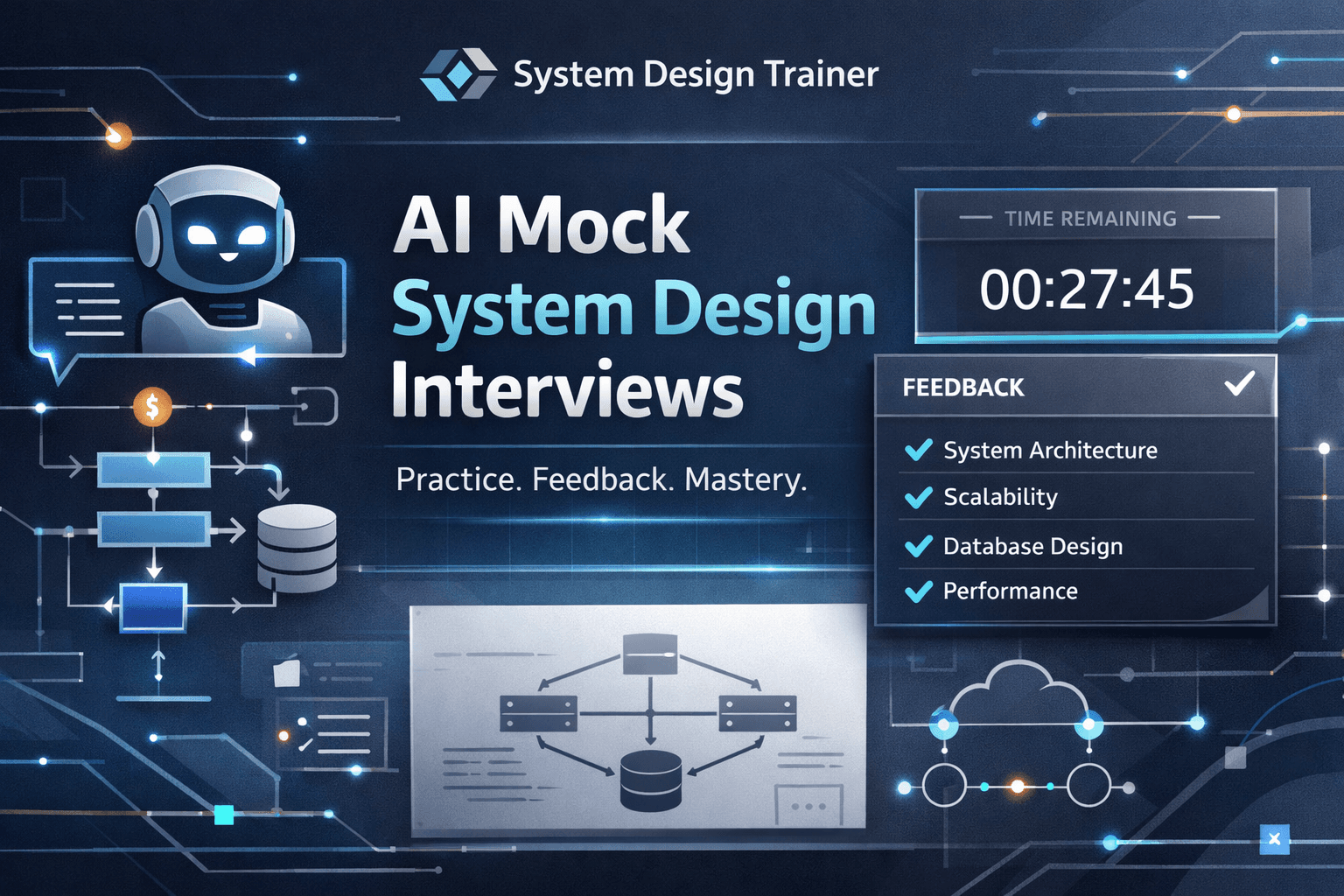
AI Mock System Design Interview
AI Mock System Design Interview is an AI-powered platform designed to help engineers master system design interviews. It offers realistic mock interviews with an AI interviewer that challenges and provides real-time feedback on architecture decisions. The platform tracks key signals like requirement coverage, scalability discussions, API proposals, and trade-offs. Users receive detailed performance breakdowns and actionable feedback to identify areas for improvement. It includes multiple practice cases based on real FAANG interviews, a whiteboard integration for diagramming, and a dashboard to track progress. This tool is ideal for serious interview preparation, offering timed sessions and a variety of pricing plans including a free interview.
AI-RAN Alliance
The AI-RAN Alliance is a collaborative initiative dedicated to transforming telecommunications by integrating Artificial Intelligence with Radio Access Networks (RAN). This alliance unites industry leaders and academic institutions to drive innovation, enhance efficiency, and unlock new economic opportunities within the telecom ecosystem. Its core focus is on advancing mobile network performance through cutting-edge AI innovation, shaping the future of AI-native networks. The alliance explores research, publishes findings, and offers membership opportunities for organizations interested in contributing to this evolving field.

Cubyts
Cubyts offers an AI control plane specifically designed for the Software Development Life Cycle (SDLC). It enables organizations to build and deliver software efficiently by leveraging AI agents with a comprehensive understanding of the system context. The platform aims to align intent, code, and execution, providing visibility and control over the development process. Cubyts is engineered to detect drifts, surface potential risks, and facilitate timely course correction without disrupting existing workflows. This integration of AI into the SDLC stack helps enterprises manage their software development more effectively and securely.
Q-CTRL
Q-CTRL offers infrastructure software designed to make quantum technology useful, focusing on quantum computing and quantum sensing. The platform leverages AI to bridge the gap between the quantum and classical worlds, delivering performance enhancements in quantum computing and enabling new quantum sensing capabilities. Key products include Fire Opal for optimizing quantum algorithms and hardware performance, Boulder Opal for designing and scaling quantum hardware, and Black Opal for interactive quantum education. Q-CTRL has achieved significant milestones, including world records in quantum computing performance and a 94x quantum advantage in navigation, making it a leader in practical quantum applications. The tool serves a diverse audience from quantum learners and educators to defense and aerospace industries, providing solutions for GPS-free navigation, quantum computer calibration, and algorithm development.

Netlify
Netlify is a comprehensive platform for building and deploying modern web applications, catering to millions of developers. It supports creating applications with AI tools or traditional code, offering instant deployment to a global production infrastructure. Key features include Agent Runners for AI-powered development, Deploy Previews for collaborative feedback, AI Gateway for connecting to various AI models, and serverless functions for backend logic. The platform also provides integrated storage, observability, and security features, ensuring scalability and reliability for everything from marketing sites to complex AI apps and e-commerce solutions. Netlify streamlines the development workflow, enabling rapid iteration and global deployment in seconds.
XNNPACK
XNNPACK is an open-source library developed by Google, offering highly optimized floating-point neural network inference operators. It is designed to accelerate machine learning frameworks such as TensorFlow Lite, TensorFlow.js, PyTorch, ONNX Runtime, ExecuTorch, and MediaPipe across a wide range of platforms including ARM, x86, WebAssembly, and RISC-V. While not intended for direct use by deep learning practitioners, it serves as a foundational component for developers building high-performance AI applications. XNNPACK supports a comprehensive set of neural network operators, including various convolutions, pooling types, and element-wise operations, with optimizations for different architectures and channel dimensions. It provides significant performance improvements for mobile and embedded devices, as demonstrated by benchmarks on MobileNet models across different Pixel phones and Raspberry Pi boards.

Continuum Industries
Continuum Industries offers Optioneer, an AI-powered option assessment platform designed for utilities and developers in the energy and water industries. It automates the generation and evaluation of options for network upgrades and expansion, leveraging thousands of GIS layers to identify optimal routes. The platform helps estimate project costs earlier, identify risks quicker, and facilitates collaboration across multiple disciplines within a geospatial planning environment. Optioneer supports various linear infrastructure projects including electricity transmission, renewables, hydrogen, CO2 networks, and water networks. It offers two main products: Optioneer for Screening, for early-stage go/no-go decisions, and Optioneer for Development, for in-depth analysis from concept to permit application, significantly reducing project timelines and risks.
AI Test Automation | mabl
Mabl's AI Test Automation platform is designed for software development and QA teams to enhance their testing processes. It leverages AI to provide comprehensive end-to-end test coverage, significantly reducing the time and effort typically required for quality assurance. Key features include low-code test creation, allowing for rapid development of UI, API, accessibility, and performance tests. Mabl integrates seamlessly into existing development pipelines and popular tools like Jira, Slack, and MS Teams. The platform boasts AI capabilities for self-healing tests, intelligent assertions, and automated test failure summaries, ensuring test suites remain resilient and reliable. It supports unlimited local test runs and cloud concurrency, enabling teams to scale testing efficiently and deliver quality at speed.
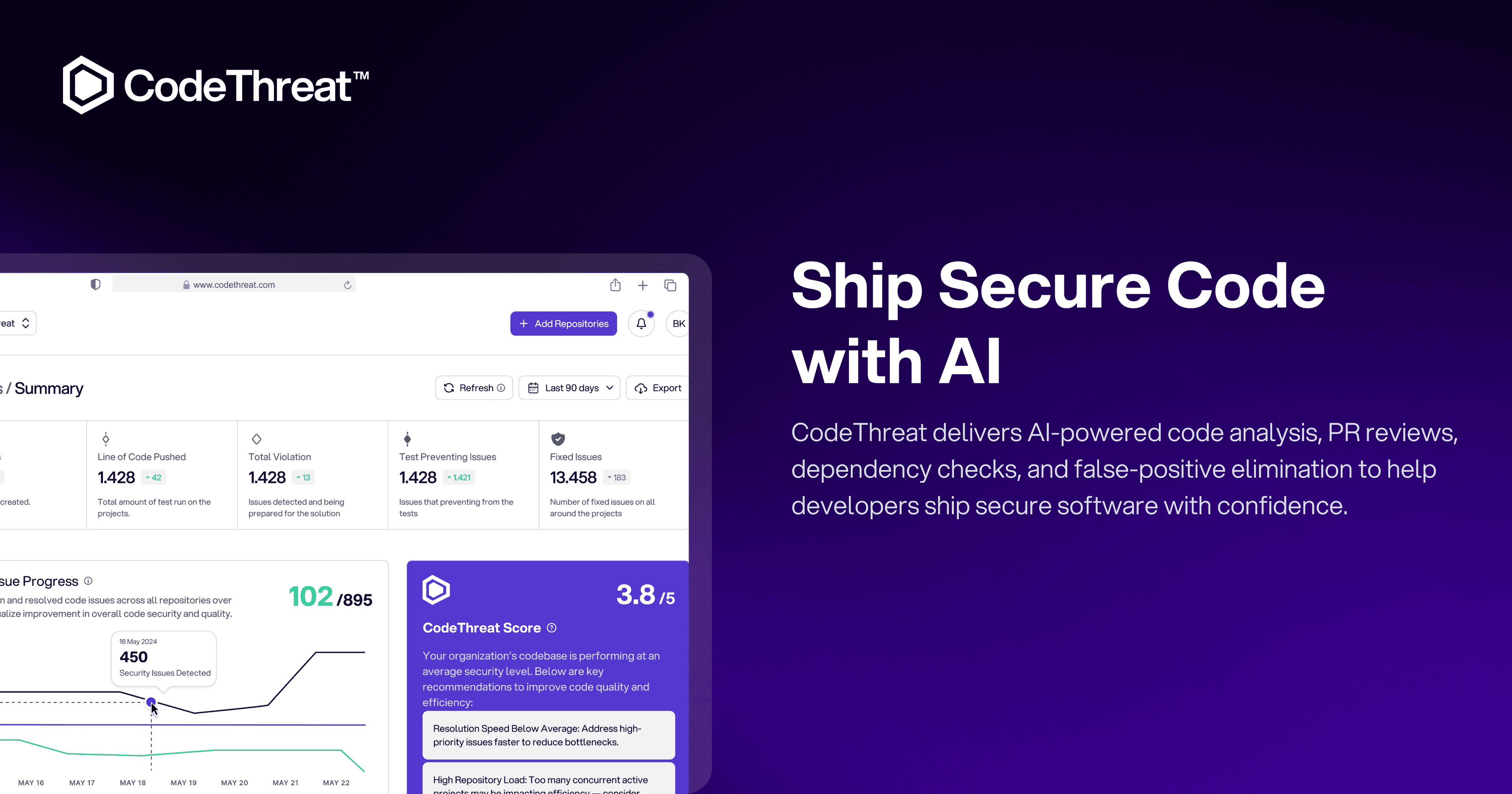
CodeThreat
CodeThreat is an AI-native application security platform designed to help teams ship secure code faster. It leverages autonomous AI agents to understand code, reduce noise from false positives, and surface meaningful security findings. The platform offers agentic PR reviews, analyzing code changes at the pull request level to highlight risks before merging. It also features AI SAST for detecting complex security issues like logic flaws and data flows, and an agent for false positive elimination that re-checks findings and explains why they are non-exploitable. CodeThreat provides unified security analysis, integrating SAST, SCA, IaC, Container Security, and Secret Scanning in one place, supporting over 27 programming languages and frameworks, and integrating with GitHub, GitLab, Bitbucket, CI/CD pipelines, and cloud providers.

latchkey
Latchkey provides AI-powered CI/CD monitoring specifically for GitHub Actions, offering real-time analytics to help teams manage their development pipelines. The tool is designed to monitor GitHub Actions costs, detect pipeline failures proactively, and even auto-generate pull requests to fix identified issues. This capability is particularly beneficial for teams working with AI-generated code, ensuring efficient and cost-effective CI/CD processes. Latchkey aims to provide actionable insights for performance optimization and cost reduction, making it an essential tool for maintaining healthy and efficient GitHub Actions workflows.