
Coding & Development
Browsing page 150 of AI tools for Open Source & Models in Coding & Development. Sorted by confidence score — our independent quality rating.

bambot
Bambot is an open-source project designed to make AI robotics accessible and easy to use. It provides a platform for individuals to experiment with and develop AI-powered robotic systems using low-cost components. The project aims to lower the barrier to entry for AI robotics, allowing users to build and interact with their own AI robots. It includes resources and code to facilitate the creation and control of these robots, making it an ideal tool for learning and prototyping in the field of AI and robotics.
awesome-6d-object
awesome-6d-object is a valuable open-source repository dedicated to collecting and organizing significant works in the field of 6 DoF (Degrees of Freedom) object pose estimation. This resource is particularly useful for researchers and developers in computer vision and deep learning, offering a curated list of papers, projects, and other materials. It covers various aspects of object pose estimation, including methods for 3D object reconstruction from a single view and techniques for 3D hand-object pose estimation. The repository aims to provide a centralized hub for staying updated on advancements and finding relevant information in this specialized domain.
FLUX.2 Klein LoRA Studio
FLUX.2 Klein LoRA Studio is a Hugging Face Space that provides a demo collection of FLUX.2-Klein Model LoRAs. This tool enables users to upload one or two images, select a specific style from the available LoRAs (or a face-swap adapter), and then input a brief text prompt. The system processes these inputs to generate a new, edited image that adheres to the chosen style while preserving key elements from the original picture(s). It's designed for experimentation with image generation and style transfer using advanced AI models, offering a hands-on experience with LoRA technology.
opyrator
Opyrator is an open-source tool designed to transform Python functions into production-ready microservices rapidly. It automatically generates web APIs based on FastAPI and interactive web UIs using Streamlit, leveraging open standards like OpenAPI, JSON Schema, and Python type hints. This tool simplifies the productization and sharing of Python code, allowing users to deploy and access services via HTTP API or an interactive UI. Opyrator also supports exporting services into portable, shareable executable files or Docker images, making deployment and scaling for production usage seamless. It aims to cut out the complexities typically associated with deploying machine learning models and other Python-based applications.
contextualized-topic-models
Contextualized Topic Models (CTM) is a powerful Python package designed for advanced topic modeling. It integrates pre-trained language representations, such as BERT embeddings, with traditional topic models to produce highly coherent topics. The package offers two main models: CombinedTM, which merges contextual embeddings with bag-of-words for enhanced topic coherence, and ZeroShotTM, ideal for tasks with missing words in test data and cross-lingual topic modeling when trained with multilingual embeddings. CTM supports various languages through HuggingFace models and allows for the use of different embedding methods, ensuring adaptability to new advancements. It also includes 'Kitty,' a submodule for human-in-the-loop classification to quickly categorize documents and create named clusters. The tool is particularly effective when the bag-of-words size is restricted to around 2000 elements, and it provides a preprocessing pipeline to manage this. CTM uses SBERT for embedding creation, offering flexibility in choosing embedding models and handling multilingual data.
introduction_to_ml_with_python
Introduction to Machine Learning with Python is a comprehensive open-source repository designed to accompany the book of the same name by Andreas Mueller and Sarah Guido. It provides all the notebooks and code examples used in the book, making it an invaluable resource for students and practitioners looking to learn machine learning with Python. The repository includes helper functions from the `mglearn` library for creating figures and datasets, and all necessary datasets are included, with the exception of `aclImdb`. Users can set up their environment using `conda` or `pip` to install required packages like `numpy`, `scipy`, `scikit-learn`, `matplotlib`, `pandas`, `pillow`, and `graphviz`. It also supports `nltk` and `spacy` for text processing chapters.
HyperLandmark
HyperLandmark is a free and open-source tool designed for real-time face landmark detection, primarily targeting mobile applications. It utilizes deep learning to accurately identify 106 facial landmark points, offering a detailed facial contour description. The tool is noted for its high accuracy, even in challenging lighting conditions, and its efficient, small model size (around 2MB for the tracking model), making it highly suitable for mobile integration. It also supports multi-face tracking and boasts fast processing speeds, with the Android version achieving 7ms per single face on a Qualcomm 820. The project provides both Android and Windows implementations, with the Android version based on deep learning and the Windows version on traditional SDM algorithms.
hyperparameter-optimization
hyperparameter-optimization is an open-source project providing implementations of Bayesian hyperparameter optimization for machine learning algorithms. This tool allows users to explore different approaches to hyperparameter tuning, specifically focusing on gradient boosting machines. It includes Jupyter Notebooks demonstrating the application of Bayesian optimization with libraries like Hyperopt, and provides examples for plotting search results. The project is designed to help data scientists and machine learning engineers enhance the performance of their models by systematically finding optimal hyperparameters, making the optimization process more efficient and effective.
Machine-Learning-in-Action
Machine-Learning-in-Action is an open-source GitHub repository offering practical code implementations for various machine learning algorithms, all based on the popular book "Machine Learning in Action." Developed in Python 3, this resource is designed to help users understand and apply machine learning concepts through hands-on examples. The repository includes code for algorithms such as K-Nearest Neighbors, Decision Trees, Naive Bayes, Logistic Regression, Support Vector Machines, AdaBoost, and different regression techniques. It also provides datasets to accompany the code, making it a comprehensive learning resource for students and developers looking to deepen their understanding of machine learning.
makeyourownneuralnetwork
makeyourownneuralnetwork is an open-source code repository hosted on GitHub, designed to accompany the 'Make Your Own Neural Network' book. It offers practical examples and implementations of neural network concepts, making it an invaluable resource for individuals looking to learn and understand the fundamentals of neural networks through hands-on coding. The repository includes various Jupyter Notebooks covering topics such as MNIST dataset handling, neural network implementation, loading custom images, and backquerying. This resource is ideal for students and self-learners who want to dive deep into the mechanics of neural networks and build their own models from scratch.
Open-AutoGLM
Open-AutoGLM is an open-source framework designed to create intelligent phone agents capable of understanding and interacting with mobile device screens. Built upon the AutoGLM model, it leverages multimodal perception to interpret screen content and automate tasks through ADB (Android Debug Bridge) or HDC (HarmonyOS Debug Bridge). Users can issue natural language commands, such as "Open Meituan to search for hotpot restaurants," and the Phone Agent will parse the intent, understand the current interface, plan, and execute the necessary actions. The system includes sensitive operation confirmation mechanisms and supports manual intervention for login or verification code scenarios. It also offers remote ADB/HDC debugging capabilities via WiFi for flexible control and development. The framework supports both Android and HarmonyOS devices, with specific models optimized for Chinese and multilingual applications.
nn-from-scratch
nn-from-scratch is an open-source project available on GitHub that provides a practical implementation of a neural network from scratch. This resource is designed for individuals looking to deepen their understanding of how neural networks function at a foundational level. The project includes Python code, an iPython notebook for interactive learning, and a related blog post that explains the concepts in detail. It covers the setup of a virtual environment and installation of necessary requirements, making it accessible for hands-on learning and experimentation with neural network architectures.
recurrentjs
recurrentjs is a Javascript library designed for implementing Deep Recurrent Neural Networks (RNN) and Long Short-Term Memory (LSTM) networks. Beyond these specific neural network types, the library offers general functionality to construct arbitrary expression graphs, over which it can perform automatic differentiation, similar to capabilities found in Python's Theano or Torch. This allows developers to build various neural networks and execute automatic backpropagation. The library provides core components like a Graph structure for managing matrix connections and a Mat class for 2-dimensional matrices, including their values and derivatives. It's an open-source tool, making it accessible for those looking to explore or implement neural networks in Javascript.
Chinese-number-gestures-recognition
Chinese-number-gestures-recognition is an open-source Android application designed to recognize Chinese number gestures from 0 to 10 using a convolutional neural network (CNN). The project includes both the Android app code for real-time gesture recognition via a mobile camera and PC-side code for data processing and model training. It supports development environments like Python 3.6 with TensorFlow-gpu and Android Studio with TensorFlow Lite and OpenCV. The project also provides datasets, including raw images, data-augmented images, and compressed H5 datasets, along with pre-trained models. While the PC-trained models show high accuracy, the app's real-world performance can vary in complex environments.
deep-learning-from-scratch-4
deep-learning-from-scratch-4 is an open-source GitHub repository that serves as the support site for the book "Deep Learning from Scratch 4: Reinforcement Learning Edition" (O'Reilly Japan, 2022). It provides all the source code used in the book, organized by chapter, along with common utility code. The repository also offers Jupyter Notebook versions of the code, which can be run directly on cloud services like Google Colab, Kaggle Notebook, and Studio Lab for interactive learning. It supports Python 3.x and requires libraries such as NumPy, Matplotlib, OpenAI Gym, and DeZero (or PyTorch). The project is licensed under the MIT License, allowing for free commercial and non-commercial use, making it an excellent resource for students and developers exploring reinforcement learning.
deep-fonts
deep-fonts is an open-source project available on GitHub that leverages deep learning to generate unique fonts. This tool provides a platform for users to explore and create new typefaces, offering a novel approach to font design. It includes scripts for creating datasets, training models, and generating fonts, making it a comprehensive solution for those interested in the intersection of AI and typography. The project also features examples of generated fonts and visualizations, demonstrating its capabilities in producing diverse and experimental typographic styles. It's ideal for researchers, developers, and designers looking to experiment with AI-driven font creation.
GraphSAINT
GraphSAINT is an open-source framework designed for efficient and accurate training of Graph Neural Networks (GNNs) on large-scale graphs. It introduces a novel minibatch method that samples small subgraphs from the full training graph, allowing for complete GNN construction and propagation on these subgraphs without further layer sampling. This approach addresses the 'neighbor explosion' problem common in other methods, leading to linear computation cost with GNN depth and improved scalability. GraphSAINT supports various GNN architectures like GraphSAGE, GAT, JK-Net, GaAN, and MixHop, and offers multiple graph samplers including Node, Edge, RW, MRW, and Full graph. It provides implementations in both TensorFlow and PyTorch, making it flexible for researchers and developers working with deep GNNs.
Paddle3D
Paddle3D is an open-source, end-to-end deep learning 3D perception toolkit developed by PaddlePaddle. It provides a flexible framework for handling various 3D data formats and supports integration with PaddleDetection and PaddleSeg for 2D vision capabilities. The toolkit features a rich model library covering mainstream 3D perception algorithms across monocular, point cloud, and multi-camera modalities, including detection and segmentation tasks. It offers full-process support from data processing and model building to training, optimization, and deployment, with compatibility for major 3D datasets like KITTI, nuScenes, and Waymo. Paddle3D is optimized for performance on various autonomous driving chips and seamlessly integrates with the Apollo autonomous driving platform.
named_entity_recognition
named_entity_recognition is an open-source project dedicated to Chinese named entity recognition (NER), offering practical implementations of several prominent models. It includes Hidden Markov Model (HMM), Conditional Random Field (CRF), Bi-directional Long Short-Term Memory (BiLSTM), and a hybrid BiLSTM+CRF model. The project utilizes a resume dataset for training and evaluation, providing detailed accuracy, recall, and F1 scores for each model. It serves as a valuable resource for researchers and developers interested in NLP, particularly in the context of Chinese NER, allowing for direct comparison and understanding of different algorithmic approaches.
PyHealth
PyHealth is a comprehensive, open-source deep learning Python toolkit designed to support clinical predictive modeling for both ML researchers and medical practitioners. It aims to make healthcare AI applications easier to develop, test, and deploy, offering flexibility and customizability. Key features include a modular 5-stage pipeline, a healthcare-first approach with support for medical codes and clinical datasets like MIMIC and eICU, and over 33 pre-built models with production-ready trainers and metrics. The toolkit supports more than 10 healthcare tasks and datasets, providing fast data processing for quick experimentation. PyHealth also includes independent modules for medical code mapping (pyhealth.medcode) and medical code tokenization (pyhealth.tokenizer), enhancing its utility for complex healthcare data.
Book7_Visualizations-for-Machine-Learning
Book7_Visualizations-for-Machine-Learning is an open-source GitHub repository offering a comprehensive educational resource for machine learning. It provides Python code examples for various machine learning algorithms, alongside detailed PDF explanations. The content covers a wide range of topics, from regression analysis and regularization to clustering and dimensionality reduction techniques. Designed to help users understand complex machine learning concepts through practical visualizations, this resource is particularly valuable for students and enthusiasts. The materials are primarily in Chinese, making it a significant resource for Chinese-speaking learners.
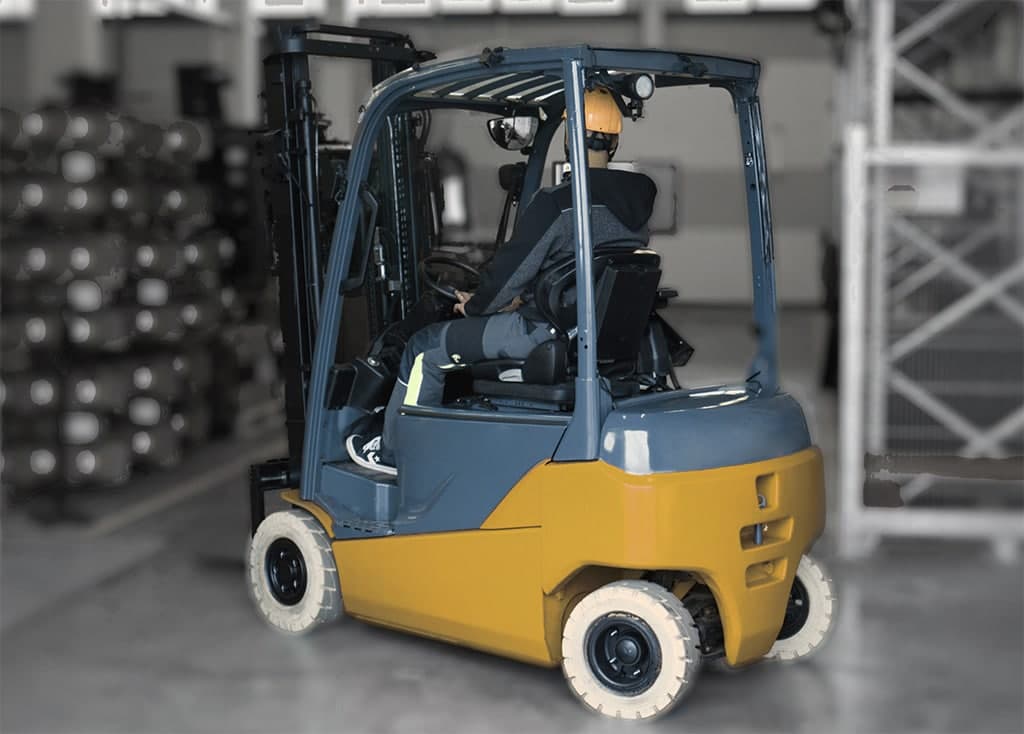
AVALTAR
AVALTAR offers AI-driven safety solutions, specializing in intelligent camera systems for workplace safety and Industry 4.0. Their adaptable solutions, such as AVA Collision avoidance system for forklifts and SPARK One monitoring system, are designed to prevent accidents, enhance safety, and optimize processes. AVALTAR's technology focuses on preventing hazards from human-machine interactions using AI, IoT connectivity, and industry expertise. The systems provide precision with minimal false alarms, learn and improve with every detection, and are seamlessly integrated and customizable. They offer robust hardware and innovative software to protect employees, assets, and data, with flexible and fast development to meet specific requirements.
braindecode
Braindecode is an open-source Python toolbox specifically designed for decoding raw electrophysiological brain data using deep learning models. It offers a comprehensive suite of functionalities, including dataset fetchers, robust data preprocessing tools, and visualization capabilities. The toolbox also features implementations of various deep learning architectures and data augmentations, making it suitable for in-depth analysis of EEG, ECoG, and MEG signals. It caters to both neuroscientists interested in applying deep learning and deep learning researchers looking to work with neurophysiological data, providing a powerful platform for advanced brain signal analysis.
training_extensions
OpenVINO™ Training Extensions is a low-code transfer learning framework designed for computer vision tasks. It enables users to train, infer, optimize, and deploy models easily and quickly, even with limited deep learning expertise. The tool supports diverse combinations of model architectures, learning methods, and task types based on PyTorch and OpenVINO™ toolkit. Key features include support for classification, object detection, semantic segmentation, instance segmentation, and anomaly recognition. It also provides usability features like native Intel GPUs (XPU) support, Datumaro data frontend for various dataset formats, distributed training, mixed-precision training, class incremental learning, and model deployment to OpenVINO™ IR and ONNX formats. The framework offers both API and CLI-based training for flexibility and ease of use.