
Coding & Development
Browsing page 69 of AI tools for Open Source & Models in Coding & Development. Sorted by confidence score — our independent quality rating.

lmdeploy
LMDeploy is a comprehensive open-source toolkit developed by the MMRazor and MMDeploy teams, designed for compressing, deploying, and serving Large Language Models (LLMs) and Vision Language Models (VLMs). It boasts core features such as efficient inference, achieving up to 1.8x higher request throughput than vLLM through innovations like persistent batching, blocked KV cache, and high-performance CUDA kernels. The toolkit also provides effective quantization, supporting weight-only and k/v quantization, with 4-bit inference performance 2.4x higher than FP16. Furthermore, LMDeploy offers an effortless distribution server, enabling easy deployment of multi-model services across multiple machines and cards. It supports a wide range of LLMs and VLMs, including popular models like Llama, InternLM, Qwen, and DeepSeek, and features two inference engines: TurboMind for ultimate performance optimization and PyTorch for developer accessibility and rapid experimentation.

Inflection AI
Inflection AI is pioneering the future with human-centered, emotionally intelligent AI, transforming interactions from transactional to relational. The company offers Pi, a personal AI designed to be a conversational companion available across various devices. For enterprises, Inflection AI provides an API, enabling businesses to integrate emotionally intelligent AI into their own products and services. This focus on human-centered AI aims to create enduring value for both individuals and businesses by fostering more meaningful and effective AI interactions.
TOP AI Network
TOP AI Network offers a decentralized AI Model-as-a-Service (MaaS) platform designed to empower AI model developers and businesses. Developers can host their AI models on the network, eliminating the need for significant investment in expensive hardware infrastructure. This democratizes access to AI model deployment. For businesses, the platform provides the flexibility to rapidly deploy pre-trained AI models or fine-tune existing ones using their private data. This capability facilitates the creation of customized AI models tailored to specific business needs, promoting innovation and efficient AI integration across various industries. The decentralized nature ensures scalability and potentially lower operational costs.
aiToggler
aiToggler serves as a comprehensive AI hub, consolidating access to over 500 AI models from various providers like OpenAI, Google, Anthropic, and Mistral into a single application. It enables users to seamlessly switch between different models for text, image, and video generation without needing multiple subscriptions or API keys. The platform features a 24/7 AI ranking engine to help users identify the best-performing models, along with transparent speed and pricing charts. aiToggler is designed for intuitive use, offering features like split chat, prompt management, and an extension for browser-based interactions. It provides clear activity tracking and cost transparency for AI usage, with flexible pricing options including a free plan, a Pro subscription, and a Lifetime Deal.
CHARRED
CHARRED is presented as a Hugging Face Space dedicated to character-aware diffusion, indicating its purpose in generating images with an understanding of character features. The tool is built using Gradio, a popular framework for creating machine learning web apps. While the intention is to provide advanced image generation capabilities, the current live website indicates a runtime error, preventing its functionality. This suggests that the tool, when operational, would be suitable for researchers and developers interested in the nuances of AI image generation and character-specific diffusion models. The project is licensed under CC-BY-SA-4.0, promoting open use and modification.
OpenLLM
OpenLLM France is a research project funded by BPI since September 2024, dedicated to building open and transparent AI centered on the French language. The consortium, comprising 9 official and 12 associated partners, aims to produce digital commons and share expertise to develop ethical and open AI applications in France. Key activities include collecting and processing French data to minimize English-introduced biases, redistributing datasets for auditability, sharing model weights under open-source licenses, and publishing training code. The project focuses on multilingualism, clean data, multimodality, and education, with a commitment to European values and sustainability.
ID Privacy AI
ID Privacy AI is an Agent Execution Platform specifically designed for Automotive Operations, enabling dealerships to deploy voice AI agents, automate Business Development Center (BDC) operations, and orchestrate complex dealership workflows. The platform is OEM Certified by Nissan, Infiniti, and Mitsubishi, emphasizing its enterprise-grade capabilities and compliance. It helps dealerships address missed calls, slow lead responses, and forgotten follow-ups by providing AI agents that answer, qualify, and book appointments 24/7. Dealerships using ID Privacy AI report an average recovery of $180K in annual revenue per rooftop. The system integrates seamlessly with existing DMS, CRM, and scheduling tools like CDK, Reynolds, Tekion, and VinSolutions, and offers a powerful dashboard to monitor agent performance and lead pipelines.

Dawiso
Dawiso is a comprehensive data governance platform designed to provide the essential business context for AI agents and human users within enterprises. It unifies data cataloging, business glossary management, and data lineage tracking, allowing teams to quickly locate and trust their data. The platform ensures accuracy and compliance in financial reporting and AI governance, offering tools for oversight and regulatory adherence. Dawiso supports both structured and unstructured data governance, integrates seamlessly with over 40 data platforms, and features automated metadata context generation and AI enrichment to minimize manual input. Its user-friendly interface and robust security are built to fit enterprise architectures, making it an affordable and efficient solution for complex data environments.
PIXSelect Teknoloji A.Ş.
PIXPass by PIXSelect Teknoloji A.Ş. is an all-in-one platform for personnel attendance control, visitor management, and workforce management. It streamlines HR operations by offering features like employee management, document management, real-time attendance tracking, and smart shift scheduling. The system integrates with existing payroll tools such as Logo, Mikro, and Netsis, and supports various meal card systems. PIXPass provides both hardware-free solutions with mobile app-based GPS and QR code tracking, and hardware-integrated solutions with biometric face recognition and turnstile control. It emphasizes security and compliance, including KVKK (Turkish Data Protection Law) adherence and Azure cloud infrastructure, making it suitable for businesses seeking efficient and secure workforce management.

Stable Diffusion Models
The Rentry.org page titled "Stable Diffusion Models" appears to be a curated list or discussion platform for various Stable Diffusion models. While the live content scraped is generic Rentry.org boilerplate, the title suggests its purpose is to serve as an informational hub for individuals interested in AI image generation. Users would likely visit this page to discover, compare, or learn about different Stable Diffusion models available for their projects. The platform itself, Rentry.org, is a markdown paste service, implying that the content is user-generated and shared for informational purposes within the AI community, particularly those working with open-source models.

Qeios
Qeios is an Open Science platform dedicated to transforming scholarly communication through an innovative approach to peer review. It provides a publishing process designed to be trustworthy, constructive, and unbiased across all research fields. The platform supports rapid review cycles by using AI to identify and invite reviewers, with reviews published alongside articles. Researchers can publish for free if their articles attract spontaneous reviewers and meet standards, or opt for a Pro plan at $4.99/month. The Pro plan includes an AI-assisted Reviewer Recruitment Service, unlimited revisions, grammar correction, custom cover images, and social media promotion to amplify scholarly reach.
Airframe
Airframe is a comprehensive AI software sourcing platform designed to empower organizations in deploying AI with confidence. It helps users navigate complex build vs. buy decisions, compare AI vendors, and gain structured market intelligence. The platform offers an AI Agent Search to find products, experts, and generate requirements, alongside tools to explore markets. Users can understand hidden costs in per-use AI token models and receive contextual recommendations based on their existing tech stack. Airframe also facilitates searching by workflow to find technology choices matching specific use cases and provides detailed vendor comparisons, including market positioning and strengths. It offers an API for token-efficient access to its catalog and expert data, making it a decision intelligence solution for the post-SaaS era.
llama-cookbook
Llama-cookbook serves as the official guide for developers and data scientists looking to build with the Llama model family. This comprehensive repository offers practical resources for getting started with model inference, fine-tuning, and implementing Retrieval-Augmented Generation (RAG). It compiles popular community approaches, diverse use-cases, and the latest recipes for both Llama text and vision models. The cookbook is structured to help users solve end-to-end problems, integrate with various third-party providers, and understand the nuances of deploying Llama models in different scenarios. It also includes a source code library and FAQs for common fine-tuning questions.
LLM-Blender
LLM-Blender is an innovative ensembling framework designed to significantly enhance the performance of large language models (LLMs) by combining the strengths of multiple open-source LLMs. It addresses the challenge of varying optimal LLMs for different examples through its two core modules: PairRanker and GenFuser. PairRanker employs a specialized pairwise comparison method to discern subtle differences between candidate outputs, while GenFuser merges top-ranked candidates into an improved output. The framework also introduces MixInstruct, a benchmark dataset for large-scale evaluation. LLM-Blender offers functionalities for re-ranking model outputs, best-of-N sampling, and serves as a local pairwise evaluator for better Reinforcement Learning from Human Feedback (RLHF) and Direct Preference Optimization (DPO). It can be easily integrated into existing workflows via pip installation and Hugging Face wrappers.
LMFlow
LMFlow is an open-source, extensible toolkit designed for the finetuning and inference of large machine learning models. It emphasizes user-friendliness, speed, and reliability, making large models accessible to a broad community. Key features include support for various finetuning methods like Full Finetuning, LISA (Layerwise Importance Sampling for Memory-Efficient Large Language Model Fine-Tuning), and LoRA (Low-Rank Adaptation). The toolkit also offers acceleration and memory optimization techniques such as FlashAttention (versions 1 and 2), Gradient Checkpointing, and Deepspeed Zero3 Offload. For inference, LMFlow supports CPU inference for LLaMA models via 4-bit quantization and integrates with vLLM for fast serving. It also provides long context support through position interpolation for LLaMA models and includes a Gradio-based UI for local chatbot deployment.
NLP-Cube
NLP-Cube is an open-source Natural Language Processing Framework designed to perform various NLP tasks such as sentence segmentation, tokenization, POS tagging (both language-independent UPOSes and language-dependent XPOSes/ATTRs), lemmatization, and dependency parsing. It supports languages included in the UD Treebanks and offers models trained on the UD2.2 corpus, with newer versions using UD 2.7. The framework is built entirely on recurrent neural networks and is written in Python, making it a ready-to-use system for developers and researchers. It provides a simple API for programmatic use and allows for specifying different model versions and 'flavours' to optimize performance for specific use cases. NLP-Cube is freely available on GitHub and can be easily installed via pip.

Lightricks
Lightricks is a leading AI technology company dedicated to transforming creative workflows across web, mobile, and open-source platforms. They develop fast, open, and efficient AI models in-house, which serve as the building blocks for their diverse product ecosystem. Their offerings include popular tools like Facetune for photo and video enhancement, Videoleap for pro-level video editing, and Photoleap for AI-powered image creation. Lightricks also provides LTX-2, an open-source generative video model, and LTX Studio for AI-powered visual storytelling. The company focuses on empowering content creators, marketers, and professionals to move faster, experiment freely, and build without limits, bridging the gap between imagination and creation.

Tensorplex
Tensorplex Labs is dedicated to building robust applications, infrastructure, and tools designed to accelerate AI development and its practical applications through decentralized technologies. Their offerings include research into parameter-efficient checkpoint merging, as detailed in their paper, and the development of high-performing models like Sumo-T9-7B, which has surpassed TII Falcon 7B and Meta's Llama-2-7b-hf. They also provide specialized models such as DOJO-INTERFACE-CODER-7B, an LLM focused on generating complex and interactive frontend interfaces. Additionally, Tensorplex Labs offers a Validator product engineered to maximize yield while ensuring the validity and accuracy of subnet outputs within decentralized AI ecosystems.
Minecraft Landscape Demo
Minecraft Landscape Demo is an AI-powered tool available on Hugging Face that specializes in generating Minecraft landscape images. While the live website currently shows a runtime error, the tool's purpose is to provide users with the ability to create unique Minecraft-themed visuals using artificial intelligence. This type of tool is often utilized for creative projects, game design inspiration, or simply for fun by enthusiasts of the popular game. Its availability on Hugging Face suggests it is part of a community-driven effort to explore AI applications in various domains.
StableSR
StableSR is an open-source image super-resolution tool that leverages diffusion prior to enhance real-world images. It is designed to improve image detail and clarity, offering capabilities like arbitrary upscaling, including examples beyond 4K resolution. The tool supports various configurations for training and testing, including DDIM with negative prompts and specific models for FaceSR. StableSR provides options for different color correction types and memory optimization for GPU usage. It has been integrated into popular platforms such as Hugging Face, OpenXLab, Replicate, ModelScope, and ComfyUI, making it accessible for researchers and developers. The project is actively maintained with updates, including support for SD-Turbo and improved performance.

Galaxy.ai - #1 All-in-One AI Platform
Magica, also referred to as Galaxy.ai, positions itself as the #1 all-in-one AI super agent, designed to simplify complex AI tasks. Users can describe their desired outcome, and Magica handles the underlying processes. The platform offers a robust API, the Magica Workflow API, which enables developers to programmatically create, manage, and execute AI workflows. This includes chaining together AI models, media processing, and custom logic, triggered via simple REST calls. Key functionalities include managing workflow definitions, starting and monitoring workflow runs, receiving real-time HTTP notifications via webhooks, and connecting AI assistants like Claude Desktop or Cursor through an MCP Server. It aims to provide a comprehensive solution for building automation pipelines with AI.

fullmoon: local intelligence
fullmoon is a mobile application designed for private and local interaction with large language models (LLMs). It enables users to chat with AI models directly on their Apple devices, including iOS, iPadOS, macOS, and visionOS. The app is optimized for Apple silicon, ensuring efficient on-device processing and full offline functionality, making it ideal for use without an internet connection. Users can personalize their experience by adjusting themes, fonts, and system prompts. It also supports shortcuts for integrating chat or model outputs with other actions. fullmoon offers several pre-installed models like Llama-3.2-1B-Instruct-4bit and DeepSeek-R1-Distill-Qwen-1.5B-4bit, with varying parameters and precision.
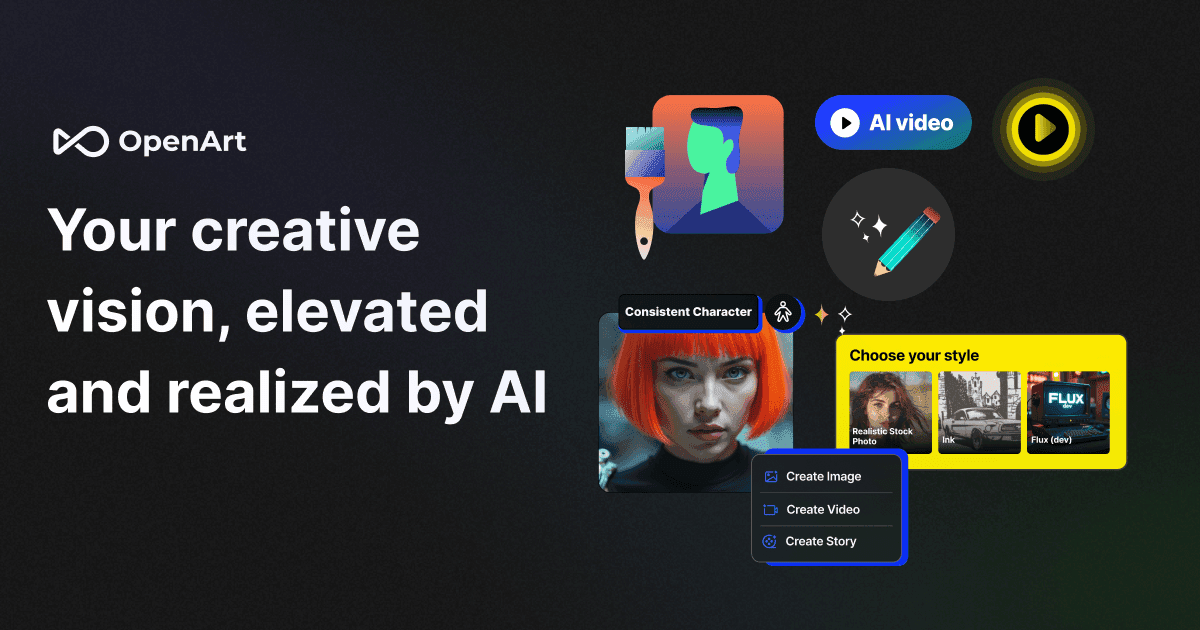
OpenArt Photo Booth
OpenArt Photo Booth is an AI-driven platform designed for comprehensive photo transformation and editing. Users can explore a wide range of fine-tuned models for image generation, editing, and more, each specializing in specific styles or tasks. The platform integrates with OpenArt's broader suite, offering access to over 100 premium image, video, and audio models. Key features include AI image generation, advanced image editing, and the ability to create consistent characters. It also provides tools for image upscale, restoration, and various AI filters like hairstyle changers and clothes changers, making it suitable for both creative experimentation and professional content creation.
taesd
TAESD (Tiny AutoEncoder for Stable Diffusion) is an open-source tool designed to significantly speed up the image generation process by efficiently decoding Stable Diffusion's latents into full-size images. It functions as a very tiny autoencoder, compatible with SD1/2, SDXL, and SD3-based models, as well as several non-SD models like FLUX.1, FLUX.2, and Sana. TAESD is available as a previewer and encoder/decoder in popular platforms like A1111 and ComfyUI, and also for Diffusers in safetensors format. Its primary advantage is its speed, enabling real-time previewing of image generation progress. It can also serve as a standalone VAE for encoding/decoding when the official VAE is inconvenient, making it ideal for interactive image generation or applying image-space loss functions to latent-space models. While it trades some fine detail quality for substantial speed, its efficiency makes it suitable for dedicated tiny NPUs.