
Content & Design
Browsing page 723 of AI tools for Content & Design. Sorted by confidence score — our independent quality rating.

Llama 3.1 70b Demo
Llama 3.1 70b Demo is an AI chatbot specifically designed for engaging in conversational tasks. Its core capabilities include advanced language understanding and efficient text generation. This tool can serve as a valuable educational resource, providing a platform for users to interact with and learn from an AI. It is offered to users at no cost.
RaDe-GS
RaDe-GS, or Rasterizing Depth in Gaussian Splatting, is a cutting-edge Content & Design tool developed by HKUST-SAIL. It significantly enhances the performance and accuracy of 3D scene reconstruction and rendering by incorporating advanced techniques like multi-view regularization and refined densification strategies. The project provides updated code and formulations, enabling users to achieve superior results on challenging datasets such as DTU and Tanks and Temples. It also supports novel view synthesis and geometry evaluation, making it a powerful resource for researchers and developers working with 3D Gaussian Splatting. The tool is built upon the original 3D Gaussian Splatting implementation and integrates ideas from several recent works to offer a robust and efficient solution for 3D graphics tasks.

LightX: AI Photo & Body Editor
LightX is a comprehensive photo and body editor that empowers creativity through innovation. It functions as a complete picture editor, allowing users to create photo collages, add photo frames, and apply various photo effects. Beyond basic editing, LightX offers professional graphics tools for individuals and enterprises, leveraging AI-driven editing to take images to the next level with features like layer and mask mode editing. It simplifies visual content creation, enabling users to plan and project ideas into visual and textual designs, create living photos, GIFs, and short videos, and even animate still images with overlays. The tool aims to inspire and facilitate the creation and sharing of compelling visual content.
deep-high-resolution-net.pytorch
Deep-high-resolution-net.pytorch is an official PyTorch implementation of the research paper "Deep High-Resolution Representation Learning for Human Pose Estimation" presented at CVPR 2019. This project focuses on maintaining high-resolution representations throughout the entire process of human pose estimation, unlike many existing methods that recover high-resolution data from low-resolution outputs. The network achieves this by starting with a high-resolution subnetwork and gradually adding parallel multi-resolution subnetworks, performing repeated multi-scale fusions. This approach leads to more accurate and spatially precise keypoint heatmaps. The repository includes code, pretrained models, and instructions for training and testing on benchmark datasets like COCO and MPII, making it a valuable resource for researchers and developers in computer vision.
Mini Nvs Solver
Mini Nvs Solver is an AI tool specifically designed for task automation. Leveraging the capabilities of AutoGPT, it provides a framework for users to streamline and automate a variety of processes. Its applications extend to content generation, assisting with the creation of diverse textual outputs, and also serves educational purposes, potentially automating learning tasks or generating educational materials. The tool is accessible for free on Hugging Face, making it a readily available resource for individuals and organizations looking to implement AI-driven automation.
Recipe-p
Recipe-p is an AI-powered tool designed to generate realistic human portraits. It offers a solution for users who need high-quality, AI-generated images without concerns about licensing. The platform aims to provide a diverse range of portraits, making it a valuable resource for professionals in design and content creation. Its primary benefit is the provision of royalty-free images, simplifying the process of acquiring visual assets for various projects.
LangSplat
LangSplat is the official implementation of the paper "LangSplat: 3D Language Gaussian Splatting" (CVPR 2024 Highlight), a cutting-edge tool for generating 3D models with integrated language features. It offers a PyTorch-based optimizer to create LangSplat models from SfM datasets, a scene-wise language autoencoder to manage memory demands, and scripts to convert images into optimization-ready SfM data. The project also provides preprocessed datasets like 3D-OVS and expanded LERF datasets with COLMAP data, along with pre-trained models. LangSplat has seen significant performance improvements with LangSplat V2, achieving over 450+ FPS in rendering, and is expanding into 4D language fields with 4D LangSplat. It is ideal for researchers and developers working on advanced 3D reconstruction and language-driven scene generation.

Q AI Chatbot
Q AI Chatbot is an AI-powered voice chatbot designed to deliver immersive chat experiences. It allows users to engage in voice conversations and generate images directly through the chatbot. A key feature is the ability to create and customize AI personas, enabling more personalized interactions. The chatbot also incorporates image recognition capabilities and supports interactive storytelling, enhancing the dynamic nature of user engagement. It aims to provide a comprehensive and engaging AI chat platform.
nerf-pytorch
nerf-pytorch is a faithful PyTorch implementation of Neural Radiance Fields (NeRF), a method renowned for achieving state-of-the-art results in synthesizing novel views of complex scenes. This open-source project successfully reproduces the original NeRF results while offering a performance improvement, running 1.3 times faster than the authors' initial TensorFlow implementation. It provides a robust framework for researchers and developers to experiment with NeRF, including tools for downloading example datasets, training models, and rendering new views. The repository also includes pre-trained models for various scenes, facilitating reproducibility and quick experimentation. It is designed for those familiar with Python and PyTorch, offering a direct path to leveraging NeRF technology.
SoundMind
SoundMind is an innovative project that provides a rule-based reinforcement learning (RL) algorithm specifically designed to endow audio language models (ALMs) with deep bimodal reasoning abilities. It is built upon the Audio Logical Reasoning (ALR) dataset, which comprises 6,446 text-audio annotated samples tailored for complex reasoning tasks. This resource enables the training of ALMs to perform sophisticated logical reasoning across both audio and textual modalities. The repository offers the official implementation, dataset download links, environment setup instructions, and details for RL-training and evaluation, making it a valuable tool for researchers and developers in the field of audio-language processing.
Grimo
Grimo is an AI-powered text editor designed to improve the writing process by offering collaborative AI assistance. It emphasizes maintaining coherence throughout the editing process and provides options for customized styling. The tool's core philosophy is to work alongside the user as a writing partner, rather than autonomously generating content. This approach helps users refine their text while retaining their unique voice and intent. It is suitable for individuals looking for an intelligent writing aid.
simple-HRNet
simple-HRNet is an unofficial yet fully compatible implementation of the Deep High-Resolution Representation Learning for Human Pose Estimation paper, built with PyTorch. This tool simplifies the process of human pose estimation, offering compatibility with official pre-trained weights and delivering results consistent with the original implementation. It supports both Windows and Linux environments and includes features like multi-GPU inference, options for retrieving YOLO bounding boxes and HRNet heatmaps, and multi-person support with YOLOv3, YOLOv3-tiny, or YOLOv5. The repository also provides a live demo, scripts for training and testing on datasets like COCO, and support for TensorRT, making it a versatile solution for developers and researchers in computer vision.
Kotoba Whisper Demo
Kotoba Whisper Demo is an AI-powered speech-to-text tool hosted on Hugging Face. Its primary function is to convert spoken audio into written text. This capability is particularly useful for tasks such as audio analysis, where researchers and developers can process and study spoken content. Additionally, it supports language research by providing a textual representation of audio data, facilitating linguistic studies and data processing. The tool is made available to users at no cost.
One More AI
One More AI is an AI image generator designed to provide users with a wide array of stock images. The platform allows for the free download and use of these AI-generated visuals, making them suitable for various creative and commercial projects. Its primary goal is to offer accessible and royalty-free stock imagery, simplifying the process for individuals and businesses to acquire high-quality visual content without licensing concerns.
MegaTTS3 Demo
MegaTTS3 Demo is an artificial intelligence-powered text-to-speech tool designed to transform written text into natural-sounding speech. Users can input text and receive audio output, making it suitable for various applications. The tool is particularly useful for creating voiceovers for videos, presentations, or other multimedia projects. Additionally, it serves as a valuable resource for developing educational materials that require spoken narration. This tool is offered to users at no cost.
Jupyter Agent
Jupyter Agent is an AI-powered tool specifically developed for task automation. Its primary applications include content generation, where it can streamline the creation of various types of content, and educational applications, suggesting its utility in learning environments or for creating educational materials. The tool is accessible at no cost, making it a free resource for users. It is hosted and deployed on the HuggingFace platform, indicating its potential integration with other AI models and datasets available there.
MakeAnything
MakeAnything is an AI-powered tool designed for generating images from textual descriptions. Users can input text prompts, and the AI will create corresponding images. This tool is made available through the Hugging Face platform, known for hosting various AI models and applications. A key advantage of MakeAnything is its accessibility, as it is offered free of charge, making it a convenient option for individuals and developers looking to experiment with AI image generation without cost barriers.
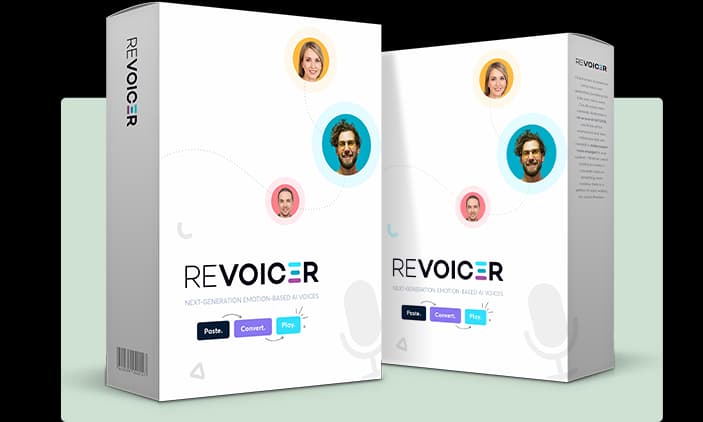
Revoicer
Revoicer is an AI voice generator designed to create realistic text-to-speech audio. It leverages emotion-based AI technology to produce engaging voiceovers, making content more impactful. The tool is utilized by professionals across various fields, including marketers, educators, and podcasters, to infuse their projects with a professional and emotionally resonant touch. Revoicer provides users with a selection of voices and emotional tones to suit different content requirements.
Mini QwQ
Mini QwQ is an AI tool specifically designed for task automation. Leveraging the capabilities of AutoGPT, it allows users to streamline and automate a variety of processes. Its applications include content generation, where it can assist in creating diverse forms of content, and educational purposes, suggesting its utility in learning environments or for generating educational materials. The tool is accessible for free on Hugging Face, making it a readily available option for individuals looking to explore AI-driven automation.
OppenheimerGPT
OppenheimerGPT is a macOS application that provides a streamlined way to interact with and compare various AI models. Users can input prompts simultaneously into different models, such as ChatGPT and Gemini, to evaluate and contrast their responses side-by-side. The application offers convenient access through the macOS menubar and supports standalone windows for focused interaction. A 'Pro' version is available, which removes limitations on the number of active windows and promises future integration with additional AI models like LLaMa and Claude.
Midjourney v6
Midjourney v6 is an advanced AI image generation model designed to create photorealistic images from text prompts. This version boasts significant improvements in image quality, realism, and its ability to understand complex prompts. Users can also integrate textual elements directly into the generated images and benefit from enhanced upscaling capabilities. Access to Midjourney v6 is primarily through its Discord server and requires a paid subscription.

MDLA Runway - Fashion Design
MDLA Runway is an iOS mobile application designed to offer a superior runway viewing experience. While specific features beyond 'better runway viewer' are not detailed, the app aims to enhance how users interact with and perceive fashion shows. It is available for download on the Apple App Store, suggesting a focus on mobile accessibility and convenience for fashion enthusiasts and professionals alike. The tool's simplicity, as indicated by the minimal website content, points towards a straightforward user experience focused on its core viewing functionality.
Uber Realistic Porn Merge V1.3
Uber Realistic Porn Merge V1.3 is a free AI tool available on Hugging Face, designed specifically for generating adult content. The platform explicitly states that the repository contains sensitive content and may include potentially harmful information, requiring users to acknowledge this before viewing. This tool falls under the category of fun and potentially NSFW AI applications, catering to users interested in exploring AI-driven content creation within this specific niche. Its availability on Hugging Face suggests it is accessible to a broad audience interested in experimental AI applications.
Monocular depth estimation
Monocular depth estimation is a specialized tool designed for computer vision tasks, specifically focusing on inferring depth information from a single 2D image. This capability is crucial for various applications in computer vision, including 3D scene understanding, object recognition, and autonomous navigation. By analyzing visual cues within a single image, the tool aims to reconstruct the spatial relationships and distances of objects in the scene. While the current live website indicates a runtime error, the underlying purpose of such a tool is to provide researchers and developers with a method to extract valuable 3D data from readily available 2D imagery, facilitating advancements in areas requiring spatial awareness.