
Content & Design
Browsing page 56 of AI tools for Photo Editing in Content & Design. Sorted by confidence score — our independent quality rating.
VisoMaster
VisoMaster is a comprehensive AI-powered software designed for advanced face swapping and editing in both images and videos. It provides a user-friendly interface, making it accessible for both casual users and professionals. Key features include support for multiple face swapper models, compatibility with DeepFaceLab trained models, and advanced multi-face swapping with detailed masking options. The tool also offers an Expression Restorer to transfer original expressions to swapped faces and a Face Restoration feature with popular upscaling and enhancement models. Users can manually adjust expressions and poses, fine-tune colors for various face parts, and benefit from real-time live playback, webcam swapping, and TensorRT support for ultra-fast processing. It also includes video markers for precise frame-by-frame adjustments.
MagicQuill
MagicQuill is an intelligent and interactive image editing system, officially implemented for CVPR 2025. This open-source tool offers a user-friendly interface with AI-powered suggestions and precise local editing features. Users can leverage three types of 'magic quills': an add brush to introduce details, a subtract brush to remove or redraw elements, and a color brush for precise color adjustments. The system also includes a 'Draw and Guess' feature that intelligently suggests prompts based on user strokes. With robust canvas tools for uploading, erasing, dragging, rotating, and resizing strokes, MagicQuill streamlines the editing workflow. It supports various base models for different editing styles, including realistic, fantasy, portrait, and anime, and allows for negative prompts to refine generation results. Hardware requirements include a GPU with at least 8GB VRAM, and it offers Docker container setup for isolated environments.

Face Changer 2
Face Changer 2 is a mobile application developed by Scoompa, designed for entertaining photo manipulation. It builds upon its predecessor, offering an improved experience for users to transform faces in photos. The app enables users to swap faces, morph heads, and add a variety of comical accessories, stickers, and backgrounds to their images. It is part of Scoompa's mobile photography suite, which emphasizes ease of use and providing immediate value to users. With over 85 million downloads across Scoompa's apps, Face Changer 2 aims to provide a fun and engaging way to interact with photos directly from a smartphone.

Cymera - Photo Editor Collage
Cymera - Photo Editor Collage is a versatile mobile application designed for comprehensive photo editing and selfie enhancement. It offers a wide array of features including various camera lenses (Basic, Action4, Pop4, Double, Fisheye, Sprocket), real-time filters, and advanced editing tools for color adjustment and beauty functions. Users can create stunning collages, add fun stickers, and utilize features like silent mode, anti-shake, and smile detection for an improved photography experience. The app also allows for easy sharing of edited pictures and provides widgets for quick access to the camera and gallery.

Chat Sticker Maker- AI Studio
The Unisoft Apps website, which hosts Chat Sticker Maker- AI Studio, primarily details its privacy policy for Android applications. It states that Unisoft Apps does not currently collect location information but would notify users if this changes. The only contact information collected is a device ID, used for sending relevant promotional information. Log data is collected by Google services for analysis purposes, and cookies may be used to gather information about app usage. The website also features a 'Speech to Text - All Languages Voice Typing APP' which converts speech to text and text to speech in multiple languages, highlighting its utility for note-taking and converting long audio conversations.
MarkMyIMages
MarkMyImages is a free online tool and desktop application designed for efficient bulk image processing. It allows users to add personalized watermarks to multiple images simultaneously, boosting creator recognition and securing digital content. Beyond watermarking, the tool also supports bulk image resizing and renaming. The desktop application, available for Mac, Windows, and Linux, operates offline, ensuring user privacy as images remain on-device. It leverages GPU rendering and modern technologies like WebAssembly for supercharged speed and performance, making it a fast and reliable solution for managing large batches of images.

AI Dog Scan
AI Dog Scan is a mobile application designed for dog owners to playfully assess their pet's potential in a beauty contest setting. By simply uploading a photo of their dog, users receive an instant AI-powered evaluation, drawing inspiration from professional dog show judging criteria. The tool emphasizes entertainment, providing a fun and engaging way for dog lovers to interact with their furry friends. It supports all dog breeds, from Chihuahuas to Great Danes, and ensures user privacy by processing images for analysis and then immediately deleting them without storage. The app is regularly updated to improve AI accuracy, add new features, and fix bugs, and encourages users to share their dog's results on social media.
Facezy AI: Face Swap Generator
Facezy AI is an application designed for beauty enthusiasts and creative players, offering a one-click solution to generate striking avatars and social content. While the website content is minimal, it positions the tool as an easy way to create engaging visual content. The tool emphasizes its use for social media and avatar creation, suggesting a focus on quick and impactful visual edits. It aims to simplify the process of face swapping for users looking to enhance their online presence or create fun, personalized images.

Rate My Willy
Rate My Willy is an AI-powered entertainment tool designed to provide fun, non-scientific ratings of user-submitted images. Users can upload a photo and choose an honesty level (Critical, Honest, Raving) to receive an instant, detailed rating, including a numerical score, creative name, physical description, and erotic commentary. The platform prioritizes privacy, ensuring all images are processed securely and immediately deleted. Key features include interactive chat with the AI about ratings, audio descriptions, and an "Epic Dick Fight Arena" where users can challenge others. It also offers a developer API for integrating AI penis ratings into other applications, making it suitable for adult websites or dating apps looking to increase engagement.
dcgan-completion.tensorflow
dcgan-completion.tensorflow is an open-source project for image completion using deep learning, built on TensorFlow. It specifically implements the techniques described in Raymond Yeh and Chen Chen et al.'s paper, "Semantic Image Inpainting with Perceptual and Contextual Losses." The tool is primarily a modification of Taehoon Kim's DCGAN-tensorflow project, sharing its MIT license. It includes a pre-trained model for faces, trained on the CelebA dataset, making it ready for immediate use in specific image completion tasks. This repository is ideal for researchers and developers interested in exploring or applying deep learning for image inpainting.
MochiDiffusion
MochiDiffusion is an open-source application designed to run Stable Diffusion and FLUX.2 Klein models natively on Apple Silicon Macs. It utilizes Apple's Core ML implementation to achieve maximum performance and speed while significantly reducing memory requirements, operating efficiently with approximately 150MB of memory when using the Neural Engine. The tool supports generating images locally and completely offline, ensuring privacy as nothing is sent to the cloud. Key features include image-to-image generation, ControlNet support, and a built-in gallery with import, save, and sync capabilities. Users can also employ custom Stable Diffusion Core ML models and benefit from generated images being saved with prompt information in EXIF metadata. MochiDiffusion is compatible with macOS 15.6 and later, and offers support for both CPU & Neural Engine and CPU & GPU compute units, depending on the model version.
DiffusionCLIP
DiffusionCLIP is an official PyTorch implementation for text-guided image manipulation using diffusion models, as presented in the CVPR 2022 paper. It addresses limitations of GAN-inversion methods by leveraging the full inversion capability and high-quality image generation of diffusion models. The tool allows for zero-shot image manipulation guided by text prompts, even for diverse real images from datasets like ImageNet. Key features include novel sampling strategies for fine-tuning, accurate in- and out-of-domain manipulation, and a unique noise combination method for straightforward multi-attribute manipulation. It supports fine-tuning for various image types like human faces, churches, bedrooms, and dog faces, and provides a Colab notebook for inference and application.
.png&w=3840&q=75)
Facialprint
Facialprint is a digital guestbook and smart event photo-sharing platform designed to simplify the collection and distribution of event photos. Hosts can create a personalized event link for guests to submit their contact information and selfies. Utilizing AI facial recognition technology, Facialprint identifies guests in uploaded photo galleries and automatically sends personalized photo selections to each guest post-event. This tool is perfect for various special occasions, including weddings, birthdays, corporate events, and baby showers, offering features like custom links, QR codes, digital guestbooks with notes, and secure guest sign-up experiences. It aims to streamline memory sharing and photo collection for event organizers.
FastPhotoStyle
FastPhotoStyle is an open-source photo editing tool developed by NVIDIA, designed for photorealistic image stylization. It allows users to transfer the artistic style from a 'style photo' to a 'content photo' using deep learning techniques. The underlying algorithm is detailed in an ECCV 2018 paper, offering a closed-form solution for image stylization. The tool is licensed under CC BY-NC-SA 4.0, making it suitable for research and development in computer vision and graphics. It provides various scripts for demonstration, model downloading, and processing stylization, including options for segmentation-aware stylization.
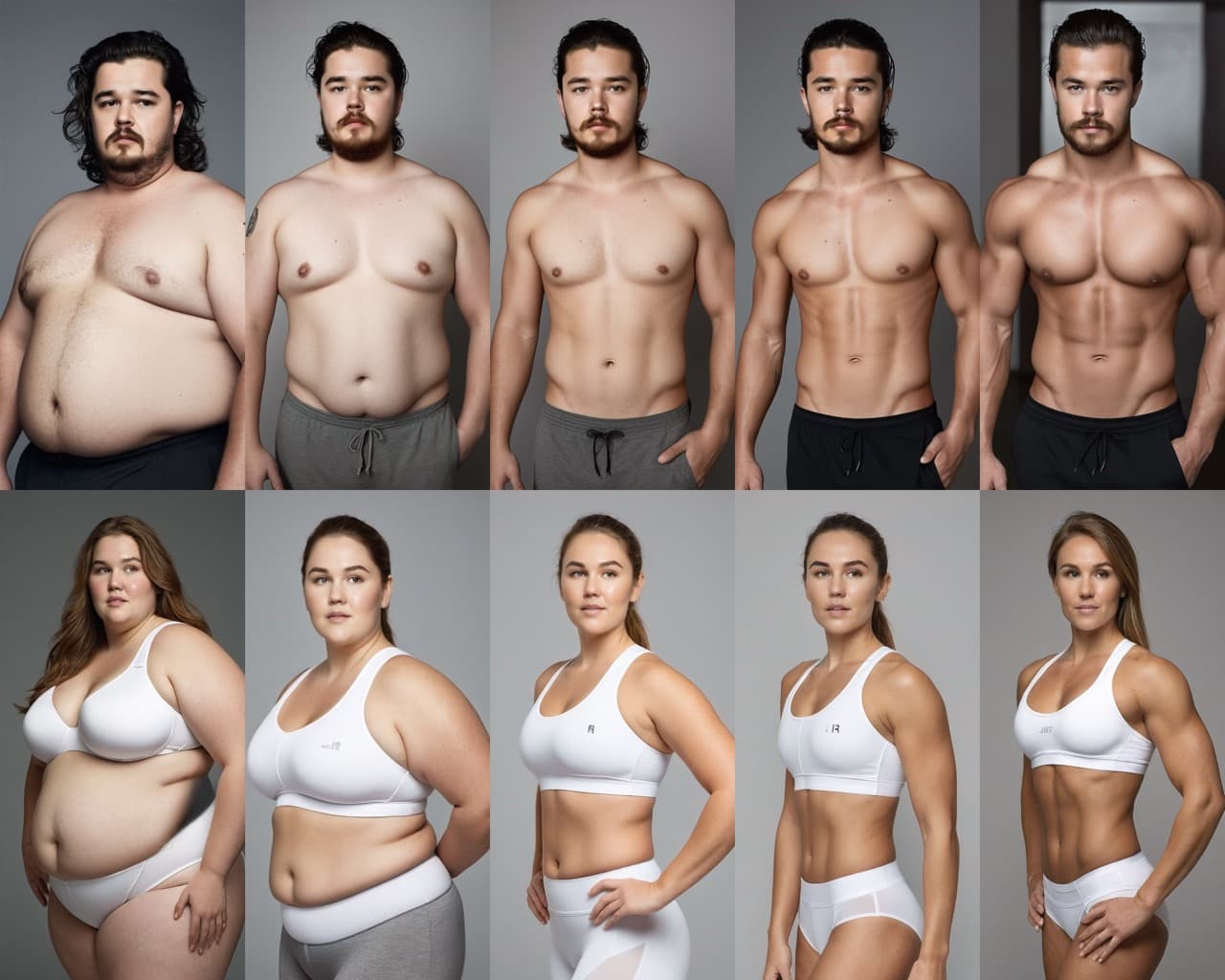
FAT2FIT
FAT2FIT is an AI-powered platform designed to help individuals visualize their body transformation. Users can generate realistic 'before and after' photos using advanced AI technology, which serves as a powerful motivational tool for fitness journeys. By seeing their potential future physique, users are encouraged to set and achieve their fitness goals. The platform emphasizes AI-assisted visualization to help users become the best version of themselves, providing a clear picture of what their efforts could lead to. It aims to increase the chances of achieving fitness goals by offering a tangible representation of progress and potential outcomes.
IRCNN
IRCNN is an open-source deep learning tool designed for image restoration, leveraging a Convolutional Neural Network (CNN) denoiser prior. It addresses various inverse problems in low-level vision, such as image deblurring, inpainting, single image super-resolution, and color image demosaicking. The tool integrates fast and effective CNN denoisers into model-based optimization methods, offering flexibility and good performance without requiring additional training for different tasks. It is implemented in Matlab, with a PyTorch version also available, and utilizes techniques like Half-Quadratic Splitting (HQS) for efficient processing. This makes IRCNN a valuable resource for researchers and developers working on advanced image processing applications.
image-restoration-sde
Image-restoration-sde is an open-source project offering official PyTorch implementations of advanced image restoration techniques, including IR-SDE (ICML 2023) and Refusion (CVPRW 2023). These methods leverage Mean-Reverting Stochastic Differential Equations and latent-space diffusion models to address various image degradation problems. The tool is capable of handling tasks such as image deraining, dehazing, denoising, deblurring, super-resolution, and shadow removal. It provides pre-trained models and detailed instructions for training and evaluation, making it a valuable resource for researchers and developers in the field of image processing and computer vision. The Refusion method was notably the winning solution for the NTIRE 2023 Image Shadow Removal Challenge.
Radiant Photo: AI Editor
Radiant Photo: AI Editor is an advanced photo editing solution that leverages Assistive AI to automatically enhance images, optimizing exposure, depth, and color rendition without over-enhancement. It intelligently recognizes photo content to apply ideal optimizations, while also allowing for manual adjustments. The tool provides comprehensive features for natural portrait retouching, creative color grading, and efficient batch processing. It functions as both a standalone application and a plugin for popular software like Adobe Photoshop and Lightroom Classic. All editing processes occur locally on the user's device, ensuring privacy, security, and fast performance. Radiant Photo is designed to empower photographers by enhancing their existing pixels and creativity.
Neural-Photo-Editor
Neural-Photo-Editor offers a straightforward interface for editing natural photographs using generative neural networks. Based on the paper "Neural Photo Editing with Introspective Adversarial Networks," this tool allows users to paint directly on images or in a latent space canvas to achieve desired modifications. It supports various models, including a slimmed-down version for laptop GPUs, and provides functionalities like selecting different images from a dataset, resetting to ground truth, updating images, and generating random latent vectors. The tool requires Python, Theano, Lasagne, and other common Python libraries for installation and operation.
RCAN
RCAN (Residual Channel Attention Networks) is a PyTorch-based implementation for image super-resolution, detailed in an ECCV 2018 paper. It addresses the challenge of training deeper networks for image SR by introducing a residual in residual (RIR) structure, which allows low-frequency information to bypass the main network, enabling it to focus on high-frequency details. Additionally, RCAN incorporates a channel attention mechanism to adaptively rescale channel-wise features, considering interdependencies among channels. This architecture results in better accuracy and visual improvements compared to state-of-the-art methods, making it a valuable tool for researchers and developers in image processing.
SRCNN-pytorch
SRCNN-pytorch offers a PyTorch implementation of the 'Image Super-Resolution Using Deep Convolutional Networks' model (ECCV 2014). This tool is designed to enhance the resolution of images, providing a practical solution for super-resolution tasks. Key differences from the original implementation include the addition of zero-padding, the use of the Adam optimizer instead of SGD, and the removal of specific weight initialization. Users can train the model with custom datasets or utilize provided pre-trained weights for various scales. It supports datasets like 91-image and Set5, allowing for training and evaluation of image upscaling capabilities.
SRCNN-Tensorflow
SRCNN-Tensorflow is an open-source implementation of Super-Resolution Convolutional Neural Networks (SRCNN) using TensorFlow. This tool is designed to enhance the resolution of images by applying deep learning techniques, specifically convolutional neural networks. It provides a practical way to reproduce the results described in the original research paper, offering a robust solution for image upscaling. The implementation requires TensorFlow, Scipy (version > 0.18), h5py, and matplotlib. Users can train the model with their own datasets or use the provided pre-trained model for testing. The project details the training process and provides example results, demonstrating its capability to produce super-resolved images comparable to reference papers.
Image-Super-Resolution
Image-Super-Resolution is an open-source project providing an implementation of Super Resolution CNN in Keras. It features several advanced models, including Expanded Super Resolution, Denoising Auto Encoder SRCNN, and Deep Denoising SR, which offer improved performance over the original SRCNN. The tool supports various scaling factors and modes for upscaling, including a patch mode for memory-constrained GPUs. It also includes experimental models like ResNet SR and GAN Image Super Resolution. Users can train the network on their own datasets, making it a flexible solution for image enhancement and research in super-resolution techniques.
BiRefNet
BiRefNet is an open-source project offering a powerful solution for high-resolution dichotomous image segmentation, as detailed in the CAAI AIR 2024 paper. It provides official implementations and well-trained weights for various tasks, including general image segmentation, matting, Dichotomous Image Segmentation (DIS), High-Resolution Salient Object Detection (HRSOD), and Co-Salient Object Detection (COD). The tool supports dynamic resolution ranges, from 256x256 up to 2304x2304, and demonstrates robust performance across different image sizes. Users can leverage its capabilities through Hugging Face Models for easy integration or explore online demos for inference and evaluation. BiRefNet also supports ONNX conversion for efficient deployment and has been integrated into several third-party applications and frameworks, making it accessible for both researchers and developers.