
Research & Education
Browsing page 174 of AI tools for Academic Research in Research & Education. Sorted by confidence score — our independent quality rating.

machine-learning-systems-design
Machine-learning-systems-design is a comprehensive booklet dedicated to the principles of designing machine learning systems. It aims to educate users on the fundamental concepts and best practices required for building robust and efficient ML solutions. The resource includes practical exercises, allowing readers to apply theoretical knowledge and solidify their understanding of system architecture and implementation. It is specifically crafted to guide individuals through the process of effectively designing and deploying machine learning systems, from conceptualization to practical application.
minDiffusion
minDiffusion is a PyTorch-based project providing a highly minimalistic implementation of diffusion models. Its primary purpose is educational, offering a self-contained and easily comprehensible codebase. The tool is specifically designed to help individuals new to the field understand and get started with denoising diffusion models, with the entire implementation kept under 200 lines of code. This focus on brevity and clarity makes it an ideal resource for learning the core concepts of diffusion models without being overwhelmed by complex architectures.
deeponet
deeponet is a specialized tool designed for learning nonlinear operators, leveraging the DeepONet architecture. It offers the source code associated with a research paper focused on the universal approximation theorem of operators. This tool is particularly relevant for researchers and practitioners in scientific computing who need to model complex nonlinear relationships. Its core utility lies in providing a foundational implementation for advanced operator learning tasks.
Facial-Similarity-with-Siamese-Networks-in-Pytorch
Facial-Similarity-with-Siamese-Networks-in-Pytorch is a project designed for learning facial similarity. It utilizes Siamese Networks, a type of neural network architecture, combined with a contrastive loss function to effectively measure the similarity between different facial images. Built on the PyTorch framework, this tool offers flexibility, allowing users to apply it to various datasets. The only requirement for dataset organization is that each distinct class, such as individual faces, should be contained within its own dedicated folder, simplifying data preparation for training and evaluation.
Open-GroundingDino
Open-GroundingDino provides a third-party implementation of the Grounding DINO paper, focusing on open-set object detection. This tool allows users to either fine-tune existing models using their own custom datasets or pretrain new models from scratch. It offers a range of features designed to support various aspects of object detection workflows, including training, inference, and efficient dataset management. The platform aims to simplify the process of developing and deploying object detection solutions for diverse applications.
Open3D-ML
Open3D-ML is an extension of the Open3D core library, specifically designed to facilitate 3D machine learning tasks. It provides a comprehensive set of tools for processing and analyzing 3D data within a machine learning context. The platform is particularly geared towards applications such as semantic point cloud segmentation, which involves classifying individual points in a 3D point cloud, and object detection in 3D environments. By building upon the robust Open3D framework, Open3D-ML aims to offer a powerful and flexible solution for developers and researchers working with 3D machine learning.
Tyles
Tyles is a dedicated research application designed to streamline the process of information capture and knowledge building. It provides tools to assist users in effectively organizing their research materials, making it easier to manage and retrieve information. The platform focuses on enabling the construction of comprehensive knowledge bases, which can be particularly beneficial for long-term research projects. It aims to enhance productivity for individuals involved in academic or professional research by centralizing their resources and insights.
FactSet Internal Research Notes Extension
FactSet Internal Research Notes Extension is a specialized tool designed to enhance the research workflow for financial professionals. It allows users to create notes directly within their browsing environment and automatically tags relevant entities within those notes. This integration with FactSet aims to streamline the research process, making it more efficient for users to capture and organize information. The extension focuses on improving productivity by simplifying data collection and categorization for financial analysis.
polyrnn-pp-pytorch
polyrnn-pp-pytorch is a PyTorch-based re-implementation of the Polygon-RNN++ model. This tool provides the functionality to train new Polygon-RNN++ models, allowing researchers and developers to leverage its capabilities for various tasks. It also supports running demonstrations directly on local machines, which is beneficial for testing and development. The primary focus of polyrnn-pp-pytorch is to facilitate efficient and interactive annotation of segmentation datasets, streamlining the process of preparing data for machine learning models.
Nuclear Fusion sim FUSION CIRCUS beta
Nuclear Fusion sim FUSION CIRCUS beta is a browser-based simulation tool designed for exploring nuclear fusion concepts. It accurately models tokamaks such as ITER and JET, which aim to harness sun-like power at extreme temperatures within magnetic fields. Built with machinery technology, the simulator integrates real-world physics, including Bosch-Hale and IPB98 models. It features 28 distinct modules, 16 different tokamaks, and an AI coach to guide users through the simulations.
PaperTalk
PaperTalk is a dedicated community platform designed to streamline the process of discovering, discussing, and understanding academic research papers. It provides a centralized space for researchers, academics, and students to connect with peers, share valuable insights, and engage in meaningful discussions about scientific publications. The platform's core mission is to foster greater collaboration within the academic community and enhance the collective understanding of complex research topics.
AI-RnD
AI-RnD serves as a dedicated platform for the AI research community, providing a centralized repository for research papers. Its primary goal is to facilitate the dissemination of knowledge and foster collaboration among researchers. Users can leverage advanced search and filtering capabilities to efficiently discover relevant papers. The platform also includes a discussion forum, enabling researchers to engage with each other, share insights, and discuss findings.
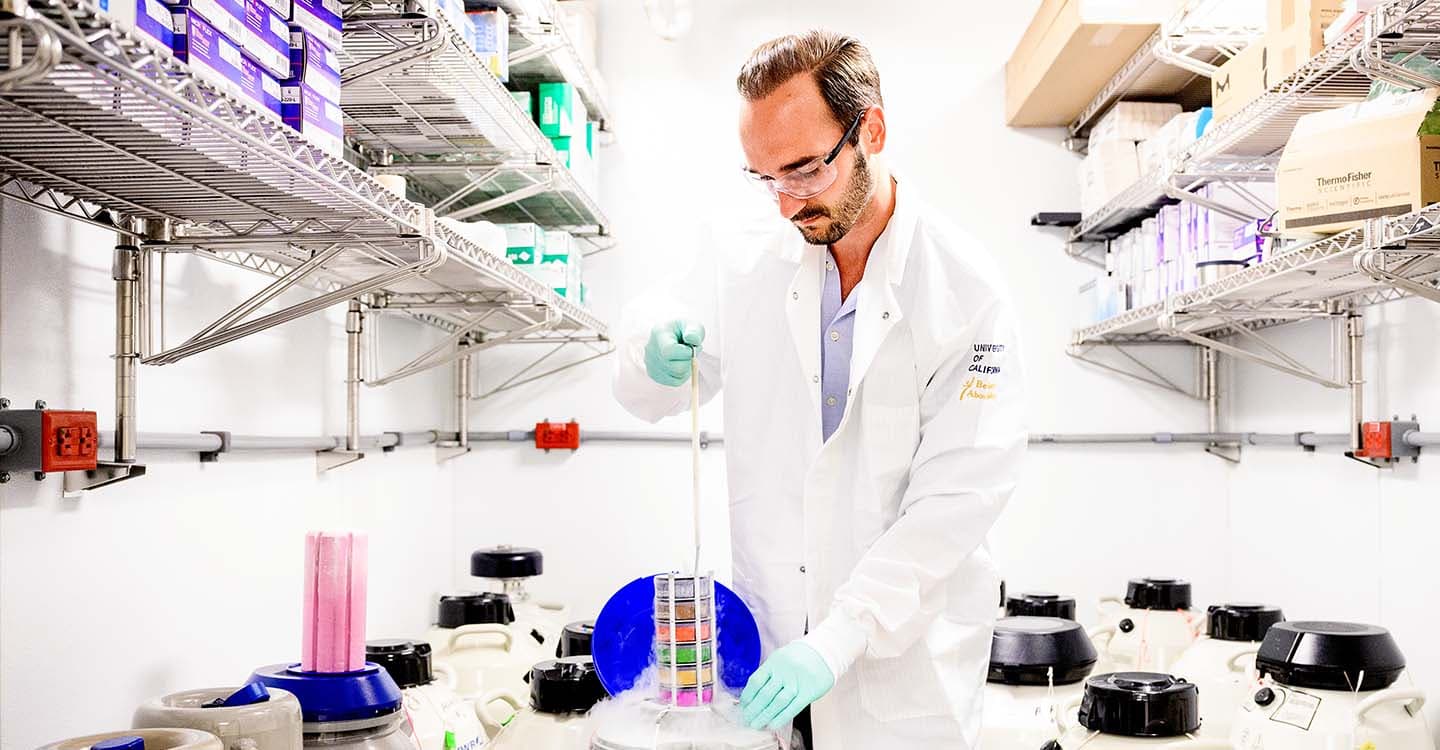
UCSF Center for Intelligent Imaging
The UCSF Center for Intelligent Imaging is a dedicated research center that focuses on the advancement of medical imaging. It achieves this by leveraging extensive data, comprehensive image archives, and specialized domain knowledge. The center serves both the internal UCSF community and collaborates with external academic and industry partners. Its primary goal is to be a leader in the discovery, innovation, and translation of intelligent imaging technologies and methodologies.
Sofon
Sofon functions as a knowledge discovery engine, designed to help users efficiently find and process information. It specializes in curating expert ideas and delivering them in personalized 'idealetters'. The tool aims to assist professionals and researchers by providing a streamlined way to discover and analyze relevant information from a multitude of sources, thereby enhancing their workflow and insights.
CloudFactory Computer Vision Wiki
CloudFactory Computer Vision Wiki serves as an extensive knowledge base dedicated to the field of computer vision. It provides detailed information on various computer vision tasks, explores different models used in the domain, and offers insights into implementation specifics. The wiki's primary goal is to educate and inform its users, making complex computer vision technology more accessible and understandable for those looking to learn or deepen their knowledge in the area.
Boff AI
Boff AI is a platform designed to bridge the gap between users and academic experts. It allows individuals to submit specialized questions and receive tailored answers directly from qualified academics. The tool's primary function is to facilitate access to expert knowledge, ensuring users get personalized and accurate responses to their inquiries. This service aims to make academic expertise more accessible to a broader audience.
Awesome-Quantization-Papers
Awesome-Quantization-Papers provides a comprehensive, curated collection of research papers specifically on neural network quantization. The repository includes papers from recent AI conferences and journals, offering a valuable resource for those interested in this specialized field. It systematically categorizes papers based on their underlying model structures and the application scenarios they address. Furthermore, it enhances discoverability by labeling various quantization methods with relevant keywords, streamlining the process of finding specific research.
best-of-atomistic-machine-learning
best-of-atomistic-machine-learning provides a regularly updated, ranked compilation of open-source projects in atomistic machine learning (AML). This resource is designed to assist researchers and developers in identifying and leveraging various libraries, tools, and other resources pertinent to AML. It serves as a central hub for discovering valuable assets for both the development and research aspects of atomistic machine learning.
bdl-benchmarks
bdl-benchmarks was a repository specifically created for Bayesian Deep Learning (BDL) benchmarks. Its primary purpose was to offer a standardized collection of benchmarks to facilitate the evaluation and comparison of various BDL tools and methodologies. The project aimed to assist in scaling BDL applications to practical, real-world scenarios. However, the repository is no longer actively maintained or updated. Users seeking current baseline implementations for BDL are now directed to Google's 'uncertainty-baselines' repository as an alternative resource.
Esheria LexChat
Esheria LexChat is an AI legal assistant specifically developed to streamline legal practice across Africa. This legal language model has been trained on an extensive dataset including statutes, judgments, and scholarly commentary from various African jurisdictions. LexChat offers real-time, expert-level support for critical legal tasks such as in-depth legal research, precise clause drafting, and advanced predictive litigation analytics. The tool's core mission is to democratize access to justice by making sophisticated legal AI accessible.
Awesome-TimeSeries-SpatioTemporal-Diffusion-Model
Awesome-TimeSeries-SpatioTemporal-Diffusion-Model is a comprehensive, curated list focusing on diffusion models specifically applied to time series and spatio-temporal data. This resource aims to consolidate and summarize the latest advancements in this specialized field. It offers a collection of valuable materials including academic papers, practical code implementations, diverse applications, and insightful surveys, making it a central hub for researchers and developers interested in these advanced modeling techniques.
awesome-tensor-compilers
Awesome-tensor-compilers is a comprehensive, curated list designed for researchers and developers interested in the intersection of compilers and deep learning. It aggregates significant compiler projects and research papers, providing valuable resources for understanding and implementing advanced optimization techniques. The list covers critical areas such as compiler design principles, auto-tuning methodologies, and various optimization strategies for CPU, GPU, and NPU architectures. Additionally, it includes resources on graph-level optimization, making it a central hub for those looking to enhance the performance and efficiency of deep learning models through compiler technology.
chatgpt-comparison-detection
Chatgpt-comparison-detection is a project dedicated to providing resources for the comparative analysis of human-generated and ChatGPT-generated responses. A core component of this project is the Human ChatGPT Comparison Corpus (HC3), a dataset designed to facilitate such comparisons. In addition to the corpus, the project includes various tools specifically developed for the detection of differences between these response types. The overarching goal of Chatgpt-comparison-detection is to support and advance research into the capabilities, limitations, and characteristics of ChatGPT.
cifar10_challenge
cifar10_challenge is a dedicated resource designed for exploring the adversarial robustness of neural networks. It specifically utilizes the well-known CIFAR10 dataset to facilitate this exploration. The platform offers a unique challenge format, enabling researchers to rigorously test and subsequently enhance the security of their AI models when faced with adversarial attacks. This tool serves as a valuable complement to existing adversarial attack tools, providing a structured environment for evaluating and improving model defenses.