
Research & Education
Browsing page 66 of AI tools for Academic Research in Research & Education. Sorted by confidence score — our independent quality rating.

ChatReviewer
ChatReviewer is an open-source AI assistant developed to streamline the academic paper review process. Leveraging ChatGPT-3.5's API, it quickly summarizes and analyzes the strengths and weaknesses of research papers, offering constructive improvement suggestions. This tool is designed to boost the efficiency of researchers in understanding literature and evaluating their own work, helping to identify gaps and enhance paper quality. Additionally, it features ChatResponse, an AI assistant that automatically generates point-to-point replies to reviewer comments, extracting issues and concerns from feedback. The tool is available as a web version, eliminating the need for VPNs, and can also be deployed via Docker for self-hosting, offering faster and more secure operation.
Baichuan-13B
Baichuan-13B is a 13-billion parameter open-source large language model developed by Baichuan Intelligent Technology. Building upon Baichuan-7B, it expands its parameter count and has been trained on 1.4 trillion tokens of high-quality data, surpassing LLaMA-13B in training data volume. The model supports both Chinese and English, utilizes ALiBi positional encoding, and has a context window length of 4096. It is available in both a pre-trained base version (Baichuan-13B-Base) and an aligned chat version (Baichuan-13B-Chat) with strong conversational capabilities. For efficient deployment, Baichuan-13B also provides int8 and int4 quantized versions, significantly reducing hardware requirements without substantial performance loss, making it deployable on consumer-grade GPUs like Nvidia 3090. It is free for academic research and available for free commercial use upon application.
Bert-Chinese-Text-Classification-Pytorch
Bert-Chinese-Text-Classification-Pytorch is an open-source project designed for Chinese text classification, leveraging powerful pre-trained language models like Bert and ERNIE. Implemented in PyTorch, this tool offers an out-of-the-box solution for developers and researchers working with Chinese language data. It includes pre-trained models and a dataset of 200,000 Chinese news titles across 10 categories, making it ready for immediate use. The project also explores the integration of Bert with other neural network architectures such as CNN, RNN, RCNN, and DPCNN for comparative analysis of classification performance. It provides clear instructions for setting up the environment, using custom datasets, and running training and testing scripts.
DeepLearning
DeepLearning is an open-source project that offers a comprehensive Python-based resource for understanding the "Deep Learning" book (also known as the 'Flower Book'). It provides detailed mathematical derivations, in-depth principle analysis, and source-level code implementations using primarily the NumPy library. The project covers foundational concepts like linear algebra, probability theory, and machine learning basics, alongside advanced deep learning techniques such as deep feedforward networks, regularization, optimization algorithms, and convolutional networks. It aims to clarify complex topics that might be difficult to grasp from the book alone, making it an invaluable tool for students and researchers in the field.
DeepLearningForTSF
DeepLearningForTSF is an open-source GitHub repository dedicated to deep learning techniques for time series forecasting. It provides comprehensive resources and code examples for predicting trends and seasonality using methods like SARIMA and triple exponential smoothing. The repository includes detailed guides on hyperparameter optimization and the development of various deep learning models, such as Multi-Layer Perceptrons (MLP), Convolutional Neural Networks (CNN), and Long Short-Term Memory (LSTM) networks. It covers different model types, including stacked LSTMs, bidirectional LSTMs, CNN-LSTMs, and Encoder-Decoder LSTMs, for both univariate and multivariate time series forecasting. Additionally, it features case studies on human activity recognition, indoor movement classification, air pollution prediction, and electricity consumption forecasting, making it a valuable resource for researchers and developers in the field.
konlpy
konlpy is an open-source Python package specifically designed for Korean natural language processing (NLP). It provides essential functionalities for analyzing Korean text, including morphological analysis and part-of-speech tagging. This makes it a valuable tool for developers and researchers who need to process and understand the nuances of the Korean language in their applications or studies. The package is built to be user-friendly, facilitating the integration of advanced NLP capabilities into various projects. Its open-source nature encourages community contributions and ensures continuous development and improvement, making it a robust choice for Korean NLP tasks.
Latimer
Latimer is a large language model designed to provide a more accurate and inclusive understanding of diverse histories and cultures. Unlike traditional AI models that may exhibit biases due to their training data, Latimer is specifically trained with a focus on diverse historical narratives and a culturally fluent voice. This approach allows it to better reflect the experiences, cultures, and histories of various communities, aiming to offer a more balanced and representative perspective. It is built to serve as a valuable resource for individuals and organizations seeking information that is sensitive to cultural nuances and historical accuracy, promoting a more inclusive AI experience.
MacBERT
MacBERT is a sophisticated pre-trained language model specifically designed for Chinese Natural Language Processing (NLP). It builds upon the foundational BERT architecture by incorporating a novel Masked and Corrected (Mac) language model pre-training task. This innovative approach aims to mitigate the common 'pre-training-downstream task' inconsistency, a challenge where the [MASK] token used during pre-training is absent in real-world downstream applications. MacBERT addresses this by replacing [MASK] tokens with similar words, derived using a synonyms toolkit based on word2vec similarity. It also integrates Whole Word Masking (WWM) and N-gram masking techniques. The model maintains full compatibility with BERT, allowing for seamless integration into existing NLP workflows without code modification. MacBERT has demonstrated significant performance enhancements across various Chinese NLP tasks, including extractive question answering, natural language inference, sentiment classification, and sentence pair matching.
machine-learning-articles
Machine-learning-articles is a comprehensive GitHub repository featuring a collection of articles on various machine learning topics. These articles, originally penned by Christian Versloot for MachineCurve.com between May 2019 and February 2022, are now archived here for public access. The repository covers a wide range of subjects including deep learning, clustering, TensorFlow, PyTorch, Keras, and Scikit-learn. Users can find detailed explanations and practical examples on topics such as neural networks, GANs, LSTMs, activation functions, and various machine learning algorithms. It serves as a valuable resource for anyone looking to deepen their understanding of machine learning concepts and implementations.
Llama-Chinese
Llama-Chinese is a vibrant open-source community dedicated to advancing Llama large language models, with a strong emphasis on Chinese language optimization. The platform serves as a central hub for developers and enthusiasts, offering a wealth of learning materials, resources, and a collaborative environment to foster the best open-source Llama ecosystem. It supports the development and deployment of Llama models for various applications, including commercial use. The community provides access to pre-trained models like Atom, offers tools for fine-tuning and quantization, and facilitates deployment acceleration. Additionally, it hosts a forum for technical discussions, provides computing resources, and shares diverse datasets, making it an invaluable resource for anyone interested in Chinese AI models.
PROTAC Scientific-Drug Discovery Pro
PROTAC Scientific-Drug Discovery Pro provides comprehensive computational services to accelerate drug lead discovery. The platform utilizes cutting-edge machine learning and informatics tools, alongside in-house multidisciplinary expertise, to streamline the drug discovery process from strategy development through publication. Services include fragment-based lead discovery, molecular docking, protein homology modeling, pharmacophore modeling, and the creation of customized machine learning models for bioactivity prediction. They also offer training programs and workshops, and support for publishing in top-tier journals and patenting. The company aims to reduce costs and save time for researchers, with financial support options for students and referral programs.
MLAPP_CN_CODE
MLAPP_CN_CODE is an open-source GitHub project dedicated to providing a comprehensive Chinese translation of Kevin P. Murphy's influential textbook, "Machine Learning: A Probabilistic Perspective." Beyond just translation, the project also includes Python implementations of the algorithms discussed in the book, making complex concepts more accessible. Users can find code files directly linked to the graphics within the translated articles, facilitating a deeper understanding of the theoretical material through practical application. The project is actively maintained, with recent updates covering topics like deep learning, decision theory, optimization, and information theory, ensuring its relevance and timeliness for students and researchers alike.
QUEBEC.AI
QUEBEC.AI is an AI research company established in 2003, dedicated to the development and commercialization of artificial intelligence technology. The organization is actively seeking associates and partners to join its mission of achieving unicorn status within the AI industry. While specific features are not detailed on the homepage, the company's focus is clearly on advancing AI research and its practical applications. The website is available in both French and English, indicating an international or bilingual outreach for its research and partnership initiatives.
VnCoreNLP
VnCoreNLP is a comprehensive Vietnamese natural language processing toolkit, designed to provide fast and accurate linguistic annotations. It integrates essential NLP components such as word segmentation, part-of-speech (POS) tagging, named entity recognition (NER), and dependency parsing. Users can run processing pipelines either from the command-line or through its API, eliminating the need for external dependencies. The toolkit supports both Python (via a wrapper) and Java, making it accessible to a broad range of developers and researchers. VnCoreNLP's architecture and experimental results have been published in prominent NLP conferences, highlighting its effectiveness for Vietnamese text analysis.
Storm by Stanford
Storm by Stanford is an AI-powered platform designed for interactive knowledge curation, enabling users to generate comprehensive reports on diverse subjects. This tool streamlines the research process with an intuitive interface, making it accessible for a wide range of users. It focuses on providing clarity and depth in its generated content, ensuring that the information is both insightful and easy to understand. Storm is particularly beneficial for those who need to quickly synthesize information and produce well-structured reports, enhancing productivity in academic and professional settings.
ChatLM-mini-Chinese
ChatLM-mini-Chinese is an open-source project featuring a 0.2B parameter Chinese dialogue model (ChatLM-Chinese-0.2B). It provides comprehensive code for the entire model development lifecycle, including data cleaning, tokenizer training, model pre-training, SFT instruction fine-tuning, and RLHF optimization. The project is designed to be resource-efficient, capable of pre-training on machines with as little as 4GB VRAM and requiring only 512MB VRAM for float16 inference. It also supports downstream task fine-tuning, with an example provided for triplet information extraction. All dataset sources, data cleaning processes, and training procedures are openly shared, making it an excellent resource for researchers and developers working with small-scale Chinese language models.
Answerthis
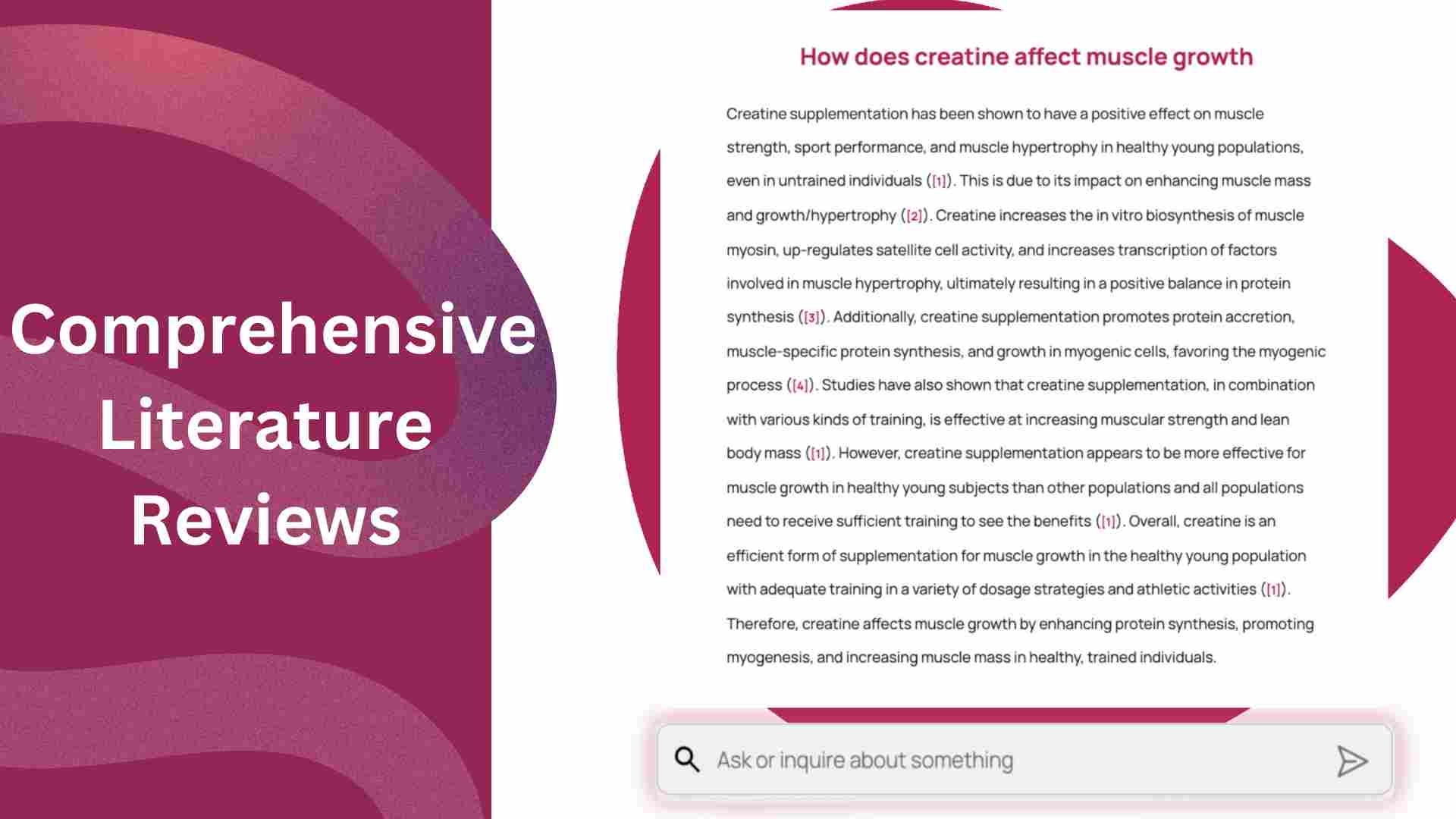
AnswerThis is an AI-powered research assistant designed to streamline academic and scientific research workflows. It provides comprehensive answers with direct citations from a database of over 300 million verified research sources. Users can find papers, draft literature reviews, and create case studies in one platform. The tool is built to understand scientific context, making it suitable for academics, scientists, professors, students, and medical professionals. Key features include the ability to search, chat with PDFs, analyze research gaps, and organize research libraries by saving papers and integrating with tools like Zotero and Mendeley. It also offers enterprise solutions for pharma, biotech, and medical device teams, focusing on speed, compliance, and collaborative workflows.
Islamic Dream
Islamic Dream offers AI-powered interpretation of dreams, grounded in centuries of Islamic scholarship. The tool analyzes dream symbols and context using the works of classical scholars such as Ibn Sirin, Al-Nabulsi, and Ibn Qayyim al-Jawziyyah. Users describe their dreams, and the AI provides a detailed, personalized interpretation that references relevant Quranic verses and Hadith. This platform aims to make traditional Islamic dream knowledge accessible, serving as an educational tool for understanding the spiritual communication inherent in dreams. It highlights the three types of dreams in Islam—Ru'ya, Hulum, and Hadith al-Nafs—and provides guidance on how to respond to bad dreams according to prophetic advice.
MTBook
MTBook, authored by Tong Xiao and Jingbo Zhu from NEUNLPLab / NiuTrans Research, is a comprehensive textbook and tutorial on machine translation. It systematically introduces the foundational knowledge and modeling methods of machine translation, while also discussing advanced frontier technologies. The content is structured into four parts, covering machine translation basics, statistical machine translation, neural machine translation, and advanced topics. It is designed for senior undergraduate and graduate students in computer science and AI, as well as researchers in natural language processing, particularly those focused on machine translation. The book's source code is open-source, and a full PDF version is available, making it a valuable resource for in-depth study and reference.
book_DeepLearning_in_PyTorch_Source
book_DeepLearning_in_PyTorch_Source is an open-source GitHub repository containing the source code for a book titled "Deep Learning Principles and PyTorch Practice." This resource is designed to help users understand deep learning concepts and their practical implementation using the PyTorch framework. It covers a wide range of topics, from introductory PyTorch concepts to advanced applications like generative models, transfer learning, and reinforcement learning. The repository includes code examples for tasks such as text classification, image style transfer, and neural machine translation, making it a valuable learning tool for students and developers looking to gain hands-on experience with deep learning in PyTorch.
RHET AI Center
The RHET AI Center, funded by the Volkswagen Foundation, is dedicated to rhetorical science communication research concerning Artificial Intelligence. It investigates the social, cultural, and ethical challenges presented by AI, including its risks and opportunities, the interaction between intelligent systems, and how automated decision-making systems can influence public discourse. The center actively engages in public outreach through events like "KI-Tools im Test" and "I’m a Scientist" to foster discussion and understanding of AI among students and the general public. It also facilitates scientific publications and collaborations, such as the "Artificial Friday" colloquium, to advance research in linguistics and AI.
Awesome-DeepLearning-500FAQ
Awesome-DeepLearning-500FAQ is a comprehensive open-source resource designed to help individuals understand deep learning concepts through a question-and-answer format. It covers a wide range of topics, including foundational knowledge in probability, linear algebra, machine learning, and deep learning, as well as specialized areas like computer vision, generative adversarial networks, and reinforcement learning. The content is structured into 18 chapters, totaling over 500,000 words, making it a substantial learning aid. Users can access the material in both HTML and PDF formats, with the HTML version offering direct navigation via anchored links for quick access to specific chapters. This resource is ideal for self-study and for those seeking to deepen their understanding of complex AI and machine learning subjects.
Papers-Literature-ML-DL-RL-AI
Papers-Literature-ML-DL-RL-AI is a comprehensive GitHub repository maintained by Dr. Tirthajyoti Sarkar, offering a curated collection of highly cited and impactful papers, literature, and free tutorials/books. The repository covers a wide range of topics within Artificial Intelligence (AI), statistical modeling, Machine Learning (ML), Deep Learning (DL), Reinforcement Learning (RL), and their various applications. It serves as an invaluable resource for anyone looking to delve into the foundational and cutting-edge research in these fields, including AI Hardware, Application of AI, AI and Game Theory, Explainability in AI, Fairness, Bias, and Ethics in AI, General Machine Learning, Reinforcement Learning, Statistics and Statistical Learning, Learning Theory, ML Ops, and ML for manufacturing and IoT. Its open-source nature ensures free accessibility to a broad audience.
AI4I
AI4I, the Italian Institute of Artificial Intelligence for Industry, is a foundation established by the Italian Government to conduct transformative, application-oriented research in AI. Based in Turin, AI4I focuses on integrating AI into industrial processes, products, and services, particularly within the manufacturing, aerospace, and automotive sectors. The institute engages young, entrepreneurial researchers, offering competitive compensation, high-performance computing access, state-of-the-art laboratories, and industrial collaborations. AI4I also fosters an ecosystem to support the initiation and growth of AI-driven startups, promoting a blend of curiosity-driven and application-oriented research for industrial impact.