
Research & Education
Browsing page 95 of AI tools for Academic Research in Research & Education. Sorted by confidence score — our independent quality rating.

OpenHGNN
OpenHGNN is an open-source toolkit designed for Heterogeneous Graph Neural Networks (HGNNs), built upon the Deep Graph Library (DGL) and PyTorch. It aims to facilitate research and development in heterogeneous graph-based machine learning by integrating state-of-the-art HGNN models. The toolkit offers easy-to-use interfaces for conducting experiments and supports various tasks including node classification, link prediction, and recommendation. Key features include extensibility for user-defined tasks, models, and datasets, efficiency through DGL's backend, and tools for hyperparameter optimization and visualization. It also supports mini-batch training and distributed training for large-scale graphs.
talking-head-anime-3-demo
talking-head-anime-3-demo provides demo programs for animating anime characters using a single image. This open-source project allows users to manipulate a character's facial expression, head rotation, body rotation, and chest expansion through a graphical user interface. Additionally, it supports transferring real-time facial motion from an iOS device to an anime character. The tool requires a powerful Nvidia GPU and specific software environments (Python, PyTorch, etc.) to run. It's designed for users interested in AI-driven animation, offering different neural network variants that balance size, speed, and accuracy. The project is released under an MIT license for the code and Creative Commons Attribution 4.0 International License for the models.

Songtell
Songtell offers an innovative platform for music enthusiasts to delve into the deeper meanings and stories behind song lyrics. Utilizing AI-powered analysis, the tool unravels complex themes and emotions embedded within songs. Beyond AI, Songtell integrates community insights, allowing real listeners to contribute and verify interpretations, enriching the overall understanding. The platform highlights trending song analyses and latest community contributions, making it a dynamic space for exploring music. It caters to anyone curious about the narrative and emotional depth of their favorite tracks, providing a unique blend of technology and human perspective.
ogb
OGB (Open Graph Benchmark) offers a comprehensive suite of benchmark datasets, data loaders, and evaluators specifically designed for graph machine learning. It supports a wide array of graph ML tasks, including predictions at the node, link, and graph levels, and covers diverse real-world applications. The platform provides datasets of varying scales, from those processable on a single GPU to large-scale graphs requiring advanced techniques. OGB's data loaders are fully compatible with leading graph deep learning frameworks like PyTorch Geometric and Deep Graph Library (DGL), offering automatic dataset downloading, standardized splits, and unified performance evaluation. This ensures reliable comparison of different methods and facilitates research in graph machine learning.

Chemify: AI Chemistry helper
Quimify, also known as Chemify, is an AI-powered mobile application designed to simplify inorganic and organic chemical nomenclature for high school students. It allows users to easily name or formulate compounds, search through thousands of inorganic compounds by name or formula, and generate names or formulas for countless organic compounds. The app also provides 2D diagrams of molecules, calculates molecular masses, and explores compound characteristics like density and melting/boiling points. Quimify includes a learning mode with chemistry games and tests, and can balance chemical reactions. It is compliant with IUPAC standards, making it a reliable resource for chemistry education.

SAT Prep Test Practice
SAT Prep Test Practice, powered by Youth4work, is an online platform designed to help students prepare for the Scholastic Assessment Test (SAT). The platform offers a comprehensive suite of practice tests, including subject-specific modules for Mathematics, Critical Reading, and Writing, as well as full-length mock tests. A key differentiator is its AI-powered adaptive testing system, which adjusts question difficulty based on user performance, ensuring a personalized and efficient learning experience. Users can track their progress through detailed performance analysis reports, which highlight strengths and weaknesses across different sections. While a free tier allows access to the first 50 questions, upgrading unlocks unlimited practice, recommended topics, and complete solutions, making it a robust tool for aspiring college students.
VideoChat: Chat-Centric Video Understanding
VideoChat is an AI tool designed for chat-centric video understanding, enabling users to analyze video content through conversational interfaces. Developed by OpenGVLab, this tool is available as a Hugging Face Space, indicating its accessibility within the ML community. While the current live website shows a runtime error related to CUDA setup, the underlying intent is to provide a platform for advanced video analysis using AI. It is particularly useful for research and development in the field of AI video analysis, offering a unique approach to interacting with and extracting insights from video data.
YouTube to Video Summary
YouTube to Video Summary is an AI-powered tool designed to quickly generate summaries of YouTube videos. This tool is particularly useful for individuals who need to grasp the core content of a video without investing time in watching it in its entirety. It leverages AI to process video transcripts and extract key information, making it an efficient solution for research, educational purposes, or simply staying informed. While the current live website indicates a build error, the tool's intended functionality is to provide concise video summaries, streamlining information gathering and enhancing productivity.
nerd-dictation
nerd-dictation is a simple, hackable, and offline speech-to-text utility designed for Desktop Linux. It leverages the VOSK-API for accurate transcription without requiring an internet connection. The tool is a single-file Python script with minimal dependencies, making it easy to set up and use. Key features include optional conversion of numbers to digits, a timeout function for automatic speech ending, and configurable output types (simulating keystrokes or printing to standard output). Users can customize text manipulation through Python scripts and bind begin/end/cancel commands to shortcut keys for efficient workflow. It also supports suspend/resume functionality to manage resource usage, especially with larger language models.

OpenAI Academy
OpenAI Academy is a comprehensive online platform designed to help individuals unlock the opportunities of the AI era. It equips users with the knowledge and skills needed to effectively harness artificial intelligence through a mix of online and in-person events, workshops, discussions, and digital content. The Academy covers everything from foundational AI literacy to advanced integration for engineers, fostering a vibrant, collaborative community. Participants can engage with OpenAI experts and external innovators, explore real-world AI applications, and stay informed about the latest cutting-edge solutions directly from OpenAI. It aims to democratize access to AI knowledge, empowering individuals from all backgrounds to confidently integrate AI into their lives, work, and communities.
qwen600
qwen600 is a static, suckless single batch CUDA-only mini inference engine specifically designed for the QWEN3-0.6B instruct model. Developed for educational purposes, it allows users to learn about Large Language Models (LLMs) and transformers while practicing CUDA programming. The engine boasts significant performance improvements, claiming to be approximately 8.5% faster than llama.cpp and 292% faster than Hugging Face with flash-attn in tokens/sec. It features compile-time optimization, minimal dependencies (CUDA, cuBLAS, CUB, std IO), efficient memory management, and zero-cost pointer-based weight management on GPU, making it suitable for systems with limited VRAM like an RTX 3050 8GB.

MarginNote 4: AI Notes·MindMap
MarginNote 4 is an all-in-one AI-enhanced application designed to empower active learning by integrating reading, note-taking, and mind mapping functionalities. Refined over ten years, it helps users discover learning and visualize their thinking. The tool allows for highlights, annotations, and pen strokes, uniquely stamping interactions with moments and contexts. It features a vibrant e-book learning space, mind maps to streamline knowledge, and flexible writing spaces without altering original PDFs. Users can collapse and reorganize pages, conduct online research with clipping, and compare documents side-by-side. Advanced features include various recall methods like Document Recall and MindMap Recall, FSRS spaced repetition for efficient review, and a Link Graph to build knowledge systems. It also offers full-text OCR, customizable toolbars, native Markdown support, and a plugin ecosystem.

BrainDeck: AI Flashcards
BrainDeck is an AI-powered flashcard and spaced repetition study app designed to help users memorize content more effectively. It allows for the generation of flashcards from various sources, including uploaded notes, documents, images, or simple text prompts. The app emphasizes daily, focused study sessions and incorporates spaced repetition to optimize knowledge retention. Users can track their progress, view performance insights, and set study reminders to maintain consistency. BrainDeck also offers access to a library of pre-made flashcard decks and supports importing flashcards from other apps or CSV formats, making it a versatile tool for students and anyone looking to improve their memorization skills.
ReconX
ReconX is an innovative AI tool designed for 3D scene reconstruction, particularly effective in scenarios with sparse input views. It addresses the challenge of creating detailed 3D models from insufficient visual data by reframing the reconstruction process as a temporal generation task. The core of ReconX lies in its ability to harness the strong generative prior of large pre-trained video diffusion models. To ensure 3D view consistency, it first constructs a global point cloud from limited input views and encodes it into a contextual space, serving as a 3D structure condition. This condition guides the video diffusion model to synthesize video frames that are both detail-preserved and exhibit high 3D consistency. Finally, ReconX recovers the 3D scene from the generated video using a confidence-aware 3D Gaussian Splatting optimization scheme, outperforming state-of-the-art methods in quality and generalizability on real-world datasets. The code for ReconX is expected to be released soon.
Laplace
Laplace is an open-source Python package designed to simplify the application of Laplace approximations within deep learning. It supports various configurations, including approximations for entire neural networks, specific subnetworks, or just their last layer. The package provides functionalities for posterior approximations, marginal-likelihood estimation, and a range of posterior predictive computations. It is accompanied by a research paper, "Laplace Redux—Effortless Bayesian Deep Learning," which introduces the library and demonstrates its versatility. Users are encouraged to experiment with different options like Hessian factorization and prior precision tuning methods to optimize its performance for specific applications.
rcnn
R-CNN (Regions with Convolutional Neural Network Features) is an open-source visual object detection system developed by Ross Girshick, Jeff Donahue, Trevor Darrell, and Jitendra Malik at UC Berkeley EECS. It integrates bottom-up region proposals with rich features extracted by a convolutional neural network. At the time of its release, R-CNN achieved a 30% relative improvement in detection performance on PASCAL VOC 2012, reaching 53.3% mean average precision. While no longer maintained and considered a historical artifact, it serves as a foundational work for more recent and advanced object detection methods like Fast R-CNN and Faster R-CNN. The codebase is available on GitHub and requires MATLAB and Caffe for installation and use.
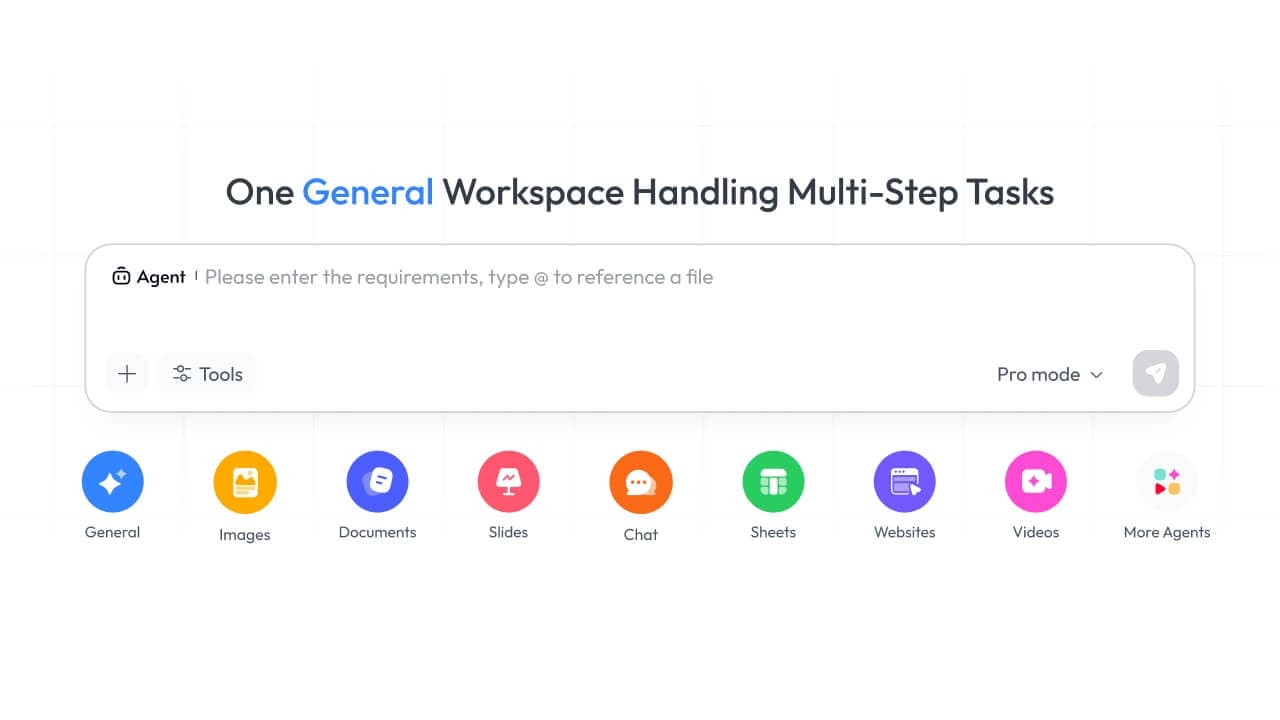
Skywork ai
Skywork AI is an innovative AI workspace platform designed to streamline content creation and research processes. It excels at converting basic inputs into a variety of multimodal content formats, such as detailed documents, engaging slides, organized sheets, informative podcasts, and professional webpages. Utilizing its DeepResearch technology, Skywork AI conducts in-depth analysis, reportedly analyzing over 600 webpages per task, to ensure comprehensive and high-quality outputs. The platform is ideal for professionals like analysts, educators, and even parents, enabling them to generate reports, design presentations, or create audiobooks with ease. Skywork AI aims to realize any content idea its users can imagine, acting as an originator of AI workspace agents.
MistoLine ControlNet Demo
MistoLine ControlNet Demo is an AI tool designed for image generation, specifically focusing on the ControlNet architecture. It provides a platform for users to explore and experiment with ControlNet, a neural network that offers precise control over image synthesis. Hosted on Hugging Face, this demo allows individuals to interact with the technology and understand its capabilities in generating controlled images. While the live website currently indicates a runtime error, the tool's purpose is to showcase the potential of ControlNet in AI-driven image creation.
Open Sora Plan V1.1.0
Open Sora Plan V1.1.0 is an AI tool hosted on Hugging Face Spaces, primarily focused on video generation. It serves as a platform for researchers and developers to explore and experiment with advanced AI models for creating video content. The tool is designed to facilitate the understanding and application of AI in video creation, allowing users to delve into the intricacies of video generation models. While the current live website indicates a runtime error, its purpose is clearly for research and development in the field of AI video generation, making it a valuable resource for those interested in the cutting edge of AI-driven content creation.
WenetSpeech Yue
WenetSpeech Yue is a text-to-speech application developed by ASLP-lab, hosted on Hugging Face Spaces, specifically designed for generating Cantonese audio. Users can input any text and then select from available models and speaker prompts to customize the generated speech. While the tool's primary function is to convert text into粤语 audio, the live website currently indicates a runtime error, suggesting it may not be fully operational at this moment. Despite the current technical issues, its intended purpose is to provide a platform for Cantonese speech synthesis, likely leveraging a large-scale Cantonese speech corpus as described in its metadata.
Lex Machina
Lex Machina elevates legal decision-making with an unparalleled Legal Analytics platform, now empowered by LexisNexis Protégé. This proprietary technology and AI-assisted attorney review converts raw legal documents into comprehensive data sets, offering unique case insights. It provides data science applied to the practice of law, gaining insights into the past behavior of parties, counsel, experts, judges, and courts to improve litigation and business outcomes. Lex Machina goes beyond the docket, revealing specific findings, awarded damages, case resolutions, involved parties, and timelines. It also features Generative Analytics with Protégé, allowing users to enter prompts for AI-powered assistance and access complex data for actionable intelligence.
EzAudio ControlNet
EzAudio ControlNet is an innovative AI tool designed for generating new audio content. Users can provide a text description outlining the desired audio characteristics and upload a reference audio file to guide the generation process. The application then creates a new audio clip that incorporates elements from both the text prompt and the reference audio, offering a unique way to control audio output. Built with Gradio and hosted on Hugging Face, this tool is accessible via the web and operates under an MIT license, making it a free and open-source solution for audio creation and manipulation.
Docs Buddy
Docs Buddy was an AI tool developed by Vishwesh V Bhat, designed to automate tasks related to document processing. It aimed to provide functionalities such as document summarization and question answering, making it useful for research and educational purposes. The tool was built using Streamlit and hosted on Hugging Face Spaces, indicating an intention for it to be freely accessible. However, the current status shows a "Build error" and "Job timeout," suggesting the application is not currently operational.
Documents To Synthetic QA
Documents To Synthetic QA is an AI tool designed to generate synthetic question-answer pairs from various document types, including text, Markdown, and PDF files. This tool is particularly useful for creating training data for question-answering models and augmenting existing datasets. Users can upload their documents, which are then processed into manageable chunks. The platform provides conformance and quality ratings for the generated QA pairs, ensuring high-quality output. This makes it an invaluable resource for researchers and educators who need to enhance their QA resources and build robust AI models.