
Research & Education
Browsing page 46 of AI tools for Knowledge Management in Research & Education. Sorted by confidence score — our independent quality rating.

Creative Minds Think Alike
Creative Minds Think Alike is an AI-powered platform designed to enhance creative collaboration and skill development. It offers tools for brainstorming, team collaboration, and project management, enabling users to work together effectively on creative projects. The platform also includes AI-powered skill assessments to help individuals understand and improve their creative capabilities. Users can leverage its features for creative development, fostering a community where ideas are shared, and projects are managed efficiently. It aims to connect individuals globally for meaningful creative work and skill enhancement.

croissant
Croissant is an open-source, high-level format designed for machine learning datasets, developed by the MLCommons Association. It integrates four key layers: metadata for dataset description, resource file descriptions for raw data sources, data structure for organizing data, and ML semantics for defining how data is used in an ML context. This standardization aims to simplify the process of finding, using, and supporting ML datasets, addressing the common challenge of unique file organizations and data translation methods across different datasets. Croissant builds upon schema.org's Dataset vocabulary, enhancing discoverability and tool compatibility. It offers a Python implementation, mlcroissant, for easy installation and integration into ML workflows, including support for TensorFlow Datasets (TFDS) and integrations with platforms like Hugging Face, Kaggle, and OpenML.
Klu
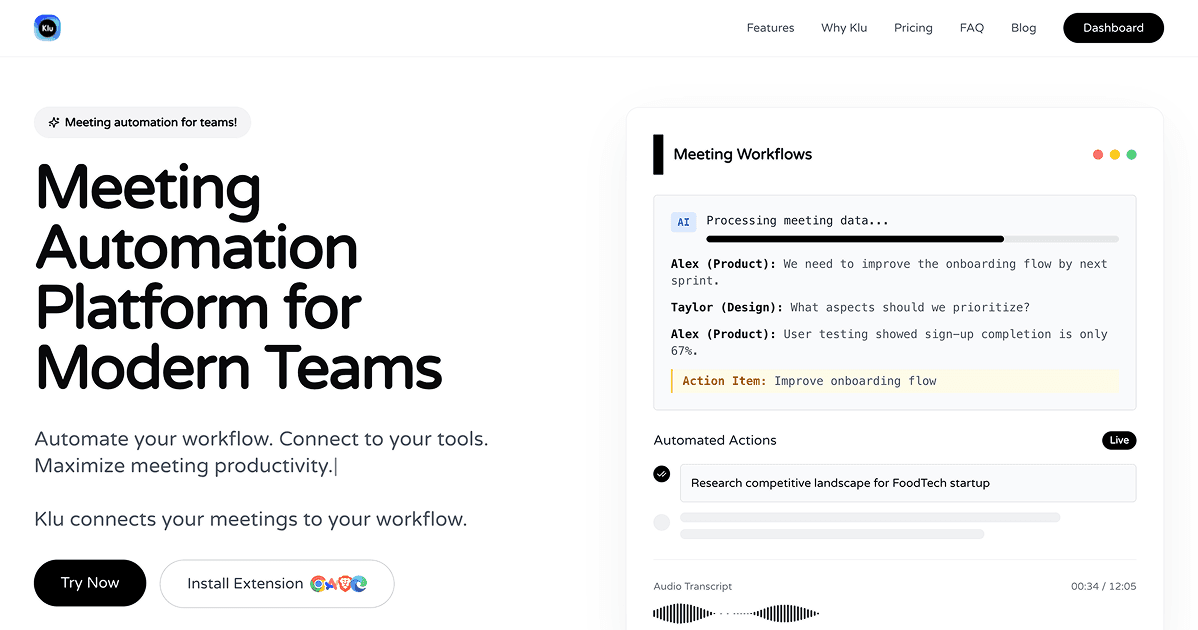
Klu is a meeting automation platform designed to enhance productivity for modern teams. It focuses on automating workflows and integrating with existing tools to streamline meeting management. The platform aims to help users take meeting notes with no effort, suggesting a focus on efficiency and ease of use. By connecting to various tools, Klu seeks to centralize meeting-related tasks and information, ultimately leading to more productive team interactions. Its core offering appears to be around simplifying the often-tedious aspects of meetings, allowing teams to concentrate on core discussions and decisions.
pearai-master
PearAI aims to be a comprehensive inventory that curates leading, cutting-edge AI tools in one centralized location. It provides a unified interface, allowing users to seamlessly switch between different AI solutions without the need to constantly search for alternatives. The project is a conglomeration of several repositories, including `pearai-app` for VSCode integration and editor functionalities, `pearai-submodule` for AI chat features, `pear-landing-page` for the website, and `pearai-documentation` for user guides. It also includes `pearai-server` for optional convenience, allowing users to avoid using their own API keys. PearAI is built using TypeScript/Electron.js for the app, Next.js/React for the landing page, and a Python FastAPI server for the backend, utilizing Supabase for authentication and database management.
Zylon
Zylon is a private on-premise enterprise AI platform specifically designed for regulated industries such as finance, healthcare, defense, and the public sector. It allows organizations to deploy secure AI within their own infrastructure, including on-premise, air-gapped, or private cloud VPC environments, ensuring full data control, governance, and compliance. Zylon provides a complete AI infrastructure, including local LLMs, vector databases, and GPU orchestration, with a single-command deployment for rapid setup. The platform features an AI Core, an OpenAI-compatible API Gateway for integrations, and a Workspace for team collaboration, document creation, and knowledge base access, all powered by private data. It is built by the creators of PrivateGPT, an open-source project with a large community.
dgl-ke
dgl-ke is an open-source package designed for learning large-scale knowledge graph embeddings, built on top of the Deep Graph Library (DGL). It offers high performance, ease of use, and scalability, making it suitable for various machine learning tasks involving knowledge graphs. The package supports training knowledge graph embeddings using popular models like TransE, TransR, RESCAL, DistMult, ComplEx, and RotatE. Users can perform training on single machines (CPU/GPU) or distributed environments, evaluate pre-trained embeddings with link prediction tasks, and conduct inference for entity/relation linkage prediction or embedding similarity. DGL-KE is optimized for scale, capable of processing knowledge graphs with millions of nodes and billions of edges efficiently.
Edutor AI
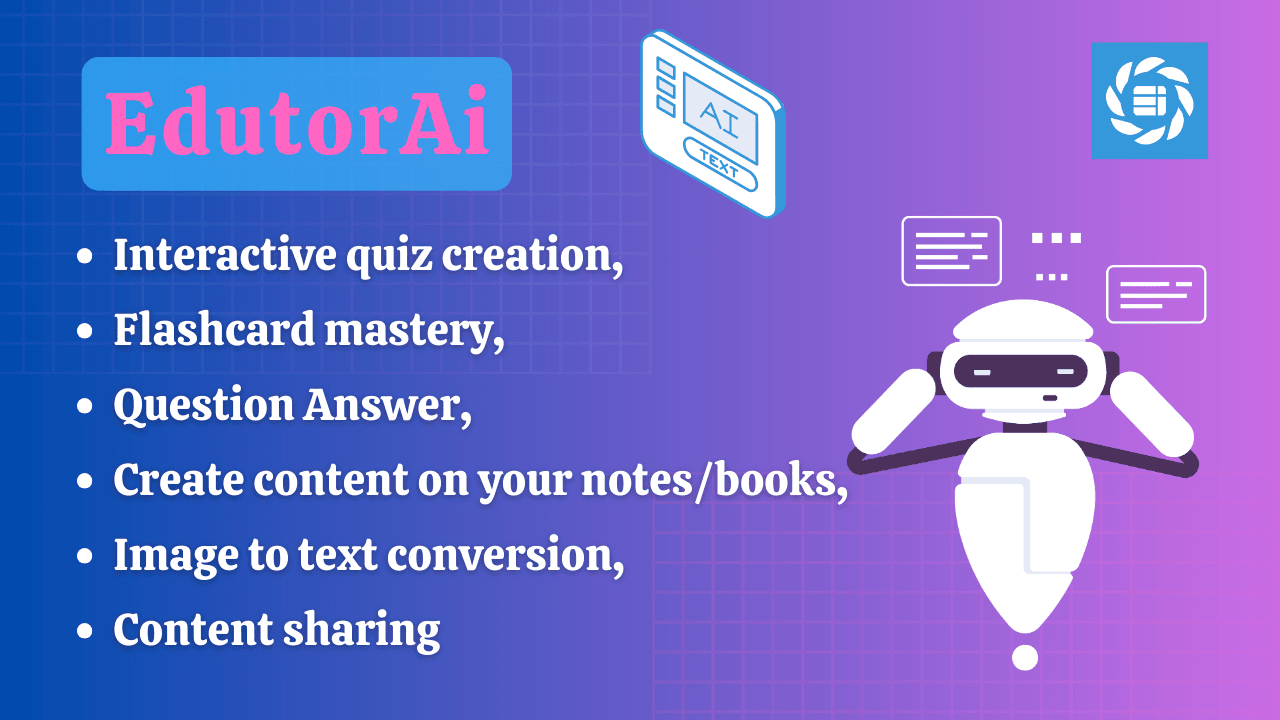
Edutor AI is an AI-powered platform designed to streamline the creation of educational content. It features an AI question generator, quiz maker, and flashcard creator, allowing users to convert text, images, or PDFs into interactive learning materials. The tool also includes an AI descriptive answer evaluation feature for automated grading and personalized feedback. Educators can generate customized worksheets and question papers, while students benefit from personalized quizzes and flashcards for effective learning and retention. Edutor AI supports content sharing and export in various formats like PDF, CSV, and PowerPoint, facilitating collaboration and diverse presentation needs. It also offers performance analytics to track progress and tailor learning strategies.
AutonomousDrivingCookbook
The AutonomousDrivingCookbook, developed by Microsoft Garage, offers a collection of scenarios, tutorials, and demos for autonomous driving. It aims to lower the barrier to entry for individuals interested in this rapidly evolving field. The cookbook provides resources for beginners, researchers, and industry experts, with tutorials presented as Jupyter notebooks for easy access and minimal setup. These tutorials leverage popular open-source tools like Keras and TensorFlow, alongside Microsoft technologies such as AirSim and Azure, focusing on content and learning rather than specific tool dependencies. It's a work in progress, with ongoing additions based on user feedback and collaborator availability.
Notaty - smart voice notes
Notaty is a smart voice note application designed to help users efficiently capture and organize their thoughts. It transforms spoken words into structured notes, making it easier to manage information. The app focuses on effortless thought capture, organization, and retrieval, allowing users to concentrate on their ideas rather than the mechanics of note-taking. This tool is ideal for anyone who needs to quickly record information, whether it's during meetings, lectures, or when an idea strikes, and then easily access and manage those notes later.

Camu – Unified Digital Campus Platform
Camu is a comprehensive cloud-based Student Information System (SIS) designed for schools, colleges, and universities. It streamlines the entire student lifecycle from admissions to graduation by automating key processes such as admissions, academic governance, student administration, and campus facilities management. The platform offers features like online admissions, assessment and exam management with Outcome-Based Education (OBE) support, secure student and staff record keeping, and a flexible fee management system. Camu also centralizes and automates academic and non-academic student services, provides real-time dashboards and analytics for data-driven decision-making, and supports multi-campus institutions. It integrates seamlessly with LMS platforms, finance systems, and payment gateways.

Quizwhiz
Quizwhiz is an AI-powered platform designed to help students and teachers generate comprehensive practice quizzes from various sources like lecture notes, PDFs, text, or URLs in seconds. It supports five question types: Multiple Choice, True/False, Fill-in-the-Blanks, Short Answer, and Scenario-based. The platform provides instant feedback, tracks skill mastery over time, and offers features like Focused Quizzes to target weak areas and Level Up Quizzes for higher-order thinking. Users can set learning goals, receive personalized study plans, and interact with an AI coach for guidance. Quizwhiz also supports math, science, and over 50 languages, making it a versatile tool for diverse academic needs.
ollama-ebook-summary
ollama-ebook-summary is an open-source AI tool designed for generating comprehensive bulleted notes and summaries from long texts, including ebooks in EPUB and PDF formats. It intelligently extracts chapters and sections, splitting them into approximately 2000-token chunks to optimize LLM reasoning performance. Unlike RAG systems, it applies the same summarization questions to every part of the document, ensuring thorough coverage. The tool is built with Python 3.11.9 and supports local LLMs like Ollama and HuggingFace models. It provides scripts for converting ebooks to chunked CSV or TXT files and generating summaries, with options for semi-manual processing for more control over chunking.
Minduck
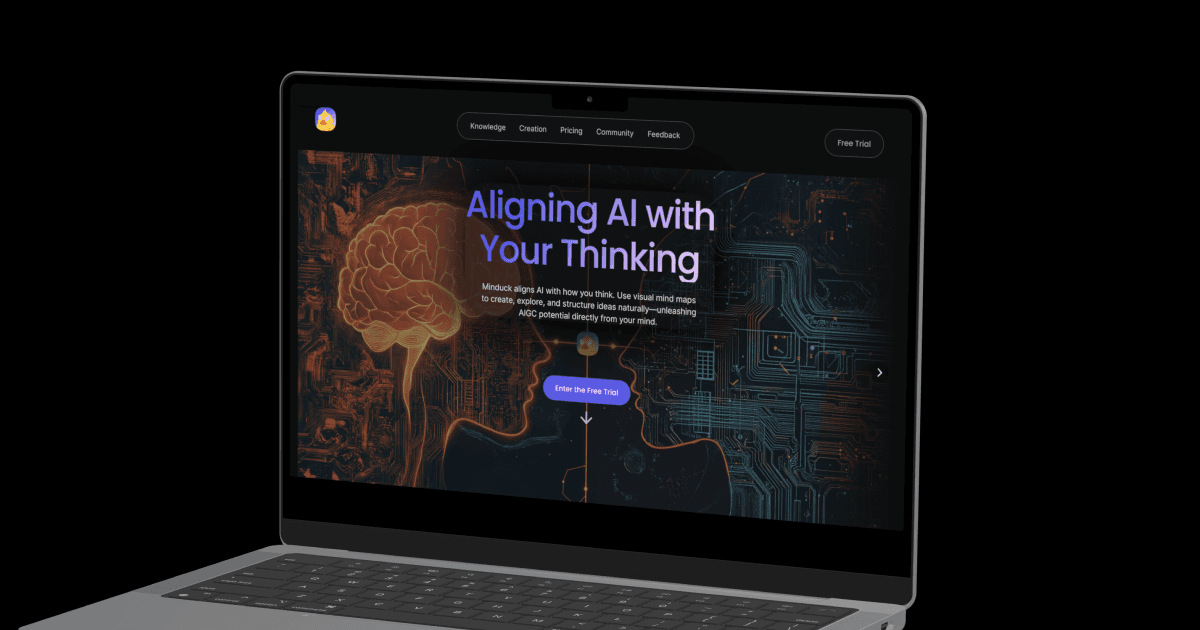
Minduck is a web-based AIGC platform that uniquely combines human logic and ideas with the generative power of AI models through visual mind maps. Unlike chat-based AI, Minduck allows users to influence AI's outputs by structuring their thoughts visually, enabling the AI to understand and build upon their unique logic and thought process. This approach simplifies the AI generation process, making it accessible for anyone to turn ideas into reality with clear, organized steps. It's ideal for creating, exploring, and structuring ideas naturally, streamlining writing and drawing, and transforming search results into organized knowledge maps. Minduck aims to align AI with how users think, fostering next-generation creativity.
WASPGPT
WASPGPT is an AI tool designed to simplify blockchain exploration through conversational AI. It enables users to interact with complex blockchain data in a more intuitive and user-friendly manner, making the technology accessible to a wider audience. The tool aims to bridge the gap between intricate blockchain mechanics and everyday users by providing an AI-powered interface for queries and data analysis. While the provided content is from GitHub's pricing page, suggesting a development-focused platform, the original description indicates WASPGPT's core functionality revolves around making blockchain data understandable through AI conversations.
Windrecorder
Windrecorder is an open-source personal memory search engine designed for Windows, offering an alternative to tools like Microsoft's Windows Recall or Rewind. It records screen activity in a small size, enabling users to rewind past sessions and query content using OCR text or image descriptions. All functionalities run locally, ensuring data privacy and no internet connection is required. Key features include recording multiple screens or active windows with low resource consumption, indexing only changed scenes, custom skip conditions, and automatic database maintenance. It provides a complete web UI for reviewing screens, conducting queries, and generating activity statistics like word clouds and timelines. The tool supports multiple OCR engines and AI-based tag summarization.
OpenML
OpenML is a collaborative online machine learning platform designed to facilitate the sharing and organization of data, machine learning algorithms, and experimental results. It aims to create a frictionless, networked ecosystem where scientists and practitioners can easily integrate their existing processes and tools to collaborate globally. The platform provides significant benefits for science by enabling rapid building upon others' results, answering complex questions quickly through prior experiments, and making larger studies feasible. For scientists, it saves time on routine duties, compares new experiments to the state of the art, and offers potential for new discoveries and publications. OpenML also serves as a valuable learning environment for students and citizen scientists, allowing them to explore state-of-the-art methods and contribute their own work.

Complexio
Complexio offers an intelligence layer designed for enterprise AI, connecting an organization's data, people, and systems into a unified operational view. It builds a live map of how work happens, called the Event Knowledge Graph (EKG), providing real-time insights. The Context Broker links this EKG to existing systems and teams, ensuring all insights and actions are grounded in a shared understanding of operational reality. Users can ask questions in natural language through Stevie and receive answers based on their real operations. Additionally, the Automated Automations Engine (AAE) identifies patterns and orchestrates executable workflows, turning observations into automated actions with traceability and control.

FindU
FindU is a free college search application designed to help students discover colleges that align with their interests, goals, and personality. Unlike traditional search tools, FindU utilizes a comprehensive quiz to understand academic interests, career goals, preferred location, and campus culture, then matches students with suitable institutions from a database of over 4,000 colleges and universities across the United States. The app also features a built-in scholarship tracker to help students find opportunities, manage deadlines, and monitor their earnings. Additionally, FindU facilitates collaboration by allowing students to share their college lists, scholarship applications, and deadlines with parents and counselors, ensuring everyone stays informed and organized throughout the college application process.
ReMind
ReMind is an AI memory agent designed to capture, index, and summarize your digital activities directly on your device. It records screenshots, audio, and other digital interactions, then transcribes text from captured screenshots. Utilizing advanced AI models and vector databases, ReMind indexes this information, provides detailed summaries of daily activities, and allows users to interact with the application via a chat interface to query their digital history. This tool is ideal for individuals seeking to effortlessly manage and recall their digital footprint, offering a personalized and local artificial memory solution.

Shiken
Shiken is an AI-powered learning platform designed to help individuals and teams learn faster and more effectively. It allows users to create voice-powered learning content, including courses, microlearning quizzes, and notes, often in minutes. The platform features an AI Knowledge Assistant to enhance creativity and productivity, along with AI role-playing scenarios for interactive training. Shiken supports various use cases such as sales enablement, onboarding, compliance training, and customer education. It aims to reduce content creation time by up to 70% using AI, offering an all-in-one solution for engaging and personalized learning experiences.
SwiftGPT
SwiftGPT is a native macOS application designed to enhance the ChatGPT experience for Mac users. It provides a fast and seamless interface for interacting with OpenAI's conversational AI, streamlining workflows and improving productivity. Key features include the ability to use your own OpenAI API key, maintain a history of conversations, and track associated costs. The app also supports dark mode and offers a familiar, native chat UI, making it feel like a natural extension of other macOS applications. SwiftGPT aims to elevate your ChatGPT game by providing a robust and customizable environment for your AI interactions.
prompt-layer-library
PromptLayer is a robust AI development tool designed for prompt engineers and developers working with large language models. It functions as middleware, seamlessly integrating with the OpenAI Python library to log and manage all API requests and prompts. Users can track, debug, and replay past completions, offering a comprehensive solution for prompt versioning, testing, and monitoring. The library provides convenient access to the PromptLayer API, allowing for prompt template retrieval, listing, publishing, and cache invalidation. It also includes features for manual request logging, request annotation with metadata, prompt linkage, scores, and groups, and even a decorator for tracing custom functions. With support for both synchronous and asynchronous operations, PromptLayer streamlines the development workflow for AI applications.
Gravity Notes For Mac
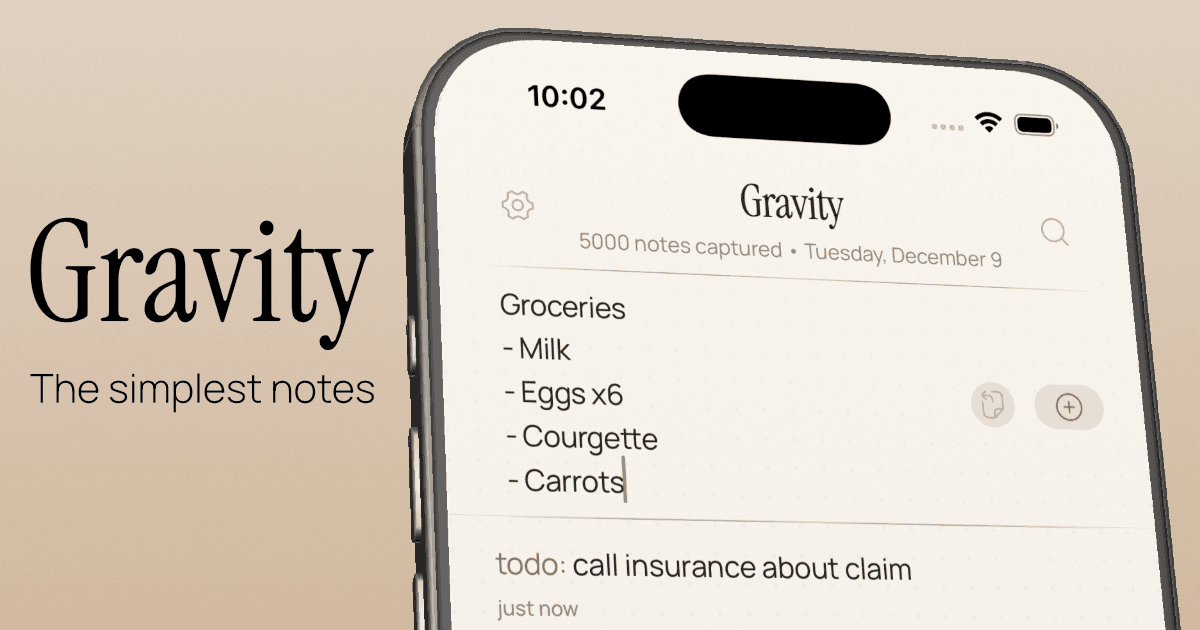
Gravity Notes For Mac is a local-first notebook designed for quick capture, effortless resurfacing, and instant search. It operates without accounts, folders, or unnecessary distractions, providing a calm home for your thoughts. Inspired by Andrej Karpathy’s append & review method, the app allows users to quickly add notes to a single stream. Users can then review the stream from newest to oldest, and 'rescue' important notes by swiping to lift them back to the top. This system ensures zero organizational overhead, letting attention curate what matters while older notes naturally sink. It supports iOS, macOS, and Android, offering a pay-once, own-forever model with optional iCloud sync for Apple devices.
Klarrity
Klarrity is a powerful Chrome extension designed to streamline the creation of study materials. It enables users to convert any webpage content, images, or YouTube videos into flashcards with remarkable speed. By simply highlighting text or capturing a diagram, Klarrity's AI generates Q&A or cloze-style flashcards that stream in one-by-one, often within seconds. The tool offers direct integrations with Anki and Notion, allowing for seamless export without manual file handling, and also supports export to Quizlet, Obsidian, or CSV. This eliminates the need for tab switching or copy-pasting, making the study material creation process highly efficient and integrated into the reading flow. Klarrity also features AI vision for generating flashcards from visual content and extracts transcripts from YouTube videos for card creation.