
Research & Education
Browsing page 127 of AI tools for Research & Education. Sorted by confidence score — our independent quality rating.

There's An AI For That
There's An AI For That is the leading platform for discovering and exploring AI tools, boasting a comprehensive database of over 48,000 tools across various categories. It serves as an AI aggregator, constantly updating its listings to ensure users have access to the latest innovations in the AI landscape. The platform allows users to efficiently search for tools based on specific tasks or use cases, making it easy to find the perfect AI solution. Key features include the ability to save favorite AIs, receive personalized recommendations, and explore trending tools, mini-tools, companies, and tasks. With a user base of over 80 million, it's a go-to resource for anyone looking to leverage AI for personal or professional needs.

Una Platform
Una Platform is an innovative AI education platform dedicated to shaping quality education with advanced technology. It offers UnaGPT, an AI self-learning exercise system for all subjects, designed to provide automated marking and personalized learning experiences. The platform also features a virtual classroom specifically for Micro:bit and AI education, enabling hands-on learning. Una Platform provides over 300 hours of "Zero to Hero" STEM/AI training courses, helping students learn computational thinking and AI concepts. These courses prepare students for innovative technology competitions and allow them to obtain globally recognized Microsoft AI Certificates. Trusted by over 400 schools and Microsoft, Una Platform collaborates with leading education stakeholders to organize teacher training sessions and competitions.

The LLM Data Company
The LLM Data Company specializes in training frontier models for critical domains, with a current emphasis on medical applications. Their approach addresses the limitations of generalist models by developing specific intelligence for areas where ambiguity, resistance to sycophancy, and robust verification are paramount. They are currently developing the Kos series of medical models, with Kos-1 Lite achieving SOTA (State-Of-The-Art) performance on HealthBench Hard. The company focuses on post-training curricula to ensure models handle complex, sensitive data effectively, distinguishing itself from models optimized for coding or general tool-use.

The Strong AI
The Strong AI specializes in bridging the gap between AI experiments and production-ready systems for enterprises. They design and implement enterprise-grade AI systems that deliver measurable business outcomes, focusing on the challenges organizations face in scaling AI initiatives. Their approach involves incremental "Value Slices" to deliver early business value and build AI infrastructure organically. Key capabilities include developing reliable data pipelines, scalable infrastructure, deployment frameworks, monitoring systems, and integration with operational workflows. The Strong AI offers services in Data Platforms & Foundations, Decision & Intelligence Systems, AI Infrastructure & MLOps, and Agentic AI Systems, helping companies transform AI from isolated experiments into reliable, impactful systems.

The Uncommon Business
The Uncommon Business offers a unique approach to scaling businesses, emphasizing strategy and AI integration over traditional hustle. It provides frameworks and training to help founders and leaders develop an "AI-first mindset," build custom AI solutions, and scale these solutions across their organizations. The platform aims to empower teams to solve problems independently, automate workflows, and leverage AI for amplified connection and growth. Offerings include the SuperHuman Work AI Productivity System for self-study and the Automate To Accelerate 12-week signature experience, designed to revolutionize business operations through AI.
CAIRNE
CAIRNE, formerly CLAIRE, is an international non-profit association established by the European AI community. Its core mission is to strengthen European excellence in AI research and innovation, with a strong focus on human-centered AI. CAIRNE achieves this by representing the interests of its members, promoting European AI through media and events, fostering cross-border collaborations, and participating in EU Horizon calls to facilitate community building. It does not provide AI services or products but rather supports a pan-European Confederation of Laboratories for Artificial Intelligence Research in Europe, including Research, Innovation, and Rising Researchers Networks.

AI World Today
AI World Today is a Substack publication focused on delivering the latest news, insights, and updates within the rapidly evolving field of AI tools and technologies. Curated by Rahul Dogra, it serves as a valuable resource for anyone looking to stay informed about advancements in artificial intelligence. With a substantial subscriber base of over 23,000, the publication offers a consistent stream of information, making it an essential read for professionals, enthusiasts, and students alike who wish to keep pace with the dynamic AI landscape. The content aims to cover a broad spectrum of AI developments, ensuring readers are well-versed in current trends and innovations.

Alteia
Alteia is a visual intelligence platform designed to accelerate AI development by transforming visual data into actionable insights. It utilizes computer vision, machine learning, and artificial intelligence to analyze, filter, display, and distribute visual data at scale. The platform offers pre-built ML models and an intuitive interface for creating custom models. Alteia operates across industries such as energy, grid infrastructure, and environment, providing solutions for optimizing operations, managing assets, and ensuring compliance. It enables rapid deployment of visual intelligence projects, moving from briefing to production within months, and is used by public, private, and non-profit sectors to address complex challenges.
GraphGen
GraphGen is a comprehensive framework designed to enhance supervised fine-tuning (SFT) for Large Language Models (LLMs) through knowledge-driven synthetic data generation. It operates by first constructing detailed knowledge graphs from source texts, then identifying knowledge gaps in LLMs using calibration error metrics. This process prioritizes the generation of high-value, long-tail knowledge QA pairs. GraphGen further incorporates multi-hop neighborhood sampling to capture complex relational information and employs style-controlled generation to diversify the resulting QA data. After data generation, users can leverage tools like LLaMA-Factory and xtuner for LLM fine-tuning. The framework supports various LLM inference servers, API servers, inference clients, and input/output data formats, including PDF, JSON, and CSV, as well as databases like UniProt and NCBI.

Devlands
Devlands offers a unique approach to learning Git by transforming abstract concepts into a tangible 3D world. Users can visualize Git commands in real-time within a voxel environment, making complex operations like 'detached HEAD' understandable. The platform includes 16 character-guided tutorial levels for mastering Git fundamentals and allows users to experiment safely with Git commands before applying them to actual projects. It's designed for a wide range of users, from new coders and students to experienced developers looking for a fresh perspective or a tool to mentor juniors. Devlands also features AI-powered code explanations and the ability to view, analyze, and edit code directly within the game.

Courseau
Courseau is an AI-powered platform designed to accelerate course creation, enabling users to develop engaging and expert-informed courses in a fraction of the time. It features AI-assisted creation, including outline generation, and supports interactive elements like quizzes and exams. Users can generate stunning images or extract visuals, upload multi-format company content as source material, and collaborate in real-time. The platform offers an intuitive drag-and-drop editor, instant translation into over 120 languages, and the ability to add lifelike AI narration for audio courses. Courseau integrates with various learning management systems (LMS) and allows export to SCORM, PDF, or PowerPoint, making it versatile for different learning environments. It aims to reduce training development overhead and foster a culture of learning.
Asteria
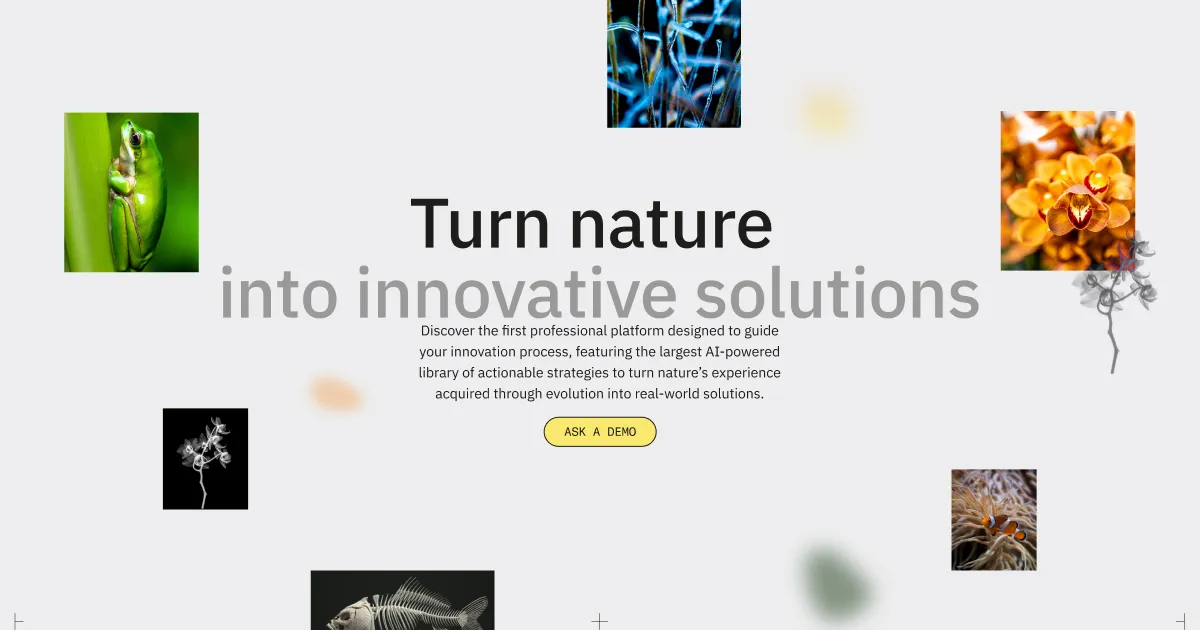
Asteria is a science-based, AI-powered platform designed to accelerate research and development by translating biological strategies into practical, real-world solutions. It offers a curated library of over 680,000 nature-inspired strategies and connects to more than 4,000,000 scientific articles relevant to biomimicry. The platform guides users through the biomimetic innovation process, ensuring scientific rigor and transparency with in-depth verification based on analyzed scientific literature. Asteria enables users to manage projects, frame challenges with a project map, and collaborate with teams by sharing, annotating, and co-building projects. It is ideal for R&I engineers, innovation managers, industrial designers, and project managers looking to embed sustainability into their innovation strategy across various industries like materials, transport, cosmetics, energy, recycling, and fashion.
kan-gpt
kan-gpt is an open-source project offering a PyTorch implementation of Generative Pre-trained Transformers (GPTs) integrated with Kolmogorov-Arnold Networks (KANs) for language modeling. This tool provides a flexible framework for researchers and developers to explore and experiment with novel neural network architectures in the context of large language models. Key features include the ability to train and prompt models, with usage examples provided for easy adoption. It supports various datasets like Tiny Shakespeare, MNIST, and WebText, and allows for comparison between KAN-GPT and traditional MLP-GPT models. The project is actively developed with a clear roadmap for future enhancements, including integration with minGPT and pykan, improved dataset parsing, and comprehensive testing.
Image-Super-Resolution-via-Iterative-Refinement
Image-Super-Resolution-via-Iterative-Refinement offers an unofficial PyTorch implementation of the SR3 (Image Super-Resolution via Iterative Refinement) model. This tool focuses on enhancing image resolution through an iterative refinement process, utilizing ResNet blocks and channel concatenation similar to vanilla DDPM. It supports conditional generation tasks like upscaling 16x16 to 128x128 and 64x64 to 512x512 on datasets like FFHQ-CelebaHQ, as well as unconditional generation for face generation. The project provides pre-trained models and scripts for training, evaluation, and inference, making it suitable for researchers and developers working with diffusion models and image super-resolution.
Byrdhouse
Byrdhouse, rebranded as Langfinity, offers real-time AI-powered voice translation designed for meetings and events. This tool enables seamless communication and connection across more than 50 languages, with a focus on industry-specific voice translation. It aims to eliminate language barriers, allowing participants to meet, speak, and connect effortlessly. The platform is ideal for global teams, international conferences, and any scenario requiring instant, accurate multilingual communication. Langfinity's technology ensures that conversations flow naturally, supporting a wide range of industries with its specialized translation capabilities.
lightly-studio
LightlyStudio is an open-source tool designed to streamline data workflows for machine learning, encompassing curation, annotation, and management within a single platform. Built with Rust for performance, it efficiently handles large datasets like COCO and ImageNet, even on consumer-grade hardware. The tool offers a powerful Python interface for indexing, querying, and manipulating datasets, supporting various data types including images, videos, and YOLO/COCO formats. It features robust capabilities for classification, detection, semantic segmentation, instance segmentation, and captions, with ongoing support for keypoints and 3D point clouds. LightlyStudio also integrates with cloud storage providers like AWS S3 and GCS, allowing users to manage data directly from the cloud. Its persistence model, using DuckDB, ensures that all tags, annotations, metadata, and embeddings are saved across sessions, facilitating continuous work.

Quotid
Quotid is an AI-powered language learning tool designed to help users improve their language skills through daily, manageable lessons. The platform offers completely AI-generated content, providing diverse speech and topics to complement other learning efforts. Users can track their lesson history, revisit vocabulary, and generate additional lessons if one a day isn't enough. Quotid also includes a built-in flashcard training system that utilizes an Open Spaced Repetition algorithm, similar to Anki, to optimize vocabulary retention. This approach allows users to grade themselves during practice, enabling the algorithm to adjust word intervals for effective learning.
long_llama
LongLLaMA is a large language model specifically designed to manage and process exceptionally long contexts, up to 256k tokens or more. Built upon the OpenLLaMA foundation and enhanced with the innovative Focused Transformer (FoT) method, it allows language models to handle extensive inputs while training on shorter sequences. The FoT method uses contrastive learning to enable attention layers to access a memory cache, significantly extending the effective context length. LongLLaMA is available in several variants, including a 3B base model under an Apache 2.0 license, and instruction-tuned versions like LongLLaMA-Instruct-3Bv1.1. A LongLLaMA Code 7B model, based on Code Llama, is also provided for code-related tasks. The project offers inference code, instruction tuning, and FoT continued pretraining code, making it a valuable resource for researchers and developers working with large language models and context scaling.

EduAssist
EduAssist is a modern educational management platform designed to streamline workflows for teachers and students. It enables users to create and organize classes with ease, inviting students using unique codes. The platform features an advanced AI engine for generating customizable assignments automatically. Teachers can track student progress through detailed real-time analytics, including heatmaps and performance predictions. EduAssist also provides instant feedback and automated grading for student submissions, empowering educators to focus on teaching while the platform handles administrative tasks. It aims to bridge the gap between classroom learning and data-driven insights, making education more efficient and effective.

EverLearns 2.0
Quinnsy, formerly known as EverLearns 2.0, is an AI-powered platform designed to streamline the course creation process. Users can rapidly transform ideas into complete, launch-ready courses within minutes by simply defining their topic, target audience, and preferred language. The platform leverages AI to assist with writing and editing content, ensuring high-quality output. It also supports the integration of interactive elements such as quizzes and flashcards, enhancing the learning experience. Quinnsy aims to significantly reduce the time and effort typically required for course development, making it accessible for educators and content creators to produce engaging educational materials efficiently.
miniDiffusion
miniDiffusion is a reimplementation of the Stable Diffusion 3.5 model, built entirely in pure PyTorch with a focus on minimal dependencies. This tool is specifically designed for educational, experimental, and hacking purposes, aiming to recreate Stable Diffusion 3.5 from scratch with the least amount of code necessary. The project encompasses approximately 2800 lines of code, covering components from VAE to DiT, as well as training and dataset scripts. Key features include implementations of VAE, CLIP, and T5 Text Encoders, Byte-Pair & Unigram tokenizers, the Multi-Modal Diffusion Transformer Model, Flow-Matching Euler Scheduler, Logit-Normal Sampling, and Joint Attention. It also provides scripts for training and inference for SD3.

123 of AI
123of AI is an ed-tech platform designed to upskill working professionals in AI and machine learning, focusing on interview preparation and career advancement. The platform features three core components: The Academy for foundational ML depth and design, ML Design Studio for sharpening research rigor and leadership thinking through real-world system breakdowns, and QnA Lab for mastering ML interviews with company-tagged questions and adaptive difficulty paths. It emphasizes practical application, coding core components, and understanding ML system architecture, moving beyond theoretical knowledge to real-world skill development. The curriculum is continuously updated to reflect the fast-changing AI/ML landscape, ensuring tangible career growth for its learners.
OpenDeepSearch
OpenDeepSearch is a lightweight yet powerful search tool designed for seamless integration with AI agents, particularly within the Hugging Face's SmolAgents ecosystem. It offers deep web search and retrieval, performing on par with or better than closed-source alternatives for single-hop and multi-hop queries. The tool features two modes of operation: Default Mode for quick, efficient, and low-latency searches, and Pro Mode for comprehensive web scraping, semantic reranking, and advanced post-processing, ideal for complex and multi-hop queries. OpenDeepSearch is highly configurable, supporting various search providers like Serper.dev and SearXNG, and reranking solutions such as Jina AI or self-hosted Infinity Embeddings. It also integrates efficiently with LiteLLM for diverse AI model support.
open-deep-research
Open Deep Research is an open-source AI agent designed to perform deep web research by cloning Open AI's Deep Research experiment. Unlike its inspiration, it utilizes Firecrawl's extract and search capabilities to gather large amounts of web data, which is then processed by a reasoning model for analysis. Key features include real-time data feeding to the AI via search, structured data extraction from multiple websites, and advanced routing with Next.js App Router. It integrates with the AI SDK for generating text and structured objects, supporting various LLM providers like OpenAI, Anthropic, and Cohere. The tool also offers data persistence with Vercel Postgres and secure authentication via NextAuth.js, making it a robust solution for comprehensive web data analysis.