
Research & Education
Browsing page 376 of AI tools for Research & Education. Sorted by confidence score — our independent quality rating.

Dori Speak AI English Learning
Dori Speak AI English Learning is a mobile application designed to make learning English speaking fun and engaging through AI-powered conversations. Users can choose from hundreds of AI tutors and character scenarios to practice speaking in various situations, from daily life to professional settings. The platform addresses common challenges like fear of speaking, lack of real-life practice opportunities, and absence of immediate error correction. Dori provides instant feedback, AI key summaries, and analysis of conversations to highlight strengths and weaknesses, helping users build confidence and improve fluency without pressure. It supports learning multiple languages beyond English, including Spanish, Japanese, and Korean.
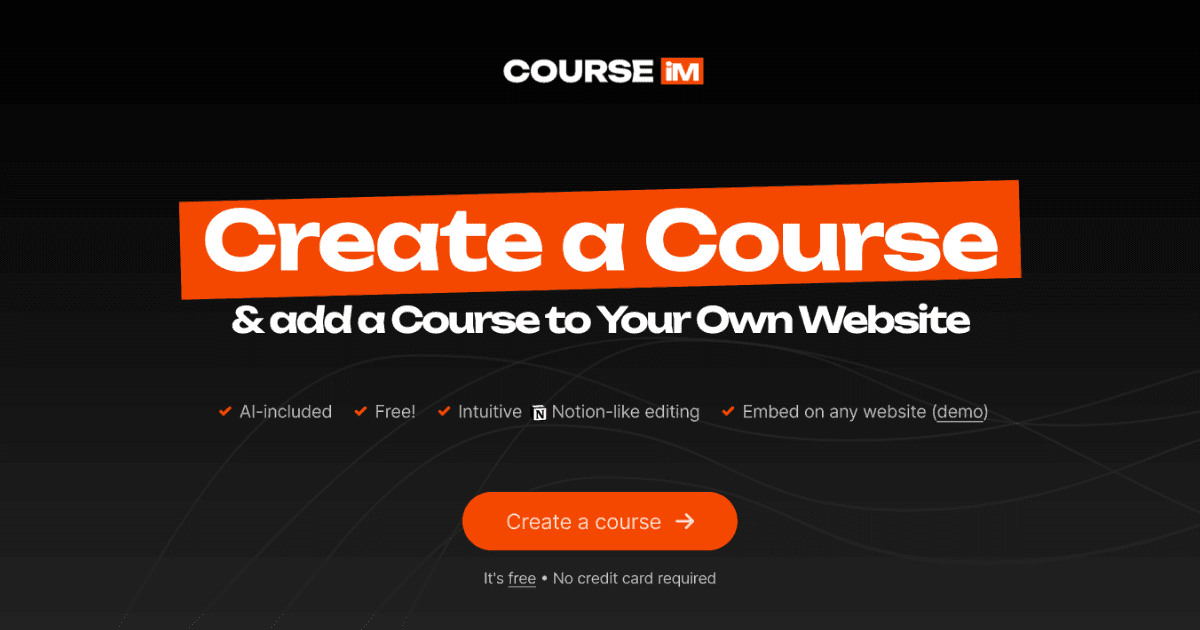
Course.im
Course.im provides a free platform for creating and sharing online courses, designed to be user-friendly with AI assistance. It offers an intuitive drag-and-drop editor, similar to Notion, for easy content creation and customization. Users can add multimedia elements and organize lessons efficiently without needing technical skills. The platform includes a website builder, enabling the creation of unlimited courses and websites, with the option to connect a custom domain. Courses can be easily embedded into existing websites, much like a YouTube video, by simply copying and pasting a code snippet. This tool is part of the Website.im ecosystem, offering additional features like website building and logo generation.
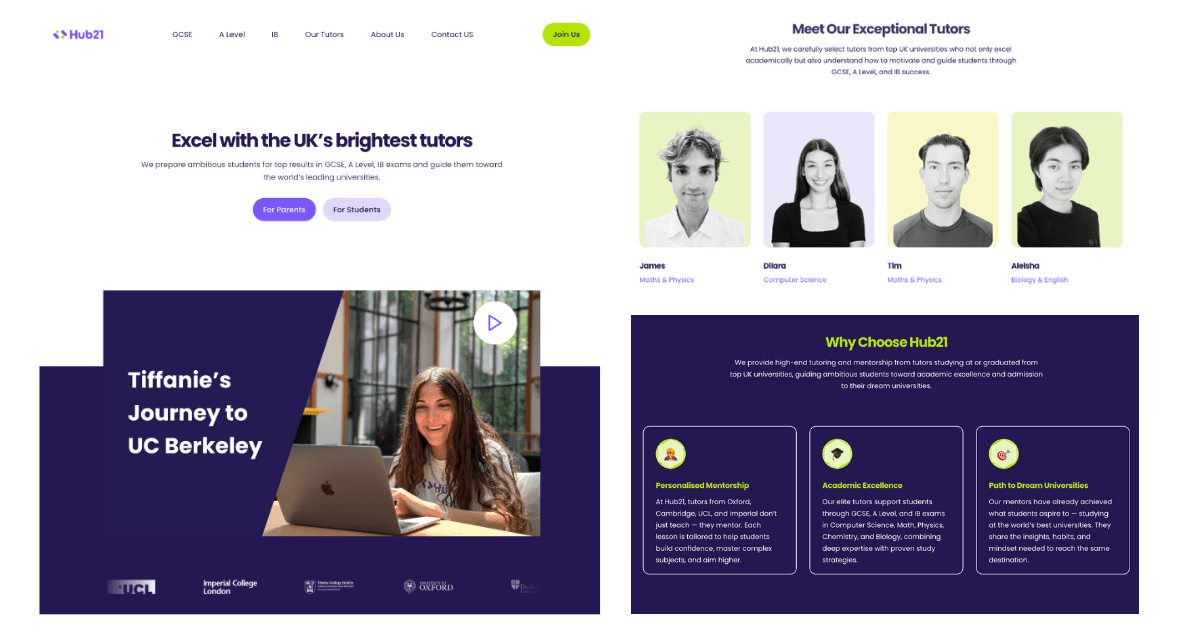
HUB21
HUB21 offers premium online tutoring services specifically designed for students pursuing GCSE, A Level, and IB qualifications. The platform connects students with highly qualified tutors from prestigious UK universities such as Oxford, Cambridge, UCL, and Imperial. Lessons are personalized and conducted one-to-one online, focusing on subjects including Maths, Physics, Chemistry, Biology, and Computer Science. Beyond academic support, HUB21 emphasizes mentorship, guiding students to build confidence, master complex subjects, and prepare for admission to leading universities worldwide. The service aims to provide tailored pathways to academic excellence, combining deep subject expertise with proven study strategies for top exam results.
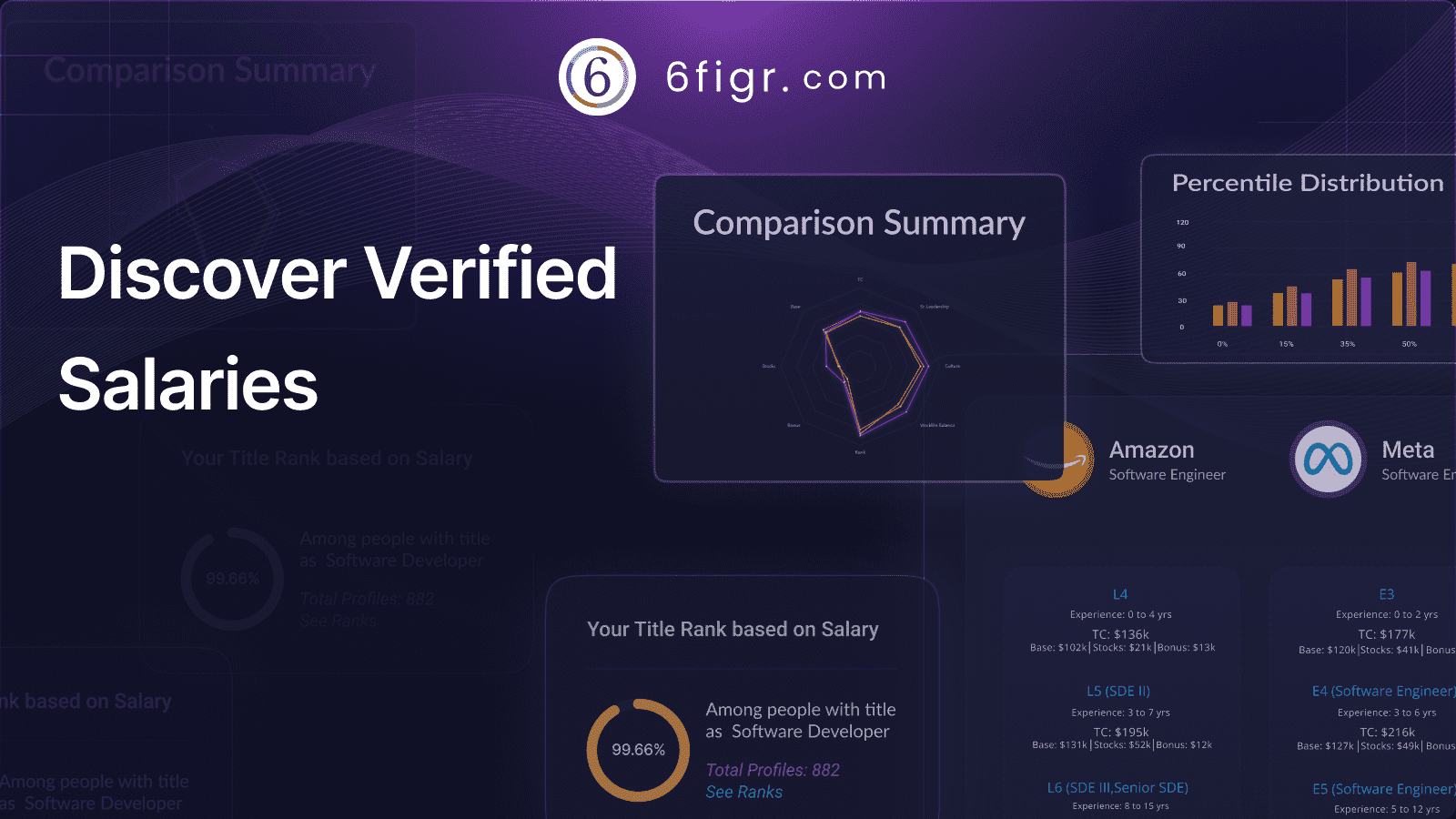
6figr.com
6figr.com is a free AI-driven career service designed to help employees understand their standing in the corporate world. It allows users to search salaries, benchmark their compensation, and compare their market worth with others. The platform provides personalized insights to help individuals navigate their career paths effectively. With its focus on data-driven career insights, 6figr.com aims to empower employees to make informed decisions about their professional development and compensation expectations.
Open Persian ASR Leaderboard
The Open Persian ASR Leaderboard is a platform designed for evaluating and ranking Automatic Speech Recognition (ASR) models specifically for the Persian language. It enables users to submit their own ASR models by providing the model name in the format "user_name/model_name" and have them assessed against a standardized benchmark. This tool facilitates comparison of different models, helping researchers and developers identify top-performing ASR systems for Persian. The leaderboard provides a transparent and accessible way to track advancements and performance metrics in Persian ASR, fostering competition and innovation within the field.

Data Phoenix
Data Phoenix is a comprehensive live media platform designed for AI and Data professionals. It offers a rich array of content including news, in-depth articles, digests, event listings, videos, and original shows. The platform focuses on covering technologies under the hood, best practices, and live demonstrations from industry builders. Users can stay updated on the latest advancements in AI and data, explore tech talks, demo stages, and research talks. Data Phoenix also provides opportunities to subscribe to newsletters, follow live streams, and partner with them to reach a large audience of AI and data professionals.
3D-Reconstruction-with-Deep-Learning-Methods
3D-Reconstruction-with-Deep-Learning-Methods is a comprehensive GitHub repository that curates a list of open-source projects centered around 3D reconstruction utilizing deep learning techniques. This resource is specifically designed for AI researchers and deep learning engineers who are actively involved in or interested in the field of 3D vision. The repository provides direct links to various projects, often including details on the deep learning frameworks used (e.g., TensorFlow, PyTorch), associated academic papers, and licensing information. It acts as a central hub for discovering, exploring, and potentially contributing to cutting-edge advancements in 3D reconstruction, making it easier for professionals to find relevant tools and methodologies for their research and development.

AI_managers
AI_Managers is a comprehensive 6-week program designed for managers aiming to integrate AI into their organizations effectively. It focuses on practical application, moving beyond theoretical trends to deliver tangible business value. Participants develop a concrete AI implementation project with a clear ROI, timeline, technology selection, and governance plan, receiving expert feedback throughout the process. The program emphasizes increasing team productivity with sensible AI tools, securing executive buy-in for AI initiatives, and building a systematic approach to AI deployment. It caters to various roles, including team managers, directors, C-level executives, and leaders across diverse industries, providing a framework for strategic AI adoption and scaling.
AI-Lesson Plan
AI-Lesson Plan is an innovative educational tool designed to empower educators by leveraging generative AI to create highly personalized and standards-aligned lesson plans. This platform streamlines the process of developing subject-specific content, offering teachers the ability to customize materials to suit diverse learning needs. Beyond just lesson plans, it supports the creation of effective educational resources, including homework assignments and quizzes, ensuring a comprehensive approach to teaching and learning. The tool aims to save educators valuable time while enhancing the quality and relevance of their instructional materials.
Internlm2 Math 7b
Internlm2 Math 7b is an advanced language model specifically engineered to address math-related queries. Users can input their questions or instructions and receive comprehensive, detailed responses. The tool offers an interactive interface, allowing for adjustments to settings such as token length, which can influence the depth and scope of the generated answers. While the current live website indicates a runtime error, the tool's core functionality is centered around providing AI-powered assistance for mathematical problem-solving, making it suitable for educational, research, and analytical applications.
Aibility - Superpowering people
Aibility provides a comprehensive AI assessment platform designed to evaluate and improve AI literacy and application within organizations. It offers individual AI profiles, team overviews, and organizational insights, identifying strengths, weaknesses, and untapped potential in AI usage. The platform measures AI proficiency through metrics like AI Stratég, SP Score, and iteration habits, providing detailed reports and actionable recommendations. Aibility also offers various programs, including a Superpowered Assessment, Superpowered Foundations workshops, and Vibe Coding Summer, to further develop AI skills. It helps companies track AI adoption, measure ROI of L&D initiatives, and identify internal AI leaders, ensuring compliance with regulations like the EU AI Act.
Flashia: AI Vocabulary Builder
Flashia is an AI-powered vocabulary learning app designed to help users acquire new words quickly and efficiently through natural learning methods. It combines smart flashcards with real-world stories and AI-generated examples tailored to the user's level, utilizing spaced repetition to ensure vocabulary sticks. Unlike traditional methods that teach words in isolation, Flashia focuses on context, showing how words live within sentences and narratives. The app supports over 12 languages, offering curated decks and the ability for users to add words from their daily life. It aims to be a sustainable alternative to rigid or overly gamified language learning tools, promoting consistent progress with just 10-15 minutes of daily use.
cornell-cs5785-2025-applied-ml
cornell-cs5785-2025-applied-ml is a GitHub repository containing comprehensive lecture materials for Cornell's CS5785 Applied Machine Learning course, specifically for the Fall 2025 edition. This resource includes executable course notes and slides, making it a valuable asset for both students enrolled in the course and educators looking for high-quality machine learning content. The repository is organized with dedicated folders for slides and lecture notes, along with a `requirements.txt` file to ensure users can easily set up their virtual environments and run the provided content. It serves as a practical, hands-on learning resource for applied machine learning concepts.
llm_engineering
The llm_engineering GitHub repository accompanies a comprehensive 8-week course designed to help users master LLM engineering. It provides all the necessary code and resources for hands-on projects, building expertise week by week. The course emphasizes learning by doing, encouraging users to run code, inspect objects, and tweak solutions. It covers topics from installing Ollama and running local LLMs to building powerful autonomous Agentic AI solutions. The repository also includes guides for environment setup, managing API costs, and utilizing platforms like Google Colab for GPU-accelerated tasks. Users can contribute their solutions via Pull Requests, fostering a community of learners.
ViTPose
ViTPose is an official PyTorch implementation for human pose estimation, based on the NeurIPS'22 paper "ViTPose: Simple Vision Transformer Baselines for Human Pose Estimation" and the TPAMI'23 paper "ViTPose++: Vision Transformer for Generic Body Pose Estimation." This tool achieves impressive accuracy, including 81.1 AP on the MS COCO Keypoint test-dev set. It supports both single-task and multi-task training, covering human, animal, and whole-body pose estimation. ViTPose provides pre-trained models, detailed configurations, and a web demo integrated into Huggingface Spaces for easy experimentation with videos and images. It's built on PyTorch and utilizes mmcv, making it a robust solution for researchers and developers in computer vision.
Cure AI
Cure AI functions as a medical research companion, offering users access to an extensive database of over 26 million PubMed articles. This AI-powered tool is designed to simplify the process of discovering trusted evidence by ranking research papers based on relevance and quality. It provides AI-generated insights derived from primary literature, helping users navigate complex medical information more efficiently. Cure AI also incorporates advanced search parameters, allowing for precise and targeted research queries. This makes it an invaluable resource for anyone needing to quickly and accurately access and understand medical research.
Mobile App Learning
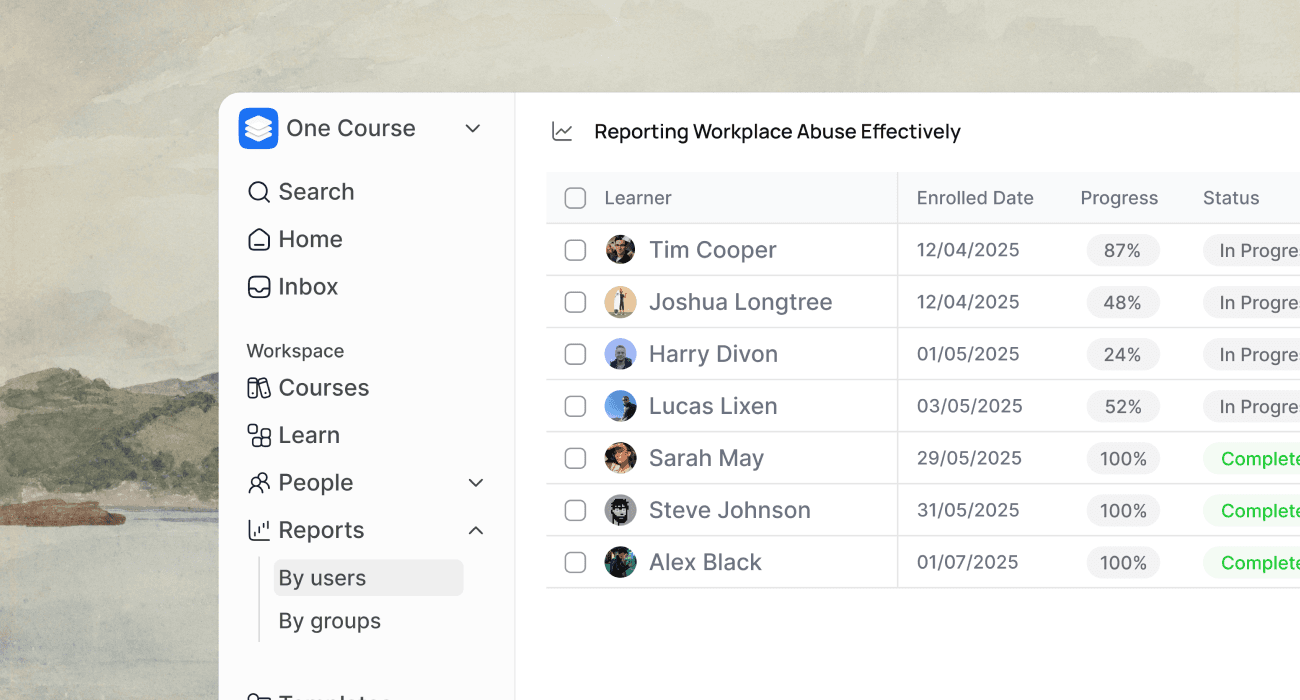
Mobile App Learning by One Course offers native mobile applications for both iOS and Android, enabling learners to access course content, complete quizzes, and track progress from anywhere. The app ensures a seamless learning experience with features like automatic progress syncing across devices, push notifications for assignments and reminders, and adaptive media streaming for smooth playback on mobile networks. Organizations can also customize the app with their branding for a white-label experience. Biometric login options like Face ID and Touch ID provide quick and secure access, making it an ideal solution for delivering flexible and engaging mobile education.
AI MathGPT
AI MathGPT is an AI-powered math tutor designed to assist students and parents with math homework. Leveraging advanced AI models like Llama3 and OpenAI o1, it offers instant, step-by-step solutions and clear explanations for a wide range of math problems. The tool aims to boost math performance by turning frustration into confidence, improving problem-solving skills, and saving time on homework. It supports personalized learning paths, interactive problem-solving with real-time feedback, and multi-language support. AI MathGPT prioritizes ethical learning, encouraging understanding over mere answer-copying, and adapts explanations to different learning styles while protecting user data.
RockettAI
RockettAI is an AI-powered platform specifically designed for teachers, offering a comprehensive suite of tools to streamline various educational tasks. It helps educators save time on lesson planning, administrative duties, and resource creation, allowing them to focus more on student engagement and well-being. The platform supports multiple curricula, including those from the UK, US, Canada, Ireland, Australia, New Zealand, and South Africa. Key features include tools for activity generation, concept explanation, rubric creation, and support for personalized learning, catering to diverse student needs, including those with disabilities or language barriers. RockettAI aims to foster creativity in the classroom, support professional growth, and facilitate smoother communication, ultimately enhancing the teaching experience and student outcomes.
seq2seq-signal-prediction
seq2seq-signal-prediction is an open-source project designed to teach users how to implement Sequence-to-Sequence (seq2seq) Recurrent Neural Networks (RNNs) for time series forecasting using TensorFlow. The project includes a series of four exercises of increasing difficulty, starting with deterministic signal prediction and progressing to more complex tasks like denoising and Bitcoin price forecasting. It provides a Jupyter notebook and a Python script version, with instructions for running the code locally or on Google Colab with GPU support. The exercises guide users through adjusting hyperparameters and modifying network architectures to achieve accurate predictions, making it a practical learning resource for those with some prior knowledge of RNNs.

CEIMIA
CEIMIA (Centre d'expertise International de Montréal en intelligence artificielle) is an international center dedicated to the responsible development of AI. It operates on principles of ethics, human rights, inclusion, diversity, innovation, and economic growth. CEIMIA develops and implements high-impact applied projects in responsible AI, focusing on areas such as AI for the environment, AI for health, data governance for AI, and human rights in AI. The organization aims to provide tools and approaches for integrating effective governance and human rights throughout the AI lifecycle, collaborating with various stakeholders to achieve its mission.
OpenChem
OpenChem is a deep learning toolkit specifically designed for computational chemistry and drug design research, built with a PyTorch backend. Its primary goal is to simplify the application of deep learning models for researchers in these fields. Key features include a modular design with a unified API, allowing for easy combination of different modules, and the ability to build new models using only a configuration file. The toolkit supports fast training with multi-GPU capabilities and provides utilities for data preprocessing. It also integrates with Tensorboard for visualization. OpenChem handles various tasks such as classification, regression, multi-task learning, and generative models, supporting data types like character sequences (SMILES, amino acids) and molecular graphs, with automatic conversion of SMILES to graphs.

Kira
Kira is an AI operating system designed to revolutionize K-12 education by integrating instruction, assessment, and intervention into a single, coherent system. It aims to replace the common 'tool sprawl' in schools, allowing educators to focus on effective teaching rather than managing disconnected software. Kira connects planning, teaching, assessment, and insights into a continuous loop, eliminating manual handoffs and providing real-time visibility into student learning. The platform offers built-in differentiation at scale, adapting instruction for diverse learners, including those with IEPs and ELLs, without requiring teachers to recreate materials. It supports curriculum and course creation, generates standards-aligned content, and provides continuous mastery updates based on student responses. Kira also identifies learning gaps instantly and automates targeted support, while adapting to various instructional realities like multilingual and special populations, career pathways, and flexible learning models. It is built for schools, ensuring compliance with FERPA and COPPA, and works alongside existing LMSs and infrastructure.
Insert Anything
Insert Anything is an AI tool hosted on Hugging Face that facilitates content generation by allowing users to insert objects into existing images. Users upload a background image and a reference object, then use masks or text labels to precisely define where the object should be inserted. The application then generates the final composite image. While the tool's current status shows a runtime error related to NVIDIA drivers, its intended functionality is to provide an intuitive way to combine visual elements. It is designed for educational purposes and task automation, offering a fun and free method for content creation.