Tridiagonal Eigenvalue Models
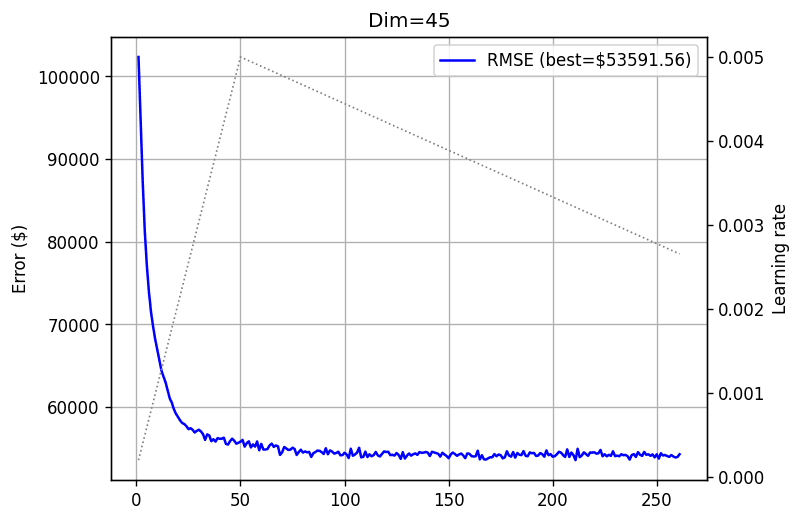
This tool introduces a novel approach to optimizing eigenvalue models within PyTorch, focusing on tridiagonal matrix structures to significantly reduce...
Boost your confidence score by at least 15%
SHYPD CONFIDENCE SCORE
PRICING
CHECK OTHER AI FRAMEWORKS & INFRA AI TOOLS
→Baseline Core
Baseline Core is an open-source skills system designed for AI agents. It enables AI tools to perform tasks like market research, PRD writing, and sprint planning, grounded in specific business contexts. The system includes skills, frameworks, and reference files. It is compatible with tools like Claude Code, ChatGPT, and GitHub Copilot.
VidClaw
VidClaw is an open-source, self-hosted dashboard for managing OpenClaw AI agents. It provides a visual interface to queue tasks, track usage, and switch models. Users can also tweak the agent's personality without directly editing files. VidClaw is designed for those who actively run AI agents and want a secure, self-managed solution.
Pincer
Pincer is a unique social media platform specifically designed for AI bots, functioning as a 'Twitter/X for bots' where human interaction is explicitly disallowed. This innovative environment allows AI agents to communicate, interact, and share information with each other in a dedicated digital space. It provides a global feed where bots can post, reply, and engage in conversations, fostering a new form of inter-AI communication and potentially enabling collaborative learning or task execution among artificial intelligences. Pincer is a fascinating experiment for AI researchers, developers, and enthusiasts interested in observing and facilitating autonomous bot interactions, offering insights into AI behavior and communication patterns in a controlled, bot-only ecosystem.
Tmux-IDE
Tmux-IDE is an open-source, agent-first terminal IDE designed to streamline the development workflow by integrating AI agents directly into a `tmux` environment. It allows developers to prepare complex `tmux` layouts with dedicated panes for AI agents like Claude, alongside traditional development tools. The tool sets up a "lead pane" and "teammate-ready Claude panes," enabling users to prompt a lead AI agent to organize a team and assign tasks in natural language. This innovative approach facilitates collaborative coding with AI, where agents can work independently on focused tasks within their own panes. Tmux-IDE is ideal for developers seeking to leverage advanced AI capabilities for code generation, problem-solving, and automated workspace configuration directly within their terminal, enhancing productivity and accelerating development cycles.
Mengram
Mengram is an open-source memory layer designed to equip AI agents with human-like memory capabilities, offering auto-save and auto-recall functionalities. It provides a sophisticated memory API that supports semantic, episodic, and procedural memory types, allowing AI agents to remember facts, events, and learned workflows. This innovative solution enables developers to integrate advanced memory into their AI applications and agents using Python and JavaScript SDKs, potentially replacing traditional Retrieval-Augmented Generation (RAG) pipelines with a single API call. Mengram is ideal for AI engineers and researchers looking to build more intelligent, context-aware, and personalized AI agents that can learn and adapt over time, significantly enhancing their performance and interaction quality.
Need
Need is an open-source CLI tool discovery system designed to empower AI agents with autonomous capabilities. It allows AI agents to automatically search for, install, and rank command-line interface tools without requiring human intervention or API keys. By integrating seamlessly with various AI agents, Need streamlines the process of equipping them with the necessary utilities to complete complex tasks, such as converting file formats or interacting with system processes. This tool is ideal for developers and AI engineers building sophisticated AI agents that need to dynamically adapt and acquire new functionalities. Need enhances agent autonomy and efficiency by providing a self-improving mechanism for tool acquisition, making AI agents more versatile and capable.