
AI Agents & Automation
Browsing page 48 of AI tools for General-Purpose Agents in AI Agents & Automation. Sorted by confidence score — our independent quality rating.

ha-llmvision
ha-llmvision is a Home Assistant integration designed to bring visual intelligence to your home using multimodal large language models. It can analyze various visual inputs, including images, video files, live camera feeds, and Frigate events. The tool supports a wide range of AI providers such as OpenRouter, OpenAI, Anthropic, Google Gemini, AWS Bedrock, Azure, Groq, Ollama, Open WebUI, LocalAI, and any provider with OpenAI compatible endpoints. Key capabilities include answering questions and providing descriptions based on prompts, remembering people, pets, and objects, and maintaining a timeline of camera events. This timeline can be displayed on a dashboard or queried via Home Assistant's Assist feature, and sensors are seamlessly updated with extracted data.
OmniAI
OmniAI provides AI agents designed to put borrower onboarding on autopilot for lending businesses. These agents manage communication, collect necessary documents, and conduct follow-ups from start to finish, operating 24/7. The platform optimizes document workflows, allowing for conversational onboarding where borrowers can reply via SMS or email. OmniAI reads, verifies, and autofills fields, reducing friction and drop-off. It boasts 4x faster borrower onboarding, 98% confidence in compliance guardrails with 100% audit-trail coverage, and a 10-day shorter loan cycle. The system offers multilingual support and integrates with services like Plaid, Experian, LexisNexis, and TransUnion for unified data networking, enabling instant soft credit checks, bank account linking, income verification, and EIN retrieval.
gptme
gptme is a personal AI agent designed to operate directly within your terminal, offering a powerful suite of local tools. It can write and execute code, interact with the terminal, edit files, and browse the web, making it a versatile assistant for developers and knowledge workers. The tool supports various LLM providers, including Anthropic, OpenAI, Google, and local models via llama.cpp. A key feature is its extensibility through plugins, skills, and lessons, allowing users to tailor its functionality. gptme is also built for autonomous operation, enabling the creation of persistent agents that can run continuously, learn, and self-correct over time, with examples like 'Bob' managing tasks and interacting with platforms like GitHub and Twitter.

Path Robotics
Path Robotics offers intelligent welding cells powered by Obsidian AI, a foundational AI model specifically trained for welding. This technology addresses the skilled labor shortage in manufacturing by enabling real-time adaptation for high-quality welds, even with part-to-part variations. The system boasts 4x productivity, 30% lower costs, and a $0 CAPEX model, supported by 24/7 mission control. Obsidian AI learns from every weld, ensuring unmatched agility and continuous improvement, leading to exceptional weld quality with over 97% first-pass yield. Path Robotics serves industries such as manufacturing, critical infrastructure, defense, utility & energy, data centers, and heavy industry, providing solutions for fabricating structures like ship hulls, utility poles, and mining equipment.
Open-Interface
Open-Interface enables users to control their computer using large language models (LLMs) such as GPT-4o or Gemini. The tool functions by sending user requests to an LLM backend, which then determines the necessary steps to achieve the goal. It automatically executes these steps by simulating keyboard and mouse inputs. To ensure accuracy and adapt to changing conditions, Open-Interface course-corrects by sending updated screenshots of the progress back to the LLM backend. This allows for a full autopilot experience across various computer tasks. It supports macOS, Linux, and Windows, and can be run as a script, offering flexibility for different user setups.
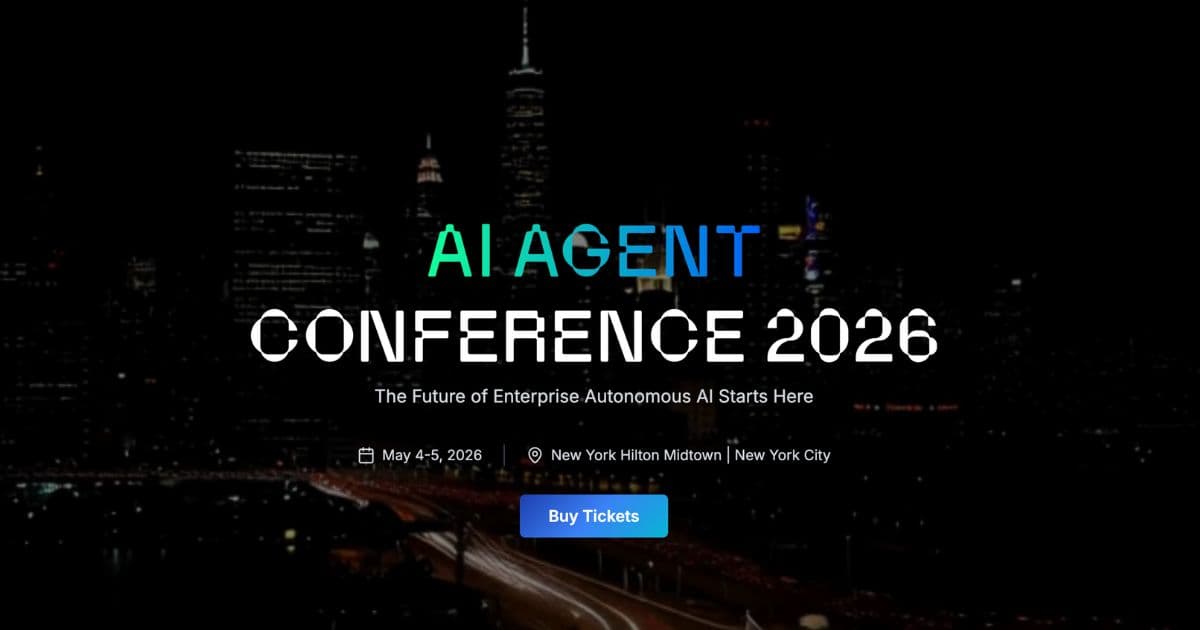
AI Agent Conference
The AI Agent Conference 2026 is the definitive gathering for autonomous AI, held in New York City. It convenes world-class AI leaders, senior executives, and top founders to exchange ideas and shape the future of agentic AI. The conference features three core themes: Agentic Enterprises, focusing on transforming business operations with autonomous AI systems; Agentic Engineering, dedicated to building the infrastructure for intelligent agent systems; and Agentic Industries, exploring the application of AI in sectors like finance, healthcare, legal, and logistics. Attendees can learn from leading experts and network with peers to advance their understanding and implementation of autonomous AI.
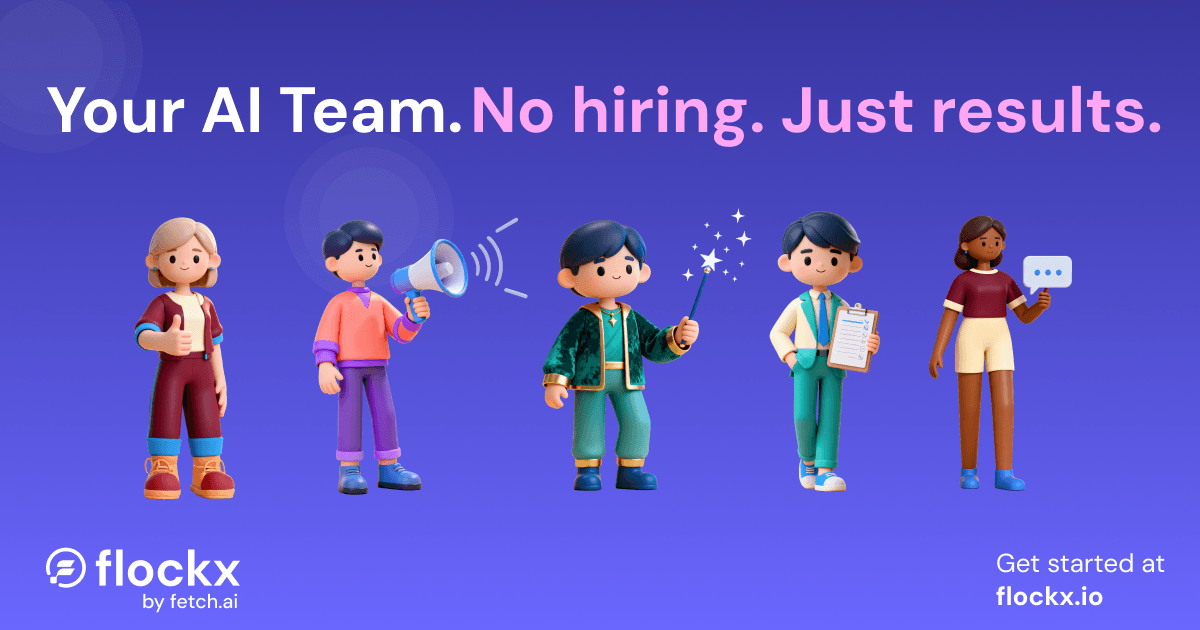
Flockx by Fetch.ai
Flockx by Fetch.ai offers an innovative solution for businesses looking to scale operations without the overhead of hiring more people. It provides specialized AI agents designed for various business functions, including marketing, sales, and operations. These AI specialists are ready to deploy in just one minute, enabling rapid integration into existing workflows. Flockx is built on the Fetch.ai ecosystem and aims to automate and optimize business processes through intelligent, multi-agent systems. It's ideal for creators and creative professionals seeking to enhance productivity and efficiency across different departments, from content creation to executive assistance and strategic planning.
Twitter Personality is a web application designed to analyze Twitter handles and generate personalized personality profiles using a Wordware AI Agent. This tool offers users unique insights into their online persona based on their Twitter activity. It utilizes cutting-edge AI technologies to process Twitter data and construct detailed profiles. The project is open-source, with its repository available on GitHub, allowing developers to explore the AI agent and prompts used in the application. Setting up the project involves cloning the repository, installing dependencies, and configuring various environment variables for database access, Wordware API keys, and other services like PostHog and Stripe, indicating potential for advanced features and analytics.

Stepsailor
Stepsailor is an AI-powered platform designed to enhance customer education and streamline user interaction within software applications. It allows users to execute tasks using natural language commands, eliminating the need for complex menus. Stepsailor integrates an AI command bar into existing software, making it more intuitive and user-friendly. The platform is designed for easy integration and usability, offering various pricing tiers including a free option with 100 credits per month and paid plans with more credits and customization features like removing watermarks and custom styling. While currently on hold for a next-generation platform, its previous offerings focused on enabling businesses to build AI-powered products efficiently.
Mobileye
Mobileye is a leader in the evolution of automobility, specializing in advanced driver-assistance systems (ADAS) and autonomous driving (AV) technologies. The company utilizes world-renowned expertise in artificial intelligence, computer vision, machine learning, mapping, and data analysis to develop its solutions. Mobileye's modular product portfolio scales from current ADAS offerings like Mobileye ADAS and Mobileye SuperVision™ to future AV programs such as Mobileye Chauffeur™ and Mobileye Drive™. Their Compound AI System integrates cutting-edge AI with engineered precision to deliver explainable and safe automated driving decisions, built on a purpose-built SoC family and a mathematical safety model. Mobileye aims to bring safe and scalable self-driving technology to the mass market.
Senso
Senso acts as the context layer for AI agents, enabling organizations to compile raw documents, websites, and internal knowledge into a verified, grounded, and synchronized knowledge base. This ensures that AI agents provide accurate responses based on the organization's ground truth, preventing hallucinations and misrepresentation. The platform addresses the challenge of AI agents accessing disparate information by ingesting, compiling, and allowing any agent to query or generate content from the verified knowledge. Senso also offers scoring and governance features to align agentic channels with ground truth, providing visibility into mentions, citations, accuracy, and compliance across various AI models like ChatGPT, Perplexity, and Gemini. It is designed to power call center, compliance, and support agents from a single source of truth.
ml-agents
The Unity Machine Learning Agents Toolkit (ML-Agents) is an open-source project designed to transform games and simulations into dynamic environments for training intelligent agents. It leverages deep reinforcement learning and imitation learning, offering PyTorch-based implementations for easy integration. The toolkit supports various training scenarios, including single-agent, multi-agent cooperative, and competitive setups, using algorithms like PPO, SAC, MA-POCA, and self-play. It also facilitates learning from demonstrations with BC and GAIL algorithms. ML-Agents provides a flexible Unity SDK, allowing developers to integrate it into custom scenes and add their own training algorithms. It's ideal for controlling NPC behavior, automated game testing, and evaluating game design decisions.
SinCode AI
SinCode AI has transitioned to Agent.ai, establishing itself as a professional network for AI agents. This platform empowers users to discover existing AI agents, utilize them for specific tasks, and even build their own custom agents. The goal is to create a team of personal AI agents that can perform useful functions. Agent.ai offers a starting point for free, allowing users to explore and try out a variety of AI agents available on the platform. It aims to provide a robust environment for individuals and businesses looking to leverage AI for automation and productivity.
poco-agent
Poco-agent, also known as Poco-claw, is an open-source AI agent platform designed as a superior alternative to OpenClaw. It provides a secure, sandboxed environment where all tasks run in isolated containers, allowing users to install dependencies, modify files, and execute commands without affecting the host system. The platform boasts a polished and productive Web UI, supporting features like Plan Mode, conversation queueing, and project management. It integrates built-in IM support for platforms like DingTalk, Feishu, and Telegram, complete with push notifications. Powered by a Claude Code–based agent, Poco-agent also offers local directory mounting for self-hosted instances, enabling direct work with real project files.
Manus AI
Manus AI, now part of Meta, is an autonomous general AI agent designed to complete tasks and deliver results. Unlike traditional chatbots, Manus AI takes action, operating in a complete sandbox environment with internet access, a persistent file system, and the ability to install software. This allows it to work independently, remember context across long tasks, and deliver production-ready results without constant supervision. It can create slides, build websites, develop desktop apps, and design, aiming to provide more intelligence with less structure for businesses worldwide.
gpt-aggregated-edition
gpt-aggregated-edition is an open-source desktop application designed to consolidate access to various AI platforms into a single interface. It supports popular models like official ChatGPT, free ChatGPT versions, Wenxin Yiyan, POE (including Sage, ChatGPT4, Claude, Dragonfly), Tongyi Qianwen, Bard, New Bing, and Wenxin Yige. The tool is built using Rust and Tauri, ensuring cross-platform compatibility for Windows, Mac, and Linux users. Key features include multi-platform switching, window and taskbar modes, and the ability to customize and import additional AI platforms. This aggregation simplifies the user experience by providing a unified hub for different AI services, making it easier to manage and utilize various conversational AI models without constantly switching applications or browser tabs.
Operit
Operit is a comprehensive AI agent application designed for Android devices, offering powerful capabilities that run entirely offline (except for API calls). It features robust tool-calling, deep search, workflow automation, and an intelligent memory system. Users can customize AI personas and role cards, and integrate local models like MNN/llama.cpp for privacy-focused operations. The application includes a full Ubuntu 24 environment, allowing for complex Linux commands and automation tasks directly on the phone. With over 40 built-in tools, a market for MCP/Skill plugins, and multi-language support, Operit provides an all-in-one solution for advanced mobile AI assistance.
Microverse
Microverse is a god-simulation sandbox game developed on Godot 4, functioning as a multi-agent AI social simulation system. In this virtual world, AI characters are endowed with independent thinking and memory, enabling them to autonomously engage in social interactions, complete tasks, and develop complex social relationships through continuous communication. Key features include a sandbox-style AI society similar to Stanford's AI Town, a multi-agent ecosystem supporting numerous AI characters, and an intelligent dialogue system powered by large language models. It also boasts a persistent memory system for AI characters, autonomous task management, and environmental perception capabilities. The tool supports integration with various AI services like OpenAI, Claude, Gemini, and DeepSeek, making it highly adaptable for developers and researchers interested in AI social simulations.
nekro-agent
Nekro-agent is a highly extensible, multi-platform AI agent framework designed for interactive scenarios. It integrates Claude Code sandbox execution, workspace orchestration, long-term memory, and structured MCP management with a visual console. The framework boasts high extensibility, multi-modal interaction, real-time status push, and automated operation capabilities. It supports a wide range of platforms including QQ, Discord, Telegram, Minecraft, BilibiliLive, WeChat, Email, and SSE(SDK), making it suitable for building intelligent chatbots. Nekro-agent can be extended into a general agent system with code execution, tool calling, plugin collaboration, and complex task processing abilities. It also offers a robust plugin system, cloud resource sharing, and a comprehensive WebUI for management and monitoring.
vibe-tools
vibe-tools is an open-source command-line interface (CLI) tool designed to significantly expand the capabilities of AI agents, particularly the Cursor Composer Agent. It enables AI agents to form an 'AI team' by integrating with various AI providers like Perplexity for web search, Gemini for large codebase context and planning, and Stagehand for browser automation. The tool also adds new skills such as working with GitHub and Linear issues, generating local documentation, and analyzing YouTube videos. vibe-tools is installed globally as a Node package and configures instruction files for supported IDEs/environments like Cursor, Claude Code, and Windsurf, ensuring broad compatibility. It requires API keys for Perplexity and Google Gemini, and optionally for OpenAI or Anthropic for certain commands.

ARTI
ARTI specializes in providing autonomous robot technology for dull, dirty, and dangerous jobs. They offer a modular and hardware-agnostic software architecture designed to make autonomy accessible, robust, and scalable for various ground-based vehicles. Their autonomy stack adapts to a wide range of industries, environments, and applications, from controlled indoor facilities to challenging outdoor terrain. ARTI acts as a development partner, combining their autonomy software with customer hardware expertise to create reliable, real-world autonomous systems. Driven by research, they offer comprehensive services, flexible licensing models, and the know-how to bring autonomous solutions to life, ensuring stable performance even under challenging conditions.
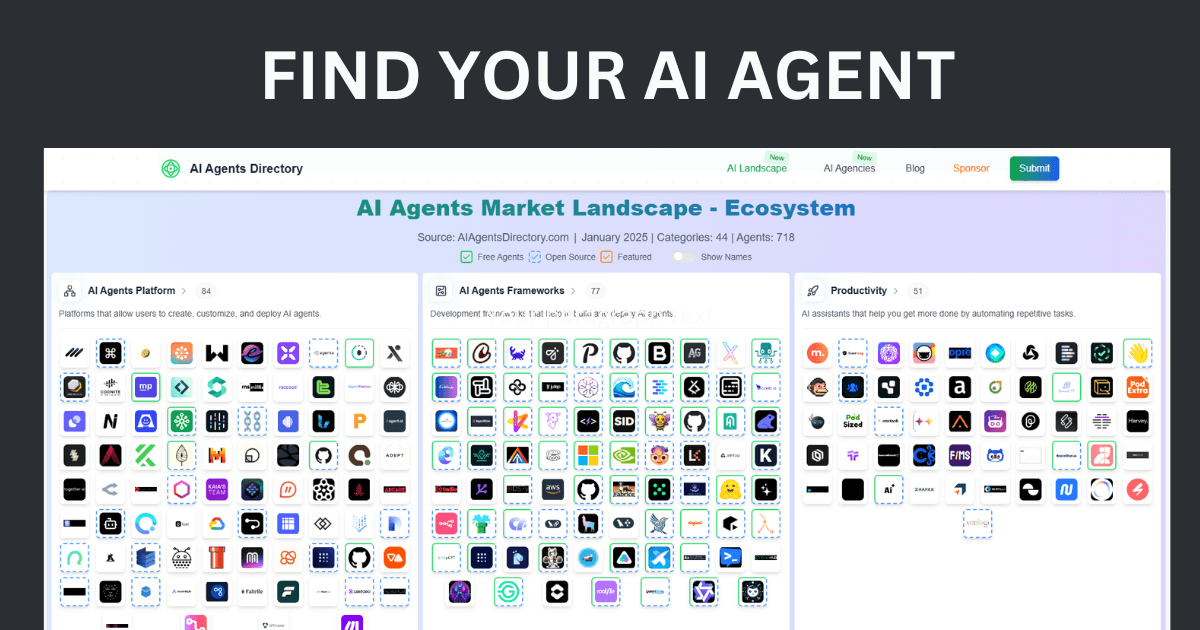
AI Agents Directory
AI Agents Directory is a comprehensive marketplace and directory designed to help users discover, compare, and choose top AI agents for a wide range of workflows. The platform allows users to explore over 1,300 AI agents, frameworks, and tools, categorized by industry, function, pricing model, and access type. It provides detailed profiles for each agent, including overviews, key features, use cases, pricing information, user reviews, and integration capabilities. Businesses can leverage the directory to automate repetitive tasks, enhance customer service, facilitate data-driven decision-making, and improve operational efficiency through innovative AI applications. The directory also features newly added and trending agents, along with articles and news related to the AI agent ecosystem.
MTools
MTools is a powerful, all-in-one desktop application designed to streamline workflows and boost productivity. It integrates a comprehensive suite of tools for audio and video processing, image editing, text operations, and coding. The application features built-in AI enhancements, leveraging technologies like ONNX Runtime for GPU acceleration across various platforms including Windows (DirectML), macOS (CoreML), and Linux (optional CUDA). MTools supports a range of AI functionalities, including speech recognition and synthesis, high-precision OCR, and AI-powered photo editing. It is available as pre-compiled executables, eliminating the need for Python installation, and also offers a source code option for developers. The tool emphasizes performance optimization through GPU acceleration, making it suitable for tasks requiring significant computational power.
llms-txt
llms-txt proposes a standardized `/llms.txt` file for websites, designed to help large language models (LLMs) efficiently process and understand web content. Recognizing that LLMs struggle with complex HTML, this initiative suggests providing concise, expert-level information in a markdown file. This file offers background, guidance, and links to detailed markdown versions of web pages, making it easier for LLMs to access relevant data without being overwhelmed by navigation, ads, or JavaScript. The specification outlines a precise markdown format, including H1 for project names, blockquotes for summaries, and H2-delimited file lists for URLs. It's particularly useful for development environments, e-commerce sites, and educational platforms, enabling LLMs to quickly find programming documentation, product details, or course information. The project also provides tools and integrations to facilitate the creation and processing of these files.