
AI Agents & Automation
Browsing page 52 of AI tools for General-Purpose Agents in AI Agents & Automation. Sorted by confidence score — our independent quality rating.

pipelex
Pipelex is a Python runtime that implements a declarative language for building composable AI workflows, known as 'methods'. These methods are reusable, typed AI procedures defined in `.mthds` files, ensuring explicit steps, structured outputs, and repeatable execution. It acts as a devtool for both AI agents and human developers, abstracting away complex API calls and model routing across over 60 different AI models. Pipelex supports various AI access configurations, including its own Gateway for major providers, existing API keys from services like OpenAI and Anthropic, and local AI solutions such as Ollama. This enables developers to focus on business logic rather than intricate AI infrastructure, facilitating the creation of sophisticated AI applications like batch CV screening.
Chipp
Chipp positions itself as the "Shopify of AI Agents," allowing businesses to create, deploy, and monetize AI agents quickly and without requiring an engineering team. Users can start from templates, customize agents with no code, and integrate their own knowledge base through document uploads or website syncing. The platform supports omnichannel deployment, enabling agents to operate across web chat, WhatsApp, phone lines, Slack, Discord, and email. Chipp offers enterprise-grade security with SOC 2, HIPAA, and GDPR compliance, along with features like private apps, white-labeling, and voice AI capabilities for phone receptionists and sales qualifiers. It caters to a wide range of industries, providing solutions for customer support, sales, marketing, and internal operations.
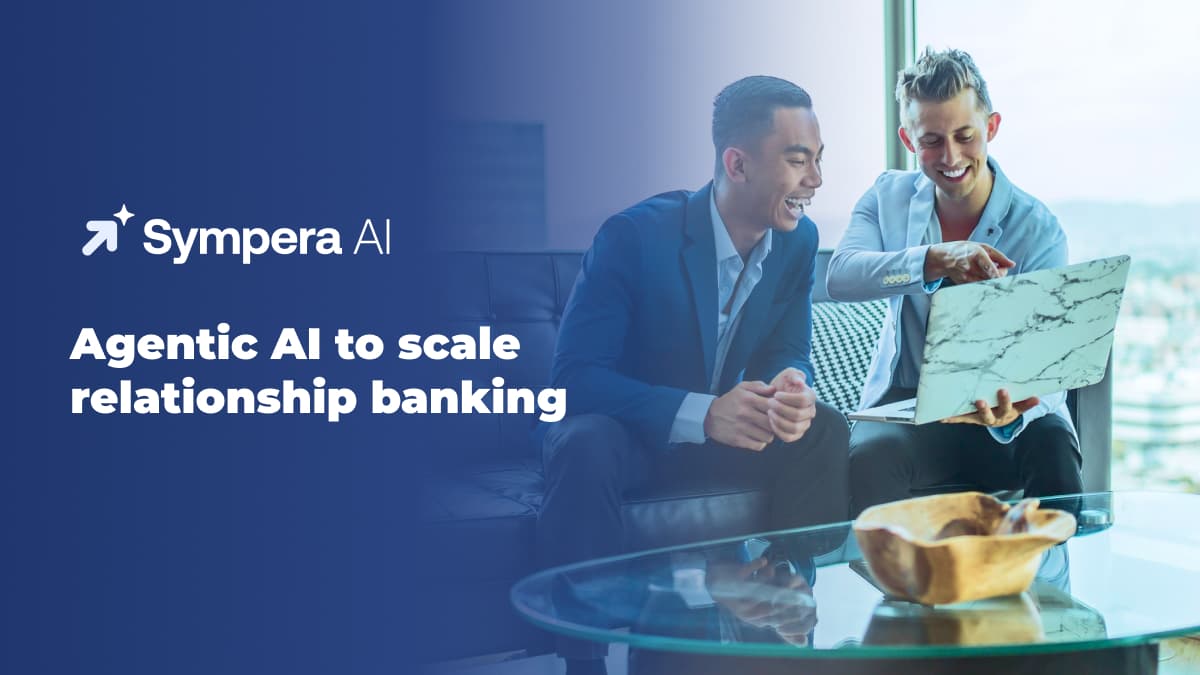
Sympera AI
Sympera AI is an agentic-AI platform designed to scale relationship banking for commercial and SMB sectors. It boosts banker productivity and grows margins by providing relationship managers with a single platform for AI-powered financial intelligence and sales enablement. The platform helps bankers uncover client needs by interpreting behavioral patterns and predicting client needs with high accuracy using domain-specific language models. It also conducts market intelligence to identify financial relationships, monitor business health, and suggest relevant prospecting strategies. Sympera AI intelligently manages pipelines based on conversion likelihood and revenue potential and generates tailored sales strategies, including product recommendations, conversational dialog references, and objection handling tips.
raptor
Raptor is an autonomous security research framework built on Claude Code, designed to function as a general-purpose AI offensive/defensive security agent. It integrates static analysis (Semgrep, CodeQL), binary analysis, LLM-powered vulnerability validation, exploit generation, and patch writing into a unified workflow. Users can configure the agent for adversarial thinking to perform research or attack/defense operations against codebases or binaries. Key capabilities include mapping attack surfaces, tracing data flows, generating proof-of-concept exploits, and creating secure patches. Raptor also features Z3 SMT integration for dataflow pre-screening and one-gadget constraint analysis, enhancing the accuracy of vulnerability detection and exploit feasibility. It supports various LLMs for analysis and can operate offline for Semgrep scanning, making it a robust tool for technical security professionals.
ralph
Ralph is an autonomous AI agent loop designed to streamline software development by iteratively completing PRD items. It operates by spawning fresh AI instances (Amp or Claude Code) for each iteration, ensuring a clean context while persisting memory through git history, a progress.txt file, and a prd.json file. This approach allows Ralph to pick the highest priority story, implement it, run quality checks, commit if successful, and update the PRD status. Key features include skills for generating and converting PRDs, automatic handoff for large stories, and critical updates to AGENTS.md for continuous learning. It emphasizes small, manageable tasks and robust feedback loops for effective development.
samples
The Strands Agents Samples repository offers a collection of agent examples designed to help developers quickly get started with building AI agents using the Strands Agents SDK. It provides a model-driven approach to creating AI agents with just a few lines of code. The repository includes comprehensive examples for both Python (3.10+) and TypeScript (Node.js 18+) SDKs, covering fundamentals, multi-agent systems, streaming, deployment patterns (Lambda, Fargate, AgentCore), integrations with AWS services and third-party tools, industry-specific use cases (finance, healthcare, retail), technical patterns like Agentic RAG, evaluation tutorials, and full-stack applications with user interfaces. While the examples are for demonstration and educational purposes, they serve as a valuable resource for understanding and implementing AI agents in various projects.
sandbox-agent
sandbox-agent is a server designed to run coding agents within isolated sandbox environments, controlling them remotely via HTTP. It provides a universal API to manage various coding agents like Claude Code, Codex, OpenCode, Cursor, Amp, and Pi, normalizing their proprietary interfaces into a single, consistent schema. This tool addresses challenges such as the need for isolated execution environments for AI, the diversity of agent APIs, and the ephemeral nature of agent sessions by streaming events for persistence. It can be run as an HTTP server or embedded with a TypeScript SDK, offering flexibility for developers to integrate it into their applications and deploy across various sandbox providers.
Ninjachat AI
Ninjachat AI is a comprehensive all-in-one AI platform designed to provide users with access to a wide array of artificial intelligence models, including cutting-edge options like GPT-5, Claude Opus 4.5, and Gemini 3. Beyond just chat capabilities, the platform integrates various creative and productivity tools. Users can interact with documents by chatting with PDFs, generate visual content through AI image and video creation, and streamline learning or brainstorming with AI-powered flashcard and mind map generators. It also includes over 50 AI writing tools, making it suitable for content creation, summarization, and transcription tasks. Ninjachat AI aims to be an affordable solution, bundling multiple AI models and tools into a single subscription.

Anthropic
Anthropic is an AI safety and research company dedicated to developing reliable, interpretable, and steerable AI systems. Their flagship product, Claude, is an advanced AI assistant designed for a wide range of applications, from generating code and visualizing data to writing and editing content. Claude offers features like web search, memory across conversations, and the ability to create and execute code. It integrates with platforms like Microsoft 365, Slack, and Chrome, and provides various models including Opus, Sonnet, and Haiku. Anthropic emphasizes responsible AI scaling and offers solutions for individuals, teams, and enterprises, with options for enhanced security and compliance.
KITT By LiveKit
KITT by LiveKit is an open-source AI agent designed for live, real-time conversations, integrating ChatGPT and WebRTC for low-latency audio and video interactions. It functions as a versatile AI assistant, capable of answering questions, summarizing meetings, and acting as a multi-language translator. The tool prioritizes minimal latency through optimized speech-to-text (STT), GPT processing, and text-to-speech (TTS) pipelines, streaming audio segments incrementally for a natural conversational flow. Built on LiveKit's developer tools, KITT can join and interact within LiveKit sessions, subscribing to audio tracks and responding dynamically. Its architecture allows for client-side React components for visual identity and uses data messages for live transcriptions and state changes, making it a powerful foundation for building advanced AI communication applications.
visualnav-transformer
visualnav-transformer offers official code and checkpoint releases for mobile robot foundation models, including GNM, ViNT, and NoMaD. This open-source repository facilitates the training of these models with custom data and their deployment on robots like TurtleBot2/LoCoBot. It supports diverse, cross-embodiment training data and allows for efficient fine-tuning or adaptation to new robots and tasks. The tool provides scripts for processing datasets, training models, and deploying them for navigation and exploration, making it a comprehensive solution for robotics researchers and AI developers in the field of visual navigation.

Avataar
Avataar is an AI-native transformations platform designed to help enterprises achieve significant cost efficiency, operational turnaround, and defensible IP-led value creation. The platform leverages domain-specialized AI agents to replace traditional, manual workflows with intelligent, self-improving systems. It focuses on agentic AI for intelligent execution, enabling autonomous execution, adaptive learning, and orchestration at an enterprise scale. Avataar's full-stack AI platform is built for secure, scalable transformation, tailored to specific domains, data, and workflows, aiming to deliver both quick wins and valuation-scale outcomes for businesses.
Dante AI
Dante AI offers an AI-powered customer service solution that can be trained on your website content and documents to provide instant support. It handles customer questions, lead capture, and bookings 24/7 across chat and voice, with the ability to escalate to human agents when necessary. The platform boasts flat monthly pricing with unlimited conversations, unlike many competitors that charge per resolution. Dante AI integrates seamlessly with various channels and allows for quick setup by simply pasting a website URL. It understands context, checks inventory, and provides accurate answers, ensuring a natural and helpful customer experience.

TeamAI
TeamAI is a multi-LLM AI platform designed for teams to enhance collaboration and automate workflows. It allows users to build custom AI agent workflows that streamline projects and automate the entire project lifecycle within a collaborative workspace. The platform integrates with popular tools like Slack, Jira, Google Workspace, and Guru, enabling teams to deploy AI where they already work. Key features include a collaborative AI chat environment, an AI knowledge base for document interaction, custom AI agents for specific tasks, and prompt libraries and plugins to standardize outputs. TeamAI also offers AI task management for planning sprints, generating reports, and tracking progress across multiple projects.

Kaba
Kaba is an open-source digital laboratory designed to empower users to build and train their own AI models. Unlike traditional AI tools that often make users the product, Kaba emphasizes data ownership and privacy by running locally. It acts as a context engine and model facilitator, allowing individuals to create personal knowledge graphs that autonomously add memories in a verifiable, private, and secure manner. Kaba's multi-modal, multi-input, and multi-context capabilities enable powerful compound sequencing, making it a versatile tool for learning, working, and playing. It aims to revolutionize how users interact with technology by providing a platform to produce AI applications based on their own observable context, fostering a 'grey market' for memory structures and applications.
.webp&w=3840&q=75)
Pypestream
Pypestream specializes in deploying agentic AI solutions for Fortune 500 contact centers, particularly within regulated industries. The platform provides advanced voice and chat agents designed to resolve customer inquiries and issues, moving beyond simple responses. Pypestream emphasizes rapid deployment, with solutions becoming production-ready in a matter of weeks. The tool leverages Agentic AI, Conversational AI, Voice AI, and Enterprise AI to automate customer service and contact center operations, aiming to improve efficiency and customer satisfaction. It is built to handle complex interactions and is suitable for organizations looking to implement robust AI-driven customer support.
Tunesona AI Music Agent
Tunesona AI Music Agent is an innovative tool designed to help users create and edit personalized AI music through natural conversation. It transforms ideas into complete, original songs instantly, offering full editing support. The platform emphasizes an intelligent workflow for planning, creating, and refining music, featuring multi-turn creation and smart iteration at every step. Users can tell the AI what music they want, create lyric songs, instrumental tracks, write lyrics, and generate styles. Tunesona differentiates itself by acting as an AI Music Agent that co-creates with users, allowing for real-time interactive refinement, over 400 genres and styles, and professional-quality, royalty-free output suitable for commercial use. It also offers free credits for new users to start creating immediately.

geeptee.com
geeptee.com provides an extensive library of over 37,000 pre-trained and customizable AI GPTs, referred to as GEE-P-TEEs, designed to enhance websites for lead generation, monetization, and various business applications. Users can describe their desired GEE-P-TEE, and the tool will suggest relevant options from its vast collection. The platform emphasizes plug-and-play simplicity, allowing for seamless integration into websites within minutes across 6 integration points. It caters to over 640 categories and industries, offering solutions for customer engagement, task automation, and unique lead generation. Additionally, geeptee.com highlights affordability, robust integration capabilities with over 50 points, and use cases such as personalized customer service, staff empowerment, and monetizing custom AI studios.
DWPose
DWPose is an official implementation of "Effective Whole-body Pose Estimation with Two-stages Distillation" (ICCV 2023, CV4Metaverse Workshop). This open-source tool provides a series of models, from tiny to large, for human whole-body pose estimation. It significantly improves image generation when integrated with ControlNet, offering better results than Openpose. DWPose also supports consistent and controllable image-to-video synthesis for character animation. Users can run DWPose with sd-webui-controlnet by updating to version >= v1.1237 and selecting 'dw_openpose_full' as the preprocessor. The tool also offers ONNX model support, allowing users to avoid installing mmcv and onnxruntime, and provides models for download via Hugging Face, Baidu Drive, and Google Drive.
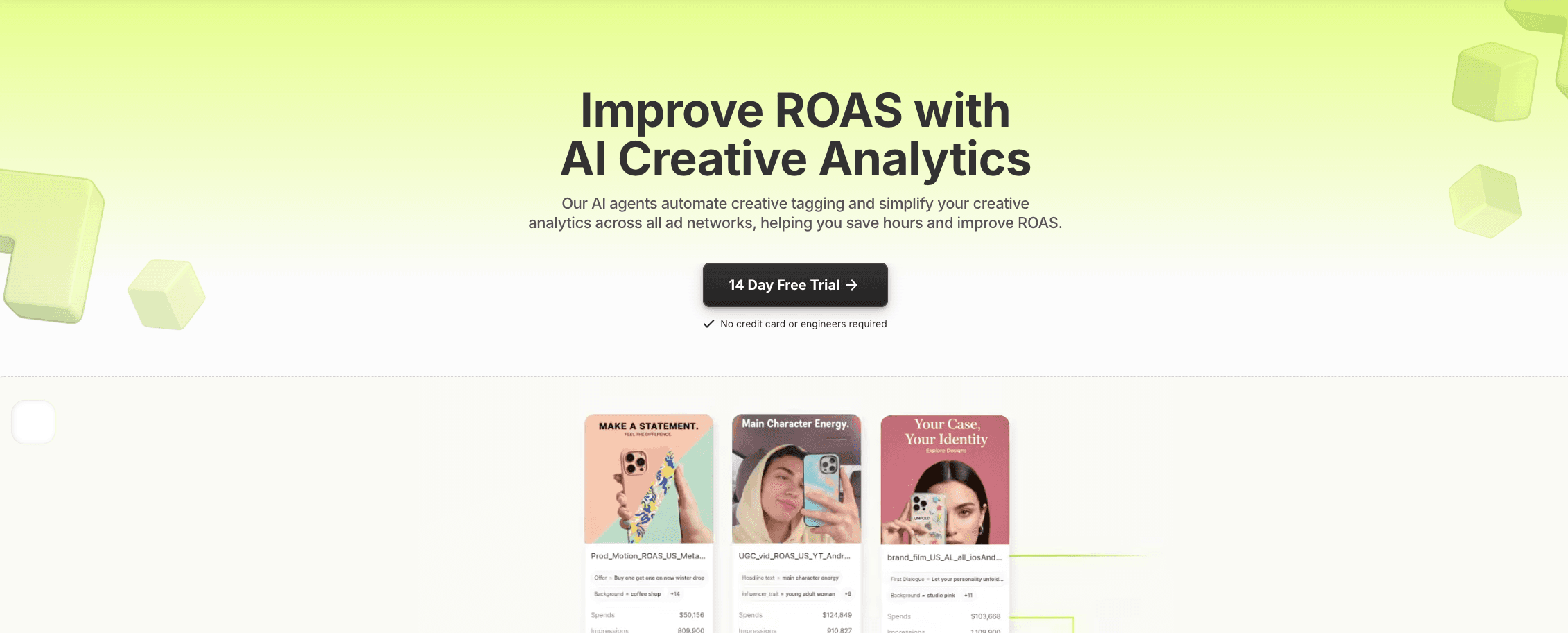
Segwise (Creative Analytics Agents)
Segwise provides AI-powered creative intelligence to automate creative tagging and streamline analytics across over 15 ad networks and data sources. Its multimodal AI automatically tags creative elements like hook dialogues, characters, products, CTAs, and emotions, mapping them to performance metrics to identify what's working. The platform unifies creative data, simplifies cross-network analytics, and automates creative fatigue tracking with custom alerts. Segwise also auto-generates winning creative iterations based on data, ensuring a continuous pipeline of high-impact creatives. It offers no-code integrations and a 14-day free trial, making it accessible for various marketing teams.
claudian
Claudian is an Obsidian plugin designed to integrate AI coding agents, such as Claude Code and Codex, directly into your Obsidian vault. This transforms your vault into the agent's working directory, allowing for comprehensive file read/write access, search capabilities, and the execution of bash commands. Key features include inline editing with word-level diff previews, slash commands and skills for reusable prompt templates, and the ability to @mention vault files or external directories for agent interaction. It also offers a 'Plan Mode' where agents explore and design solutions before implementation, and 'Instruction Mode' for refined custom instructions. Claudian supports multi-tab conversations, history, and the integration of external tools via Model Context Protocol (MCP) servers, making it a powerful tool for developers and technical users managing code and projects within Obsidian.

Jen-AI
Jen-AI is an advanced AI assistant powered by the OpenAI API, designed to support users across a wide range of tasks on iPhone and iPad. It excels in writing assistance, offering suggestions, rewrites, and improvements to ensure polished and professional text. Beyond writing, Jen-AI provides concise explanations, helps with programming tasks like SwiftUI code fixes, offers helpful instructions, and delivers instant document summaries. The tool also provides insightful recommendations and expert advice on any topic, fostering meaningful conversations and offering emotional support. A key differentiator is its advanced AI memory, which remembers recent and saved interactions, editable via natural language commands or a dedicated view. Its sleek, intuitive interface makes interaction seamless, and content can be easily shared via standard iPhone sharing features.

Madevo AI
Madevo AI is an AI-first platform that deploys secure, autonomous AI agents for real-time industrial data analysis across multiple sectors. It addresses common industrial challenges such as unused data, lack of real-time insights from large datasets, complex dashboards, and privacy concerns with cloud-based tools. Madevo's agentic AI stands out by offering deterministic, trusted AI with traceable and auditable answers, eliminating hallucinations. It provides analyst-free insight delivery, turning complex data into instant, actionable answers without the need for dashboards or extensive training. The platform is built for speed and scale, integrating seamlessly and deploying anywhere—on-prem, at the edge, or in the cloud—in days, not months. Madevo supports industries like manufacturing, online gaming, sports, telecoms, rail transportation, logistics, and utilities.
RT-DETR
RT-DETR is an official implementation of the Real-Time DEtection TRansformer, a cutting-edge object detection model that surpasses YOLO models in real-time performance. Developed for CVPR 2024, this open-source project provides robust solutions for various object detection challenges. It supports both PaddlePaddle and PyTorch frameworks, making it versatile for different development environments. The project has seen continuous updates, including the release of RT-DETRv2 and RT-DETRv4, which leverage Vision Foundation Models for enhanced performance without additional inference latency. It also features support for sliced inference for small object detection and integration with Hugging Face Transformers and Ultralytics.