
AI Agents & Automation
Browsing page 264 of AI Agents & Automation. Sorted by confidence score — our independent quality rating.

eland
Eland is a Python client and toolkit designed for seamless interaction with Elasticsearch, offering a Pandas-compatible API for data exploration and analysis. It enables users to work with large datasets residing in Elasticsearch without loading them into local memory, making it ideal for big data applications. Beyond data manipulation, Eland facilitates machine learning workflows by allowing users to upload trained regression and classification models from libraries like scikit-learn, XGBoost, and LightGBM directly into Elasticsearch for inference. It also supports importing PyTorch-trained BERT models for NLP tasks, including those from the Hugging Face model hub, enhancing Elasticsearch's capabilities for advanced AI applications and ETL processes.
fulling
Fulling is an AI-powered full-stack engineer agent designed to streamline the development process. It offers a sandboxed environment complete with Claude Code as an AI pair programmer and a dedicated PostgreSQL database. The platform automates the setup of necessary infrastructure, allowing developers to focus on coding. Key features include a full-stack development environment, a web terminal, a file manager, and live HTTPS domains. It supports configuration-driven development, enabling users to integrate services like Stripe or OAuth by simply entering API keys, with Claude Code implementing the features. Fulling also provides GitHub integration for version control and one-click deployment from sandbox to production.
Alteia
Alteia is a visual intelligence platform designed to accelerate AI development by transforming visual data into actionable insights. It utilizes computer vision, machine learning, and artificial intelligence to analyze, filter, display, and distribute visual data at scale. The platform offers pre-built ML models and an intuitive interface for creating custom models. Alteia operates across industries such as energy, grid infrastructure, and environment, providing solutions for optimizing operations, managing assets, and ensuring compliance. It enables rapid deployment of visual intelligence projects, moving from briefing to production within months, and is used by public, private, and non-profit sectors to address complex challenges.
Macaron AI
Macaron AI is positioned as the world's first personal AI agent, designed to enrich your lifestyle rather than just boost productivity. It functions by creating personalized tools and mini-apps for various aspects of life, including travel, health, relationships, and hobbies. A key differentiator is its "Deep Memory" feature, which allows Macaron to grow with the user and remember important details, much like a real friend. The platform emphasizes providing real-life solutions through simple requests, eliminating the need for frustrating adjustments. It aims to build tools users actually need, making it a unique personal assistant that focuses on improving daily living.
google-search
google-search is a Playwright-based Node.js tool designed to perform Google searches and extract results while bypassing common anti-scraping mechanisms. It offers a local alternative to paid SERP APIs, providing advanced techniques like intelligent browser fingerprint management, automatic browser state saving, and smart headless/headed mode switching to reduce detection risk. The tool can function as a command-line utility for direct searches or as a Model Context Protocol (MCP) server, enabling AI assistants like Claude to access real-time search capabilities without needing additional API keys. It supports raw HTML retrieval, page screenshots, and outputs results in JSON format, making it highly customizable and extensible for developers.
FlagGems
FlagGems is a high-performance, generic operator library implemented in the Triton language, designed to accelerate Large Language Model (LLM) training and inference. As part of FlagOS, it aims to unify model-system-chip layers, enabling a "develop once, run anywhere" workflow across various AI accelerators. This approach unlocks hardware performance, eliminates fragmentation among AI chipset-specific software stacks, and significantly lowers the cost of porting and maintaining AI workloads. FlagGems offers a large collection of PyTorch compatible operators, hand-optimized performance for selective operators, and eager-mode readiness. It supports automatic pointwise operator codegen, fast per-function runtime kernel dispatching, and a multi-backend interface for diverse hardware platforms, including over 10 supported backends.
FireRedTTS
FireRedTTS is an open-sourced, LLM-empowered foundation Text-to-Speech (TTS) system designed for generative speech applications. It provides tools for developing and researching advanced TTS technologies, including an upgraded streamable foundation TTS system (FireRedTTS-1S). Key features include acoustic LLM and flow-matching decoders, enabling high-quality speech synthesis. The system also incorporates zero-shot voice cloning functionality, intended strictly for academic research purposes. Developers can clone the repository, set up a Conda environment, and install necessary dependencies to utilize the system. Pre-trained checkpoints and inference code are available, making it a robust platform for speech technology innovation.
GodMode
GodMode is a dedicated AI chat browser designed for quick and comprehensive access to leading AI models like ChatGPT, Claude 2, Perplexity, Bing, and Llama2. Users can interact with these full web applications simultaneously, entering prompts into all web apps at once, or focusing on individual models. It supports a wide range of LLM providers, including no-API models and local models via OobaBooga. Key features include customizable keyboard shortcuts for quick access and submission, pane resizing and reordering, a model toggle, and an AI-assisted PromptCritic for improving prompts. GodMode ensures users have full access to all functionality on launch day, including features often released without API access.
gateway
Gateway is an open-source AI Gateway designed for fast, reliable, and secure routing to over 1600 language, vision, audio, and image models. It offers a lightweight, enterprise-ready solution that integrates with any language model in under 2 minutes, boasting blazing fast latency (<1ms) and a tiny footprint (122kb). The tool is battle-tested, having processed over 10 billion tokens daily, and provides enterprise-grade security, scalability, and custom deployments. Key functionalities include automatic retries and fallbacks to prevent downtimes, load balancing for high availability, and conditional routing for scaling AI applications. It also features robust guardrails to protect AI deployments, multi-modal capabilities, and integrations for agentic workflows. The enterprise version offers advanced capabilities like org management, governance, and enhanced security.
Gmail-MCP-Server
Gmail-MCP-Server is an open-source Model Context Protocol (MCP) server designed for seamless integration of Gmail with AI assistants, specifically Claude Desktop. This server empowers AI to manage various Gmail functions through natural language commands, offering features like sending and drafting emails with full attachment support, reading emails with enhanced attachment details, and downloading attachments to local storage. It also provides comprehensive email management capabilities, including searching, modifying, deleting, and batch processing emails, as well as managing Gmail labels and filters. The server supports both Desktop and Web application credentials with a simple OAuth2 authentication flow, including auto browser launch and global credential storage, making it a robust solution for automating Gmail tasks with AI.
genkit
Genkit is an open-source framework designed for building full-stack AI-powered applications, actively used in production by Google's Firebase. It offers SDKs for JavaScript/TypeScript, Go, and Python, providing a consistent API across these languages. The framework simplifies AI development by offering a unified interface for integrating models from providers like Google, OpenAI, Anthropic, and Ollama. Developers can rapidly build and deploy chatbots, automations, and recommendation systems using streamlined APIs for multimodal content, structured outputs, tool calling, and agentic workflows. Genkit also includes a local CLI and Developer UI to accelerate development, allowing for prompt testing, debugging with execution traces, and production monitoring.
hazm
Hazm is a comprehensive Python library specifically designed for natural language processing (NLP) tasks on Persian text. It enables developers and researchers to perform a wide array of text processing functions, including normalizing text by correcting diacritics and ZWNJ, tokenizing sentences and words, and lemmatizing words to their base forms. The library also supports advanced NLP capabilities such as part-of-speech (POS) tagging, dependency parsing to identify syntactic relations, and creating both word and sentence embeddings. Hazm integrates with Hugging Face, allowing for automatic downloading and caching of pretrained models, making it a powerful tool for anyone working with Persian language data.
graphbit
GraphBit is the world’s first enterprise-grade Agentic AI framework, built on a Rust core with a Python wrapper for unmatched speed, security, and scalability. It enables reliable multi-agent workflows with minimal CPU and memory usage, making it production-ready for real-world enterprise environments. GraphBit is designed for developers who need deterministic, concurrent, and ultra-efficient AI execution without the overhead. It powers multi-agent workflows that run in parallel, persist memory across steps, self-recover from failures, and ensure 100% task reliability. Key features include tool selection, type safety, multi-LLM support, resource management, and observability.

World Simulator AI
World Simulator AI offers an engaging platform for users to dive into immersive, AI-powered virtual worlds. Players experience stories in first person, with their choices directly influencing the narrative's progression. The tool supports a wide array of genres, from historical conquests like Alexander's Conquest and Pharaoh's World to fantasy adventures such as The Last Sorceress and Beast-Tamer’s Trial, and even horror scenarios like Teddy Bear Chase. Users can explore pre-made worlds or create their own, offering endless possibilities for interactive storytelling and roleplay. This platform is ideal for those who enjoy 'choose your own adventure' style narratives and want to experience dynamic, AI-driven stories.
gpt-cli
gpt-cli is a command-line interface (CLI) tool designed for seamless interaction with large language models (LLMs) such as ChatGPT, Claude, and Bard directly from your terminal. It offers extensive model customization, allowing users to override default settings for parameters like model, temperature, and top_p. The tool supports multiple providers including OpenAI, Anthropic, Google Gemini, and Cohere, as well as other OpenAI-compatible APIs and local models via LM Studio. Key features include usage tracking, keyboard shortcuts for conversation management, multi-line input, and markdown support. Users can define multiple assistants with predefined messages and flexible YAML configuration, enabling role-play scenarios and easy switching between different AI personalities.
Whileresume
Whileresume is an AI-powered resume database designed to streamline recruitment for businesses. It allows companies to post unlimited job listings, access enriched candidate profiles with standardized resumes, video resumes, and detailed portfolios, and directly contact candidates via instant messaging. The platform emphasizes a qualitative approach, presenting only available and engaged candidates, unlike generalist platforms. It offers advanced multi-criteria filters and customizable dashboards for efficient candidate discovery. Whileresume aims to save recruiters precious time by providing a fluid and fast communication system, a 360° view of candidates, and an intuitive web and mobile interface for managing recruitment tasks on the go.
gpt-oss
gpt-oss is a series of open-weight language models developed by OpenAI, designed for advanced reasoning, agentic tasks, and diverse developer use cases. It includes two primary models: gpt-oss-120b, suitable for production and general-purpose high-reasoning tasks on a single 80GB GPU, and gpt-oss-20b, optimized for lower latency and specialized local applications within 16GB of memory. Both models are trained with a harmony response format, which is crucial for their correct operation. Key features include a permissive Apache 2.0 license, configurable reasoning effort, full chain-of-thought access for debugging, fine-tunability, and agentic capabilities like function calling and web browsing. The models also utilize MXFP4 quantization for efficient memory usage.

LaunchLemonade
LaunchLemonade offers AI agents designed to automate back-office operations for regulated professional services firms, including accountants, financial advisors, consultants, and fractional CFOs. The platform provides pre-built agents and workflows for tasks like meeting intelligence (notes, action items, follow-ups), email management (triaging, scheduling), and searchable knowledge bases from firm-wide data. It emphasizes compliance and governance, with features like audit logs, role-based access, and data retention controls built-in. LaunchLemonade also offers services for custom agent development, AI consulting, team training, and white-labeling the platform, enabling firms to integrate AI safely and efficiently without needing an in-house engineering team.
kelivo
Kelivo is a versatile, open-source Flutter-based LLM chat client designed for both mobile (Android, iOS, Harmony) and desktop (Windows, macOS, Linux) platforms. It boasts a modern Material You design language with dynamic color theming and a perfectly adapted dark mode. The client supports multiple AI providers, including OpenAI, Google Gemini, and Anthropic, and allows for custom AI assistants. Key features include multimodal input for various document types, comprehensive Markdown rendering, and integration with voice/TTS providers like OpenAI and ElevenLabs. Kelivo also supports the Model Context Protocol (MCP) with built-in tools, web search integration, prompt variables, and QR code sharing for configurations. Users can back up and restore chat history, customize HTTP requests, and use custom fonts, making it a highly adaptable and feature-rich chat solution.
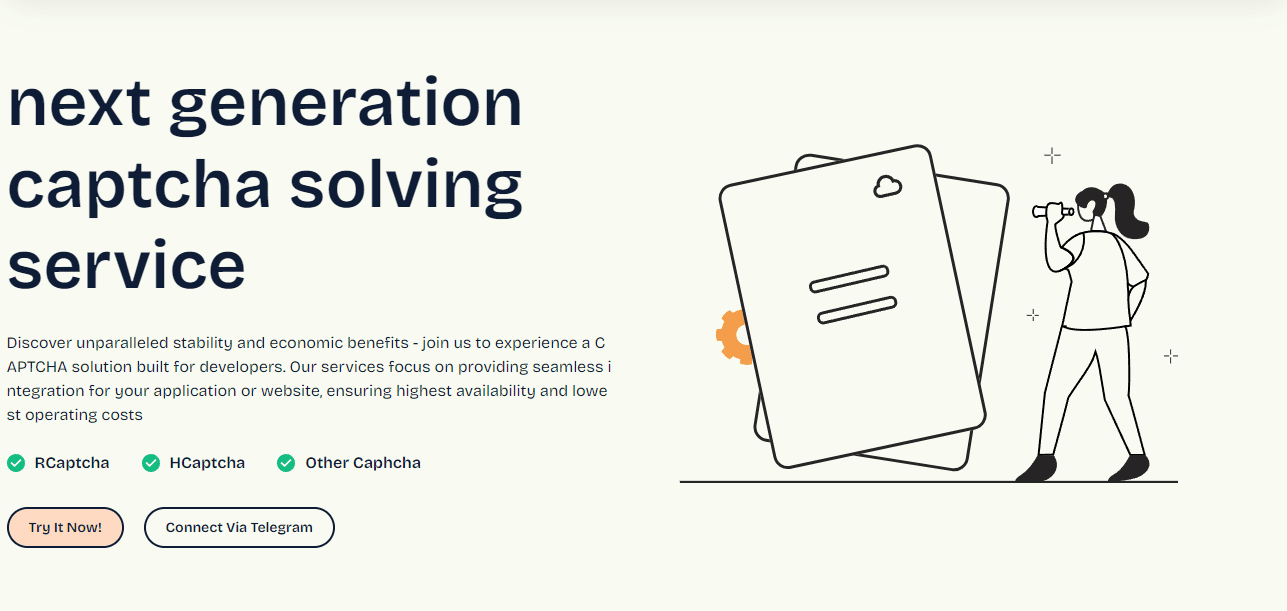
NextCaptcha
NextCaptcha is an AI-powered CAPTCHA solving service designed for developers, offering unparalleled stability and economic benefits. It provides seamless integration for applications and websites, including a Turnstile solving service for Cloudflare verification flows. The service supports various CAPTCHA types such as reCAPTCHA v2, reCAPTCHA v2 Enterprise, reCAPTCHA v3, reCAPTCHA Mobile, and Cloudflare Turnstile. NextCaptcha boasts a high success rate of 99% and an average solve speed of less than 3 seconds. It is built to handle complex scenarios where other similar services might fail, ensuring compatibility with over 99% of websites. The platform prioritizes user privacy by never retaining sensitive information and implements strict data security measures. NextCaptcha also offers competitive pricing and custom discount packages for high-volume users.
kan-gpt
kan-gpt is an open-source project offering a PyTorch implementation of Generative Pre-trained Transformers (GPTs) integrated with Kolmogorov-Arnold Networks (KANs) for language modeling. This tool provides a flexible framework for researchers and developers to explore and experiment with novel neural network architectures in the context of large language models. Key features include the ability to train and prompt models, with usage examples provided for easy adoption. It supports various datasets like Tiny Shakespeare, MNIST, and WebText, and allows for comparison between KAN-GPT and traditional MLP-GPT models. The project is actively developed with a clear roadmap for future enhancements, including integration with minGPT and pykan, improved dataset parsing, and comprehensive testing.
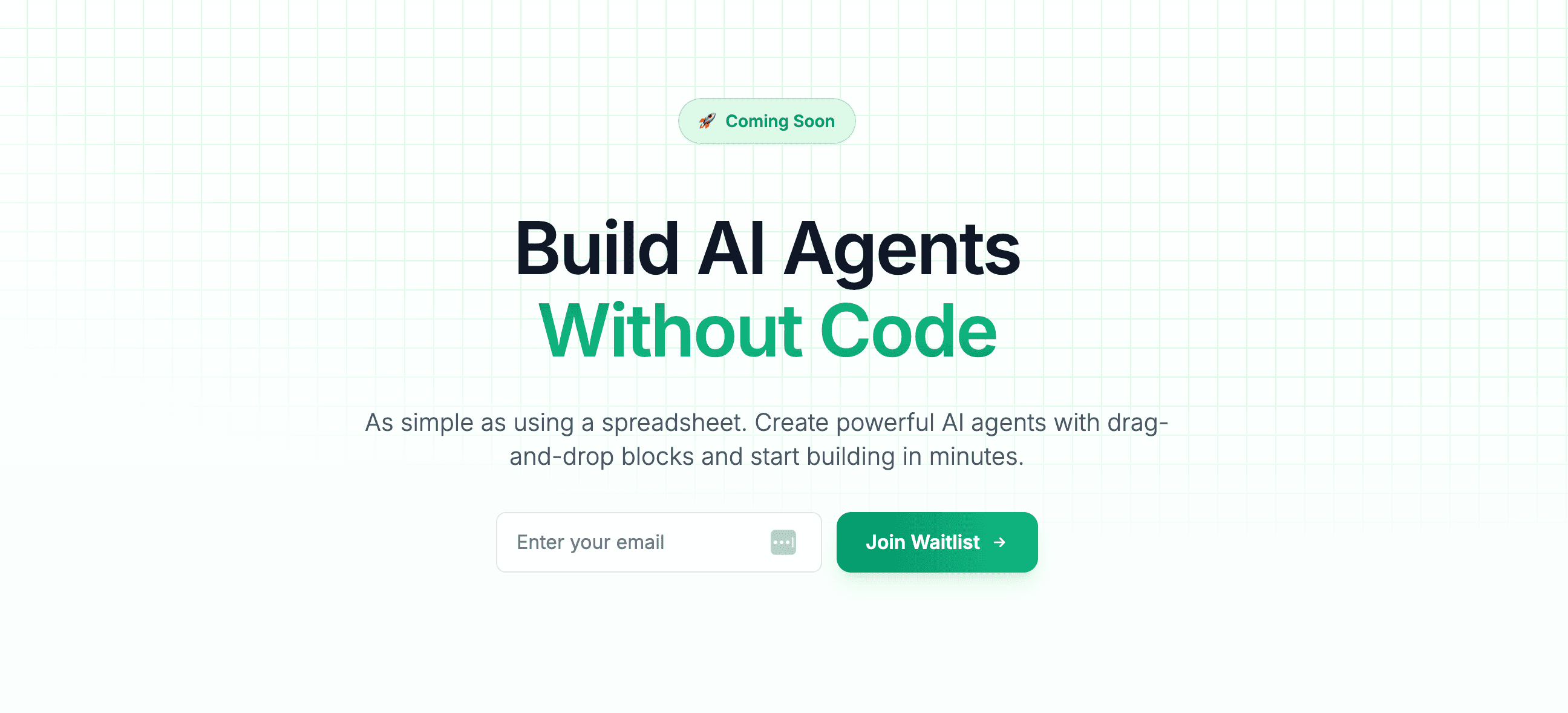
SageFlow
SageFlow is a no-code platform designed for building and deploying powerful AI agents using a drag-and-drop interface. Users can create custom agents with pre-built blocks, enabling rapid development and deployment. The platform also features an AI Marketplace where users can discover and rent expert-crafted AI agents for various tasks, or monetize their own creations. Key benefits include predictable income for creators, effortless scaling of agents, and flexible payout options. SageFlow aims to simplify agentic AI for everyone, offering solutions for tasks like SEO optimization and social media strategy, with future integrations planned for voice assistants, mobile devices, and a community platform.

Alife
Alife is an AI-powered platform designed to enhance In-Vitro Fertilization (IVF) outcomes for both clinics and patients. The platform offers a suite of AI tools, including Embryo Assist for standardizing lab procedures and reducing cryo calls, Lab Schedule Predict to optimize retrieval days and increase efficiency, and Clinic tools to improve patient satisfaction and conversion rates. Alife Assist™ integrates seamlessly with EMR systems, converting raw data into actionable insights for informed decision-making across the clinic. The technology is supported by peer-reviewed research, demonstrating its efficacy in areas like embryo selection, ovulation trigger timing, and oocyte optimization. Alife aims to empower every member of the clinic with data to make the best decisions for each IVF patient.
iris.c
Iris.c is an inference pipeline designed for generating images from text prompts using open weights diffusion transformer models. It is implemented entirely in C, requiring zero external dependencies beyond the C standard library. The tool supports various model families, including FLUX.2 Klein (4B and 9B versions) and Z-Image-Turbo (6B), offering both distilled and base models for different quality and speed requirements. Key features include optional MPS and BLAS acceleration for significant speedups, memory-mapped weights for efficient memory usage, and integrated text encoders. It supports text-to-image, image-to-image transformations, multi-reference generation, and an interactive CLI mode, making it a versatile tool for developers and researchers working with image synthesis.