
AI Agents & Automation
Browsing page 265 of AI Agents & Automation. Sorted by confidence score — our independent quality rating.

AcceptMyApp
AcceptMyApp is an AI-powered assistant designed for iOS developers to streamline the app submission process. It meticulously analyzes your app's metadata against Apple's stringent Review Guidelines, proactively identifying potential rejection risks before you submit your build. This pre-check functionality helps developers avoid costly delays and rework. In cases where an app is rejected, AcceptMyApp provides clear insights into why Apple flagged the build and assists in generating reviewer-safe appeal replies, offering a clear path to fix, appeal, or submit with confidence. The tool leverages AI to provide comprehensive analysis and support throughout the app review lifecycle.

BeyondRisk AI-6
BeyondRisk AI-6 is a platform tailored for enterprises to develop and expand AI-native applications. It focuses on integrating infrastructure and data to remove data silos and reduce tool proliferation, thereby streamlining the development process. The platform empowers organizations to innovate their software development methodologies, offering a comprehensive solution for managing complex AI environments. By providing a unified approach to AI infrastructure and data management, BeyondRisk AI-6 helps businesses overcome common challenges associated with scaling AI initiatives, such as regulatory reporting burdens and the complexity of on-premise vs. cloud ML infrastructure.

Idealogic
Idealogic is a leading software development company offering comprehensive solutions in AI, blockchain, and other innovative technologies. They provide services ranging from web and mobile development to specialized AI/ML solutions, custom blockchain implementations, and Oracle development. Idealogic caters to startups, mid-sized companies, and enterprises across diverse industries including Finance, Logistics, Aviation, Real Estate, Media, iGaming, and Healthcare. Their expertise covers product design, MVP development, dedicated teams, technical consulting, and ongoing maintenance and support, ensuring end-to-end project success and client satisfaction.
Human Emulator, powered by Grok
Human Emulator, powered by Grok, offers AI digital workers capable of performing any computer task a human can do, but faster, cheaper, and at infinite scale. This includes data entry, customer emails, invoice processing, and report generation. The platform automates back-office tasks, handles finance and compliance operations, supports software development with AI teams, provides business analytics, generates content and documents, and manages customer operations. Users describe the work needed in plain English, receive an instant quote based on complexity and volume, and can deploy and scale workers instantly, handling 10x volume with zero ramp-up.
LLamaTuner
LLamaTuner is an open-source, efficient, flexible, and full-featured toolkit designed for fine-tuning large language models (LLMs). It supports a wide range of models including Llama, Llama2, Llama3, Qwen, Baichuan, GLM, Falcon, and even visual language models (VLMs) like LLaVA. The toolkit is optimized for efficiency, capable of fine-tuning 7B LLMs on a single 8GB GPU and supporting multi-node fine-tuning for models exceeding 70B. It automatically dispatches high-performance operators like FlashAttention and Triton kernels to boost training throughput and is compatible with DeepSpeed for ZeRO optimization techniques. LLamaTuner offers various training algorithms such as QLoRA, LoRA, and full-parameter fine-tuning, alongside support for continuous pre-training, instruction fine-tuning, and agent fine-tuning. It also includes features for chatting with large models using pre-defined templates.
up-board.org
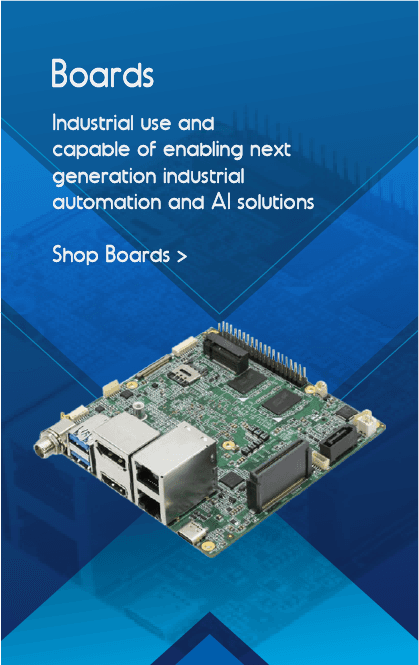
UP Bridge the Gap provides a robust platform for AI on the Edge computing, featuring a diverse range of devices such as boards, modules, and complete systems. These devices are designed for industrial use, facilitating advanced industrial automation and AI solutions. The platform supports various applications, including smart city infrastructure, transportation, and industrial inspection, leveraging integrated AI accelerators like Hailo-8™. UP Bridge the Gap also offers development kits, camera support, and a vibrant community forum for technical discussions and support, making it a comprehensive ecosystem for edge AI deployment.
ktransformers
KTransformers is an open-source research project focused on efficient inference and fine-tuning of large language models (LLMs) through CPU-GPU heterogeneous computing. It comprises two core modules: kt-kernel for high-performance inference kernels and kt-sft for a fine-tuning framework. kt-kernel offers CPU-optimized operations with AMX/AVX acceleration, MoE optimization, and quantization support (INT4/INT8 CPU, GPTQ GPU), with easy integration via Python API. kt-sft integrates with LLaMA-Factory for resource-efficient fine-tuning of ultra-large MoE models, supporting LoRA and production-ready features like chat and batch inference. The framework is designed for researchers and engineers working to optimize LLM performance on diverse hardware configurations.
Byrdhouse
Byrdhouse, rebranded as Langfinity, offers real-time AI-powered voice translation designed for meetings and events. This tool enables seamless communication and connection across more than 50 languages, with a focus on industry-specific voice translation. It aims to eliminate language barriers, allowing participants to meet, speak, and connect effortlessly. The platform is ideal for global teams, international conferences, and any scenario requiring instant, accurate multilingual communication. Langfinity's technology ensures that conversations flow naturally, supporting a wide range of industries with its specialized translation capabilities.

Agentleader
Agentleader is an AI-powered lead generation platform designed to help businesses grow their customer base. It leverages advanced agent-based browsing technology to identify and qualify potential leads. The platform offers data-driven prospecting solutions, aiming to provide cutting-edge capabilities for lead generation. By automating the lead discovery process, Agentleader helps users streamline their sales and marketing efforts, focusing on efficiency and targeted outreach. While specific features are not detailed on the provided website content, the core offering revolves around intelligent lead identification and data-backed insights to enhance prospecting strategies.
Agent-First-Organization
Agent-First-Organization is the official Python library for the Arklex framework, designed for building, deploying, and scaling intelligent AI agents with enterprise-grade reliability. It features an agent-first design purpose-built for multi-agent orchestration and is model agnostic, supporting OpenAI, Anthropic, Gemini, and more. The framework includes built-in evaluation capabilities, enterprise security features like authentication and rate limiting, and is production-ready with monitoring, logging, and auto-scaling. Key components include a declarative Task Graph, an Orchestrator for runtime and state management, and various Workers (RAG, database, web automation) and Tools (Shopify, HubSpot, Google Calendar integrations).
llm-awq
llm-awq is a powerful tool for Activation-aware Weight Quantization (AWQ) designed for Large Language Model (LLM) compression and acceleration. It offers efficient and accurate low-bit weight quantization (INT3/4) for a wide range of LLMs, including instruction-tuned models and multi-modal LMs. Key features include AWQ search for precise quantization, a pre-computed AWQ model zoo for popular LLMs like Llama-1/2/3, OPT, and CodeLlama, and memory-efficient 4-bit Linear in PyTorch. The tool also provides an efficient CUDA kernel implementation for fast inference, supporting both context and decoding stages. It includes examples for 4-bit inference with instruction-tuned models like Vicuna and multi-modal LMs such as VILA, and supports chunk prefilling for faster multi-round Q&A. llm-awq has received the MLSys 2024 Best Paper Award and is integrated into various platforms like Google Vertex AI, Amazon Sagemaker Containers, and Hugging Face transformers.
manifest
Manifest is an open-source smart model router designed for personal AI agents like OpenClaw or Hermes. It intelligently sits between your agent and LLM providers, scoring each request based on 23 dimensions in under 2ms. This allows it to route requests to the most cost-effective model that can fulfill the task, potentially cutting costs by up to 70%. The tool also features automatic fallbacks, ensuring continuity if a model fails, and allows users to set budget limits to prevent overspending. Manifest records all routing data, including tokens, costs, model used, and latency, which is viewable in a dashboard without extra setup. It supports over 300 models across various providers, including OpenAI, Anthropic, Google Gemini, and custom OpenAI-compatible providers, and can route through existing flat-rate subscriptions.
macOSpilot-ai-assistant
macOSpilot-ai-assistant is a voice and vision-powered AI assistant designed for macOS, enabling users to get answers about any application directly within their workflow. By simply using a keyboard shortcut, users can speak or type their question, and the assistant provides an in-context, audio-based response within seconds. The tool works by taking a screenshot of the active window and sending it to OpenAI GPT Vision along with the transcribed question. The answer is then displayed in a small overlay window and converted into audio using OpenAI TTS. This application-agnostic approach means it works across all macOS applications, eliminating the need to switch windows for information.
LLMRouter
LLMRouter is an intelligent open-source library designed to optimize Large Language Model (LLM) inference by dynamically selecting the most suitable model for each query. It achieves smart routing based on task complexity, cost, and performance requirements. The library supports over 16 routing models, categorized into single-round, multi-round, agentic, and personalized routers, covering diverse strategies like KNN, SVM, MLP, and graph-based routing. It provides a unified command-line interface (CLI) for training, inference, and interactive chat with a Gradio-based UI. Additionally, LLMRouter includes a comprehensive data generation pipeline for creating training data from 11 benchmark datasets, complete with automatic API calling and evaluation. It also supports multimodal understanding (image/audio/video) and integration with OpenAI-compatible servers like OpenClaw for production deployment.
long_llama
LongLLaMA is a large language model specifically designed to manage and process exceptionally long contexts, up to 256k tokens or more. Built upon the OpenLLaMA foundation and enhanced with the innovative Focused Transformer (FoT) method, it allows language models to handle extensive inputs while training on shorter sequences. The FoT method uses contrastive learning to enable attention layers to access a memory cache, significantly extending the effective context length. LongLLaMA is available in several variants, including a 3B base model under an Apache 2.0 license, and instruction-tuned versions like LongLLaMA-Instruct-3Bv1.1. A LongLLaMA Code 7B model, based on Code Llama, is also provided for code-related tasks. The project offers inference code, instruction tuning, and FoT continued pretraining code, making it a valuable resource for researchers and developers working with large language models and context scaling.
magentic
Magentic is a Python library designed to seamlessly integrate Large Language Models (LLMs) into Python code, enabling developers to build complex agentic systems. It leverages `@prompt` and `@chatprompt` decorators to define functions that interact with LLMs, returning structured outputs based on Pydantic models and built-in Python types. Key features include streaming of structured outputs and function calls, LLM-assisted retries for adherence to complex schemas, and observability via OpenTelemetry. Magentic supports multiple LLM providers like OpenAI and Ollama, offering flexible configuration options. It also facilitates asynchronous operations and chaining of LLM calls for sophisticated workflows.
llumnix
Llumnix is an open-source project designed for efficient and easy multi-instance Large Language Model (LLM) serving. It acts as a cross-instance request scheduling layer built on top of LLM inference engines like vLLM, aiming to optimize multi-instance serving performance. Key benefits include low latency through reduced time-to-first-token (TTFT) and queuing delays, high throughput via integration with state-of-the-art inference engines, and support for techniques like prefill-decode disaggregation. Llumnix achieves this through dynamic, fine-grained, KV-cache-aware scheduling and continuous rescheduling across instances, enabled by a near-zero overhead KV cache migration mechanism. It is easy to use, requiring minimal code changes for vanilla vLLM deployments, and offers seamless integration with existing multi-instance deployment platforms, fault tolerance, elasticity, and high service availability.
Blace Plugins | blace.ai | logoswap.ai
Blace Plugins provides a robust AI inference SDK and model hub designed for developers to build AI-powered applications without relying on Python. This cross-platform solution supports Windows, Mac, and Linux, offering a unified C++ inference layer. It connects models from its hub with various AI frameworks and hardware backends, ensuring fast, portable, and production-ready deployment. Key features include a no-Python runtime, a unified API for Torchscript and ONNX, and computation graphs for high-performant AI inference, similar to ComfyUI. This architecture helps reduce infrastructure complexity and allows deployment across desktop, edge, and cloud environments, making it ideal for integrating AI models quickly.
local-ai-stack
local-ai-stack is a comprehensive starter kit designed for developers to build and deploy local-only AI applications, eliminating the need for cloud services and associated costs. It focuses on privacy and offline capabilities, starting with document Q&A functionalities. The stack integrates key technologies such as Ollama for inference, Supabase pgvector for vector database management, and Langchain.js for LLM orchestration. The application logic is built with Next.js, and embeddings are generated using Transformer.js and all-MiniLM-L6-v2. This kit is ideal for those looking to develop AI solutions that run entirely on local infrastructure, offering a cost-effective and privacy-focused approach to AI development.
Memary
Memary is an open-source memory layer specifically engineered for autonomous AI agents, aiming to replicate human-like memory functions to enhance agent reasoning and performance. It integrates seamlessly with existing agents, providing features like auto-generated memory, memory modules for tracking user preferences, and system improvement capabilities. Developers can easily manage agent memories, switch between downloaded models, and incorporate custom tools. Memary supports local models via Ollama (Llama 3, LLaVA) and also integrates with OpenAI's GPT models. It utilizes knowledge graphs for efficient information retrieval and offers multi-graph capabilities for managing different agents' memory contexts, particularly with FalkorDB.
Memento
Memento is a Python application designed to record everything you do on your computer, providing a comprehensive timeline of your digital activity. It achieves this by taking screenshots every two seconds, compiling them into efficient h264 video segments, and using OCR to extract text from these images. This extracted text is then indexed in a sqlite3 database and a vector database, enabling powerful search capabilities via FTS5. Users can navigate their timeline, search for specific information, and even chat with a Large Language Model (LLM) like GPT through OpenAI's API to retrieve details about past actions. Inspired by rewind.ai, Memento offers a unique way to revisit and understand your computer usage history, making it a valuable tool for productivity and information retrieval.
MemMachine
MemMachine is an open-source, long-term memory layer designed for AI agents and LLM-powered applications. It enables AI to learn, store, and recall information from past sessions, transforming stateless chatbots into personalized, context-aware assistants. Key capabilities include episodic memory for graph-based conversational context, profile memory for long-term user facts, and working memory for short-term context. MemMachine ensures memory persistence across restarts, sessions, and model changes. It offers developer-friendly APIs, flexible storage using Neo4j for episodic memory and SQL for profiles, and is LLM agnostic, working with various providers like OpenAI and Anthropic. It can be self-hosted or used via a managed service.
NodeMaven IP Quality Filter
NodeMaven IP Quality Filter offers a premium proxy service designed to prioritize IP quality, ensuring that 95% of its IPs have clean records. This focus on quality minimizes the risk of blacklisting and improves the success rate of online operations. The service provides various proxy types including Residential, Mobile, and ISP Proxies, each optimized for specific use cases like multi-accounting, data collection, and geo-targeting. Key features include a speed and quality filter for faster, more reliable connections, ZIP-level targeting for precise location accuracy, and sticky sessions up to 7 days for consistent identity. NodeMaven also offers a Scraping Browser for auto-scaling automation and data collection, making it suitable for affiliate marketing, AI agents, crypto, and digital marketing.

ADEX
ADEX has developed and patented a disruptive control system technology for power plant instrumentation and control optimization, leveraging Self-Tuning AI. This technology boosts performance, increases economic outcomes, and improves safety and reliability within industrial applications. ADEX's platform is an enabler for Energy Transition, helping both power producers and large electricity consumers to improve their performance, increase energy efficiency, and reduce CO2 emissions. The system integrates as an add-on to existing control systems, requiring no additional instrumentation or long data acquisition for commissioning, and offers a short-term payback with a zero-risk commercial model for new customers.