
AI Agents & Automation
Browsing page 475 of AI Agents & Automation. Sorted by confidence score — our independent quality rating.
Forgemytrip
Forgemytrip is an AI-powered travel planning tool designed to simplify the process of organizing trips. Users can input their travel dates and destinations, and the platform will generate comprehensive, personalized itineraries. This tool aims to make travel planning easy by providing suggested activities for each day of the trip. Currently in beta, Forgemytrip is actively seeking user feedback to refine its features and user experience. Future developments are planned to enhance its capabilities, including the integration of map functionalities and direct booking options, further streamlining the travel planning process for its users.

TextSnatcher
TextSnatcher is a desktop application for Linux that enables users to quickly and easily extract text from images. Utilizing Tesseract OCR 4.x, it performs optical character recognition operations in seconds, making it simple to digitize text from visual sources. Key features include multi-language support and the ability to copy text from images with a simple drag-and-paste action. This tool is ideal for anyone needing to extract information from screenshots, scanned documents, or other image-based content on a Linux system, streamlining the process of converting visual text into editable digital format.
agent-device
agent-device is a command-line interface (CLI) designed for AI agents to control and observe iOS, tvOS, macOS, Android, and AndroidTV devices. It facilitates UI automation by providing structured snapshots of the accessibility tree, allowing agents to understand and interact with mobile UIs efficiently. The tool supports deterministic interactions, session-aware workflows, and replayable flows, making it suitable for repeated automation runs and debugging. Key features include inspecting UI states, collecting logs, network inspection, and performance snapshots. It also integrates with React DevTools for deeper component-level insights, making it a comprehensive solution for agent-driven mobile app testing and automation.
AI-Gateway
AI-Gateway is a comprehensive set of labs designed to help developers and platform engineers explore and manage AI Models, MCP servers, and Agents. Powered by Azure API Management and Microsoft Foundry, it offers an enterprise-grade gateway for building production-ready AI applications. Key features include robust security with OAuth 2.0 and content safety filtering, enhanced performance through load balancing and semantic caching, and detailed observability with token metrics and built-in logging. It also provides cost control via rate limiting and quota management, and extensibility with MCP protocol support and multi-model routing. The labs offer hands-on Jupyter notebooks, Bicep infrastructure templates, and APIM policies for easy deployment to Azure subscriptions, making it ideal for those looking to implement secure, reliable, and scalable AI solutions.
Coursology
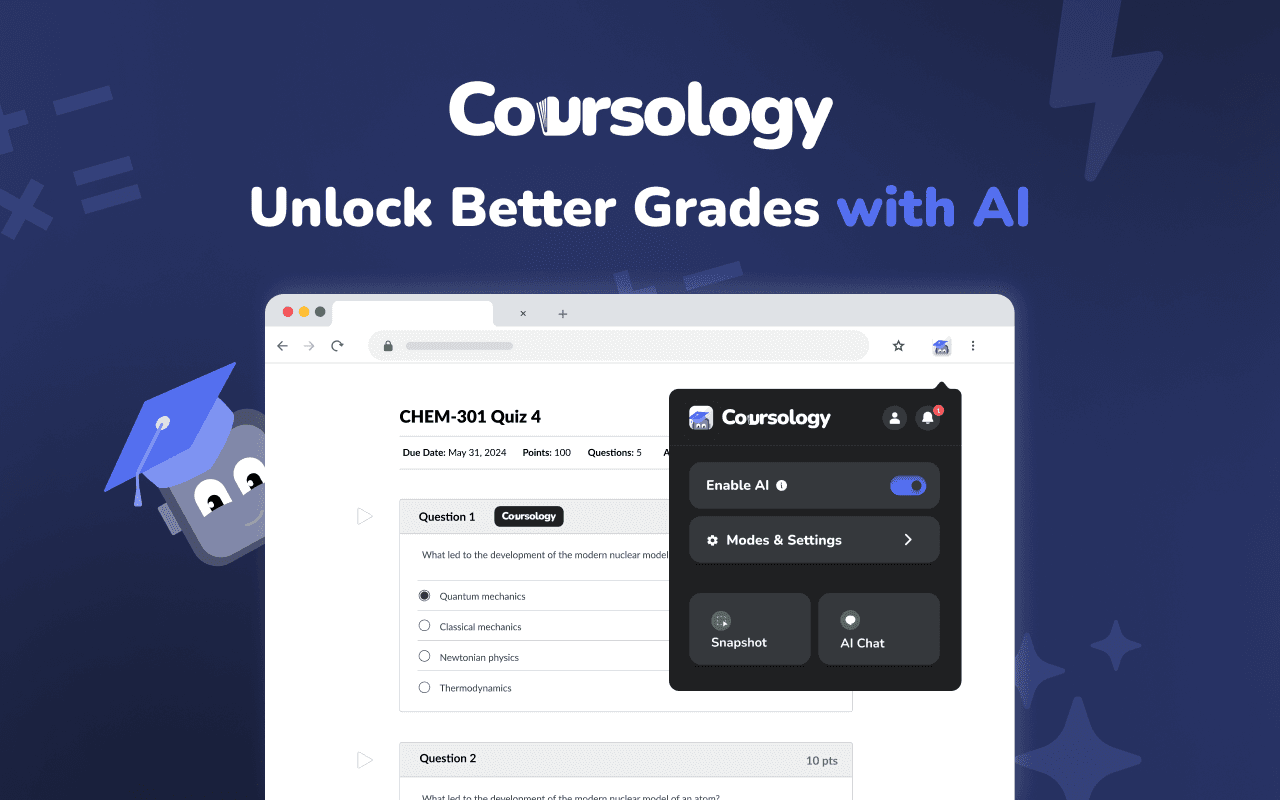
Coursology is an AI homework helper designed to assist students in completing assignments and enhancing their understanding across various subjects. It offers instant, accurate solutions and a suite of study tools, including AI notetaking, quizzes, and flashcards. Users can upload materials like notes, lectures, and textbooks for the AI to ingest, enabling file chat and personalized AI podcasts. The platform also provides a Chrome extension for verifying solutions and expanding understanding directly on learning platforms. Coursology supports multiple languages and is available on mobile apps, making learning faster and more effective for students at all levels.
budgetml
BudgetML is an open-source library designed for practitioners who need to quickly deploy machine learning models to an endpoint without significant time, money, or effort. It addresses the challenges of cloud functions' limitations and Kubernetes' overkill for single models by offering a simple, developer-friendly solution. BudgetML deploys models on Google Cloud Platform preemptible instances, which are approximately 80% cheaper than regular instances, while ensuring high uptime through automatic autostart. It provides features like automatic FastAPI server endpoint generation, interactive Swagger docs, built-in SSL certificate generation, and OAuth2 secured endpoints. While not intended for full-fledged production, it offers a cost-effective and fast way to get ML models into production.
Dataset_Synthesizer
NVIDIA Deep learning Dataset Synthesizer (NDDS) is a powerful UE4 plugin designed for computer vision researchers. It facilitates the export of high-quality synthetic images along with comprehensive metadata, including segmentation, depth, object pose, bounding boxes, keypoints, and custom stencils. Beyond simple export, NDDS incorporates various components for generating highly randomized images, encompassing lighting, objects, camera positions, poses, textures, and distractors, as well as camera path following. These capabilities collectively enable researchers to effortlessly create diverse and randomized scenes, which are crucial for effectively training deep neural networks and overcoming the limitations of hand-labeled data.
ElatoAI
ElatoAI offers a comprehensive solution for integrating realtime voice AI into Arduino ESP32 devices, supporting over 100 voice AI models. It's designed for creating AI toys, companions, and various smart devices, facilitating uninterrupted conversations for more than 20 minutes globally. The platform leverages secure WebSockets and Deno Edge Functions for low-latency performance and global accessibility. Key features include real-time speech-to-speech conversion using APIs like OpenAI, Gemini, and Eleven Labs, custom AI agent creation with customizable voices, and robust hardware integration with the ESP32 Arduino Framework. It also provides device management, user authentication, conversation history, and OTA updates, making it a versatile tool for developers building interactive voice AI applications.
fastapi-langgraph-agent-production-ready-template
The fastapi-langgraph-agent-production-ready-template is a comprehensive solution for AI engineers looking to build robust AI agent backends using FastAPI and LangGraph. This template addresses critical aspects of AI agent development, including stateful conversations, long-term memory management, and tool calling. It integrates essential features like Langfuse tracing for observability, Prometheus metrics with Grafana dashboards for monitoring, and JWT authentication with session management for security. Additionally, it includes rate limiting via slowapi, Alembic migrations for database management, and an optional Valkey/Redis cache layer. The template is designed to handle the complex infrastructure, allowing developers to focus on agent logic and accelerate their application development.
faster-rnnlm
faster-rnnlm is an open-source toolkit designed for efficient recurrent neural network language modeling. It aims to train on massive datasets (billions of words) and very large vocabularies (hundreds of thousands) for real-world Automatic Speech Recognition (ASR) and Machine Translation (MT) problems. The toolkit incorporates advanced setups like ReLU+DiagonalInitialization, GRU, Noise Contrastive Estimation (NCE), and RMSProp to achieve better results and faster training. It boasts impressive speed, processing over 250k words per second on a 3.3GHz CPU with standard parameters, making an epoch take less than an hour. The toolkit supports various hidden layer types and offers both Hierarchical Softmax and NCE for output layers, with NCE being particularly effective for large vocabularies as its speed is independent of vocabulary size.
PriviNet
PriviNet delivers advanced AI-driven IoT solutions, focusing on unbreakable connectivity and privacy-first intelligence. Its core technology, Lumra AI™, processes diverse data streams, including visuals and audio, to provide actionable, verifiable evidence from sensitive and remote environments. This transforms ambiguous alerts into trusted intelligence for applications ranging from in-home safety with Scout I to industrial asset monitoring with Scout X. Lumra AI enables low-power IoT devices to perform sophisticated analytics, optimizing resource use, reducing operational costs, and ensuring data integrity with advanced security protocols like encryption and blockchain. PriviNet's solutions are scalable and applicable across smart cities, precision agriculture, logistics, healthcare, airports, and environmental projects, driving innovation and improving quality of life.
MAgent
MAgent is a research platform specifically engineered for many-agent reinforcement learning, distinguishing itself from other platforms that typically focus on single or few-agent scenarios. It enables researchers to scale up their reinforcement learning experiments from hundreds to millions of agents, facilitating the study of artificial collective intelligence. The platform supports both Linux and OS X and allows for the implementation of various algorithms, including rule-based systems and deep learning frameworks. While the original project is no longer maintained, a community-maintained fork, MAgent2, is available for continued development and use. It offers examples for training and playing with agents in scenarios like pursuit, gathering, and battle, along with baseline algorithms like DQN, DRQN, and A2C.
llm-foundry
llm-foundry is a comprehensive open-source repository offering code for the entire lifecycle of Large Language Models (LLMs), from training and finetuning to evaluation and deployment. It is specifically designed to integrate with Composer and the MosaicML platform, providing an efficient and flexible environment for rapid experimentation. The codebase supports various LLM workloads, including data preparation, training HuggingFace and MPT models from 125M to 70B parameters, and benchmarking training throughput and MFU. It also facilitates inference by converting models to HuggingFace or ONNX formats, generating responses, and evaluating LLMs on academic or custom in-context-learning tasks. The repository includes support for DBRX and MPT models, with detailed instructions for local use and community contributions.
Mocha.jl
Mocha.jl is a deep learning framework for the Julia programming language, drawing inspiration from the C++ framework Caffe. Although now deprecated, it was designed for efficient training of deep and shallow convolutional neural networks, supporting optional unsupervised pre-training via stacked auto-encoders. The framework boasts a modular architecture with isolated components for layers, activation functions, solvers, and more, allowing for easy extension. Written in Julia, it offers a high-level interface for intuitive deep neural network experimentation. Mocha.jl provides multiple backends, including a portable pure Julia backend, a faster native extension backend, and a highly efficient GPU backend utilizing NVidia® cuDNN and CUDA kernels. It also supports HDF5 for data and model storage, ensuring compatibility with other computational tools, and can import Caffe model snapshots.
project_news_alan_ai
Project News Alan AI is an open-source code repository that showcases how to build a conversational voice-controlled React News Application using Alan AI. Alan AI is a powerful speech recognition software designed to integrate voice capabilities into various applications, enabling users to control app functionalities entirely through voice commands. This project serves as a practical tutorial, guiding developers through the process of integrating Alan AI into a React application to create interactive, voice-enabled experiences. It highlights the ease of integration and the potential for developing custom voice-controlled applications, making it a valuable resource for those looking to add advanced speech recognition features to their projects.
rnn
rnn is a specialized library designed for building Recurrent Neural Networks within the Torch7's nn framework. It offers functionalities to construct different types of RNN architectures, including LSTMs (Long Short-Term Memory), GRUs (Gated Recurrent Units), and BRNNs (Bidirectional Recurrent Neural Networks). This tool is particularly useful for developers and researchers working on deep learning projects that require sequential data processing and advanced neural network models. While the original repository is deprecated, its principles and functionalities laid a foundation for subsequent RNN implementations in Torch.
Resemblyzer
Resemblyzer is a Python package designed for advanced voice analysis and comparison, leveraging deep learning techniques. It functions by deriving a high-level representation of a voice through a sophisticated voice encoder model. The tool generates a summary vector consisting of 256 values, which effectively encapsulates the unique characteristics of a spoken voice. This capability makes it suitable for applications requiring detailed voice identification, verification, or similarity analysis, providing a robust framework for understanding vocal nuances in various contexts.
sematic
Sematic is an open-source platform designed for ML engineers and data scientists to develop and manage machine learning pipelines. It enables users to write complex end-to-end pipelines using simple Python code, which can then be executed locally on a laptop, in a cloud VM, or on a Kubernetes cluster to leverage cloud resources. The platform emphasizes easy onboarding with no deployment or infrastructure needed to get started, offering local-to-cloud parity. Key features include end-to-end traceability of pipeline artifacts, reproducibility of results, dynamic graphs, lineage tracking, and runtime type-checking. Sematic also provides a modern web dashboard for monitoring, tracking, and visualizing pipelines and artifacts, along with integrations for Apache Spark, Ray, Snowflake, Plotly, Matplotlib, and Pandas.
SuperGluePretrainedNetwork
SuperGluePretrainedNetwork is a research project from Magic Leap, presented at CVPR 2020, focusing on learning feature matching using Graph Neural Networks. The core of the project is the SuperGlue network, which integrates a Graph Neural Network with an Optimal Matching layer. This architecture is specifically designed to perform matching tasks on two distinct sets of sparse image features. The repository offers both the PyTorch code implementation and pretrained weights, making it accessible for researchers and developers interested in computer vision and feature matching applications. It serves as a valuable resource for those looking to implement or build upon advanced feature matching techniques.

DoNotPay
DoNotPay is an AI-powered platform designed to empower consumers by fighting against large corporations, protecting privacy, finding hidden money, and navigating bureaucracy. Established in 2015, it provides over 100 AI-powered tools to help users save time and money. Key features include a Free Trial Card to avoid unwanted charges, tools to fight scammers, beat bureaucracy, and protect personal privacy. DoNotPay also assists with tasks like canceling subscriptions, appealing bank fees, suing robocallers, and finding unclaimed money. While it provides a platform for legal information and self-help, it explicitly states it is not a law firm and does not provide legal advice.
stellargraph
StellarGraph is a comprehensive Python library designed for machine learning on various types of graphs and networks. It provides a rich collection of state-of-the-art algorithms, including GraphSAGE, GCN, GAT, Node2Vec, and Metapath2Vec, enabling users to perform tasks such as representation learning for nodes and edges, classification of nodes or entire graphs, and link prediction. The library supports diverse graph structures, from homogeneous to heterogeneous and knowledge graphs, and integrates seamlessly with TensorFlow 2, Keras, Pandas, and NumPy. This makes it user-friendly, modular, and extensible, allowing for smooth interoperability with existing machine learning workflows and easy augmentation of its core algorithms.
sumo-rl
sumo-rl is an open-source tool designed to simplify the creation and management of Reinforcement Learning (RL) environments for Traffic Signal Control using SUMO. It offers a straightforward interface, ensuring compatibility with widely used RL libraries and frameworks such as Gymnasium, PettingZoo, stable-baselines3, and RLlib. The tool supports both single-agent and multi-agent RL scenarios, allowing for flexible experimentation. Users can easily customize observation spaces and reward functions to suit their specific research or application needs. sumo-rl is particularly useful for developers and researchers focused on advancing AI agents for traffic management and optimization, providing a robust platform for simulating and evaluating different control strategies.
susi_shell
susi_shell provides a collection of command-line tools designed for seamless interaction with various AI services directly from the terminal. This allows developers and technical users to integrate AI capabilities into their workflows without leaving the command line. While the specific AI services are not detailed, the tool aims to streamline AI-related tasks, offering a programmatic approach to leveraging artificial intelligence. Some functionalities within susi_shell require a connection to the OpenAI API, indicating its potential for tasks like natural language processing, code generation, or other generative AI applications. It caters to those who prefer a text-based interface for efficiency and automation.
Stock Analysis Tool
The Stock Analysis Tool is an open-source project built using the CrewAI framework, designed to automate the process of analyzing stocks and providing investment recommendations. It orchestrates autonomous AI agents to collaborate and execute complex financial tasks efficiently. Users can input a company name, and the tool will generate a detailed report by leveraging various tools like browser scraping, internet search, calculator functions, and SEC filings (10-Q, 10-K). The tool supports both GPT-4 (default) and GPT-3.5, and also allows integration with local models like Ollama for enhanced flexibility, privacy, and customization. This makes it a versatile solution for financial analysis.