
AI Agents & Automation
Browsing page 514 of AI Agents & Automation. Sorted by confidence score — our independent quality rating.

Reflectr AI Journal
Reflectr AI Journal is a mobile application designed to enhance personal journaling through the power of artificial intelligence. Available on iOS and Android, it provides a private digital space for users to freely post their thoughts and feelings without social pressure. The app leverages AI to organize, summarize, and provide feedback on entries, including mood indicators, tags, emojis, and writing tips. Users can chat with their journal, receive AI comments on every post, and even clean up or change the tone of their writing. Premium features include additional AI personalities for commentary, more introspective questions, and a passcode lock, making it a comprehensive tool for self-reflection and mental well-being.

Universities
Universities is an AI application hosted on Hugging Face Spaces, designed to showcase a curated list of universities that maintain profiles on the Hugging Face platform. This tool provides users with a centralized directory to explore academic institutions engaged with AI and machine learning. Each entry includes essential details about the university and direct links to their respective Hugging Face profiles, facilitating easy access and exploration. It serves as a valuable resource for students, researchers, and anyone interested in understanding the academic landscape within the Hugging Face ecosystem. The application is straightforward to use, offering a clear and concise interface for browsing university information.
Detect Auto
Detect Auto is an AI-driven tool designed to streamline auto shop operations by automating service processes. It helps auto shops save time, boost maintenance sales, and improve overall productivity without disrupting existing workflows. Key features include an Inspection Assistant, a Maintenance System that compares service history against maintenance schedules, Customer Workflows for collecting concerns, and Profitability Analysis. The Maintenance System integrates data from shop management systems and CARFAX® to provide comprehensive reports. Detect Auto aims to enhance customer experience and significantly increase average repair orders (AROs) and maintenance sales for automotive repair businesses.
RecommenderSystem-Paper
RecommenderSystem-Paper is an open-source GitHub repository that serves as a curated collection of significant papers, tools, and frameworks within the domain of recommender systems. It is designed to assist researchers and academics by providing a centralized resource for reading and exploring key advancements. The repository categorizes papers by conference (e.g., KDD, ICDM, AAAI, WWW, NIPS, ICML, CIKM, SIGIR, Recsys, WSDM) and by interesting topics such as Cold Start and Deep Learning. Beyond academic papers, it also lists useful recommender system engines like Mosaic and Crab, and algorithm frameworks such as Surprise and LightFM, making it a comprehensive resource for understanding and implementing recommender technologies.

Vellex Computing
Vellex Computing provides a complete hardware and software stack for real-time AI training at the edge, addressing the challenge of static AI models on devices like satellites, drones, and industrial robots. Unlike conventional iterative AI training that consumes significant power and time, Vellex utilizes a physics-based optimization approach. This allows its analog IP block to deliver optimal model weights at milliwatt power and nanosecond-scale speed, integrating seamlessly with standard ARM or RISC-V cores. The platform includes Vellex Train (software optimization), Vellex Board (developer kit), Vellex Core (licensable silicon), and a Code-to-Circuit compiler compatible with ML frameworks like PyTorch and JAX, requiring no analog expertise from engineers. This innovation enables continuous on-device learning, making AI models adaptive and responsive to changing real-world conditions.
WriteMage
WriteMage is an AI application designed to seamlessly integrate ChatGPT capabilities into macOS and iOS devices. It allows users to interact with AI directly within any macOS app, functioning like Apple Spotlight with context-awareness, eliminating the need for copy-pasting. The tool features memory, enabling it to remember conversation context within a session, and saves all chat history locally with labels for easy retrieval. WriteMage also includes a Prompt Editor GUI, empowering users to customize and create their own prompts. For iOS, it integrates natively with the keyboard, working across various apps. The app offers both subscription and lifetime deal options, with a beta period that includes free usage and discounts.
deep-learning-from-scratch-4
deep-learning-from-scratch-4 is an open-source GitHub repository that serves as the support site for the book "Deep Learning from Scratch 4: Reinforcement Learning Edition" (O'Reilly Japan, 2022). It provides all the source code used in the book, organized by chapter, along with common utility code. The repository also offers Jupyter Notebook versions of the code, which can be run directly on cloud services like Google Colab, Kaggle Notebook, and Studio Lab for interactive learning. It supports Python 3.x and requires libraries such as NumPy, Matplotlib, OpenAI Gym, and DeZero (or PyTorch). The project is licensed under the MIT License, allowing for free commercial and non-commercial use, making it an excellent resource for students and developers exploring reinforcement learning.
Wmtis Explorer
Wmtis Explorer is presented as a Hugging Face Space, suggesting it is a platform for discovering and interacting with machine learning applications developed by the community. However, based on the live website content, the tool is currently non-functional, displaying a "Runtime error" and a "Scheduling failure: not enough hardware capacity" message. This indicates that while its intended purpose is to showcase ML apps, it is presently unable to operate. The platform is hosted by nlphuji and is identified as an AI Application.
Random Walk AI
Random Walk AI specializes in providing advanced AI solutions for modern enterprises, focusing on building AI solutions that integrate seamlessly with business operations. Their platform suite includes tools for visual AI, analytical AI, functional AI, and textual AI, designed to address various enterprise challenges from vision and voice to data and decision-making. These platforms are engineered for adaptability, security, and seamless integration, enabling businesses to leverage intelligence effectively. The Business Enterprise Suite, their flagship offering, includes AI Readiness Assessment, Knowledge Nudge, Chateleon, and Fortune Cookie, aimed at empowering organizations to learn, communicate, and make data-driven decisions. Random Walk AI emphasizes transforming images and videos into actionable intelligence, simplifying complex data into patterns, automating workflows, and understanding/generating human-like text.

Soothe Note — Cancer Care Companion
Soothe Note is a dedicated digital companion designed for cancer patients and their caregivers, offering a calm and private platform for health tracking. Users can easily log daily health metrics, symptoms, mood, and medication intake. The tool also facilitates the tracking of appointments and generates visit-ready summaries, which can significantly improve the quality and efficiency of oncology appointments. By centralizing vital health information, Soothe Note aims to provide clarity and confidence throughout the cancer treatment journey, making it easier to manage and communicate health status effectively.

Octave Melody AI
Vercel offers a comprehensive AI Cloud platform designed for developers to build, scale, and secure web experiences. It provides essential developer tools and cloud infrastructure, enabling teams to ship features faster and more efficiently. Key offerings include the AI Gateway for managing multiple AI models, Sandbox for isolated code execution, and Vercel Agent for stack-aware assistance. The platform also features an AI SDK for TypeScript, robust CI/CD capabilities, fast content delivery, and fluid compute for serverless functions. Vercel emphasizes security with bot management, DDoS protection, and a Web Application Firewall, making it suitable for deploying AI apps, composable commerce, marketing sites, and multi-tenant platforms.
text_gcn
text_gcn is an open-source implementation of Graph Convolutional Networks (GCNs) specifically designed for text classification tasks. This tool provides the necessary code to reproduce the results presented in the paper "Graph Convolutional Networks for Text Classification" from the AAAI 2019 conference. It requires Python 2.7 or 3.6 and Tensorflow >= 1.4.0, making it accessible for those familiar with these environments. The repository includes scripts for data preparation, graph building, and model training, along with examples for various datasets like 20ng, R8, R52, ohsumed, and mr. An inductive version, fast_text_gcn, is also available for scenarios where test documents are not included in the training process.
GlobalPros
GlobalPros.ai is an AI-driven platform designed to revolutionize tech recruiting by precisely matching job descriptions with a global community of pre-vetted tech talent. It aims to reduce tech time-to-fill by up to 90% and solve 20 common sourcing pain points, including misleading resumes, candidate shortages, and screening bias. The platform offers an "Auto Pipeline Builder" to automate the creation of assessed tech talent pipelines and the "GlobalPros.ai Community" for instant matching with thousands of fully assessed developers. Candidates are rigorously vetted for coding, soft skills, problem-solving, cultural fit, and English proficiency, ensuring high-quality hires. GlobalPros.ai also emphasizes AI explainability and bias mitigation through algorithm audits and anonymous profiles.
KB2E
KB2E is a knowledge graph embedding tool developed as a subproject of THU-OpenSK. It provides implementations for several prominent knowledge graph embedding algorithms, including TransE, TransH, TransR, and PTransE. These algorithms are crucial for representing entities and relations in a knowledge graph as low-dimensional vectors, enabling various downstream tasks like link prediction and entity classification. While the project offers valuable resources for researchers and developers interested in knowledge graph embeddings, it is important to note that KB2E is no longer actively maintained. Users are advised to transition to the newer and actively supported OpenKE package for continued development and support in this domain.
Kindroid AI
Kindroid AI provides a platform for creating highly personalized AI companions with advanced features. Users can customize their AI's personality through configurable backstories and generate consistent images with the selfie gallery feature. The tool boasts infinite memory with a proprietary Cascaded Memory system, ensuring the AI remembers important details and learns over time. Kindroid also offers high-fidelity AI-generated audio for voice and video calls, with customizable pitch, accent, and speed. Beyond one-on-one interactions, users can create group chats with multiple Kindroids, fostering dynamic and unpredictable conversations. This makes Kindroid suitable for various roles, including roleplay partners, language tutors, mentors, confidants, or even as a memorial for loved ones.
AgentsBase AI
AgentsBase AI was a platform designed to deploy swarms of cloud marketing agents for automated A/B testing. The tool focused on optimizing ad performance across various demographics, copy, and styles, claiming to deliver 50-500x better CPM compared to Google, Instagram, or TikTok ads. However, the company announced its acquisition and shutdown only nine months after launch. The founders learned that AI video models were not generating sales for customers, and unpolished user-generated content (UGC) performed better than highly produced AI video clips. The technology has been purchased by another AI video startup, with plans for a new version. The original team is now starting a private research lab, Riddermark Labs, focusing on broader automation problems.

Fatala Digital House
Fatala Digital House specializes in digital transformation for Small and Medium-sized Enterprises (SMEs) and mid-sized companies, focusing on data and AI. They assist organizations in improving performance and optimizing costs by placing data at the core of their strategy. Services include data strategy consulting, custom solution development and deployment leveraging Web, Data Engineering, and Data Science expertise, and training to build capable teams. Fatala offers a data diagnostic to identify potential areas for improvement, aiming to increase revenue, achieve operational excellence through process automation and algorithmic implementation, and enhance business intelligence for better decision-making. Their teams are based in Africa and Europe.
WIKK Terminal
WIKK Terminal is a real-time monitoring tool specifically designed for MegaETH, providing live updates on Transactions Per Second (TPS), latency, and the overall progress of stress tests. Built for the Day 1 Global Test targeting 11 billion transactions, WIKK offers critical insights for builders. It allows users to compare MegaETH's performance against other Layer 2 solutions like Base, Arbitrum, and Optimism. Key features include real-time metrics, smart alerts for TPS spikes via browser notifications or Discord/Telegram webhooks, and an open-source codebase for community contributions. WIKK is a community-built tool, not officially affiliated with MegaETH, and aims to support developers tracking the network's performance.
MiVOLO-Demo
MiVOLO-Demo is an AI-powered tool available on Hugging Face Spaces that allows users to upload an image and receive an estimation of the age and gender of individuals within it. The platform provides options to adjust detection settings, which can help improve the accuracy of the results. Developed by Irina Tolstykh, this web application falls under the AIApplication category and is licensed under Apache 2.0. It offers a straightforward interface for exploring AI capabilities in facial analysis, making it accessible for quick demonstrations and personal use.
ThreeDPoseUnityBarracuda
ThreeDPoseUnityBarracuda is an open-source Unity sample project designed for 3D pose estimation, leveraging the Barracuda neural network inference library. This tool allows developers to implement real-time motion capture, enabling an avatar (like Unity-chan) to mimic human movements from a video input. It supports loading ONNX models for improved accuracy and provides options for choosing target videos, avatars, and even using a web camera for input. While the project is not actively maintained, it serves as a valuable foundation for integrating advanced pose estimation capabilities into Unity-based game development and other interactive applications. Users can customize avatar sizes and input sources, making it a flexible starting point for various motion-related projects.
PRMLT
PRMLT is a Matlab package designed to implement machine learning algorithms as detailed in C. Bishop's influential textbook, "Pattern Recognition and Machine Learning" (PRML). This open-source package is entirely written in Matlab, ensuring it is self-contained with no external dependencies beyond Matlab itself. It requires Matlab R2016b or a later version, specifically utilizing features like implicit expansion (broadcasting) and requiring the Statistics and Image Processing Toolboxes for certain functionalities. The design prioritizes succinctness, efficiency through vectorization and matrix factorization, numerical robustness, and readability with heavy commenting and formula annotations. It aims to be practical for ML research, with many functions already widely used.
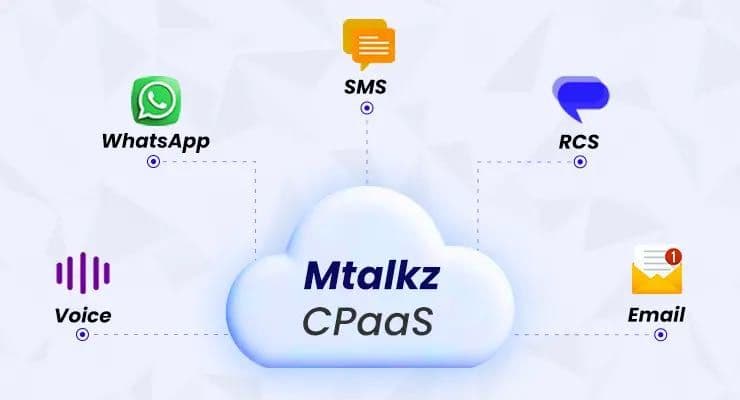
Mtalkz
Mtalkz is a comprehensive communication platform designed for businesses of all sizes, from startups to established enterprises. It offers a suite of services including bulk SMS, WhatsApp API, RCS messaging, OTP SMS, IVR solutions, and email services. The platform emphasizes reliability with a 99.9% uptime guarantee and provides 24/7 expert support to ensure seamless operations. Mtalkz aims to reduce communication costs by up to 20% and improve delivery rates by 30%, making it an efficient solution for various business communication needs. It also includes features like DLT registration support, API integrations, message personalization, and real-time analytics.
PandaGPT
PandaGPT is a pioneering open-source AI model that excels in instruction-following across six distinct modalities, including visual and auditory inputs. It is the first foundation model to achieve this without explicit supervision, demonstrating advanced capabilities in complex understanding, reasoning, knowledge-grounded descriptions, and multi-turn conversations. Researchers and developers can leverage PandaGPT to perform intricate tasks such as detailed image description generation, creating stories inspired by videos, and answering questions based on audio. Its unique ability to process and semantically compose multimodal inputs, like connecting visual and auditory information, makes it a powerful tool for advanced AI research and application development. The project provides resources for running demos, training custom models, and accessing pre-trained checkpoints.
legged_gym
legged_gym offers Isaac Gym environments specifically designed for training legged robots to walk on rough terrain. This open-source repository provides all necessary components for successful sim-to-real transfer, including an actuator network, friction and mass randomization, noisy observations, and random pushes during training. It supports the development and testing of robust robot control algorithms, with a focus on real-world applicability. The platform allows users to define and train new environments, customize robot assets, and fine-tune training parameters. While the project has migrated to Isaac Lab for future updates, this repository remains a valuable resource for those working with Isaac Gym Preview 3.