
AI Agents & Automation
Browsing page 549 of AI Agents & Automation. Sorted by confidence score — our independent quality rating.

Pocketride
Pocketride is a ridesharing service dedicated to offering safe, affordable, and reliable transportation, with a particular focus on rural communities like Sarnia, Ontario. The platform aims to dismantle the rideshare gray market by providing a regulated and trustworthy alternative. Key features include background-checked drivers, real-time tracking, and an emphasis on affordability to make transportation accessible to everyone. Pocketride is building a relatable, local, and experiential rideshare brand, offering exclusive early access with rides starting at just $3.5. It also highlights its commitment to community-centered design, transparency, and inclusivity, positioning itself as an AI ride companion connecting communities.
AGIE AI
AGIE.ai is presented as a premium domain for sale through the Atom platform, which specializes in curating and selling brandable domains. The domain itself is described as a sleek, 4-letter, 2-syllable name, ideal for startups looking to evoke agility and intelligence in the digital landscape. The Atom platform facilitates secure transactions, offers flexible payment options including installments, and guarantees domain transfers. It also provides services like AI naming contests, AI audience testing, and domain appraisal, making it a comprehensive resource for businesses seeking to establish their online presence with a strong domain name.
QuickJS
QuickJS is an open-source, embeddable JavaScript engine, ideal for applications requiring a minimal footprint. It supports standard JavaScript features and allows users to compile JavaScript code into binary executables, enhancing deployment and execution efficiency. The engine is designed for flexibility, enabling integration into various projects. Key functionalities include compiling JS to binary, handling modules, and providing a lightweight environment for JavaScript execution. While powerful, it has known limitations such as not supporting Blob or WebWorker, and silent exceptions in promises unless explicitly handled. It also has issues with recursive async functions, which can lead to segmentation errors. Despite these, QuickJS offers a robust solution for developers needing a compact and efficient JavaScript runtime.
pytorch-memonger
pytorch-memonger is an open-source Python library designed for sublinear memory optimization in deep learning models built with PyTorch. It re-implements the technique described in "Training Deep Nets with Sublinear Memory Cost," significantly reducing the memory required for backward passes from O(N) to O(sqrt(N)). This optimization is particularly beneficial for training large sequential models or using larger batch sizes that would otherwise exceed available GPU memory. By replacing `nn.Sequential` with `memonger.SublinearSequential`, developers can easily integrate this memory-saving technique. The tool also addresses challenges with non-deterministic layers like BatchNorm and Dropout by re-scaling momentum and memorizing random number generator states, respectively, ensuring reliable performance.
safe-rlhf
safe-rlhf is an open-source framework designed for research into Constrained Value Alignment using Safe Reinforcement Learning from Human Feedback (RLHF). It offers a comprehensive and reproducible code pipeline, making it an invaluable resource for alignment research. The framework supports various training methods, including Supervised Fine-Tuning (SFT), standard Reinforcement Learning from Human Feedback (RLHF), and Safe RLHF. This allows researchers to explore different approaches to aligning AI models with human values while ensuring safety constraints are met. Its modular design facilitates experimentation and integration into existing research workflows, providing a robust platform for developing and evaluating safe AI systems.
shimmy
shimmy is a Python-free Rust inference server designed for local AI model deployment, offering full OpenAI API compatibility. It supports GGUF and SafeTensors models, enabling users to point existing AI tools to shimmy for local, private, and free inference. Key features include hot model swapping, automatic model discovery from Hugging Face cache, Ollama, and local directories, and zero configuration. It also boasts advanced Mixture of Experts (MOE) support for running large models (70B+) on consumer hardware through intelligent CPU/GPU hybrid processing. shimmy is distributed as a single binary, including all GPU backends for various platforms, simplifying installation and ensuring automatic GPU detection.
stride-gpt
stride-gpt is an AI-powered threat modeling tool designed to enhance application security by leveraging OpenAI's GPT models. Users can input details about their applications, and the tool will generate comprehensive threat models and attack trees based on the STRIDE methodology. This capability is crucial for identifying potential vulnerabilities and assessing security risks effectively. The tool aims to streamline the process of security analysis, providing developers and security professionals with actionable insights to fortify their applications against potential threats. By automating the generation of these complex security artifacts, stride-gpt helps in proactively addressing security concerns and integrating security practices earlier in the development lifecycle.
sunnypilot
sunnypilot is an open-source driver assistance system, forked from comma.ai's openpilot, designed to provide a unique driving experience across more than 350 supported car makes and models. It achieves this by modifying behaviors of driving assist engagements, all while adhering as closely as possible to comma.ai's safety policies. The system logs various data, including road-facing camera, CAN, GPS, IMU, and thermal sensors, with optional opt-in for driver-facing camera and microphone. Users can join the community forum for support and installation instructions, and documentation is available for features and FAQs. sunnypilot is released under the MIT License, with portions derived from openpilot.
uniface
UniFace is a lightweight, production-ready, and open-source face analysis library built on ONNX Runtime, offering a comprehensive suite of features for processing facial data. It includes advanced capabilities such as RetinaFace, SCRFD, YOLOv5-Face, and YOLOv8-Face for face detection with 5-point landmarks, and various models like AdaFace, ArcFace, and MobileFace for face recognition embeddings. The library also provides multi-object face tracking with BYTETracker, 106-point facial landmark localization, and semantic face parsing with BiSeNet. Additional features include trimap-free portrait matting, real-time gaze and head pose estimation, and attribute analysis for age, gender, race, and emotion. For privacy, it offers anti-spoofing and face anonymization with multiple blur methods. UniFace supports hardware acceleration on ARM64 (Apple Silicon), CUDA (NVIDIA), and CPU, making it versatile for different deployment environments.
Transcribro
Transcribro is a private, on-device speech recognition keyboard and service designed for Android devices. It leverages whisper.cpp to run OpenAI's Whisper models, ensuring high-quality and accurate speech-to-text conversion directly on your device. The tool also incorporates Silero VAD (Voice Activity Detection) for efficient processing. Users can utilize Transcribro as a voice input keyboard for typing with speech, offering a convenient alternative to manual input. Furthermore, its functionality can be extended to other Android applications, providing them with robust speech-to-text capabilities. This makes Transcribro a versatile solution for enhancing productivity and accessibility on Android.
torch-points3d
torch-points3d is a comprehensive PyTorch framework designed for deep learning on point clouds, offering a robust environment for researchers and developers. It facilitates the implementation and experimentation of deep learning models for various 3D data analysis tasks. The framework is built upon PyTorch Geometric and Facebook Hydra, ensuring reproducibility and ease of model construction. It supports a high-level API to democratize deep learning on point clouds and includes implementations of state-of-the-art models like PointNet, PointNet++, RandLA-Net, and KPConv. Users can leverage it for tasks such as classification, segmentation, object detection, panoptic segmentation, and registration, with support for datasets like ScanNet, S3DIS, and ModelNet.
vehicle-detection
Vehicle-detection is an open-source project focused on implementing vehicle detection using machine learning and computer vision. It leverages several key techniques, including Linear Support Vector Machines (SVM) for classification, Histogram of Oriented Gradients (HOG) for feature extraction, color space conversion for image processing, and a sliding window approach to scan images for vehicles. This project was originally developed as part of Udacity's Self-Driving Car Engineer Nanodegree, indicating its practical application in autonomous vehicle technology research and development. It serves as a valuable resource for students and developers interested in computer vision and self-driving car applications.
Windows-Machine-Learning
Windows-Machine-Learning is a comprehensive repository offering samples and tools for developing machine learning applications on the Windows platform. It provides a high-performance machine learning inference API, powered by ONNX Runtime and DirectML, suitable for low-latency applications like games and real-time systems. The repository includes various model samples for image classification and style transfer, as well as advanced scenario samples demonstrating custom tensorization, custom operators, and adapter selection. Developers can find tools for model conversion to ONNX format, optimization with WinML Dashboard and graph optimizations, and validation using WinMLRunner. It also features a Visual Studio extension (mlgen) for integrating WinML APIs into UWP apps, simplifying model loading and evaluation.
vlmaps
VLMaps (Visual Language Maps) is an open-source implementation designed for robot navigation. It creates spatial map representations by fusing pretrained visual-language model features into a 3D reconstruction of the physical world. This innovative approach enables natural language indexing within the map, allowing robots to localize landmarks and spatial references without requiring additional data collection or model finetuning. The tool supports both object goal navigation and spatial goal navigation tasks, with configurable parameters for map creation, indexing, and evaluation. Users can generate datasets from simulated environments like Habitat simulator with Matterport3D or integrate their own customized datasets, making it a flexible solution for robotics research and development.
Ubicept
Ubicept is a pioneering computer vision company that transforms cutting-edge research in single-photon imaging and perception into practical solutions. Their Ubicept Toolkit provides real-time processing and flexible integrations to enhance the performance of any vision system. This technology is designed to improve machine perception across various industries, including mobility, manufacturing, surveillance, and robotics. By focusing on advanced image sensors and innovative algorithms, Ubicept aims to deliver superior perception capabilities, even in challenging conditions like low light, as demonstrated by their work on HDR and photon fusion for cleaner data.
3Laws
3Laws Robotics offers an AI supervisor designed to enhance the safety and performance of autonomous and intelligent robotic systems. Their core technology provides a universal safety layer that dynamically adjusts systems, eliminating the need for e-stop triggers and increasing operational output. The platform offers features like collision avoidance, geofencing, stabilization, and fault management, applicable across diverse integrations. By separating safety from the autonomy stack, 3Laws enables faster development times, improved product capabilities in challenging environments, and reduced operational expenses. It is proven in applications ranging from USAF F-16 platforms for autonomous air-to-air combat to integration with ROS 2's Nav2 for mobile robots and collision avoidance for industrial vacuum cleaners.
Aeon Robotics GmbH
Aeon Robotics GmbH specializes in advanced robotics, offering the HandEffector, a human-inspired 5-finger gripper. This innovative tool integrates an RGB camera, depth sensor, AI accelerator, and force sensitivity, making it highly adaptable. Its patented AI-based teaching method simplifies setup and operation, enabling users to intuitively teach grasping motions and forces through a wearable force feedback controller, eliminating the need for programming. The HandEffector is designed to automate processes and applications in environments built for humans, which were previously difficult to automate. It also features AI-assisted force control for adapting to new objects and creating object databases by combining force and motion primitives with image data.
Artizen, Inc.
Artizen, Inc. is a consulting firm specializing in digital transformation and AI implementation, providing expert guidance in AI, data analytics, and cloud solutions. Their services are designed to help enterprises navigate complex technological changes, optimize operations, and unlock new growth opportunities through strategic innovation and automation. Artizen focuses on delivering tailored strategies that integrate advanced AI capabilities and digital solutions to drive efficiency and competitive advantage for their clients.
UFOstart
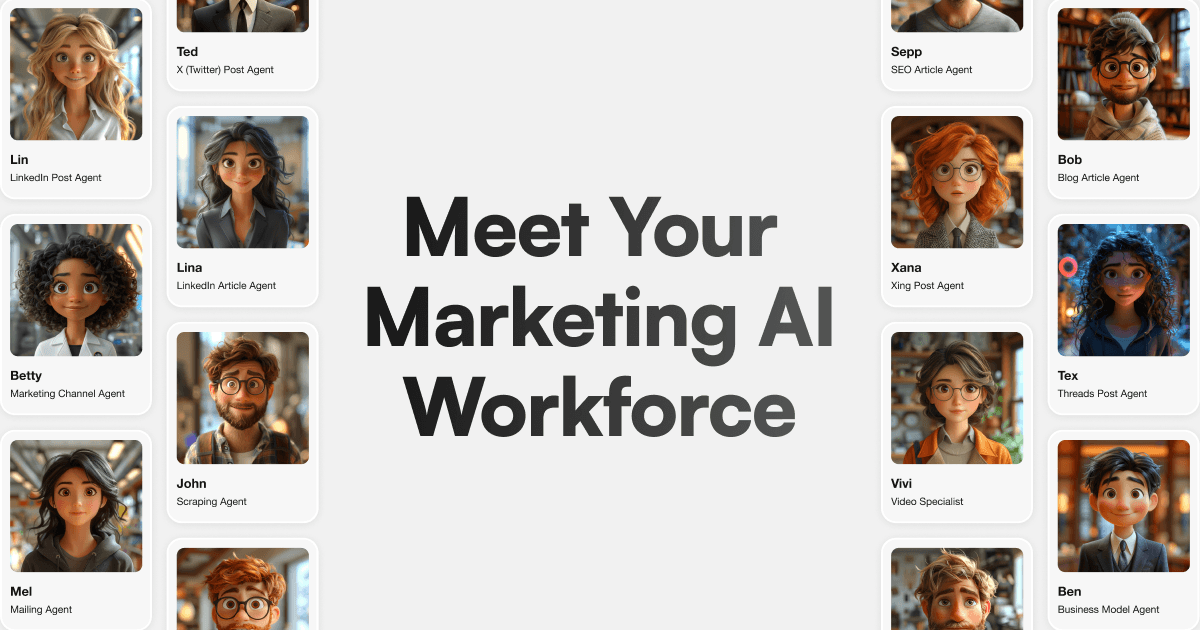
UFOstart is a decentralized initiative focused on exploring and coordinating new worlds within the realm of decentralized AI. The project is driven by a team comprising both marketing experts and AI enthusiasts, suggesting a blend of technical innovation and strategic outreach. While the website content is minimal, the core message emphasizes a collaborative and decentralized approach to AI development and application. The tool aims to foster coordination within the decentralized AI space, potentially offering solutions or platforms for collective intelligence and distributed AI projects. The focus on "new worlds" implies an innovative and exploratory stance, pushing the boundaries of current AI capabilities.
CitCom.ai TEF – Testing AI and Robotics in Smart Communities
CitCom.ai TEF offers AI startups and SMEs subsidised access to advanced Testing and Experimentation Facilities (TEFs) for AI models and robots, focusing on smart and sustainable cities. It brings together 32 partners across 11 EU member states, including research organizations, cities, universities, and companies. Through real, virtual, and physical test environments, CitCom.ai helps innovators validate performance, ensure compliance with EU regulations like the AI Act and Data Act, and accelerate market entry. Users can test AI solutions in real city and community environments, access facilities, infrastructure, and AI services like data quality checks, product optimization, and legal compliance support. It also connects users with top AI experts and a trusted EU network.
OnSight Technology
Nextpower delivers integrated Robotics & AI systems specifically designed for utility-scale solar power plants. From pre-commissioning quality assurance to long-term operational optimization, the platform unifies inspection, detection, and performance management into one product ecosystem. Key offerings include NX Clario™ for optimizing cleaning decisions based on real-time soiling analysis and intelligent wash forecasting, NX Ranger™ which uses autonomous robotics and AI-driven imaging for early defect detection and improved QA/QC, and NX Vantage™ a camera system providing real-time alerts for early smoke and fire detection with a 500-meter panoramic radius. This comprehensive approach aims to eliminate operational blind spots, reduce preventable loss, and protect asset performance for decades.
Alphabase
Alphabase offers Sara, an AI frontdesk assistant designed specifically for modern healthcare clinics and wellness practices. Sara automates patient communication across phone, text, and chat, managing inquiries, scheduling appointments, sending reminders, and conducting follow-ups. The platform is tailored for various specialties including dental, aesthetics, hair transplant, physiotherapy, and nutrition. It provides features like consistent answers aligned with clinic policies, 24/7 scheduling, unified inbox for calls and messages, and automated intake and post-visit workflows. Alphabase also offers an integrated EHR Platform for comprehensive practice management, allowing teams to run operations and documentation in one connected system while Sara handles patient communication.
GFocus
GFocus is an AI focus app designed to significantly enhance study performance and optimize deep work by leveraging real-time Edge AI technology. It acts as a professional AI focus guard, helping users master their concentration and track working habits. The tool actively recognizes distractions, providing AI nudges to help users stay in the zone and build self-discipline. Unlike traditional time-tracking apps, GFocus prioritizes actual focus over mere time spent, making it ideal for students and professionals seeking to eliminate distractions and achieve peak productivity. It supports various operating systems, including Windows, macOS, iOS, and Android, ensuring accessibility across multiple devices.

SafeNav
SafeNav is a cutting-edge software-only, human-in-the-loop AI Navigation Co-Pilot designed to significantly enhance maritime safety. It integrates various sensor data, including AIS, radar, vision, GNSS, LiDAR, and chart data, into a single maneuver decision engine. The system delivers clear, explainable course and speed guidance to prevent collisions and groundings, always keeping the human operator in control. SafeNav is built to reduce operational and financial costs associated with maritime incidents, improve HSEQ reporting through its Ocean Observation Database, and prepare for future regulatory shifts towards certified decision-support systems. It is non-invasive, integrates with existing onboard systems, and is edge-based for low latency and resilience.