
Coding & Development
Browsing page 48 of AI tools for Code Assistants in Coding & Development. Sorted by confidence score — our independent quality rating.

LeFlow
LeFlow is an open-source tool-flow designed to bridge the gap between TensorFlow deep neural networks and synthesizable hardware, specifically FPGAs. It achieves this by integrating Google's XLA compiler with the LegUp high-level synthesis tool, enabling the automatic generation of Verilog code from TensorFlow specifications. This facilitates the deployment of deep neural networks on FPGAs, offering a flexible approach to hardware acceleration. The tool includes a testing framework with 15 building blocks to verify installation and functionality, ensuring that generated circuits match original TensorFlow results. It also provides examples ranging from simple tests to more complex applications, making it a comprehensive solution for hardware synthesis of AI models.
mistral.rs
mistral.rs is an open-source, high-performance framework designed for fast and flexible Large Language Model (LLM) inference. It boasts zero-configuration support for any Hugging Face model, automatically detecting architecture, quantization format, and chat template. The tool offers true multimodality, handling text, vision, video, audio input, speech generation, image generation, and embeddings within a single engine. Key features include comprehensive quantization control (ISQ, GGUF, GPTQ, AWQ, HQQ, FP8, BNB), hardware-aware tuning for optimal performance, and flexible SDKs for both Python and Rust. It also provides advanced agentic features like integrated tool calling, server-side agentic loops, web search integration, and an MCP client for external tool connections. A built-in web UI simplifies interaction, making it a versatile solution for developers building AI applications.
WISERLI
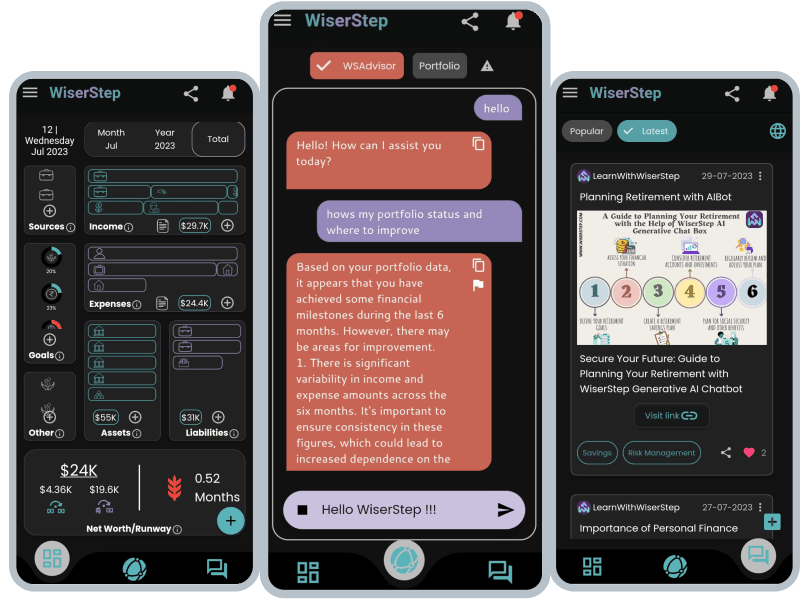
WISERLI is an AI software partner dedicated to providing AI-powered solutions and products, with a strong focus on ensuring AI systems are free from biases. Their services encompass a wide range of offerings, including financial technology, web and mobile application development, and the creation of advanced AI-based algorithms. They emphasize strategic software products and solutions, catering to various domains such as e-commerce and online media development. WISERLI aims to help businesses leverage AI effectively, offering tools like WiserStep for personal finance management, WiserBoard for project management, and a computer vision app for custom model deployment.
recommenders-addons
TensorFlow Recommenders Addons (TFRA) is an open-source collection of projects designed to enhance TensorFlow's capabilities for building large-scale recommendation systems. It primarily introduces Dynamic Embedding Technology, which allows for trainable key-value data structures within TensorFlow, leading to better recommendation effects compared to static embedding mechanisms by avoiding hash conflicts. TFRA is compatible with native TensorFlow optimizers, initializers, CheckPoint, and SavedModel formats. It fully supports training and inference of recommender models on GPUs, including integration with TF Serving and Triton Inference Server. The project also offers support for various Key-Value implementations as dynamic embedding storage, such as cuckoohash_map and HierarchicalKV, and supports both half-synchronous and asynchronous training methods.
sweep
Sweep is an AI coding assistant specifically designed for the JetBrains integrated development environment (IDE). It functions as a plugin, offering developers AI-powered support to streamline their coding workflows. The tool aims to enhance productivity and facilitate code creation within the JetBrains ecosystem. As an open-source project, Sweep encourages community contributions and provides a flexible platform for developers looking to integrate AI assistance directly into their daily coding routines. Its primary focus is on providing intelligent coding suggestions and automation to help developers write better code more efficiently.
VibeSec
VibeSec is an advanced AI-powered security scanning tool designed to secure code within GitHub repositories. It leverages a combination of AI security intelligence and Semgrep to identify real security issues, secrets, insecure patterns, and known vulnerabilities. The platform provides instant, actionable reports for every scan, detailing what is wrong, why it matters, and how to fix it. VibeSec supports both public and private GitHub repositories securely using token authentication, requiring no agents or SDKs. Built for developers, it integrates security early into the development lifecycle, allowing users to scan repos, gain insights, and ship confidently without needing a dedicated security team. It also offers lightning-fast scans and an upcoming API for CI integration.
Hadrix
Hadrix is an open-source, AI-powered security scanner designed to audit codebases for vulnerabilities. It operates locally on your machine, ensuring no data is stored by the tool, which enhances privacy and security. Hadrix combines static analysis with AI scanning to identify a wide range of issues, including injection, access control, authentication, secrets, logic issues, dependency risks, and misconfigurations. It supports JavaScript/TypeScript codebases and integrates with OpenAI and Anthropic models. The tool provides a detailed summary of findings, categorized by severity, and offers prioritized remediation suggestions, making it easier for developers to address critical security flaws.
chatgpt-plugin
chatgpt-plugin is a robust plugin designed for Miao-Yunzai / Yunzai-Bot, leveraging the Chaite core to provide advanced intelligent chat capabilities. It supports multiple model channels, tools, processors, triggers, RAG (Retrieval Augmented Generation), and a management panel. The plugin facilitates high-concurrency conversations, knowledge base retrieval, simulated human chat, and memory management locally, with an option to connect to Chaite Cloud for online channels and tools. Key features include multi-channel support with load balancing, advanced message adaptation for various input types, group context management, and a pseudo-human mode for more natural interactions. It also offers both visual and command-line control, along with automatic updates.
SampleApp.ai
SampleApp.ai is an innovative platform designed to significantly accelerate API and SDK integration for developers. It offers a Stripe-like guided onboarding experience, allowing developers to visualize and understand how to implement APIs directly into their codebase. The tool generates personalized code snippets tailored to the prospect's tech stack and provides pre-built flows for specific use cases. With a live preview synced with the code, developers can track their progress, while teams gain full visibility into engagement and usage. This solution aims to reduce integration time from weeks to hours, enhance developer activation, and decrease support tickets by providing a fast, guided, and measurable integration process.
AI-Codereview-Gitlab
AI-Codereview-Gitlab is an automated code review tool designed to enhance code quality and development efficiency for teams using GitLab. It leverages large language models such as DeepSeek, ZhipuAI, OpenAI, Anthropic, Tongyi Qianwen, and Ollama to perform intelligent code reviews during merge requests or push operations. The tool offers instant notification delivery of review results via DingTalk, Enterprise WeChat, or Feishu. Additionally, it generates automated daily reports based on GitLab, GitHub, and Gitea commit records, providing insights into daily development progress. A visual dashboard centralizes all code review records, offering project and developer statistics. Users can also choose from various review styles, including professional, sarcastic, gentle, and humorous.
aider.el
aider.el brings AI-assisted programming to Emacs, leveraging the Aider terminal tool to offer a lightweight yet powerful UI. It supports AI-driven agile workflows, including TDD, refactoring, and legacy code handling. Developers can utilize diff extraction and AI code review tools, along with AI assistants for code reading and software planning. The tool also features automated Flycheck error fixes, context expansion for dependencies, and code/repo evolution analysis using git blame and log. With minimal configuration and clear documentation, aider.el is designed as a stable, daily productivity tool, with many of its own Elisp components generated by Aider or aider.el itself. It supports various models like Claude Sonnet and ChatGPT, requiring API keys for usage.
Chainlit
Chainlit is an open-source Python framework designed to accelerate the development of production-ready conversational AI applications. It allows developers to build interactive chat user interfaces in minutes, not weeks, by providing a streamlined environment for integrating AI agents and automated workflows. The framework supports popular AI tools and services such as OpenAI, Anthropic, LangChain, LlamaIndex, ChromaDB, and Pinecone, making it versatile for various AI projects. Chainlit emphasizes ease of use for Python developers, enabling them to quickly prototype and deploy AI applications. While the original team has stepped back from active development, it is now community-maintained, ensuring ongoing support and evolution.

stagewise
Stagewise is a specialized browser designed for web developers, featuring a built-in coding agent that streamlines development workflows. It provides comprehensive access to browser developer tools, enabling users to make quick test changes to any webpage or connect a codebase for permanent edits. The agent offers powerful reverse engineering capabilities, allowing developers to understand and reuse components, style systems, and color palettes from existing websites. Stagewise integrates with popular IDEs, displaying relevant and modified files directly within the developer's preferred environment. It aims to enhance the browsing experience for developers by prioritizing their specific needs and offering an AI-powered assistant for coding tasks.
Yuan-2.0
Yuan-2.0 is a new generation foundational large language model released by Inspur Information. It provides open-source access to three model sizes: Yuan2.0-102B, Yuan2.0-51B, and Yuan2.0-2B. The project includes relevant scripts for pre-training, fine-tuning, and inference services, enabling developers to further develop and customize the models. Built upon Yuan-1.0, Yuan-2.0 leverages more diverse and high-quality pre-training data and instruction fine-tuning datasets, resulting in enhanced understanding capabilities across semantics, mathematics, reasoning, code, and knowledge. The model supports commercial use under the Apache 2.0 license, with specific versions offering improved code generation in Java, C++, and Go, API tool integration for numerical calculations, and strengthened safety and value alignment.
chatgpt-vue
chatgpt-vue is an open-source project built with Vue3, Typescript, and Tailwind CSS, designed to create a straightforward chat application. It leverages the OpenAI gpt-3.5-turbo model API to facilitate continuous chat dialogues, offering a basic yet functional interface for interacting with the ChatGPT model. This tool is particularly useful for developers looking to integrate chat functionalities into their Vue.js projects, providing a clear example of how to connect to the OpenAI API from a frontend application. Users need to provide their own OpenAI API Key to get started, and the application supports local deployment and configuration.

Fast Code AI
Fast Code AI is an AI solutions provider specializing in accelerating innovation by helping organizations build and scale AI solutions. They offer comprehensive services, from initial research to real-world deployment, focusing on enterprise-scale AI. The company provides various solutions, including a Data Intelligence Platform for automotive, AI-powered automation for engineering drawings, an AI Legal Helper, and an AI Job Management Platform. They also offer AI-based posture analysis and e-commerce automation. Fast Code AI works with clients through co-creation, platform deployment, and research-as-a-service models, aiming to bridge the gap between AI research and practical enterprise applications.
GPT Web App Generator
GPT Web App Generator, also known as MAGE, is an innovative tool that leverages the power of GPT to streamline the development of full-stack web applications. It allows users to generate complete web apps using modern technologies like React for the frontend, Node.js for the backend, and Prisma for database interaction. This generator is built on the Wasp full-stack framework, providing a robust foundation for the generated applications. Developers can rapidly prototype and deploy web apps by specifying their desired app details, authentication methods, and complexity levels, significantly reducing development time and effort. MAGE aims to make web app creation more accessible and efficient.
ellama
Ellama is an open-source tool designed for seamless interaction with large language models (LLMs) directly within the Emacs text editor. It empowers developers to integrate AI functionalities into their coding and development workflows, offering capabilities such as translation, code review, summarization, and grammar enhancement. Ellama natively supports streaming output, ensuring a smooth experience with your preferred text editor. The tool can perform various tasks like generating text, completing code, proofreading, and improving wording. It also supports interactive selection of LLM models and providers, including Ollama and OpenAI-compatible APIs, making it highly customizable for different use cases and preferences.

Wafer
Wafer is an advanced AI tool designed to deliver the fastest GPU inference in the world by autonomously profiling, diagnosing, and optimizing inference across the entire stack, from kernels to models and production pipelines. It helps developers and AI agents achieve superior performance for open-source models through a flat-rate API access. For enterprises, Wafer offers tailored inference optimization for custom models, hardware, workloads, and production constraints, promising setup in less than 24 hours. The platform boasts significant speed improvements, such as being 2.8x faster than base SGLang for specific models, ensuring efficient and high-throughput AI operations.
Groq APP Gen
Groq Appgen is an interactive web-based HTML editor powered by AI generation, designed to help users quickly build micro-applications. Leveraging Groq's speed, the platform allows for the creation of diverse apps such as calculators, to-do lists, weather apps, quiz apps, and even games like Snake Game and Space Invaders. It also supports more complex applications like chatbots, image galleries, and Kanban boards. The tool aims to streamline the development process by providing an intuitive environment for generating and modifying web applications with AI assistance, making it accessible for rapid prototyping and development.
Znote
Znote is a local-first productivity application designed for executable Markdown notes, integrating AI capabilities, script execution, and data exploration. It allows users to save prompts as reusable files, run JavaScript/Node.js code, and perform meeting transcriptions directly within their notes. Unlike cloud-based alternatives, Znote operates offline, storing all files locally for enhanced privacy and control. It supports Bring Your Own Key (BYOK) for AI models like OpenAI, Ollama, and OpenRouter, giving users full control over their AI usage and costs. Znote aims to transform notes into active tools, enabling workflows from brainstorming to Jira ticket creation and API testing.
JSONEditor.io
JSONEditor.io offers a comprehensive online JSON editor designed for developers, data analysts, DevOps engineers, and API designers. It provides a VS Code-like interface, enabling users to format, validate, beautify, and minify JSON data with real-time error detection and syntax highlighting. The tool supports conversion between JSON and various formats, including YAML, CSV, and TypeScript, all processed locally in the browser for complete data privacy. Key features include AI-powered assistance, multi-tab support, the ability to handle large JSON files up to 512MB, and options to view data in text, tree, or table modes. It also facilitates JSON Schema validation, side-by-side document comparison, and sharable links for collaboration.
qkeras
QKeras is an open-source quantization extension for TensorFlow Keras, designed to simplify the creation of deep quantized neural networks. It offers drop-in replacements for standard Keras layers, particularly those involved in parameter creation and arithmetic operations, allowing users to easily convert existing models to quantized versions. The library emphasizes user-friendliness, modularity, and extensibility, aligning with Keras's design principles while being minimally intrusive. Key features include quantized versions of common layers like QDense, QConv2D, and QActivation, along with various activation functions such as `quantized_relu` and `quantized_tanh`. QKeras also includes QTools for data type map generation and energy consumption estimation, and AutoQKeras for automated quantization and rebalancing through hyperparameter search.
CrevCLI
CrevCLI is a command-line interface tool designed to enhance code quality and efficiency through AI-powered code reviews. It allows developers to receive comprehensive feedback on their code's quality, performance, and security without leaving their terminal. A key feature is the ability to bundle an entire codebase and directory structure into a single file, simplifying its sharing with AI models for review. Written in Golang, CrevCLI is fast, efficient, and cross-platform, supporting Windows, Mac, and Linux. This tool aims to help software engineers become better at their craft by providing instant, expert AI feedback to catch bugs and improve overall code health.