
Coding & Development
Browsing page 165 of AI tools for Open Source & Models in Coding & Development. Sorted by confidence score — our independent quality rating.

libMultiRobotPlanning
libMultiRobotPlanning is a C++(14) library designed for task and path planning in multi-robot/agent systems. It provides a collection of highly templated search algorithms optimized for performance. The library includes single-robot algorithms such as A*, A* epsilon (focal search), and SIPP (Safe Interval Path Planning). For multi-robot scenarios, it supports Conflict-Based Search (CBS), Enhanced Conflict-Based Search (ECBS), and their variants with Optimal Task Assignment (CBS-TA, ECBS-TA), as well as Prioritized Planning using SIPP. Additionally, it offers assignment algorithms like minimum sum-of-cost (flow-based) and Best Next Assignment. The library is open-source, comes with useful examples, and is built for researchers and developers working on complex multi-robot coordination problems.
MaskDINO
MaskDINO is an official implementation of the paper "Mask DINO: Towards A Unified Transformer-based Framework for Object Detection and Segmentation," accepted at CVPR 2023. This open-source project offers a unified architecture capable of performing object detection, panoptic segmentation, instance segmentation, and semantic segmentation. It supports task and data cooperation between detection and segmentation, delivering state-of-the-art performance on major datasets like COCO, ADE20K, and Cityscapes. The framework is built upon detectron2 and offers a detrex version. Key features include a flexible architecture where users can easily replace backbone, pixel decoder, and transformer decoder components, and it supports mask-enhanced box initialization for improved performance.
nnfusion
nnfusion is an open-source deep neural network (DNN) compiler designed for flexibility and efficiency. It generates high-performance executables directly from DNN model descriptions, supporting popular formats such as TensorFlow frozen models and ONNX. The tool aims to facilitate full-stack model optimization, offering features like data-flow graph optimizations, model-specific kernel selection, kernel fusion, and static memory layout. It provides ahead-of-time and source-to-source compilation, reducing runtime overhead and minimizing library dependencies. nnfusion supports various accelerator devices, including CUDA GPUs, ROCm GPUs, and CPUs, making it suitable for developers and researchers looking to speed up model execution or customize optimizations. It also supports parallel training via SuperScaler.

Itzam
Itzam is an open-source backend platform specifically designed to simplify the integration of artificial intelligence into various applications. It provides a comprehensive set of tools for efficient prompt and model management, which are crucial components in AI development. The platform aims to significantly reduce the time and effort developers typically spend on tasks such as Retrieval-Augmented Generation (RAG), observability, and overall model management. By handling these complexities, Itzam allows developers to concentrate more on building and enhancing the core AI-powered features of their applications.
nematus
Nematus is an open-source neural machine translation toolkit developed by EdinburghNLP, built using Tensorflow. It provides robust support for both RNN and Transformer architectures, making it versatile for various machine translation tasks. Key features include support for advanced RNN architectures with arbitrary input features, deep models, and various dropout techniques. For Transformer architectures, it offers arbitrary input features and DropHead for attention head dropout. The toolkit also includes multi-GPU support, documentation, label smoothing, early stopping, and the ability to resume training. It provides batch decoding, n-best output, and scripts for scoring and rescoring, along with a server mode. Nematus also stores model hyperparameters, vocabulary files, and training progress in JSON format, and offers pretrained models for 13 translation directions.
OneFormer
OneFormer is an innovative open-source AI tool designed for universal image segmentation, leveraging a single transformer model to address diverse segmentation challenges. It stands out by being trained only once with a single universal architecture and model on a single dataset, yet it outperforms existing frameworks across semantic, instance, and panoptic segmentation tasks. The tool employs a task-conditioned joint training strategy, uniformly sampling different ground truth domains by deriving all labels from panoptic annotations. A key feature is its use of a task token to condition the model, making it task-guided for training and task-dynamic for inference, all within a single model. This approach simplifies the segmentation workflow and delivers state-of-the-art results on datasets like ADE20K, Cityscapes, and COCO.
pixelsplat
pixelSplat provides the code for generating 3D Gaussian splats from image pairs, a method for scalable and generalizable 3D reconstruction. Developed by David Charatan et al. and presented at CVPR 2024, this tool allows users to reconstruct 3D scenes from 2D images. The codebase has been updated to reflect the camera-ready version of the paper, including architectural improvements like per-image self-attention in the epipolar transformer, leading to slightly better results across datasets. It supports running with an arbitrary number of views, though requiring significant GPU memory for more complex setups. The project also offers pre-trained checkpoints and scripts for dataset conversion and evaluation.
RefineDet
RefineDet is an open-source implementation of a single-shot refinement neural network designed for object detection tasks. Published at CVPR 2018, this method aims to surpass the accuracy of traditional two-stage object detection approaches while preserving the computational efficiency characteristic of one-stage methods. The repository provides comprehensive code for training and evaluating RefineDet models on various datasets, including PASCAL VOC and MS COCO. Users can leverage pre-trained models based on VGG-16 and ResNet-101 architectures, and the system supports both single-scale and multi-scale testing strategies. It includes detailed instructions for installation, data preparation, training, and evaluation, making it a valuable resource for researchers and developers in computer vision.
SNIPER
SNIPER, also known as AutoFocus, is an efficient multi-scale training and inference algorithm designed for instance-level recognition tasks such as object detection and instance-level segmentation. It significantly speeds up multi-scale training by selectively processing context regions around ground-truth objects, called 'chips', operating on low-resolution data. This memory-efficient design allows SNIPER to benefit from Batch Normalization and larger batch-sizes on a single GPU. AutoFocus, the inference component, employs a coarse-to-fine approach, processing only regions likely to contain small objects at finer scales using 'FocusPixels' to generate compact 'FocusChips'. The tool supports half-precision training with no loss in accuracy and offers fast inference speeds, making it suitable for advanced computer vision research and development.
simpledet
SimpleDet is a versatile, open-source framework designed for object detection and instance recognition tasks. It boasts major features such as FP16 training for significant memory savings and up to 2.5X acceleration, alongside highly scalable distributed training capabilities. The framework provides full coverage of state-of-the-art models, including FasterRCNN, MaskRCNN, CascadeRCNN, RetinaNet, and EfficientNet, among others. It also includes extensive features like large batch BN, loss synchronization, automatic BN fusion, soft NMS, and multi-scale train/test. SimpleDet's modular design allows for coding-free exploration of new experiment settings, making it a powerful tool for researchers and developers in the AI domain.
speech-denoising-wavenet
speech-denoising-wavenet is an open-source neural network designed for end-to-end speech denoising, implementing a Wavenet architecture. This tool is valuable for researchers and developers focused on speech processing applications, offering a method to significantly improve audio quality by effectively removing unwanted noise from speech signals. It provides pre-trained models for immediate use and supports both inference and training modes. The project requires specific versions of Keras and Theano, indicating a technical setup. Users can configure various parameters for denoising and training, and it includes options for faster denoising by adjusting target-field length. The tool uses the NSDTSEA dataset for training, making it suitable for those working with established speech enhancement benchmarks.
Euranova
Euranova is a consulting firm specializing in data science and digital transformation, guiding clients from proof-of-concept to production. They promote a data-centric culture by offering expertise in data governance, AI governance, architecture, engineering, applied data science, embedded AI, DevOps/MLOps, and training. Their services aim to identify business processes, structure business value, decrease data asset total cost of ownership (TCO), and reduce time to market for solutions. Euranova also focuses on increasing information and value through real-time data analysis and improving effectiveness by combining automation, software engineering, and data analysis. Their research center explores future technologies in AI and data science, ensuring clients use the most relevant and cutting-edge solutions.
vecstack
vecstack is a Python package designed for implementing stacking, a powerful machine learning ensembling technique also known as stacked generalization. It provides a convenient way to automate out-of-fold (OOF) computation, prediction, and bagging across various models. The package features a minimalistic functional API for quick integration and a standardized scikit-learn compatible API, allowing for seamless use within existing scikit-learn pipelines, including multilevel stacking with `sklearn.pipeline.Pipeline` and `FeatureUnion`. It supports classification and regression tasks, handles class labels or probabilities, and allows for user-defined metrics and transformations. vecstack is RAM-friendly and can automatically save stacked features and hyperparameters, making it suitable for competitive machine learning environments like Kaggle.
LLMule
LLMule offers a decentralized peer-to-peer network designed for running AI models directly on your computer. This platform prioritizes privacy, ensuring that user data remains local and is never stored in the cloud or tracked. Users can choose to run AI models locally or connect to the community network to discover and utilize a diverse library of AI models shared by others. LLMule is fully open source, promoting transparency and community collaboration. It seamlessly integrates with existing AI setups like Ollama, LM Studio, vLLM, and EXO, offering flexibility to run various model sizes. The platform also features a credit system, MULE credits, to balance network usage, which are earned by sharing compute resources and are not a cryptocurrency.
HelloGov
HelloGov is the nation's first full-stack federal AI company, providing a no-code and non-proprietary end-to-end ML product suite designed for the public sector. The platform offers a comprehensive set of tools covering the entire AI/ML lifecycle, including data ingestion (HOOVER™), ETL and aggregation (LIBERTY™), high-performance data storage (STAR™), DoD and HIPAA compliant data annotation (CARNEGIE STUDIO™), data normalization (MAVERICK™), scalable ML training orchestration (GRANT™), ML-driven application development (PATRIOT™), and ML application deployment (KNOX™). HelloGov emphasizes responsible AI, vendor lock-in avoidance, and interoperability with government, commercial, and open-source ML applications, addressing mission-critical challenges for federal enterprises.
inait
inait is pioneering Adaptive Intelligence by developing AI with 'digital brains' that mimic human cognitive processes. This technology allows AI to learn, understand, and interact with dynamic environments in real-time, addressing the scaling problem faced by modern AI where new capabilities often require exponentially more data and compute. inait's Causal AI approach enables systems to learn cause and effect, leading to more efficient and generalizable intelligence. The company aims to make intelligent interactive real-time assistance accessible to everyone, with applications starting in finance and robotics. Founded by Professor Henry Markram, known for his work on the Brain Mind Institute and Human Brain Project, inait leverages unmatched expertise to build AI that naturally evolves cognitive skills.
DINO
DINO (DETR with Improved DeNoising Anchor Boxes) is an open-source object detection model, officially implemented from a paper accepted at ICLR 2023. It offers state-of-the-art, end-to-end object detection capabilities, achieving high accuracy on benchmarks like COCO Val and COCO test-dev with significantly smaller model and data sizes compared to previous best models. A key differentiator is its fast convergence, with the ResNet-50 backbone achieving 49.4 AP in just 12 epochs. The project provides model checkpoints, training logs, and detailed installation instructions, making it accessible for researchers and developers. It also supports various backbones like Swin-L and offers scripts for evaluation, inference, visualization, and distributed training.
llama-moe
LLaMA-MoE is an open-source project that provides a series of Mixture-of-Expert (MoE) models based on LLaMA and SlimPajama, optimized for continual pre-training. It aims to offer smaller, more affordable MoE models suitable for a wide range of research and deployment scenarios. Key features include lightweight models with activated parameters between 3.0-3.5B, multiple expert construction methods (Neuron-Independent and Neuron-Sharing), and various MoE gating strategies like TopK Noisy Gate and Switch Gating. The project also emphasizes fast continual pre-training with FlashAttention-v2 integration and dynamic weight sampling, alongside abundant monitoring items for gate load, importance, and loss. It provides quick start guides, installation instructions, and examples for supervised fine-tuning (SFT).
Skytree – The Machine Learning Company
Skytree, operating under the domain allvideoslots.net, functions as a comprehensive online casino guide specifically tailored for the Dutch market. It offers a curated list of top online casinos in the Netherlands, evaluating each platform based on critical factors such as licensing, security, game offerings, and payout reliability. The website provides detailed reviews, information on casino bonuses, and guides for playing various casino games with real money. It also covers important aspects like legal online gambling in the Netherlands, CRUKS registration, responsible gaming tools, and different payment methods like iDEAL. The content is regularly updated to ensure accuracy and relevance for players seeking a safe and enjoyable online gambling experience.
musicnn
musicnn, pronounced "musician," is a set of pre-trained deep convolutional neural networks specifically designed for music audio tagging. This open-source tool also includes pre-trained VGG-like baselines, offering a robust solution for music information retrieval and audio classification tasks. Users can easily install musicnn via pip or from the source to access its functionalities. It enables the prediction of top N tags for audio files and the extraction of taggrams, providing detailed insights into musical content. The repository includes examples and documentation to help users understand and implement the tool effectively.
Theodora AI
Theodora AI develops disruptive AI-based tools to protect the reputation of organizations by detecting, correcting, and measuring biases in communications and algorithms. It aims to empower human intelligence by uncovering and eliminating unconscious bias for unparalleled impact. The platform provides high-definition data points and actionable insights to reinforce organizational structure with fairness and transparency. Combining cutting-edge AI with neuroscience, Theodora AI offers a bias measurement test to quantify unconscious biases, helping organizations foster inclusivity and equity. It also hosts the Anti-Bias World Challenge, a global movement for companies to lead in fairness, and is building the world's largest Spanish-language dataset to eliminate biases.
University of Toronto Robotics Institute
The University of Toronto Robotics Institute serves as a leading robotics research center, bringing together a diverse group of experts from various departments within the University of Toronto. The institute is dedicated to advancing the field of robotics through collaborative research, with a particular emphasis on key areas such as autonomous field robotics, healthcare robotics, and advanced manufacturing. By fostering interdisciplinary cooperation, the institute aims to push the boundaries of robotic capabilities and applications. It provides essential facilities and resources, enabling researchers to conduct cutting-edge studies and develop innovative solutions in the rapidly evolving domain of robotics.
node-llama-cpp
node-llama-cpp provides Node.js bindings for llama.cpp, allowing developers to run AI models directly on their local machines. It supports various hardware accelerations including Metal, CUDA, and Vulkan, adapting automatically without manual configuration. A key feature is the ability to enforce a JSON schema on the model's output, ensuring parseable and structured generation. The tool comes with pre-built binaries for macOS, Linux, and Windows, with a fallback to building from source using CMake if binaries are unavailable. It offers a complete suite for LLM integration, including embedding and reranking support, function calling, and a CLI for direct model interaction. The project emphasizes a great developer experience with full TypeScript support and comprehensive documentation.
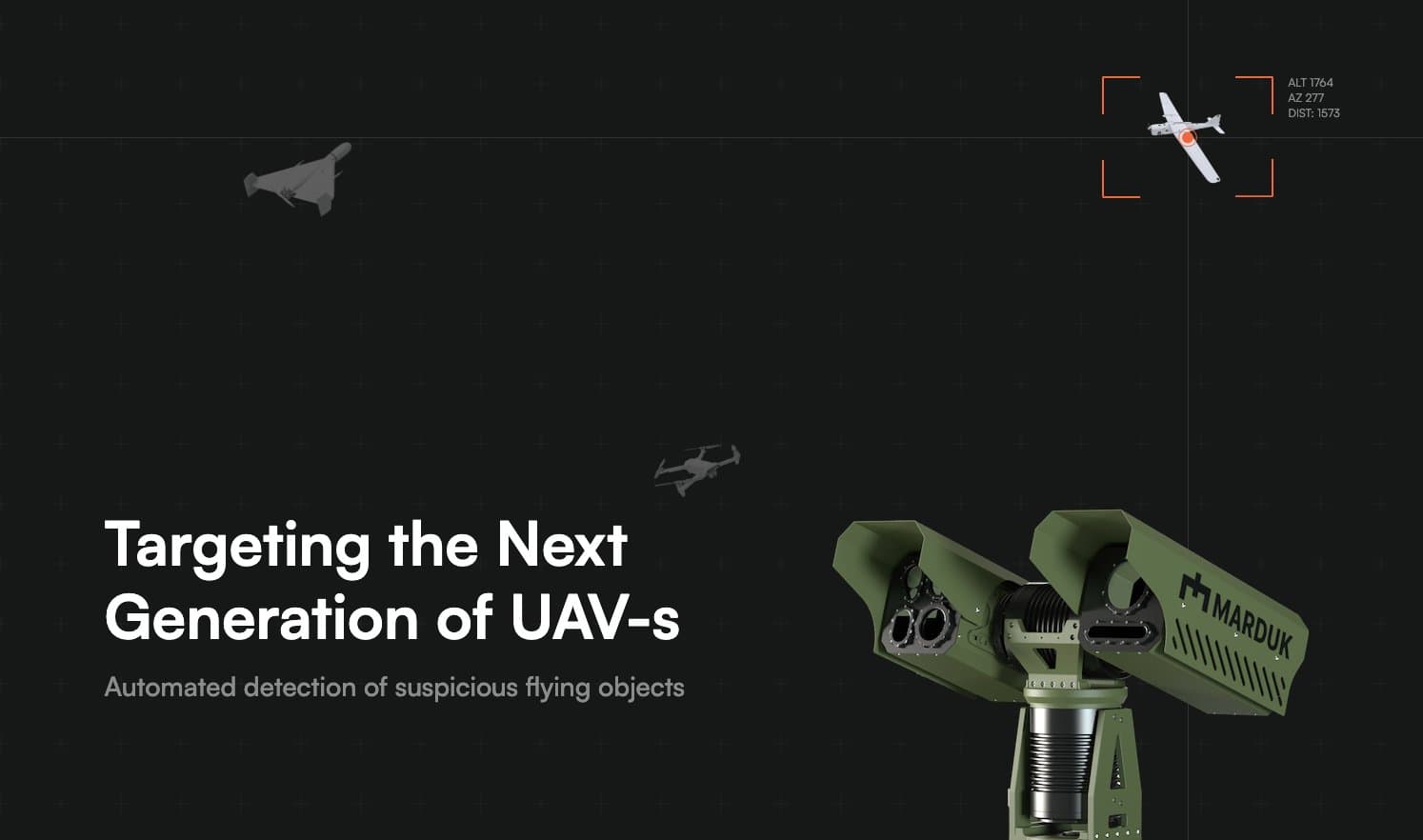
Marduk Technologies
Marduk Technologies specializes in advanced electro-optical systems designed for the detection, classification, and targeting of unmanned aerial vehicles (UAVs). Their flagship product, Marduk Shark, is a high-precision C-UAS platform capable of detecting small drones up to 3 km away and larger fixed-wing drones from 6-8 km. It features a custom AI/ML model database for classification, 270° per second gimbal speed, and integrates with various sensors and effectors like radars, RF detectors, jammers, and Remote Weapon Stations. The Marduk Piraya offers similar capabilities in a more compact, lightweight design, ideal for rapid deployment and vehicle mounting. Both systems utilize passive wide-angle optical detection and on-board computing to enhance airspace security for military assets, borders, and critical infrastructure.