
Coding & Development
Browsing page 359 of AI tools for Coding & Development. Sorted by confidence score — our independent quality rating.

SPEEDNET
SPEEDNET is a strategic digital transformation partner specializing in software development for the banking, fintech, and insurtech industries. They accelerate time-to-market, integrate legacy systems, and strengthen delivery capabilities, ensuring predictable IT project delivery and full regulatory compliance. Their services include web and mobile development, product design, technical consultancy, and hiring dedicated developers. SPEEDNET offers ready-made digital solutions, an AI-driven SDLC framework for 3-5x faster delivery, and a repository of ready-made components to accelerate time-to-market by up to 18%. They also provide predictive modeling for costs and risks, reducing budget overruns by up to 25%, and an AI governance framework that cuts regulatory non-compliance risk by 40%.
Mapji
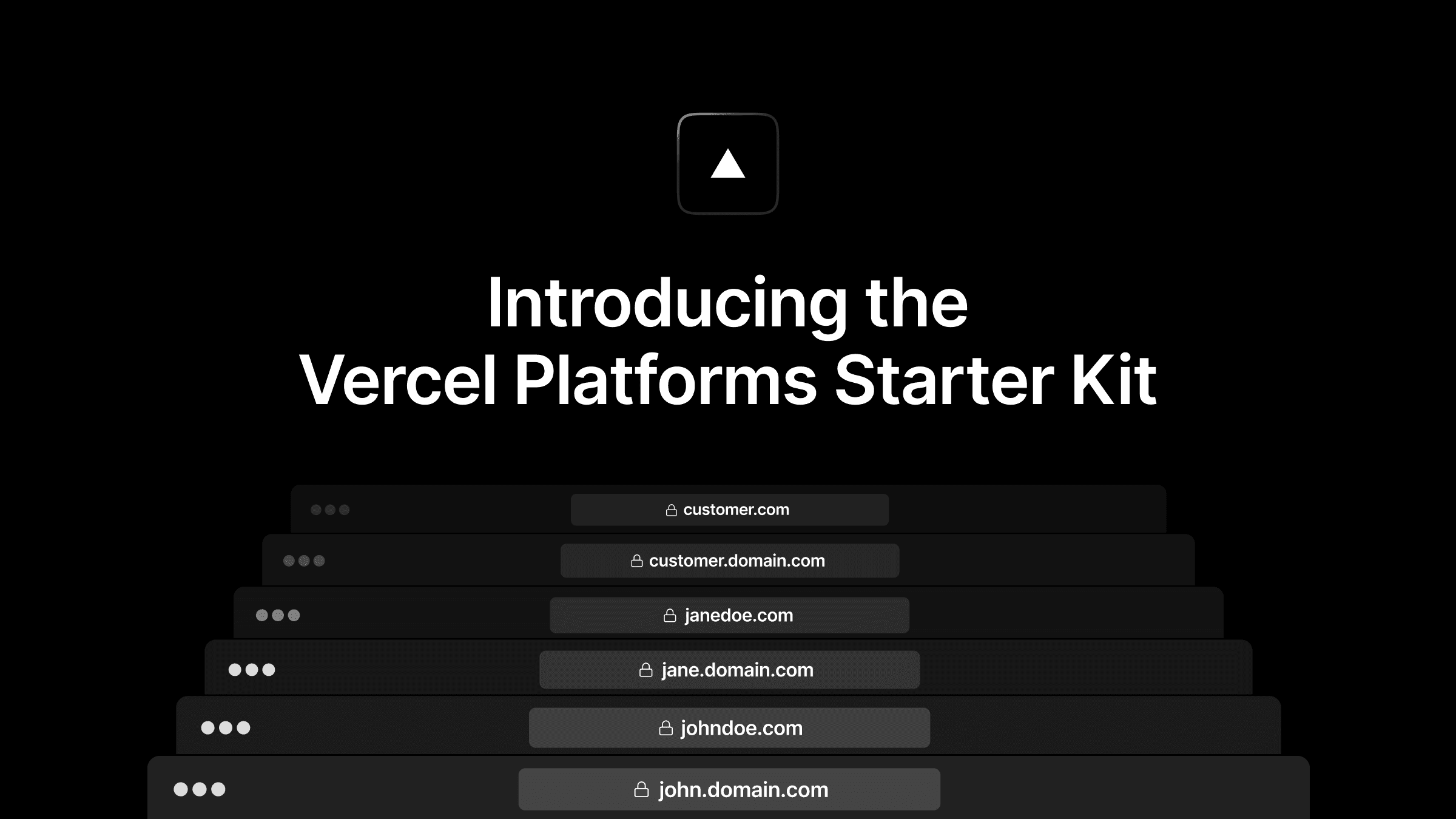
Mapji is a no-code interactive map builder that empowers users to create and share dynamic maps without any programming knowledge. It provides 8 distinct map types, including Draw, Cluster, Heatmap, Choropleth, Isochrone, Store Locator, Time Slider, and Story Map, catering to diverse visualization needs. Users can publish their maps to custom subdomains or connect their own domains for a branded experience. The platform supports various data import formats like GeoJSON, KML, CSV, and Excel, and offers advanced features such as 3D terrain, building extrusions, and full UI customization. Mapji is ideal for professionals in real estate, urban planning, logistics, research, and journalism, enabling them to visualize data and tell compelling stories through interactive maps.

Its IT Group
意昂4 (EAON4) by Its IT Group specializes in smart fitness mirrors, integrating AI and motion capture technology to provide a personalized home fitness experience. The system offers real-time AI motion correction, identifying deviations in 0.3 seconds and providing audio-visual feedback to prevent injuries and enhance training effectiveness. Users benefit from over 1000 professional courses across 12 categories, designed by a team of top coaches. The AI generates personalized weekly training plans based on individual goals and fitness levels, adjusting difficulty as progress is made. The 55-inch 4K mirror seamlessly blends into home decor, and the system tracks multi-dimensional data, connecting with popular wearables to generate comprehensive fitness reports. It also fosters a community for user engagement and motivation.
Basalt
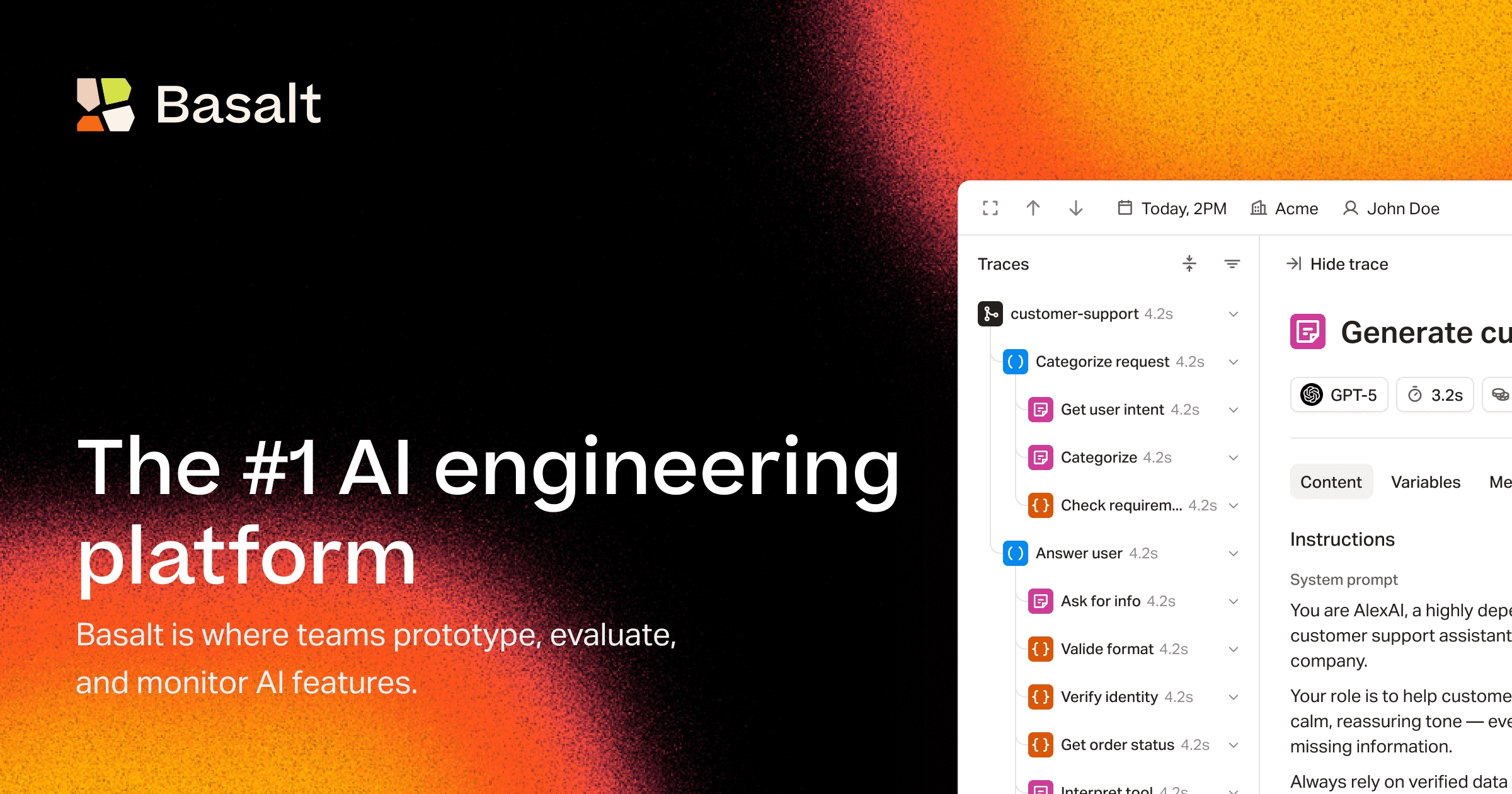
Basalt is an AI engineering platform designed to create the infrastructure for self-improving agents. It focuses on capturing customer behavior to enable AI agents to continuously learn and improve from every user interaction. This platform aims to accelerate the development and deployment of production-grade AI features by providing the necessary tools for agents to evolve based on real-world usage. Basalt helps teams prototype, evaluate, and monitor AI features, facilitating collaboration between product managers, domain experts, and engineers to ensure agents are constantly optimizing their performance and user experience.
DeepHash
DeepHash is an open-source, lightweight deep learning library designed for hashing and quantization algorithms. It provides implementations of state-of-the-art deep hashing models such as DQN, DHN, DVSQ, DCH, and DTQ, with continuous updates and additions. The library is built to be extensible, actively encouraging researchers to contribute new deep hashing models based on its established framework. DeepHash is ideal for those working on efficient image retrieval and similarity search, offering tools and examples for data preparation, model training, and testing. It supports Python 3 and integrates with TensorFlow-GPU and OpenCV, making it suitable for technical users in academic or research settings.

ContribHub
ContribHub is a dedicated platform designed to connect developers and enthusiasts with open source projects seeking contributions. It streamlines the process of finding relevant projects by allowing users to search based on specific technologies and interests. The platform aims to foster a vibrant open source community by making it easier for individuals to discover opportunities to contribute their skills and for projects to gain valuable support. ContribHub serves as a central hub for exploring various open source initiatives, promoting collaboration, and helping users build their portfolios through meaningful contributions.
dlwpt-code
dlwpt-code is an open-source repository containing all the code examples from the book "Deep Learning with PyTorch" by Eli Stevens, Luca Antiga, and Thomas Viehmann. This resource is designed to provide practical implementations of deep learning concepts using the PyTorch framework, making it an invaluable companion for readers of the book. It covers foundational aspects of deep learning and demonstrates their application through real-life projects. The repository aims to offer intuition and selective delves into details, supporting further exploration for practitioners. It's particularly useful for those looking to get acquainted with PyTorch and understand the underlying mechanisms of deep learning.
sklearn-classification
sklearn-classification is a comprehensive data science notebook designed for classification tasks, leveraging the power of sklearn and Tensorflow. This resource focuses on predicting whether an individual's income exceeds $50K/yr using the Census Income Dataset. The notebook guides users through essential data science steps, including feature exploration (uni and bi-variate), imputation, selection, encoding, and ranking. It also covers machine learning model training, random search optimization, and evaluation metrics such as accuracy, precision, recall, f1 calculations, and ROC curve analysis. The notebook is designed to run within a Jupyter Tensorflow Docker instance, providing a ready-to-use environment for hands-on learning and experimentation in machine learning.
Gradio_opencv
Gradio_opencv is a specialized tool designed to bridge the gap between OpenCV's powerful computer vision capabilities and Gradio's user-friendly interface for machine learning applications. It enables developers and researchers to easily create interactive web demos for image processing and computer vision tasks. The tool facilitates the integration of complex OpenCV functions into Gradio applications, making it simpler to showcase and test computer vision models. This is particularly useful for those working on real-time video analysis or developing prototypes that require visual interaction. While the current live website indicates a runtime error, the core purpose of Gradio_opencv is to streamline the development and deployment of computer vision applications within the Gradio ecosystem.
Danbooru2022 Embeddings Playground
Danbooru2022 Embeddings Playground is an AI tool designed for exploring image embeddings from the extensive Danbooru2022 dataset. It enables users to upload their own images and specify positive and negative tags to conduct highly relevant searches for similar images. The platform offers options to refine results by model type, ratings, and the desired number of matches, making it a versatile tool for image analysis and discovery. While currently paused, its functionality is geared towards researchers and developers interested in understanding image feature representations and experimenting with image similarity within a large-scale dataset.
SparkAI
SparkAI offers a unique solution for resolving AI edge cases, false positives, and other exceptions encountered live in production environments. By combining human mission specialists with ML-powered rapid decision tools, SparkAI delivers real-time resolutions directly to AI products via API. This allows companies to launch and scale automation products faster, even with imperfect AI, by ensuring confident decisions in uncertain situations. The platform handles all operational aspects, including hiring, training, and managing the human workforce, and offers infinite scalability to ramp up or down as needed. SparkAI integrates easily via REST API or Python SDK, providing a complete solution for managing edge cases and deriving deeper real-world insights.
deep-learning-localization-mapping
This repository, deep-learning-localization-mapping, serves as a comprehensive collection of deep learning-based localization and mapping approaches. It includes models for various tasks such as odometry estimation (visual, visual-inertial, inertial, LIDAR), geometric and semantic mapping, and global localization. The repository also features survey papers on deep learning for visual localization and mapping, and deep learning for inertial positioning, providing a valuable resource for understanding the state-of-the-art in spatial machine intelligence. Researchers and engineers in robotics, computer vision, and related fields will find this collection useful for exploring and implementing advanced localization and mapping techniques.
gradio_huggingfacehub_search V0.0.7
gradio_huggingfacehub_search V0.0.7 is a specialized AI search engine designed to navigate the vast resources available on the Hugging Face Hub. This tool enables users to efficiently search for models, datasets, and various AI spaces by simply entering their query. It streamlines the discovery process for AI components, providing a list of relevant results that can be explored further. Ideal for developers and researchers, it simplifies the task of finding specific AI tools and resources, making it easier to integrate them into projects or studies. The tool is hosted as a Hugging Face Space, indicating its accessibility and potential for community-driven development.
Video Classification UCF101 Subset
Video Classification UCF101 Subset is an AI tool designed for video content analysis, specifically utilizing the UCF101 dataset. This tool enables users to explore and classify videos, making it valuable for tasks such as action recognition and the training of AI models. While the live website indicates a runtime error and scheduling failure due to insufficient hardware capacity, suggesting it may not be fully operational at the moment, its intended purpose is to provide a platform for researchers and developers to work with video classification tasks. The tool is hosted on Hugging Face Spaces, indicating a focus on community and accessibility for machine learning applications.
Deep-Reinforcement-Learning-Algorithms-with-PyTorch
Deep-Reinforcement-Learning-Algorithms-with-PyTorch is an open-source GitHub repository offering PyTorch implementations of a wide array of deep reinforcement learning (RL) algorithms and environments. It features implementations of popular algorithms such as Deep Q Learning (DQN), Double DQN (DDQN), Soft Actor-Critic (SAC), Proximal Policy Optimisation (PPO), and Hindsight Experience Replay (HER) for both DQN and DDPG. The repository also includes custom environments like Bit Flipping Game, Four Rooms Game, and Long Corridor Game, alongside support for OpenAI Gym environments. It provides scripts to watch agents learn various games and train them on custom environments, making it a valuable resource for researchers and developers working on AI agents and model training.
Gpt-4o-mini Battles
Gpt-4o-mini Battles is an AI tool hosted on Hugging Face Spaces, designed for comparing the performance of various AI models, specifically focusing on GPT-4o-mini. Users can explore and filter chat conversations between different models, making it a valuable resource for evaluating language model responses. The application provides options to select the language of the conversation, the opponent model involved, the outcome of the battle, and even specific questions asked. This detailed filtering capability allows researchers, developers, and AI enthusiasts to gain insights into model behavior and performance under different conditions. It serves as a practical platform for understanding the nuances of AI model interactions and identifying strengths and weaknesses.
VEO3 Directors
VEO3 Directors is an AI-powered tool designed to assist users in generating highly detailed video prompts. By simply providing a topic and an initial sentence, the application constructs a comprehensive prompt that covers various aspects of video production. This includes intricate scene settings, specific camera movements and angles, character descriptions, and detailed lighting instructions. The tool leverages advanced models like Wan2.1-T2V-14B, combined with a Fast 4-step process using NAG and Automatic Audio, to ensure rich and actionable output. Hosted on Hugging Face Spaces, VEO3 Directors aims to streamline the pre-production phase for video creators, offering a structured approach to conceptualizing video content.
AFML
AFML is an open-source GitHub repository offering experimental answers and solutions to exercises found in 'Advances in Financial Machine Learning' by Dr. Marcos López de Prado. This resource is invaluable for individuals seeking to develop a solid understanding of quantitative strategies and their implementation. The repository includes Python notebooks covering various chapters and concepts from the book, such as triple barriers and bet sizing, which are applicable across different strategy types like volatility and trends. While the original book's code was in Python 2.7, AFML provides updated solutions compatible with modern Python versions and libraries. It serves as a reference for those who wish to write their own code from scratch, offering guidance and explanations for complex financial machine learning concepts.
Uniformer_video_demo
Uniformer_video_demo is an AI tool designed to showcase video analysis capabilities. Hosted on Hugging Face Spaces, it provides a platform where users can upload video files and observe the AI's processing and interpretation of the content. This demonstration tool is particularly useful for individuals involved in research, development, or educational pursuits related to video understanding and computer vision. While the current live website indicates a runtime error, suggesting it may not be fully operational at this moment, its intended purpose is to offer a practical insight into how AI can analyze and extract information from video footage.
Unicl Image Recognition Demo
Unicl Image Recognition Demo is an AI tool designed to showcase image recognition functionalities. Users can upload various images to the platform and observe the AI's predictions regarding the content within those images. This tool serves as a practical demonstration for understanding how AI models interpret visual data. It is particularly useful for individuals involved in research, development, or educational pursuits within the field of computer vision, offering a hands-on experience with image classification and analysis.
JustCode
JustCode is an AI-powered extension designed for Visual Studio Code that streamlines the process of generating documentation for JavaScript code. It integrates directly into the VSCode environment, allowing developers to automate the creation of accurate and consistent documentation without leaving their IDE. This tool is particularly useful for maintaining code clarity, facilitating onboarding for new team members, and ensuring project maintainability. By leveraging AI, JustCode aims to reduce the manual effort involved in documentation, enabling developers to focus more on coding while still adhering to best practices for project documentation.
Deep_reinforcement_learning_Course
Deep_reinforcement_learning_Course provides comprehensive implementations from a free online course focused on Deep Reinforcement Learning (Deep RL) using Tensorflow and PyTorch. The course is designed to guide participants through both the theoretical foundations and practical applications of Deep RL. It teaches users how to leverage popular Deep RL libraries such as Stable Baselines3, RL Baselines3 Zoo, Sample Factory, and CleanRL. Participants will train AI agents in diverse environments, including SnowballFight, Huggy the Doggo, MineRL (Minecraft), VizDoom (Doom), and classic games like Space Invaders. A unique feature is the ability to publish trained agents to the Hugging Face Hub with a single line of code, and also download agents from the community. The course also includes challenges for evaluating agents against other teams.
few-shot
few-shot is an open-source repository dedicated to few-shot learning machine learning projects. It offers clean, readable, and thoroughly tested code designed to help researchers and developers reproduce results from key few-shot learning research papers. The project is built with Python 3.6 and PyTorch, and is optimized for GPU usage, making it suitable for computationally intensive machine learning tasks. It includes implementations for prominent models such as Prototypical Networks, Matching Networks, and Model-Agnostic Meta-Learning (MAML), along with detailed instructions for setting up datasets like Omniglot and miniImageNet. This repository serves as a valuable resource for understanding and experimenting with advanced few-shot learning techniques.
granite-docling-258M demo
The granite-docling-258M demo is a Hugging Face Space by ibm-granite, showcasing the capabilities of the granite-docling-258M language model. This application enables users to upload images of documents, including pages, tables, charts, formulas, or code snippets. Once uploaded, users can interact with the document by asking questions or requesting specific conversions. The tool is designed to return clear text answers and extract structured information, making it useful for various data extraction and document understanding tasks. Built with Gradio and licensed under Apache-2.0, it provides a practical demonstration of advanced document AI.