
Research & Education
Browsing page 361 of AI tools for Research & Education. Sorted by confidence score — our independent quality rating.

Hugging Face Values
Hugging Face Values offers an accessible platform for exploring and using machine learning models without requiring coding expertise. Users can easily select a model and input their data to generate results, making it suitable for educational exploration and AI experimentation. The platform emphasizes an open and collaborative environment, allowing individuals to discover and leverage various AI models. This tool is ideal for those looking to engage with machine learning technologies in a straightforward manner, fostering learning and practical application.

Ottawa Responsible AI Hub
The Ottawa Responsible AI Hub (ORAH) is a community-driven initiative dedicated to fostering ethical and responsible AI practices within Ottawa. Its core mission is to inspire and support the creation of 500 responsible tech innovations in the region over the next decade. ORAH achieves this through various programs, including community-led hackathons, collaborative research, open-source initiatives, and ethical design practices. The hub also hosts a flagship yearly conference, the Responsible AI Summit, and organizes Responsible AI Talks. ORAH envisions Ottawa as a global leader in responsible AI innovation, where technology advances the public good and empowers every community, ensuring transparency, fairness, and integrity in AI development.
Andrew-Ng-Deep-Learning-notes
Andrew-Ng-Deep-Learning-notes is an open-source GitHub repository offering detailed notes and practice code for Andrew Ng's renowned Deep Learning course. The notes are primarily in Chinese, making it a valuable resource for Chinese-speaking learners. The repository includes completed assignments, allowing users to review and understand practical applications of the course material. While it doesn't guarantee to cover every aspect of the course, it serves as an excellent supplementary learning tool. Users are encouraged to contribute by raising issues or submitting pull requests for any identified inaccuracies, fostering a collaborative learning environment.

Agoge
Agoge is a smart L&D system designed to help Small and Medium-sized Enterprises (SMEs) transform competence gaps into measurable business impact. The platform connects Key Performance Indicators (KPIs) with targeted training, reflection, and continuous improvement initiatives. It aims to close skill gaps, drive effective training, and deliver measurable results, ultimately enhancing learning effectiveness and competence development within organizations. Agoge offers a comprehensive solution for competence management, allowing businesses to analyze gaps, implement relevant training, and track the return on investment (ROI) of their learning and development efforts.
oie-resources
oie-resources offers a comprehensive, curated list of resources focused on Open Information Extraction (OIE). This GitHub repository serves as a central hub for researchers and academics, providing access to a wide array of materials including research papers sorted chronologically and by category, code implementations, and datasets. It covers not only core OIE systems but also related work such as taxonomizing open relations and various downstream applications like Question Answering, Knowledge Base Population, and Event Extraction. The resource also features information on OIE systems for different languages, supervised OIE, PhD theses, and demos, making it an invaluable reference for anyone working in the field of natural language processing and information extraction.

Liveboard
Liveboard is a real-time collaborative whiteboard designed for teachers and teams to facilitate brainstorming, lesson planning, idea mapping, and sharing plans from any location. This online whiteboard supports real-time collaboration, making it an ideal solution for remote teams and online learning environments. Users can leverage its features for interactive teaching, collaborative planning, and shared digital workspaces. It aims to enhance productivity and communication by providing a dynamic canvas where multiple users can contribute simultaneously, ensuring everyone stays aligned and engaged whether in a virtual classroom or a remote team meeting.
AIRS
AIRS, or Artificial Intelligence Research for Science, is an open-source initiative offering a comprehensive collection of software tools, datasets, and benchmarks. It is specifically designed to support research in AI for quantum mechanics, density functional theory, small molecules, protein science, materials science, molecular interactions, biological science, partial differential equations, and ordinary differential equations. The project's goal is to foster an integrated, open, reproducible, and sustainable set of resources to advance the emerging field of AI for Science. It includes various methods and resources, with the list continuously expanding as research progresses, making it a valuable resource for academic and scientific communities.
WebGPU Depth Anything
WebGPU Depth Anything is an AI-powered tool hosted on Hugging Face Spaces that enables users to generate depth maps from uploaded images. Utilizing WebGPU technology, it processes images to estimate the distance of objects, providing a visual representation of depth. This tool is particularly useful for researchers and developers in computer vision, offering a straightforward way to analyze spatial relationships within images. Its web-based nature makes it easily accessible for quick demonstrations and experiments without requiring complex local setups.
365-Days-Computer-Vision-Learning-Linkedin-Post
365-Days-Computer-Vision-Learning-Linkedin-Post is an open-source GitHub repository curated by Ashish Patel, offering a comprehensive, day-by-day learning journey through various computer vision concepts and models. Each entry in the repository corresponds to a LinkedIn post, providing a concise overview and a link to further resources on topics ranging from EfficientDet and YOLO Series to Vision Transformers, GANs, and advanced segmentation techniques. This resource is ideal for individuals looking to deepen their understanding of computer vision through a structured, accessible format, leveraging the power of community learning and readily available information.
relational-networks
relational-networks is an open-source Pytorch implementation of the "A simple neural network module for relational reasoning" paper, also known as Relational Networks. This tool is designed for researchers and developers working on visual reasoning and relational AI tasks. It has been thoroughly tested on the Sort-of-CLEVR task, a simplified version of CLEVR, which involves processing images with various colored shapes and answering both relational and non-relational questions. The implementation demonstrates superior performance compared to traditional CNN + MLP models, particularly in relational reasoning tasks, and includes modifications for improved computational efficiency.
Mainstay
Mainstay is an AI success coaching platform designed to enhance student engagement and success through human-centered, AI-enhanced conversations. It provides personalized guidance directly to students' mobile phones, acting as a success coach. The platform offers an AI Success Coaching feature for students, a Conversation Co-pilot for staff to reclaim time and enhance empathy, and Conversation Insights for institutional leaders to understand student needs and foster belonging. Mainstay's approach is backed by research, utilizing a SPARK model and pre-built conversation libraries informed by mindset science and behavioral economics to drive behavior change and improve outcomes.
fire-detection-cnn
fire-detection-cnn is an open-source project offering real-time fire detection in video imagery through experimentally defined convolutional neural network (CNN) architectures. Based on research from ICIP 2018 and ICMLA 2019, it provides models like FireNet, InceptionV1-OnFire, InceptionV3-OnFire, and InceptionV4-OnFire for binary fire detection and superpixel-based localization. The tool emphasizes reduced complexity for high accuracy and computational performance, achieving up to 17 fps processing. It supports Python 3.7.x, TensorFlow 1.15, TFLearn 0.3.2, and OpenCV 3.x/4.x, and includes scripts for downloading pre-trained models and datasets. Users can convert models to protocol buffer (.pb) and tflite formats for integration with other frameworks like OpenCV DNN.
squeezeDet
squeezeDet is an open-source project providing a TensorFlow implementation of SqueezeDet, a convolutional neural network specifically designed for real-time object detection. This tool is particularly optimized for autonomous driving applications, emphasizing a unified, small, and low-power architecture. It allows users to train and evaluate object detection models using datasets like KITTI, supporting various network backbones such as SqueezeNet, ResNet50, and VGG16. The repository includes scripts for installation, demo execution, training, and validation, making it a comprehensive resource for researchers and developers working on efficient object detection in resource-constrained environments.
EazyQuizzy
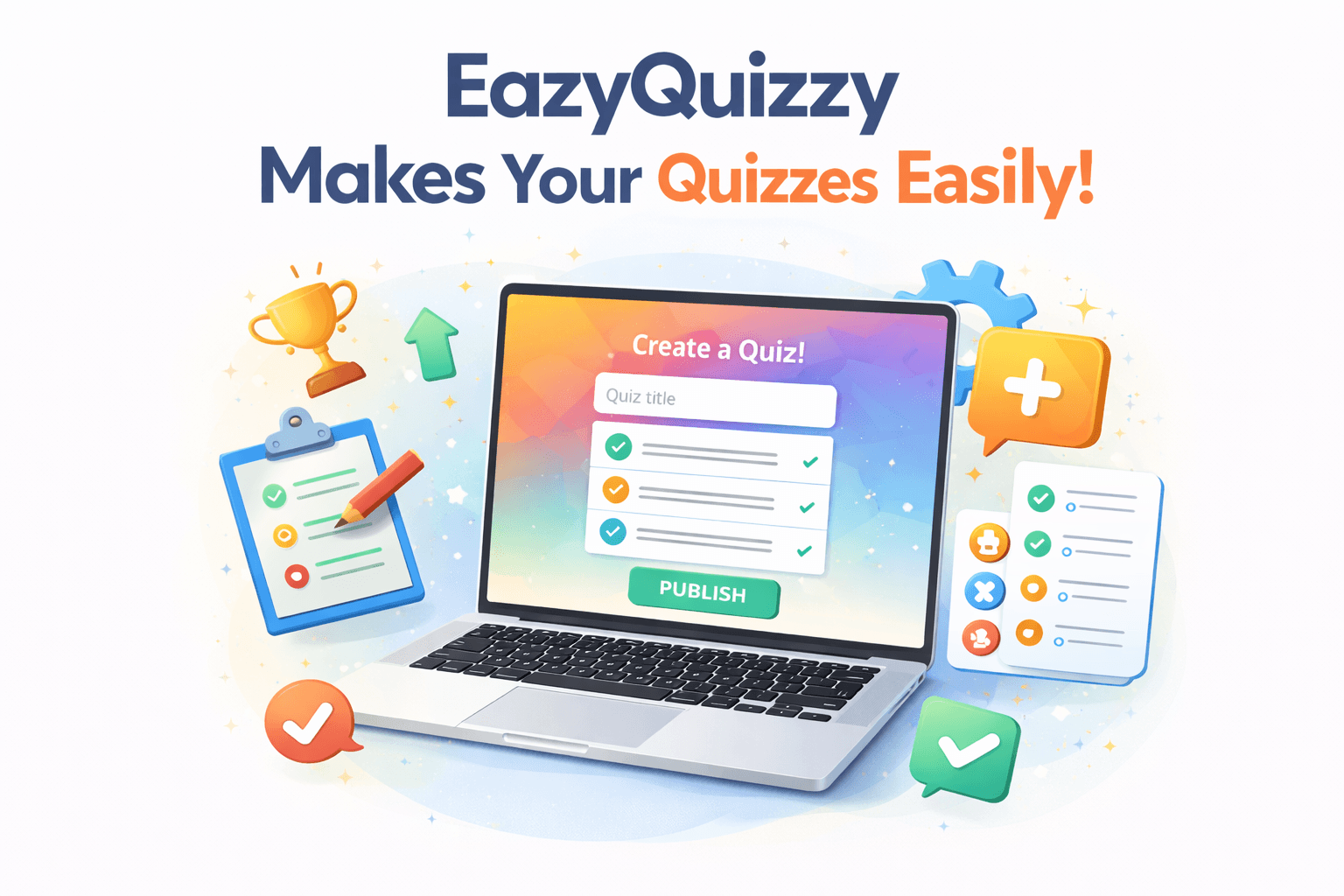
EazyQuizzy is a professional online platform designed for creating, managing, and evaluating quizzes, exams, and training assessments. It offers a straightforward, rapid, and secure solution for educators, trainers, and organizations. Users can easily design various types of assessments, from simple quizzes to comprehensive training evaluations. The platform emphasizes ease of use, allowing for quick setup and deployment of tests. EazyQuizzy provides a free 30-minute trial to explore its full features, alongside a premium annual subscription for unlimited access. It aims to streamline the assessment process for professional use, ensuring efficient management of educational and training evaluations.

Vellex Computing
Vellex Computing provides a complete hardware and software stack for real-time AI training at the edge, addressing the challenge of static AI models on devices like satellites, drones, and industrial robots. Unlike conventional iterative AI training that consumes significant power and time, Vellex utilizes a physics-based optimization approach. This allows its analog IP block to deliver optimal model weights at milliwatt power and nanosecond-scale speed, integrating seamlessly with standard ARM or RISC-V cores. The platform includes Vellex Train (software optimization), Vellex Board (developer kit), Vellex Core (licensable silicon), and a Code-to-Circuit compiler compatible with ML frameworks like PyTorch and JAX, requiring no analog expertise from engineers. This innovation enables continuous on-device learning, making AI models adaptive and responsive to changing real-world conditions.
ml-workspace
ml-workspace is a comprehensive web-based Integrated Development Environment (IDE) designed specifically for machine learning and data science tasks. It offers a streamlined deployment process, allowing users to quickly set up and begin building ML solutions on their own machines. The workspace comes pre-loaded with a wide array of popular data science libraries such as Tensorflow, PyTorch, Keras, and Scikit-learn, alongside essential development tools like Jupyter, VS Code, and Tensorboard. These tools are perfectly configured, optimized, and integrated to provide a productive environment. Key features include web-based access to Jupyter, JupyterLab, and Visual Studio Code, a full Linux desktop GUI via web browser, seamless Git integration optimized for notebooks, and integrated hardware and training monitoring via Tensorboard and Netdata. It supports easy deployment on Mac, Linux, and Windows via Docker.

SpaceKnow Inc.
SpaceKnow Inc. leverages a cutting-edge platform to convert satellite data into actionable intelligence. Its core offering, SpaceKnow Guardian, integrates data from various satellite providers and employs proprietary AI algorithms to extract valuable information from complex raw data. This enables faster, data-driven decisions for users. The platform also features automated monitoring and an early warning system, providing timely alerts and continuous surveillance to detect changes and potential issues swiftly. SpaceKnow's solutions are tailored for sectors like Defense & Intelligence, enhancing situational awareness and strategic decision-making, and Construction Monitoring, offering precise tracking of progress and site activity.
ML-Roadmap-for-2022
ML-Roadmap-for-2022 offers a comprehensive and curated list of resources for individuals looking to master machine learning within a six-month timeframe. This GitHub repository provides a structured learning path, starting from foundational concepts like Python programming, data manipulation with Numpy and Pandas, and data visualization, all the way to advanced machine learning algorithms and practical applications. The roadmap is divided into distinct levels: 'Testing the waters,' 'Gaining Conceptual depth,' and 'Learning Practical Concepts,' each with estimated completion times. It includes links to numerous YouTube playlists, practice problems, and Kaggle datasets, making it an invaluable resource for self-paced learning and practical skill development in machine learning.

Calculator Star AI
Calculator Star is an intelligent calculator app designed for iOS that combines traditional calculator functionality with advanced voice-powered AI assistance. Users can ask math questions in plain English, such as "If I work 8 hours a day at $25 per hour, how much will I earn in a week?", and receive answers with step-by-step explanations. The app handles a wide range of calculations including basic arithmetic, percentages, time calculations, currency conversions, unit conversions, and word problems. It also features a calculation history, allowing users to review previous problems and their logic. While basic functions work offline, the voice AI features require an internet connection for processing. Privacy is a priority, with voice processing done securely and recordings never stored.
Fewshot_Detection
Fewshot_Detection is an open-source implementation of the paper "Few-shot Object Detection via Feature Reweighting," designed for researchers and developers working with computer vision. This tool addresses the challenge of detecting novel objects with limited training data by employing a meta feature learner and a reweighting module within a one-stage detection architecture. It is built upon `pytorch-yolo2` and developed with Python 2.7 and PyTorch 0.3.1. The system extracts meta features generalizable to novel object classes and transforms support examples into reweighting vectors, enhancing detection capabilities. The entire process, including a carefully designed loss function, is trained end-to-end based on an episodic few-shot learning scheme. It demonstrates significant performance improvements over established baselines on multiple datasets and settings.
Neural-Network-Visualisation
Neural-Network-Visualisation offers an interactive web-based visualization for a compact multi-layer perceptron, specifically trained on the MNIST handwritten digit dataset. Users can draw digits on a 28x28 grid and observe in real-time how activations propagate through the 3D network. The tool also displays prediction probabilities, providing a clear understanding of the neural network's decision-making process. It highlights the strongest incoming connections per neuron and uses color-coding to represent activation sign and magnitude. The project is open-source and provides Python helper scripts for training the MLP and exporting weights, supporting Apple Metal, CUDA, or CPU acceleration. It also includes a timeline export feature, allowing users to scrub through different training checkpoints.

AI Product Engineer
AI Product Engineer (AIPE) is an interactive learning platform designed to master AI product development. Through engaging quests and hands-on experience, users can learn to build agentic AI systems and production-ready AI software. The platform emphasizes a code-first approach, providing tutorials and a community for aspiring AI product engineers. Users earn XP and level up their skills with Quackster the DuckTyper, making the learning process gamified and engaging. AIPE also hosts live events, such as discussions on the AI Cluster and its role in agentic AI, offering insights into industry-relevant tools and frameworks like Apify's AI Cluster.
Chrono Civilizations
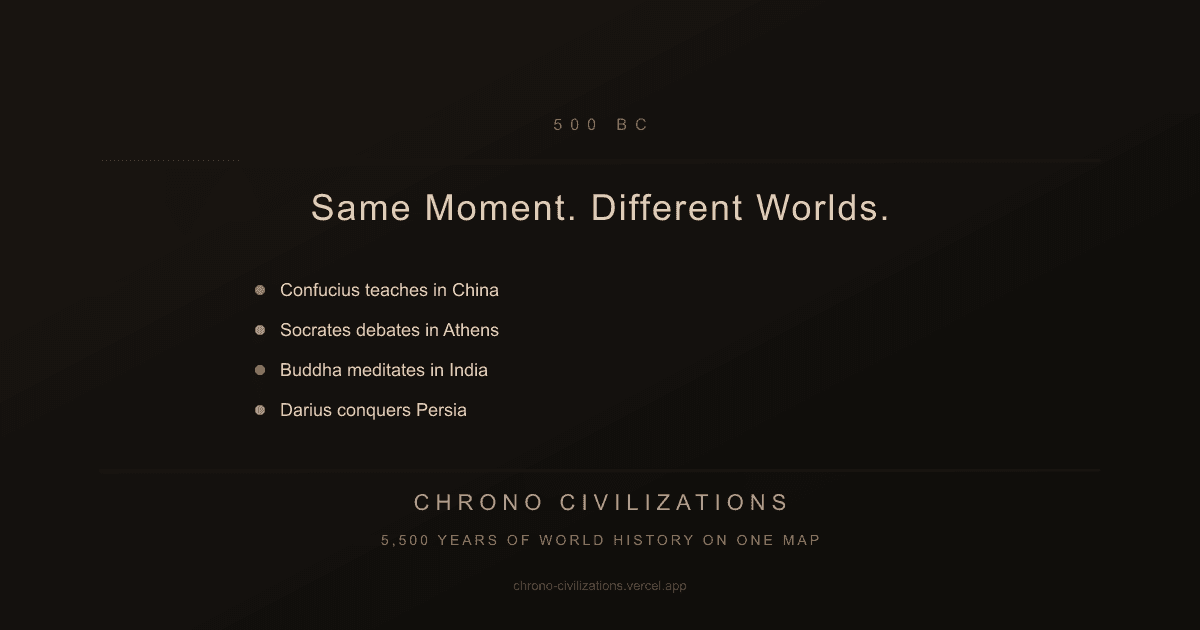
Chrono Civilizations offers an interactive historical atlas, allowing users to explore 5,500 years of world history from 3500 BC to 2024 AD. This educational tool visualizes 1,477 historical events and over 2,700 dynamic territory borders across 10 major civilizations, including China, Greece-Rome, Egypt, India, and the Islamic world. Users can watch empires rise and fall in real-time by sliding through an interactive timeline, observing dynasty boundary changes and the coexistence of different empires like Tang Dynasty China and the Roman Empire. It features a bilingual Chinese/English interface and highlights cross-civilization interaction routes such as the Silk Road.
d2l-tvm
d2l-tvm is an open-source project dedicated to deep learning compilers, offering comprehensive resources for those looking to understand and optimize deep learning models. Hosted on GitHub, it provides a platform for learning about the TVM deep learning compiler stack. The project includes detailed documentation, practical examples, and guides on how to contribute, making it a valuable resource for developers and researchers. It covers various aspects of deep learning compilation, from common operators and CPU/GPU schedules to deployment strategies, enabling users to dive deep into the technical intricacies of optimizing AI models.