
Research & Education
Browsing page 359 of AI tools for Research & Education. Sorted by confidence score — our independent quality rating.

Teacher-free-Knowledge-Distillation
Teacher-free-Knowledge-Distillation provides an implementation for a novel approach to knowledge distillation, as detailed in a CVPR2020 Oral paper. This method, titled "Revisiting Knowledge Distillation via Label Smoothing Regularization," enables significant improvements in model accuracy without the need for a stronger teacher model or extensive computational resources. The framework supports "self-training" and "manually-designed regularization" strategies. For instance, it can enhance powerful student models like ResNeXt101-32x8d by 0.48% on ImageNet or ResNeXt29 by over 1.0% on CIFAR100. The repository includes code for environment setup, dataset handling (CIFAR100, CIFAR10, Tiny_ImageNet), training baseline models, and conducting exploratory experiments like Reversed KD and Defective KD, alongside the core Teacher-free KD implementations.

Beatz: AI Song・Cover Generator
Conlan is a dynamic team of experienced developers specializing in innovative mobile applications powered by artificial intelligence. Their product EveryScan transforms smartphones into sophisticated visual encyclopedias, using state-of-the-art AI image recognition for identifying animals, insects, plants, coins, and culinary items. Another key offering is the AI Skin Scanner, an innovative mobile application that utilizes cutting-edge AI technology to analyze skin and provide precise insights into its health and condition. Conlan is committed to excellence, creativity, and user-centric design, continuously upgrading their skills to stay at the forefront of AI advancements in the mobile app landscape.
ControlNet 3D Pose
ControlNet 3D Pose is an AI tool designed for generating images directly from 3D pose inputs. This application, hosted on Hugging Face Spaces by Diffusers, enables users to create visual content by providing specific 3D pose data. It is built using Gradio, which facilitates an interactive web-based interface. The tool is a derivative of the `diffusers/controlnet-openpose` project, indicating its foundation in established pose-to-image generation techniques. While the live website currently indicates a runtime error, suggesting it may not be fully operational at this moment, its core functionality is centered around leveraging 3D pose information to guide image synthesis.

MovieMe
MovieMe is the world's first pay-per-minute movie streaming service, revolutionizing how users access entertainment. This platform eliminates the need for traditional subscriptions and hidden fees, allowing users to watch movies on their own terms. Available across mobile and web platforms, MovieMe offers a flexible and transparent viewing experience. Users can stream content anytime, paying only for the minutes they watch, which provides significant control over their entertainment budget. This innovative approach caters to individuals who prefer not to commit to monthly subscriptions or who only watch movies occasionally, making high-quality entertainment more accessible and affordable.
Immunai
Immunai is an advanced AI tool dedicated to decoding the immune system, offering solutions for drug discovery and development. It partners with biopharmaceutical companies and research institutions to identify novel targets, prioritize drug candidates, and optimize clinical trials. The platform transforms complex therapeutic questions into actionable recommendations by generating high-quality, multiomic data, augmenting it with AMICA (the world's largest immune-focused single-cell database), and leveraging advanced machine learning to compute novel immune features. Immunai validates ML-driven hypotheses through functional genomics, providing clear, actionable paths for decision-making in drug development.

BookBadge
BookBadge is an online learning platform designed to transform the learning journey through interactive engagement with books. Users can read, learn, test their knowledge, and earn professional certifications across various domains, including technology and business. The platform provides interactive book summaries and chapter quizzes to reinforce understanding. By offering structured learning paths and verifiable certificates, BookBadge aims to help individuals master new skills and advance their careers. It focuses on making education accessible and measurable through a comprehensive system of learning and certification.
Play-with-Machine-Learning-Algorithms
Play-with-Machine-Learning-Algorithms is a GitHub repository offering the official code for a MOOC course titled "Play with Machine Learning Algorithms" (《Python3 入门机器学习》). This resource serves as a comprehensive companion to the course, providing all source code, updated content, errata information, and additional exercises. Users can download, run, test, and modify the code to gain practical experience with various machine learning algorithms. The repository covers fundamental concepts from machine learning basics to advanced topics like ensemble learning and random forests, making it an invaluable resource for students and practitioners looking to deepen their understanding of machine learning through hands-on coding.
Machine_Learning_Code_Implementation
Machine_Learning_Code_Implementation is an open-source GitHub repository offering comprehensive mathematical derivations and pure Python code implementations for a wide array of machine learning algorithms. It is designed to complement classic textbooks like "Statistical Learning Methods" and "Machine Learning," providing practical code examples and theoretical foundations. The repository covers 26 classic algorithms across supervised learning (single and ensemble models), unsupervised learning, and probabilistic models. It aims to help beginners fully grasp algorithm details, implementation methods, and underlying logic, making it an invaluable resource for students and practitioners looking to deepen their understanding of machine learning.
machine_learning_python
machine_learning_python is an open-source GitHub repository offering Python implementations of various fundamental machine learning algorithms. Developed by reading and processing online resources and code, this project aims to provide practical, runnable examples for understanding and applying these algorithms. It covers a wide range of techniques including KNN (with KdTree), K-means (with Kmeans++), EM (with GMM and GMM+LASSO), Perceptron (basic and dual forms), decision trees, logistic regression, SVM, AdaBoost, and Naive Bayes (basic and Gaussian mixture). This resource is ideal for those looking to deepen their understanding of machine learning concepts through hands-on coding examples.

Kids Scroll
Kids Scroll is a free, ad-free, and safe alternative to YouTube for toddlers and preschoolers, designed by a parent with child safety in mind. The platform offers a wide array of educational games and activities aimed at improving attention span, problem-solving skills, and hand-eye coordination through mindful digital play. Key features include an infinite avatar scroll, a drawing canvas, logic puzzles like 'Shadow Match' and 'Emoji Jigsaw', and fine motor skill games such as 'Rocket Burst' and 'Make Fruit Salad'. It also includes activities for cognitive skills, early literacy, and sorting, making it a comprehensive learning tool for young children.
Python-Machine-Learning-Second-Edition
Python-Machine-Learning-Second-Edition is a comprehensive code repository accompanying the second edition of the book published by Packt. This resource is designed to support readers in their journey to learn and implement machine learning models. It includes all the necessary project files, allowing users to follow along with the book's examples and exercises. The content specifically focuses on practical applications of machine learning using popular libraries such as TensorFlow and scikit-learn, making it an invaluable asset for those looking to gain hands-on experience in the field. It serves as a practical companion for understanding and applying machine learning concepts.

MusiQ AI - AI Music Generator
MusiQ AI is an innovative AI-powered application developed by Lumetro, designed to transform musical ideas into complete songs quickly and easily. Users can generate original songs, create covers, or produce custom tracks by simply providing prompts. This tool makes music creation accessible to everyone, regardless of their musical expertise, by handling the complexities of composition, arrangement, and production. It's part of Lumetro's suite of AI applications aimed at enhancing creativity and delivering seamless digital experiences, empowering users to achieve more in their personal projects or professional work.
Janus Pro WebGPU
Janus Pro WebGPU is an innovative in-browser AI tool designed for unified multimodal understanding and generation. Hosted on Hugging Face Spaces, it offers a unique capability to render LaTeX math expressions as crisp, high-quality graphics directly within your web browser using WebGPU technology. This eliminates the need for external rendering tools or complex setups, providing an instant visual feedback loop for mathematical notation. The tool is part of the WebML Community's efforts to bring advanced AI capabilities to the web, making it accessible for experimentation and learning. Its focus on in-browser processing highlights a commitment to efficient and client-side AI applications.

Megathil
Megathil is an AI-driven career accelerator designed to help individuals land their dream jobs through cutting-edge upskilling resources. The platform provides personalized, interactive, and effective learning experiences that adapt to unique needs and goals. Users can practice unlimited mock interviews with realistic, job-specific questions and receive instant AI-based feedback on their responses, including detailed analytics on answers, body language, and vocal delivery. Megathil also offers a gamified learning experience with points, badges, and leaderboards, covering essential skills like critical thinking and communication. Comprehensive resources, skill development modules, and real-time analytics further enhance the learning journey, empowering users to confidently overcome interview challenges.

Calculator Star AI
Calculator Star is an intelligent calculator app designed for iOS that combines traditional calculator functionality with advanced voice-powered AI assistance. Users can ask math questions in plain English, such as "If I work 8 hours a day at $25 per hour, how much will I earn in a week?", and receive answers with step-by-step explanations. The app handles a wide range of calculations including basic arithmetic, percentages, time calculations, currency conversions, unit conversions, and word problems. It also features a calculation history, allowing users to review previous problems and their logic. While basic functions work offline, the voice AI features require an internet connection for processing. Privacy is a priority, with voice processing done securely and recordings never stored.
Clip Guided Faces
Clip Guided Faces is an AI tool designed for generating unique facial images through a guided process. While the live website currently shows a runtime error, the tool's purpose, as indicated by its name and previous descriptions, is to enable users to create diverse and customized face images. This capability makes it suitable for various applications, including educational purposes, creative projects, and exploring the possibilities of AI-driven image generation. The tool aims to provide a platform for users to experiment with AI in a visual context, focusing specifically on facial imagery.
BrowseComp-Plus
BrowseComp-Plus is an application designed for the fair and disentangled evaluation of deep-research agents. It enables users to browse and compare the performance of various AI models using a comprehensive set of evaluation metrics. The tool features a leaderboard where different models are ranked, allowing researchers and developers to easily assess and analyze their capabilities. This platform is particularly useful for those looking to understand the strengths and weaknesses of different AI agents in a structured and objective manner, facilitating informed decisions in academic research and development.
CompassArena
CompassArena is a platform developed by OpenCompass, designed for the evaluation and benchmarking of AI models. It offers a dedicated environment to assess the performance and capabilities of various AI models across different scenarios. The tool is presented as a Hugging Face Space, accessible via a full-screen iframe, allowing users to directly view and interact with the platform without needing to provide any input. This makes it a straightforward solution for researchers and developers looking to analyze and compare AI model efficacy. Its primary function is to provide a standardized arena for AI model assessment, contributing to advancements in AI research and development.

AI Hub Albania
AI Hub Albania is a non-profit organization dedicated to fostering an open, collaborative AI community. It serves as a platform for AI enthusiasts, researchers, and professionals to connect, learn, and innovate. The hub provides resources, events, and opportunities for members to engage in discussions, contribute to cutting-edge research, and access tools designed to shape the future of AI. Key activities include organizing AI meetups, hackathons, public lectures, policy discussions, and workshops focused on AI education and innovation. AI Hub also supports AI-driven startups with mentorship, funding opportunities, and networking, aiming to drive meaningful progress and ethical AI development.
Clasificador Comentarios Suicidas
Clasificador Comentarios Suicidas is an AI-powered tool designed to classify comments and identify potential suicide risk. Developed as a Hugging Face Space, this application allows users to input text comments and receive a classification result indicating whether the comment is related to suicide risk. This functionality can be valuable for monitoring online content, supporting mental health initiatives, and identifying individuals who may be in distress. While the tool's live version currently experiences a runtime error, its intended purpose is to provide a preliminary assessment of text for warning signs, aiding in early intervention efforts.
DictionaryByGPT4
DictionaryByGPT4 is an AI-generated English vocabulary resource created using GPT-4, offering comprehensive analysis for over 8000 words. Each entry includes detailed definitions, multiple example sentences, in-depth etymology (root and affix analysis), cultural background, word transformations (nouns, verbs, adjectives, tenses), memory techniques, and short illustrative stories. This tool aims to enhance language learning by providing a rich, contextual understanding of words, moving beyond rote memorization. It is available in various formats including EPUB, PDF, online web pages, JSON data, and an MDX dictionary, making it accessible for diverse learning preferences.
INKslate
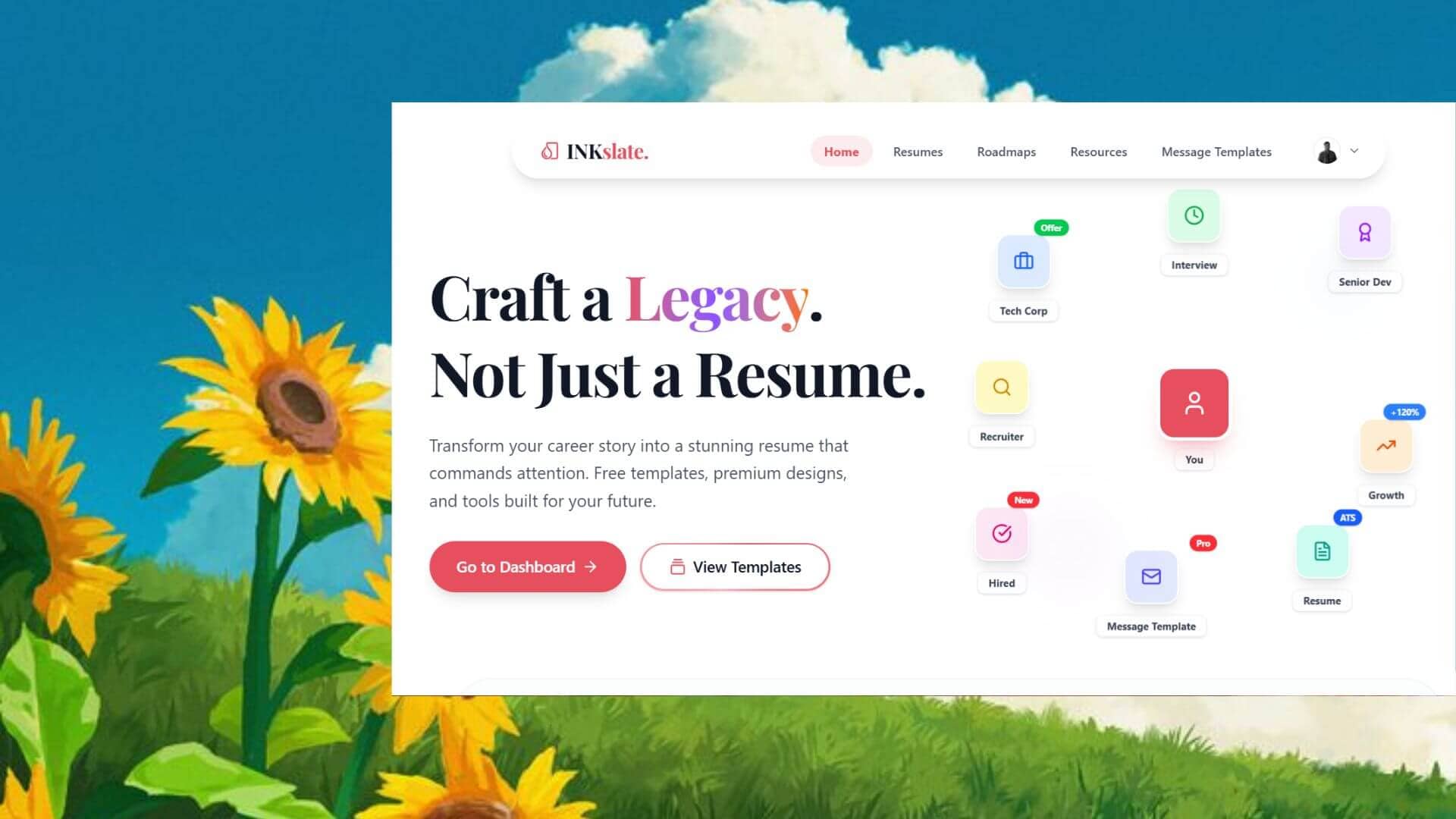
INKslate is a comprehensive career operating system designed for tech professionals. It enables users to craft ATS-friendly resumes using custom templates, suitable for both freshers and experienced individuals. Beyond resume creation, INKslate provides structured career roadmaps, guiding users from beginner to expert in various tech skills. The platform also features proven message templates for job applications, recruiter outreach, and cold emails, alongside curated resources to master in-demand tech skills like DSA, System Design, Frontend, and Backend. With real-time preview and rigorously tested ATS-friendly layouts, INKslate aims to help users land their dream job faster.
PDFSeek
PDFSeek is an AI-powered document management tool designed to enhance productivity for students, researchers, and professionals. It allows users to upload PDF documents and interact with them through AI chat, summarization, and translation features. The platform supports multi-language translation, intelligent recognition of multi-column content, and the ability to retain and translate text within charts and formulas. Users can organize multiple PDFs into folders and chat with them simultaneously, with built-in citations linking responses directly to the original PDF content. PDFSeek aims to simplify document interaction, making it easier to understand complex information and extract key insights without extensive reading.
OwlU
Owlu is a free AI email agent designed for solo professionals, freelancers, and 1-person founders to streamline email management. It offers chat-driven workflows, allowing users to automate tasks like triaging alerts, summarizing reports, and managing attachments. The platform emphasizes a 'human-in-the-loop' approach, ensuring users review personalized drafts before sending. Owlu integrates with Gmail, enabling personalized mass emails and inbox triage with pre-summarized threads and suggested actions. It's built for those whose work revolves around their inbox, helping them decide faster, write with full context, and put repetitive tasks on autopilot.