
Research & Education
Browsing page 78 of AI tools for Research & Education. Sorted by confidence score — our independent quality rating.

DTU - Intelligent Transportation Systems
DTU - Intelligent Transportation Systems is a research and education initiative from Danmarks Tekniske Universitet (DTU) dedicated to advancing the field of transportation through artificial intelligence and machine learning. The program focuses on developing novel ML methodologies applicable to mobility and various other domains, aiming to create intelligent solutions for complex transportation challenges. By integrating expertise in simulation and optimization, DTU's researchers work towards predictive optimization in transportation systems. This involves exploring how AI can enhance efficiency, sustainability, and safety within urban and national transport networks. The university's broader mission is to develop and utilize natural and technical sciences for the benefit of society, with a strong emphasis on sustainable solutions.
ML-University
ML-University is a comprehensive, open-source platform designed for free learning in the field of machine learning. Curated by an ML enthusiast for the global community, it serves as a continuously updated repository of educational resources. The platform covers a wide array of topics, including Mathematics for ML, Machine Learning, Deep Learning, Natural Language Processing, Reinforcement Learning, Large Language Models, ML in Production, Quantum ML, and provides access to datasets, useful websites, and research papers. Users can contribute to its growth by suggesting improvements or sharing valuable resources through pull requests, fostering a collaborative learning environment for ML practitioners at all levels.
Modern-Computer-Vision-with-PyTorch
Modern Computer Vision with PyTorch is an open-source code repository published by Packt, accompanying a book of the same name. It offers a hands-on approach to solving over 50 computer vision problems using PyTorch 1.x on real-world datasets. The repository includes code examples for training neural networks from scratch, implementing 2D and 3D multi-object detection and segmentation, generating digits and DeepFakes with autoencoders and GANs, and manipulating images using various GAN architectures. It also covers combining computer vision with natural language processing for OCR, image captioning, and object detection, and with reinforcement learning for building agents. The resource is ideal for beginners to PyTorch and intermediate-level machine learning practitioners.
NLPBook
NLPBook is a comprehensive open-source resource focused on neural networks and large language models within the field of Natural Language Processing. Authored by Tong Xiao and Jingbo Zhu, this book is designed for anyone interested in NLP and deep learning. It integrates content from previously published articles with significant new material, covering foundational concepts in machine learning and neural networks, basic NLP models like word vectors, recurrent and convolutional sequence models, and transformers. The book also delves into advanced topics such as pre-training, generative models, prompting, alignment, and inference for large language models. All chapters are available in PDF format, and the book has been translated into multiple languages using LLMs.
Tech AI Magazine
Tech AI Magazine is a leading publication dedicated to artificial intelligence journalism, offering comprehensive insights into the rapidly evolving AI landscape. It covers a wide range of topics, including AI 2.0 breakthroughs, top AI gadgets for 2025, and smart tools revolutionizing productivity. The magazine features articles on AI basics, advanced courses, artificial general intelligence (AGI), and foundation models. It also provides global AI news, top AI tool rankings, and guides on building AI models without coding. With a focus on balancing autonomy, security, and ethical risks, Tech AI Magazine aims to bridge the gap between AI innovation and practical implementation for a diverse audience.
DL4NLP
DL4NLP is a comprehensive GitHub repository dedicated to Deep Learning for Natural Language Processing (NLP). It serves as a valuable resource hub, offering state-of-the-art materials for various NLP sequence modeling tasks such as machine translation, image captioning, and dialog systems. The repository includes detailed notes on fundamental concepts like neural networks, RNNs, and LSTMs. It also curates links to prominent academic courses, including Stanford CS 224D and Oxford Deep Learning for NLP, complete with syllabi, slides, and lecture videos. Additionally, it provides access to seminal papers, code, and tutorials on key NLP topics like word vectors, sentiment analysis, neural machine translation, and conversation modeling, making it an essential reference for anyone studying or working in the field.
SlowMo AI
SlowMo AI is an advanced AI-powered educational platform specifically designed for children aged 6-12. It provides a safe and engaging environment for young learners to explore the world of artificial intelligence through interactive games, AI literacy modules, and prompt engineering challenges. The platform aims to foster critical thinking skills and introduce fundamental AI concepts in an age-appropriate manner. With a focus on educational safety, SlowMo AI ensures content is filtered and suitable for its target audience, making learning about AI both fun and secure. It helps children understand how AI works and how to interact with it responsibly, preparing them for a future increasingly shaped by technology.
Teachify
Teachify is an AI-powered teaching assistant designed to empower educators by streamlining the creation of engaging and personalized assignments. This tool focuses on enhancing the teaching process and improving student learning outcomes. By leveraging artificial intelligence, Teachify helps educators save time on administrative tasks, allowing them to focus more on direct instruction and student interaction. The platform is built to be intuitive, making it accessible for teachers of varying technical skill levels. Its core functionality revolves around generating customized educational content, which can significantly benefit both teachers looking to diversify their teaching methods and students seeking more tailored learning experiences.
saasguru
SaaSGuru is a comprehensive online platform designed to supercharge Salesforce careers. It provides a robust learning experience through training bootcamps, self-paced certification exam prep courses, and hands-on labs for real-world project experience. Learners benefit from live classes led by global Trailblazers, 1-1 mentoring, interview practice, and job readiness support. The platform boasts a 97% pass rate for certifications and offers unlimited doubt-clearing sessions, 24x7 community support, and a Gen-AI-powered Personal Learning Assistant. With over 150,000 learners across 60+ countries, SaaSGuru aims to help individuals build a strong foundation in Salesforce, achieve certifications, and secure their dream jobs.

Afforai
Logically is an AI-powered workspace designed to streamline academic research and writing. It offers citation-backed research capabilities, allowing users to manage references efficiently and conduct comprehensive literature reviews. The platform supports annotating PDFs directly within the system and aids in writing academic papers. Logically aims to simplify complex research tasks, providing a robust environment for students, professors, and researchers to organize their work, ensure proper citation, and enhance their writing process with AI assistance. It is designed to be user-friendly, offering a free tier to get started without requiring a credit card.
FollowYourPose
FollowYourPose is an open-source implementation of the "Follow-Your-Pose: Pose-Guided Text-to-Video Generation using Pose-Free Videos" research paper from AAAI 2024. This tool allows users to generate character videos by combining pose information with text descriptions, leveraging pre-trained text-to-image models like Stable Diffusion. It features a two-stage training scheme that uses image-pose pairs and pose-free videos to achieve continuously pose-controllable character videos while retaining the editing and concept composition abilities of the underlying text-to-image model. The project provides code, configurations, and checkpoints, along with a local Gradio demo for easy experimentation, requiring an A100/3090 GPU.
Ovis
Ovis (Open VISion) is an innovative Multimodal Large Language Model (MLLM) architecture available as an open-source project on GitHub. It is specifically designed to structurally align visual and textual embeddings, enabling advanced multimodal understanding and generation. Key features include native-resolution visual perception, enhanced reflective reasoning (thinking mode), and leading performance across STEM, chart analysis, grounding, and video understanding. Ovis supports various model sizes, from 2B to 34B parameters, and offers quantized versions for optimized deployment. It provides comprehensive installation and inference instructions, including examples for both transformers and vLLM, and supports fine-tuning with in-repo code or ms-swift.
Failed-ML
Failed-ML is a comprehensive compilation of high-profile, real-world examples of machine learning projects that have failed. This GitHub repository serves as an invaluable resource for anyone looking to understand the challenges, biases, and pitfalls inherent in AI implementation. It categorizes failures across various domains including Classic Machine Learning, Computer Vision, Forecasting, Image Generation, Natural Language Processing, and Recommendation Systems. Each entry provides a title and description of the failure, offering concrete lessons from incidents like Amazon's biased AI recruitment system, Google Photos' mislabeling, and various predictive models that proved inaccurate or harmful. The repository aims to educate practitioners and researchers on potential failure points, fostering a deeper understanding beyond the typical success stories of applied machine learning.
AI Battlecards
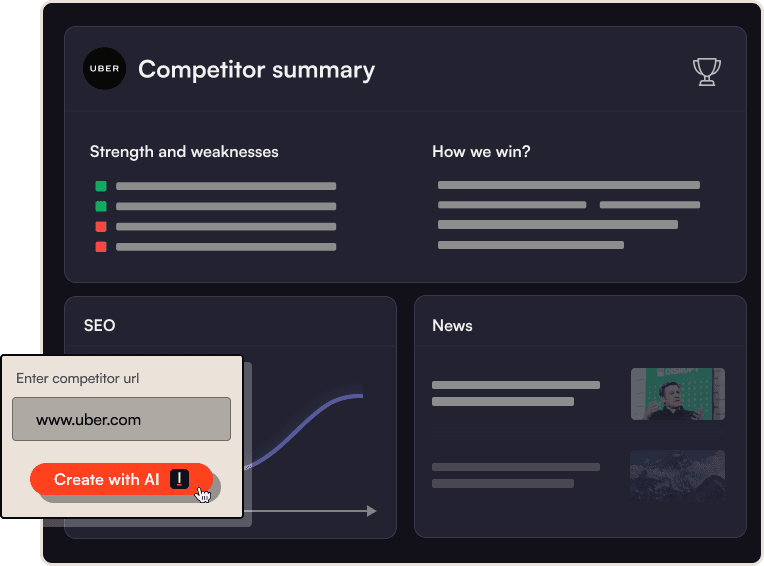
AI Battlecards is a free sales battlecard generator that instantly creates templates and populates them with competitive intelligence. It helps sales and product marketing teams by providing a head start in filling out competitor company info, key talking points, and recent news. The tool addresses common challenges like manual research, outdated information, and poor battlecard adoption by offering AI-generated content and integration capabilities with CRMs like Salesforce, Hubspot, and Microsoft Dynamics. It supports the creation of comprehensive battlecards including company info, USP, talking points, strengths, weaknesses, product details, pricing, and recent news, ensuring sales reps are equipped with up-to-date information to handle competitive deals effectively.
revix ai
Revix AI is an AI-powered study platform designed to enhance learning efficiency for students. It transforms textbooks into smart notes and flashcards, acting as a personalized study assistant. The tool helps users stay organized, motivated, and on track with their studies. Key features include personalized learning experiences, adaptive study tools, and an intelligent tutoring system. It leverages machine learning to optimize academic performance and improve memory retention. Revix AI is ideal for exam preparation, offering automated study notes and a digital learning companion to support various learning techniques.
MyResearchHome
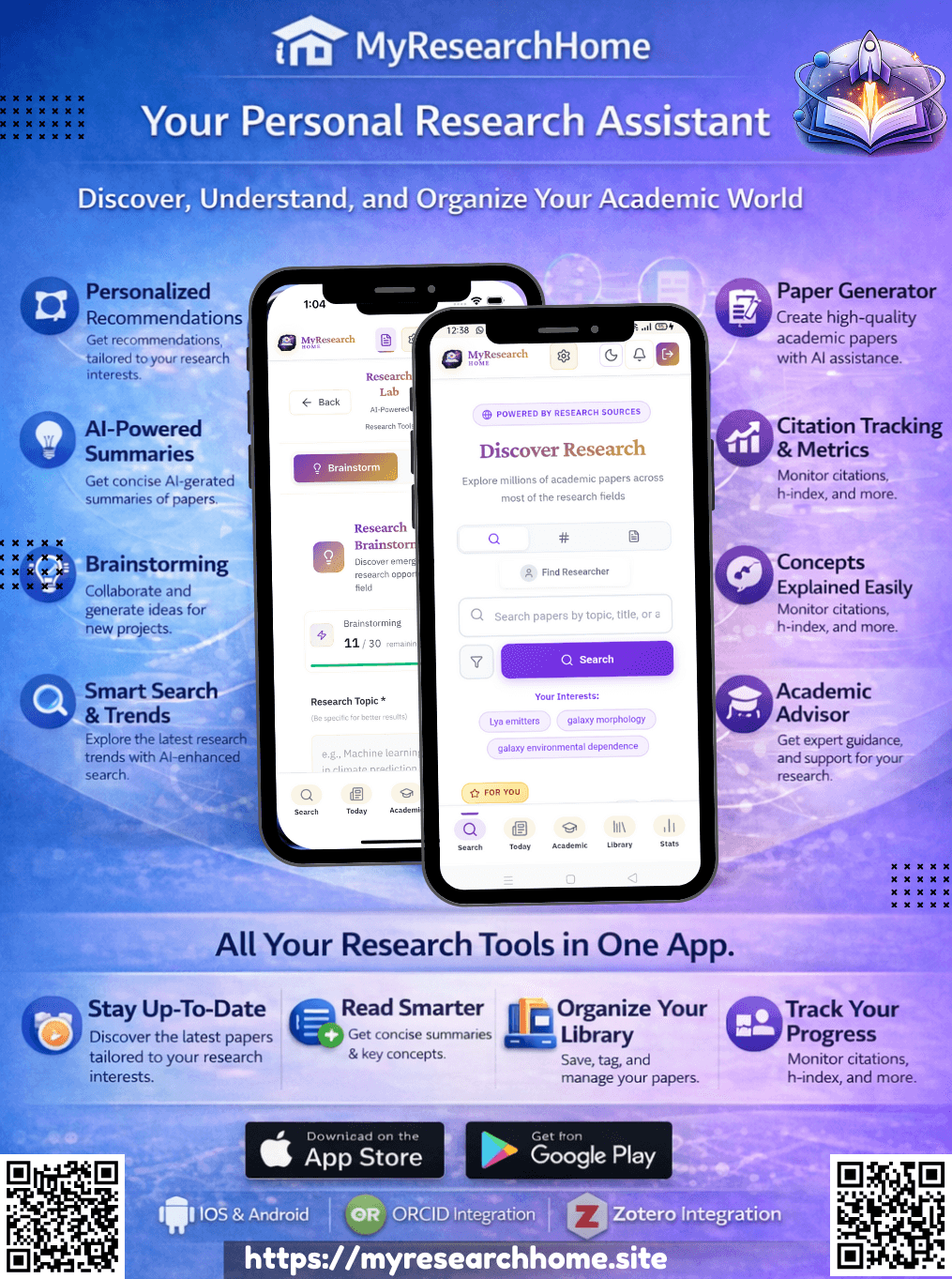
MyResearchHome is a comprehensive academic research platform designed for researchers worldwide, offering a complete workspace for their research workflow. It provides smart discovery across millions of academic papers, AI-powered insights for concise summaries, and a personalized 'Today Feed' for daily recommendations. Users can organize papers with a smart library, integrate their ORCID profile for automatic publication sync, and track citations and collaboration networks. The platform also includes a Research Lab for literature reviews and an Academic Advisor for career guidance. Available as a free iOS app, with a web version offering core features, MyResearchHome aims to streamline the entire research process.
Podcast summaries & transcripts in minutes - from Youtube, Spotify and Apple urls
Podtyper is an AI-powered tool designed to transform podcast audio from YouTube, Spotify, and Apple Podcasts into searchable transcripts and AI-generated summaries. It eliminates the need for manual transcription, providing full text transcripts with automatic speaker identification and labeling. Users can quickly extract key insights, including AI-generated summaries, key takeaways, and best quotes. The platform supports various export formats such as PDF, TXT, SRT, and VTT, making it easy to repurpose content for captions or editorial review. With auto language detection and fast processing, Podtyper aims to streamline content analysis and accessibility for podcasters, content creators, and researchers.
Honkist
Honkist is an AI-powered tool designed to streamline the learning process by offering summaries of non-fiction books. It focuses on helping users efficiently absorb the main ideas and key takeaways from various texts. The platform aims to enhance knowledge acquisition by providing condensed versions of books, making it easier for individuals to understand complex topics without having to read entire volumes. This tool is particularly beneficial for those who need to quickly get up to speed on new subjects or refresh their understanding of existing ones, catering to a broad audience interested in efficient learning.
generative-ai-on-aws
Generative AI on AWS is an open-source resource developed by O'Reilly Media, offering a detailed guide to building and deploying generative AI applications on the Amazon Web Services platform. The resource is structured into chapters covering essential topics such as generative AI use cases, prompt engineering, large language models, and fine-tuning techniques like PEFT and RLHF. It also delves into practical aspects like quantization, distributed computing, and deploying generative AI applications, including Retrieval Augmented Generation (RAG) and multimodal models. The content is designed to help users leverage AWS services, including Amazon Bedrock, for their generative AI projects.
GenerativeAICourse
GenerativeAICourse offers a comprehensive and practical course designed to teach generative AI from first principles. It covers the invention of AI, the rise of large language models (LLMs), and moves into hands-on tutorials. Users will learn to build basic chatbots, implement Retrieval-Augmented Generation (RAG), create AI agents, explore Model Context Protocol (MCP), and understand the requirements for building production-grade AI applications. The course emphasizes practical relevance, avoiding jargon and overly academic content, making AI engineering accessible for those looking to build real-world AI solutions that scale. It highlights key differences between traditional ML and AI engineering, focusing on adapting models rather than just training them.

Brisk Teaching
Brisk Teaching is an AI-powered education platform designed to assist teachers and students by integrating AI capabilities directly into existing workflows. It enables educators to quickly generate instructional materials like lesson plans, quizzes, and presentations from various resources such as Google Docs, YouTube videos, or PDFs. The platform also offers robust feedback tools, including targeted, Glow & Grow, and rubric-aligned feedback, which can be applied to individual assignments or entire classes. Additionally, Brisk Teaching features an "Inspect Writing" tool to help teachers understand student writing processes and identify potential AI-generated content, promoting academic integrity. For students, Brisk Boost provides a teacher-controlled AI workspace for personalized, interactive learning experiences.
FreeAskInternet
FreeAskInternet is a completely free, private, and locally running search aggregator and answer generator that utilizes multiple Large Language Models (LLMs). It operates without the need for a GPU, making it accessible on any computer. Users can ask questions, and the system performs multi-engine searches using SearXNG, combines the results, and feeds them to LLMs like ChatGPT3.5, Qwen, Kimi, ZhipuAI, or custom LLMs via Ollama to generate answers. All processes run locally, ensuring privacy and eliminating the need for API keys from OpenAI or Google. It's designed for web and mobile, offering a user-friendly interface for enhanced AI chat based on web search.
GenAI_LLM_timeline
GenAI_LLM_timeline is a comprehensive GitHub repository dedicated to chronicling the evolution of Generative AI and Large Language Models (LLMs). It meticulously organizes significant events, product launches, research papers, and news, both preceding and following the announcement of ChatGPT. The repository acts as a valuable historical scene, curating information to offer a clear timeline of advancements in LLMs and Generative AI. It's an open-source resource, making it accessible for anyone interested in tracking the rapid development and milestones within this dynamic field.
generative-ai
Generative-ai is a GitHub repository offering a comprehensive collection of resources for learning and mastering Generative AI. It features a detailed roadmap for GenAI and AI/ML, interactive learning through AI-ML Companion with animated diagrams, quizzes, and hands-on Python exercises. The repository covers essential GenAI terms, LLM fundamentals, vector embeddings, prompt engineering, and AI design patterns. It also delves into architecture and technical stacks, including GenAI tech stacks, LLM providers, and advanced RAG decision flows. Practical use cases and projects are provided, spanning Retrieval-Augmented Generation (RAG), Agentic AI, conversational AI, and data analytics applications. Additionally, it offers career and interview preparation guides for various AI roles.