
Research & Education
Browsing page 36 of AI tools for Scientific Computing in Research & Education. Sorted by confidence score — our independent quality rating.

giotto-tda
Giotto-tda is a high-performance topological machine learning toolbox implemented in Python, designed to facilitate advanced data analysis and machine learning research. Built on top of the scikit-learn ecosystem, it offers robust algorithms for topological data analysis (TDA). The toolbox is part of the Giotto family of open-source projects and is distributed under the GNU AGPLv3 license. It supports Python 3.7+ and integrates with popular libraries like NumPy, SciPy, and Plotly. Giotto-tda is the result of a collaborative effort between L2F SA, EPFL, and HEIG-VD, making it a reliable tool for researchers and data scientists working with complex datasets.
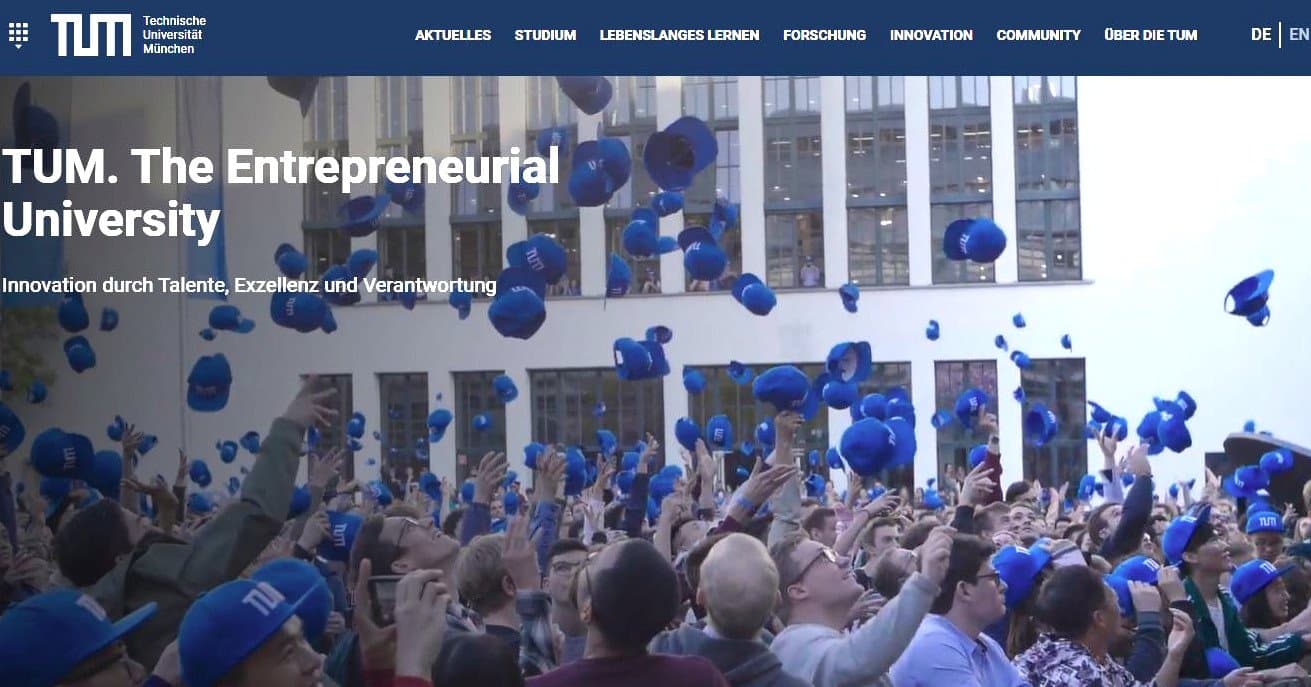
Institute for Computational Mechanics (Wall Lab)
The Institute for Computational Mechanics (Wall Lab) at the Technical University of Munich (TUM) is dedicated to cutting-edge research in computational mechanics. Their work spans application-motivated fundamental research, with a particular emphasis on complex coupled multifield and multiscale problems across various engineering and applied science domains. The institute's activities encompass advanced modeling techniques, the development of novel computational methods, and the creation of specialized software for high-performance computing systems. This focus enables them to tackle challenging scientific and engineering questions, contributing to advancements in fields requiring sophisticated simulation and analysis.
machine_learning_with_python_jadi
machine_learning_with_python_jadi is an open-source GitHub repository offering a collection of Jupyter notebooks specifically designed for a machine learning course. The repository includes various practical examples covering topics such as classification (Decision Trees, K-Nearest Neighbors, Logistic Regression, SVM), clustering (DBSCAN, Hierarchical, K-Means), regression (Linear, Non-Linear, Polynomial), and recommender systems (Collaborative and Content-Based Filtering). It also provides several datasets like ChurnData.csv, FuelConsumption.csv, and movies.csv, which are used within the notebooks for hands-on exercises. This resource is ideal for students and developers looking to learn and practice machine learning concepts using Python.
braindecode
Braindecode is an open-source Python toolbox specifically designed for decoding raw electrophysiological brain data using deep learning models. It offers a comprehensive suite of functionalities, including dataset fetchers, robust data preprocessing tools, and visualization capabilities. The toolbox also features implementations of various deep learning architectures and data augmentations, making it suitable for in-depth analysis of EEG, ECoG, and MEG signals. It caters to both neuroscientists interested in applying deep learning and deep learning researchers looking to work with neurophysiological data, providing a powerful platform for advanced brain signal analysis.
tf_unet
tf_unet is an open-source project offering a generic U-Net implementation developed with TensorFlow, specifically designed for image segmentation tasks. Originally used for Radio Frequency Interference mitigation, this tool is highly adaptable and can be applied to diverse imaging data, from detecting circles in noisy images to identifying galaxies and stars in wide-field imaging. The project provides Jupyter notebooks for toy problems and RFI mitigation, making it accessible for both learning and practical applications. While the project is discontinued in favor of a TensorFlow 2 compatible version, it remains a valuable resource for understanding and implementing U-Net architectures.
PythonNumericalDemos
PythonNumericalDemos is an open-source repository designed to provide Python demonstrations for spatial data analytics. It encompasses a range of topics, including geostatistical and machine learning workflows, making it a valuable resource for both students and educators. The repository is specifically tailored to support courses in data analytics and geostatistics, helping users overcome intellectual hurdles in data science. By offering practical, code-based examples, PythonNumericalDemos facilitates a deeper understanding of complex numerical methods and their application to real-world spatial data problems. Its open-source nature encourages collaboration and continuous improvement within the data science community.
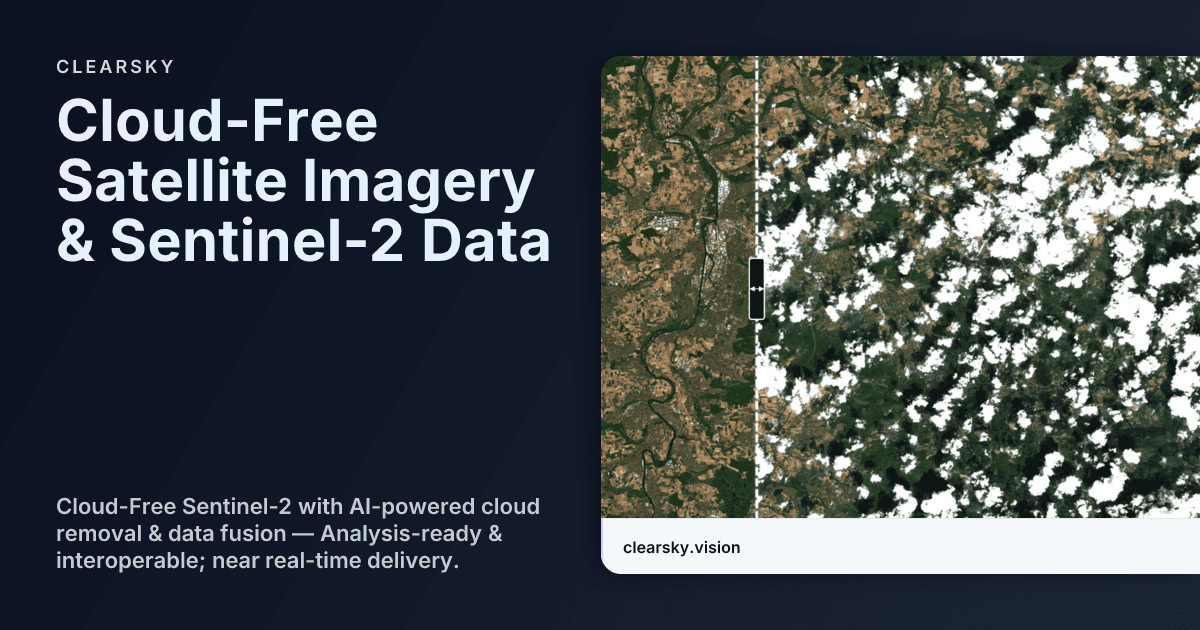
ClearSKY Vision
ClearSKY Vision offers cloudless Sentinel-2 satellite imagery, leveraging AI for cloud removal and data fusion. It integrates optical and SAR data from Sentinel-1 and Sentinel-2 satellites to reconstruct cloud-covered areas, clean optical pixels, and provide harmonized, analysis-ready images. This tool delivers frequent, consistent data at 10m resolution, available in Cloud Optimized GeoTIFF (COG) format, with options for TOA or BOA products. It supports flexible ordering via GeoJSON, WKT, or tiles, catering to agriculture, forestry, and environmental monitoring, ensuring uninterrupted insights even under persistent cloud cover.
schnetpack
schnetpack is an open-source toolbox designed for researchers and developers working with atomistic systems. It provides a robust framework for developing and applying deep neural networks to predict various properties of molecules and materials, such as potential energy surfaces and quantum-chemical characteristics. The tool includes fundamental building blocks for atomistic neural networks, simplifying the process of conducting simulations and making accurate property predictions. Its open-source nature, hosted on GitHub, encourages community contributions and provides transparent access to its codebase, making it a valuable resource for academic and industrial research in computational chemistry and materials science.
SpatialLM
SpatialLM is a 3D large language model designed to process 3D point cloud data and generate structured 3D scene understanding outputs. It can identify architectural elements such as walls, doors, and windows, as well as oriented object bounding boxes with their semantic categories. A key differentiator is its ability to handle point clouds from diverse sources, including monocular video sequences, RGBD images, and LiDAR sensors, unlike previous methods that often required specialized equipment. This multimodal architecture bridges the gap between unstructured 3D geometric data and structured 3D representations, providing high-level semantic understanding. SpatialLM enhances spatial reasoning capabilities for applications in embodied robotics, autonomous navigation, and other complex 3D scene analysis tasks. It offers models like SpatialLM1.1-Llama-1B and SpatialLM1.1-Qwen-0.5B, available on Hugging Face, and supports detection with user-specified categories.
rl
TorchRL is an open-source Reinforcement Learning (RL) library built for PyTorch, emphasizing a modular, primitive-first, and Python-first design. It provides a comprehensive framework for developing and deploying RL agents, featuring a command-line training interface for state-of-the-art agents without extensive coding. The library also includes a revamped vLLM integration for scalable LLM inference and training, offering features like AsyncVLLM service, multiple load balancing strategies, and distributed data loading. Additionally, TorchRL offers an experimental PPOTrainer for configurable PPO training solutions and a complete LLM API for fine-tuning language models, supporting RLHF, supervised fine-tuning, and tool-augmented training. Its design principles align with the PyTorch ecosystem, ensuring efficiency, extensibility, and minimal dependencies.
shapash
Shapash is a Python library designed to make machine learning models interpretable and comprehensible for everyone. It offers various visualizations with clear and explicit labels, simplifying the understanding of interactions between a model's features. A key feature is its ability to generate a Webapp, allowing users to easily navigate between local and global explainability. This Webapp helps Data Scientists understand their models and share results with non-data experts. Shapash also contributes to data science auditing by providing comprehensive reports about models and data. It supports Regression, Binary Classification, and Multiclass problems and is compatible with numerous models like Catboost, Xgboost, LightGBM, Sklearn Ensemble, Linear models, and SVM, with options to integrate other models.
techniques
The 'techniques' GitHub repository serves as a comprehensive resource for deep learning methods specifically tailored for satellite and aerial imagery analysis. It provides an organized overview of various techniques designed to handle the unique challenges of processing large-scale image datasets. The repository focuses on methodologies for identifying diverse object classes within these images, making it a valuable asset for researchers and developers in the field. As an open-source project, it is freely accessible for both research and development purposes, fostering collaboration and advancement in the application of AI to geospatial data.
TFC-pretraining
TFC-pretraining is a specialized tool designed for self-supervised contrastive learning, specifically tailored for time series data. It leverages a novel approach called time-frequency consistency to significantly improve the learning process and the quality of representations derived from complex time series. The tool provides researchers and practitioners with not only the underlying methodology but also includes processed datasets and readily available code for implementing the technique. This makes it an invaluable resource for those working in time series analysis, enabling them to explore advanced predictive analytics and pattern recognition with greater efficiency and accuracy. Its focus on robust representation learning addresses key challenges in handling sequential data.
torchcv
TorchCV is a PyTorch-based framework designed for deep learning applications in computer vision. It offers a comprehensive collection of implementations for various models, primarily focusing on image classification and other common computer vision tasks. The framework is built with the goal of keeping pace with the latest advancements and research in the field, providing developers with up-to-date resources. While the provided content is a GitHub pricing page, the context indicates torchcv is a tool for developers working with computer vision models, likely open-source given its GitHub presence. It serves as a valuable resource for those looking to implement or experiment with state-of-the-art computer vision algorithms.
brian2
Brian2 is a free, open-source simulator for spiking neural networks, primarily written in Python. It provides a user-friendly and efficient platform for researchers to model and simulate complex neural circuits. The simulator is designed with ease of learning and use in mind, aiming to save scientists' time in addition to processing power. Brian2 is highly flexible and easily extensible, making it suitable for a wide range of neuroscience research applications. It is available on almost all platforms and offers comprehensive documentation. Users are encouraged to report issues via GitHub or the Brian forum and to cite the provided article if used for published research.
bullet3
bullet3 is the official C++ source code repository for the Bullet Physics SDK, offering real-time collision detection and multi-physics simulation capabilities. It is widely used across various domains including virtual reality, game development, visual effects, robotics, and machine learning. The SDK supports a range of platforms like Windows, Linux, Mac OSX, iOS, and Android, and includes experimental OpenCL GPGPU support for accelerating collision detection and rigid body dynamics. Users can also leverage PyBullet, Python bindings for enhanced support in robotics, reinforcement learning, and VR, with simple installation via pip. The project is licensed under the permissive zlib license.

DK AI Lab
DK AI Lab is an AI research lab dedicated to human-centric AI innovation, celebrating over five years in the field. Their mission is to develop AI that is understandable, explainable, and reproducible, ensuring its sustainability for future generations. Key projects include HOMINIS, an ethical and explainable AI initiative building a bias-free, trustworthy, and equitable multi-verse model. They also apply AI to climate understanding, developing real-time meta forecasting solutions for researchers and energy companies, and to sustainable energy through projects like PETAI and INERTIA. In healthcare, CURAE.AI reinvents operations with augmented intelligence, supporting projects like DEPRESSIO and MENO AI. Additionally, DK AI Lab is committed to teaching human-centered AI through initiatives like LiveAI.EU and the EU-funded HCAIM Master's program.

Entalpic
Entalpic is an AI-driven platform designed to accelerate chemistry and materials research and development, focusing on surface-driven industrial processes. It leverages cutting-edge AI, quantum modeling, and atomistic simulations to discover new materials and chemistry, enabling more sustainable industrial processes. The platform integrates multimodal datasets, including quantum simulations, scientific literature, patents, and experimental data, to power its predictive and generative models. Entalpic's technology includes a high-throughput discovery engine for screening chemical spaces, process modeling for simulating material behavior under manufacturing conditions, and a robust data curation system. It applies AI and atomic-scale modeling to solve industrial challenges in semiconductors, batteries, catalysis, and advanced materials.
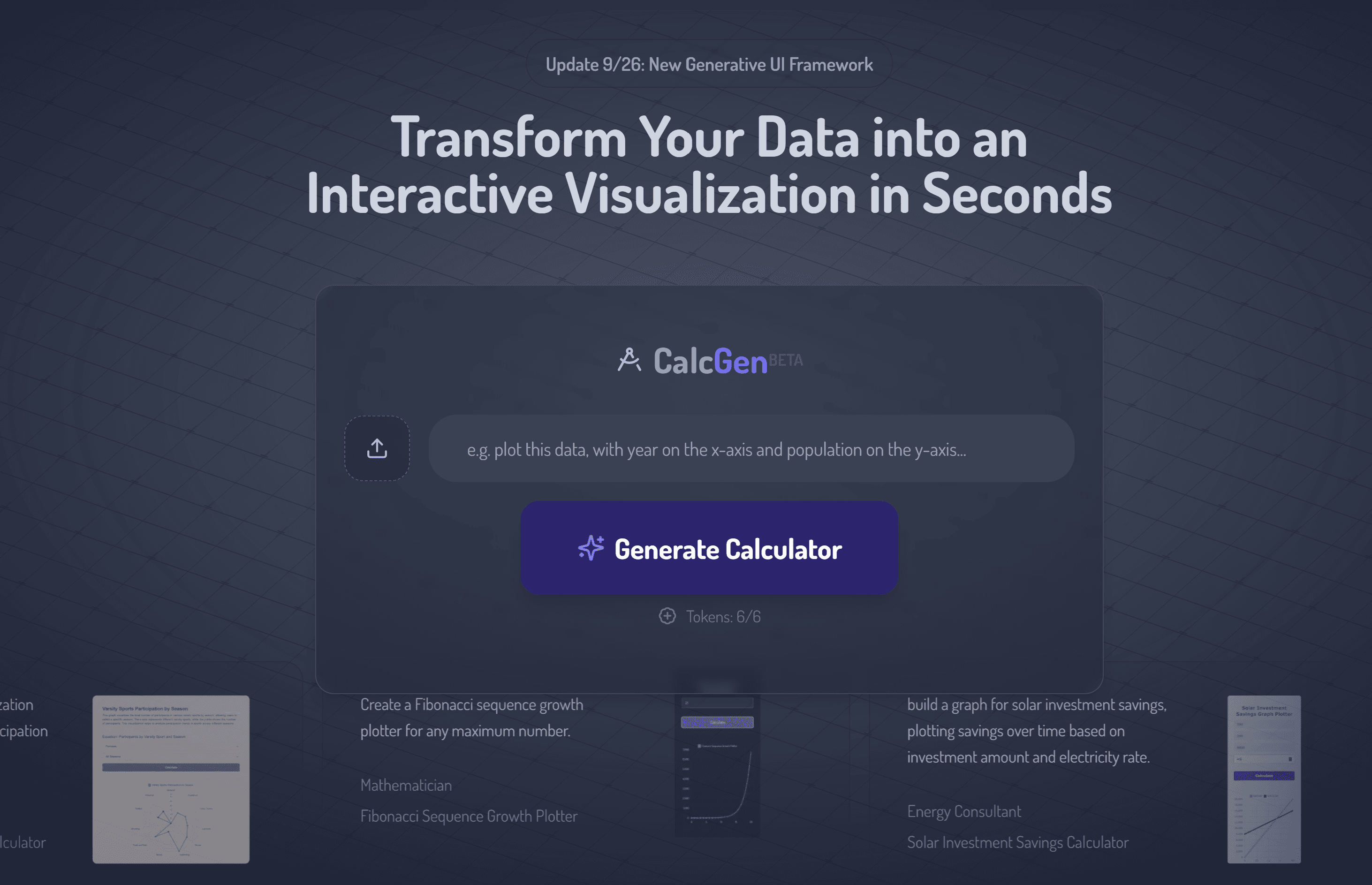
CalcGen AI
CalcGen AI transforms raw data and images into interactive charts, graphs, calculators, and data visualizations with the power of AI. Users can upload data tables or images to generate custom visualizations, making data storytelling and insights accessible for various applications. The tool is designed for ease of use, allowing professionals like financial managers, demographers, scientists, and educators to quickly create complex data representations. It supports the generation of financial performance graphs, population comparison charts, scientific calculators, and even custom quote estimators, enhancing data analysis and presentation for websites or presentations.
Immunai
Immunai is an advanced AI tool dedicated to decoding the immune system, offering solutions for drug discovery and development. It partners with biopharmaceutical companies and research institutions to identify novel targets, prioritize drug candidates, and optimize clinical trials. The platform transforms complex therapeutic questions into actionable recommendations by generating high-quality, multiomic data, augmenting it with AMICA (the world's largest immune-focused single-cell database), and leveraging advanced machine learning to compute novel immune features. Immunai validates ML-driven hypotheses through functional genomics, providing clear, actionable paths for decision-making in drug development.
Space DOTS
Space DOTS offers SKY-I, an intelligence platform designed to transform fragmented and outdated space environmental data into a single, comprehensive source of mission-critical intelligence. This platform dramatically accelerates mission planning cycles from months to hours by providing immediately actionable insights. SKY-I delivers trusted environmental intelligence across various orbital regimes, from VLEO to cislunar space, helping operators plan and execute missions with confidence in contested environments. Key features include real-time 3D visualization of space environments, an advanced tagging system for anomaly and threat attribution, customizable dashboards, and multiple workspaces. It also offers comprehensive API access for seamless integration with existing mission planning systems.
deep-motion-editing
Deep-motion-editing is an open-source library built with PyTorch, designed for editing and rendering 3D character animations using deep learning. It offers fundamental and advanced functions, covering everything from reading and editing animation files to visualizing and rendering them, including integration with Blender. The library's core deep editing operations include motion retargeting and motion style transfer, based on research published at SIGGRAPH 2020. It supports both intra-structural and cross-structural retargeting, and allows for style transfer from video to animation. The library provides pretrained models and instructions for training models from scratch, making it a comprehensive tool for developers working with 3D character animation.

Gurobi Optimizer
Gurobi Optimizer is a powerful optimization technology designed to tackle complex business challenges by translating them into mathematical models. It provides the indisputable, optimal solution, not just an approximation. The software scales to handle real-world models with millions of variables and constraints, offering agility to adapt plans quickly as new data emerges. Gurobi gives users control to model problems, explore 'what-if' scenarios, and make defensible decisions. It integrates easily with modern analytics and development environments, offering flexible APIs, including a widely used Python API, to build and deploy optimization models within applications and data pipelines. Gurobi is built on decades of optimization research by PhD mathematicians and experts, ensuring numerical stability and proven performance across various industries.
Medra
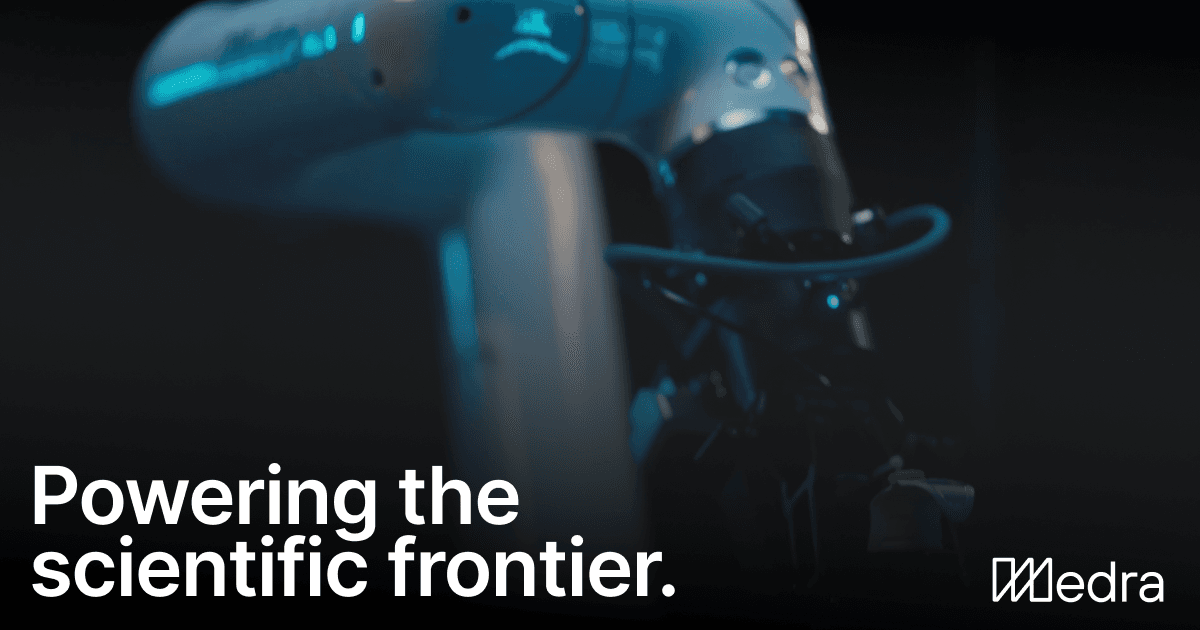
Medra is an advanced Scientific Computing tool designed to automate and accelerate laboratory work through its autonomous robotic system. The platform integrates Physical AI and Scientific AI to run and optimize protocols, allowing scientists to hand over lab work. Key capabilities include text-to-protocol conversion, instrument agent control, and closed-loop optimization. The Physical AI captures data at scale, logs videos and metadata, reduces errors with computer vision, and offers flexibility through modular, instrument-agnostic agents. The Scientific AI enables programming in natural language, multi-modal reasoning across various data types, and adaptive experiment design based on results. Medra aims to unlock breakthroughs at scale by enabling the creation and execution of multiple experiments in parallel, from gene editing to microbial discovery.