
Research & Education
Browsing page 44 of AI tools for Scientific Computing in Research & Education. Sorted by confidence score — our independent quality rating.

Depth Anywhere App
Depth Anywhere App is an AI-powered tool available as a Hugging Face Space that allows users to easily generate depth maps from uploaded images. By simply providing a photograph, the application processes it to produce an output image that visually represents the distances of objects within the scene. This functionality is particularly useful for tasks requiring 3D understanding from 2D inputs, such as computer vision research, 3D reconstruction, or artistic applications. The tool is built with Gradio, making it accessible through a web interface, and is licensed under Apache-2.0, indicating its open-source nature suitable for various development and educational purposes.
MATIS
MATIS provides a comprehensive solution for art authentication and analysis, combining a certified multispectral camera with an intuitive user interface. The camera utilizes an illumination-induced technology based on physics models of light absorption and reflection, allowing for the visualization of different layers of artworks, from surface examination to underdrawings. It captures high-resolution images up to 45MPx across 15 different bands, is handheld, battery-operated, and includes integrated calibration. The accompanying software integrates advanced image processing algorithms for pigment identification, pigment mapping, and underdrawing visualization, all within a secure database designed for institutions. This system aims to increase efficiency for art experts in their daily authentication assessments without the need for costly third-party specialists.
Mutanex
Mutanex is an AI-driven platform dedicated to precision medicine, focusing on collaborative personalized treatments. It leverages advanced genetic profiling to analyze an individual's unique biological makeup, aiming to provide accurate and early cures for a range of chronic, genetic, and rare disorders. The platform is designed to enhance treatment efficacy by tailoring medical interventions to the patient's specific genetic profile, thereby potentially minimizing adverse effects and improving patient outcomes. Mutanex seeks to revolutionize how medical professionals approach complex conditions by offering data-driven insights for highly individualized care plans.
FreeNoise
FreeNoise is presented as a Hugging Face Space, developed by MoonQiu (Haonan Qiu). While the live website indicates the space is currently sleeping due to inactivity, its presence on Hugging Face suggests it's an AI tool primarily for experimentation and potentially noise generation. Tools hosted on Hugging Face Spaces are often used for showcasing machine learning models, research, and educational purposes, allowing users to interact with AI applications directly in a web browser. The tool's status as a 'sleeping' space implies it's a project that can be restarted and utilized for its intended functions, likely within the domain of AI research or development.
Ro5
Juvenescence, operating under the Ro5 initiative, is a clinical-stage drug development company focused on extending healthy lifespan through innovative medicines. Their approach centers on developing therapies that target core aging mechanisms, aiming to not only treat but also prevent age-related diseases. The company is on track to have five medicines in Phase I or II trials by 2025, utilizing small molecules, biologics, and cell therapies. Ro5 integrates leading AI and data science tools to design novel compounds, increase drug success rates, and compress development times. They also employ adaptive clinical trial designs with patient stratification, biomarkers, and AI-enabled real-time analysis to provide meaningful efficacy readouts early in development. Their primary goal is prevention, with the potential to increase lifespan by addressing fundamental aging processes.
myosuite
MyoSuite is an open-source collection of musculoskeletal environments and tasks designed for simulation using the MuJoCo physics engine. It is wrapped in the OpenAI gym API, making it accessible for machine learning applications in biomechanical control problems. The suite supports Python 3.10+ and offers fast installation via `uv` or `conda`. Users can test installations, visualize environments with random controls, and integrate with the latest MyoSkeleton models. MyoSuite provides tutorials and examples for creating and interfacing with its environments, along with baselines for testing pre-trained policies, making it a valuable resource for researchers and developers in robotics and AI.
Protein Structure Modeling
Protein Structure Modeling is an AI tool available on Hugging Face Spaces, designed for predicting and visualizing protein structures. This application is particularly useful for researchers and students in fields such as biology, biochemistry, and pharmacology, who require accurate structural models for their work. While the current live website indicates a runtime error, suggesting temporary unavailability, the tool's core purpose is to facilitate scientific research and educational endeavors by providing a platform for protein structure analysis. Its integration within the Hugging Face ecosystem implies a focus on accessibility and community-driven development in AI-powered scientific tools.
svox2
svox2 is an open-source project that implements Plenoxels, a technique for representing radiance fields without relying on neural networks. This approach offers an alternative to traditional neural radiance fields for 3D scene representation and rendering. The tool is designed for researchers and developers in computer vision and 3D graphics, providing official optimization code and support for various dataset formats like NeRF-Blender, LLFF, NSVF, and CO3D. It includes scripts for data processing, optimization, and rendering, with options for single scene training or parallel task execution. While primarily tested on Linux, it offers a robust framework for experimenting with radiance fields.
pytorch-drl4vrp
pytorch-drl4vrp is an open-source implementation of the deep reinforcement learning approach for solving the Vehicle Routing Problem (VRP), as detailed in the paper "Deep Reinforcement Learning for Solving the Vehicle Routing Problem." It specifically supports both the Traveling Salesman Problem (TSP) and the Vehicle Routing Problem (VRP). The tool is built using Python 3.6 and PyTorch, providing a framework for researchers and developers to apply deep learning techniques to optimize complex routing and logistics challenges. It includes sample tours, masking schemes for both TSP and VRP, and performance comparisons with the original paper's results, along with training time benchmarks.
Dystr
Dystr is an engineering analysis platform designed to accelerate mathematical computations for engineers. It offers a GPU-accelerated runtime, branded as RunMat, which enables users to perform complex math operations at high speeds across various environments including web browsers, desktop applications, and command-line interfaces. This platform aims to help engineers build bigger and bolder projects by providing efficient code execution and analysis capabilities. While the current description mentions MATLAB input syntax and automatic GPU/CPU scheduling, the live website primarily highlights the RunMat feature for fast math execution.
pytorch3d
PyTorch3D is FAIR's open-source library designed to provide efficient and reusable components for deep learning with 3D data, specifically within the PyTorch framework. It offers key features such as data structures for storing and manipulating triangle meshes, along with efficient operations like projective transformations, graph convolution, and sampling. A notable component is its differentiable mesh renderer, which is crucial for integrating 3D data into deep learning pipelines. The library is built to handle minibatches of heterogeneous data, can be differentiated, and utilizes GPUs for acceleration, making it suitable for advanced 3D computer vision research and applications like Mesh R-CNN.
SAIR Lab
SAIR Lab, part of the Computer Science and Engineering department at the University at Buffalo, is dedicated to advancing mobile robots toward human-level autonomy. The lab focuses on developing algorithms and systems that enable robots to efficiently and robustly perceive and interpret various sensory inputs, integrate neural and symbolic memory representations for spatial common sense, and reason, plan, and act in real time within dynamic environments. A core principle is imperative learning (IL), a neuro-symbolic framework promoting data-efficient learning through structured reasoning. SAIR Lab also leads the development of PyPose, an open-source library for differentiable robotics on manifolds, which has seen significant downloads.
BioBox
BioBox is the Decision Operating System for AI-driven drug discovery, designed to help biopharma teams manage, integrate, and analyze massive, often siloed, datasets. It enables the creation of custom knowledge graphs that weave together scientific data and encode scientific reasoning, powering AI scientists. Unlike black-box vendors, BioBox ensures proprietary insights remain sovereign, allowing teams to build and evolve their own graphs and models. The platform supports end-to-end integration from public databases to proprietary experiments, bridging discovery to development. Key features include custom knowledge graphs, graph models for AI, an AI research assistant, and real-time multi-omic reports, all designed to accelerate innovation and improve decision-making in drug discovery.
Franka Robotics
Franka Robotics is a German, research-driven robotics company headquartered in Munich, founded in 2016 and part of Agile Robots since 2023. Their mission is to empower the robotics and AI community by developing a reference robotics platform that facilitates exploration, collaboration, creation, and sharing, thereby driving continuous advancements in robotics and AI. They offer the Franka Research 3, a world-class, force-sensitive robot system tailored for robotics and AI, providing both user-friendly features and low-level access for control and learning. Franka Robotics also integrates products like Diana 7 by Agile Robots into its ecosystem, expanding its portfolio with robots featuring greater reach and payload capacity, and focuses on physical AI research and applications.
TrainYourOwnYOLO
TrainYourOwnYOLO is a comprehensive repository designed for building custom object detectors from scratch using the state-of-the-art YOLOv3 computer vision algorithm. It supports TensorFlow 2.3 and Keras 2.4, offering a full pipeline that includes image annotation, model training with pre-trained weights, and object inference on new images and videos. The tool provides detailed instructions and scripts for each step, ensuring a smooth workflow for users. It also supports Weights & Biases for experiment tracking and offers a Google Colab tutorial for quick setup. The repository is structured to maintain ease of use, with dedicated folders for annotation, training, and inference, making it ideal for data scientists looking to implement custom object detection solutions.
Theano-Tutorials
Theano-Tutorials offers a foundational learning experience in machine learning, specifically utilizing the Theano library. This resource is designed to introduce users to core concepts, ranging from basic linear regression models to more complex convolutional neural networks. It provides a practical, hands-on approach to understanding these machine learning paradigms. The tutorials are structured to be accessible, though they do assume the user has access to the MNIST dataset for practical exercises and examples. This makes it a suitable starting point for individuals looking to grasp the fundamentals of machine learning with a specific focus on Theano's capabilities.
Crypto King
Crypto King is an AI platform that is currently in its launching soon phase. The website provides minimal information, indicating it is a business-focused tool. It features a contact form for inquiries and an option to sign up for an email list to receive updates and promotions. The platform is protected by reCAPTCHA and adheres to Google's Privacy Policy and Terms of Service. Copyright information suggests a 2025 establishment. Further details regarding its specific AI capabilities, target industries, or unique selling propositions are not yet available on the live website.

Cyclops
CYCLOPS is the first-of-its-kind dMRV platform designed to transform how natural capital is measured, monitored, and verified globally and at high resolution. Leveraging AI, it enables digital monitoring, reporting, and verification for nature-based carbon projects, empowering developers, investors, and buyers to assess risk, validate impact, and scale with confidence. The platform offers full-stack digital MRV solutions, including a 4D-MRV approach covering Due Diligence, Design, Documentation, and ongoing MRV. It supports various nature-based project types like REDD+, ARR, and blue carbon, adhering to leading standards such as Verra and Gold Standard. Built on EarthOS, a digital twin and data infrastructure for satellite-driven climate intelligence, CYCLOPS provides real-time analytics, predictive carbon modeling, and high-resolution monitoring.
async_deep_reinforce
async_deep_reinforce is an open-source implementation of asynchronous methods for deep reinforcement learning, specifically designed to reproduce the findings from Google DeepMind's influential paper, "Asynchronous Methods for Deep Reinforcement Learning." The tool focuses on the Asynchronous Advantage Actor-Critic (A3C) method, applying it to the classic "Atari Pong" game using TensorFlow. It provides implementations for both A3C-FF (Feed-Forward) and A3C-LSTM (Long Short-Term Memory) architectures. The project includes instructions for building a multi-thread ready version of the Arcade Learning Environment and details on how to train and visualize results. Performance benchmarks comparing GPU and CPU speeds for different A3C implementations are also provided, making it a valuable resource for researchers and developers in the field.
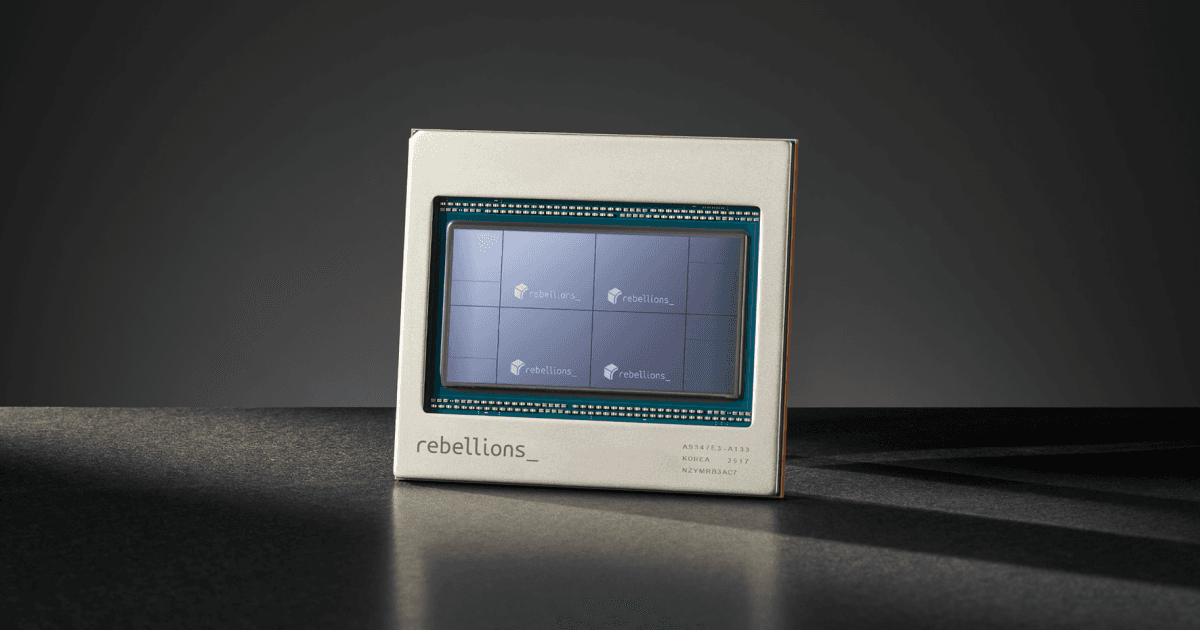
Rebellions
Rebellions provides advanced AI accelerators specifically designed for data centers, offering a comprehensive suite of hardware solutions such as AI cards, servers, and rack-scale systems. The company distinguishes itself with its proprietary full-stack software, which ensures native support for popular AI frameworks like PyTorch and vLLM. This integration allows for seamless deployment and optimization of AI workloads. Rebellions' hardware, exemplified by the REBEL-Quad, focuses on high-throughput compute, massive HBM3E bandwidth, and a scalable chiplet architecture, setting new standards for performance per watt. Their offerings, including RebelServer™ and ATOM™-Max Server, are built for efficient AI inference and optimized for real-world AI deployment, emphasizing scalability from individual servers to entire racks.
Cyrebro Neurosignals
Cyrebro Neurosignals is a pioneering neurotechnology company based in Paris, specializing in decrypting natural intelligence through brain dynamics. The platform utilizes proprietary EEG sensors for clinical-grade data collection, an extensive EEG database with over 170,000 recording sessions, and an exclusive portfolio of patented intelligent algorithms. It offers a user-centric analytics platform for instant insight discovery, enabling cognitive and emotional consumer profiling for product development, particularly in neurocosmetics and fragrances. Additionally, it supports digital therapeutics (DTx) by improving mental health outcomes for conditions like stress, pain, and ADHD, and personalizing treatments. The mybrain Tech platform analyzes brain activity in real time to optimize products, refine clinical studies, and sustainably improve quality of life.

AI Calculator: Scan and Solve
AI Calculator: Scan and Solve is an Android mobile application designed to assist students, educators, and professionals with complex mathematical problems. The app acts as both an AI Math Solver and a scientific calculator, allowing users to scan problems for instant solutions. It supports a wide range of mathematical disciplines, including algebra, calculus, and advanced scientific computations, making it a versatile educational and professional tool. The app aims to simplify the process of solving equations and understanding mathematical concepts, providing quick and accurate results directly from a mobile device. Its core functionality focuses on ease of use and accessibility for on-the-go problem-solving.
AOC AI Gaming Laptop
The AOC AI Gaming Laptop is a 2024 model designed to blend gaming performance with AI capabilities. It is equipped with an Intel Core Ultra5 processor, 16GB of DDR5 RAM, and a 1TB NVMe PCIe 4.0 SSD, ensuring fast processing and ample storage. The laptop boasts a 16.1-inch FHD IPS display with a high refresh rate for smooth and immersive visuals, making it suitable for gaming, multimedia consumption, and creative work. Its AI chip is intended to enhance productivity and creativity across various applications, from data science to smart IoT. The laptop also features an 8-hour battery life and a backlit keyboard, making it a versatile option for users on the go.
taichi-nerfs
taichi-nerfs offers a robust PyTorch and Taichi implementation for instant-ngp NeRF training pipelines, designed for researchers and developers working with neural radiance fields. This open-source tool allows users to train NeRF models from preprocessed datasets like Synthetic NeRF and 360_v2, or directly from their own videos. A key differentiator is its ability to deploy NeRF rendering pipelines on mobile devices using Taichi AOT, achieving real-time interactive performance on iOS devices such as iPad Pro and iPhone 14 Pro Max. It also serves as a backend for text-to-3D projects like stable-dreamfusion, expanding its utility in 3D content creation. The project emphasizes performance, with optimizations like half2 optimization for compatible GPUs.