How does Earmark capture meeting information without being a bot?
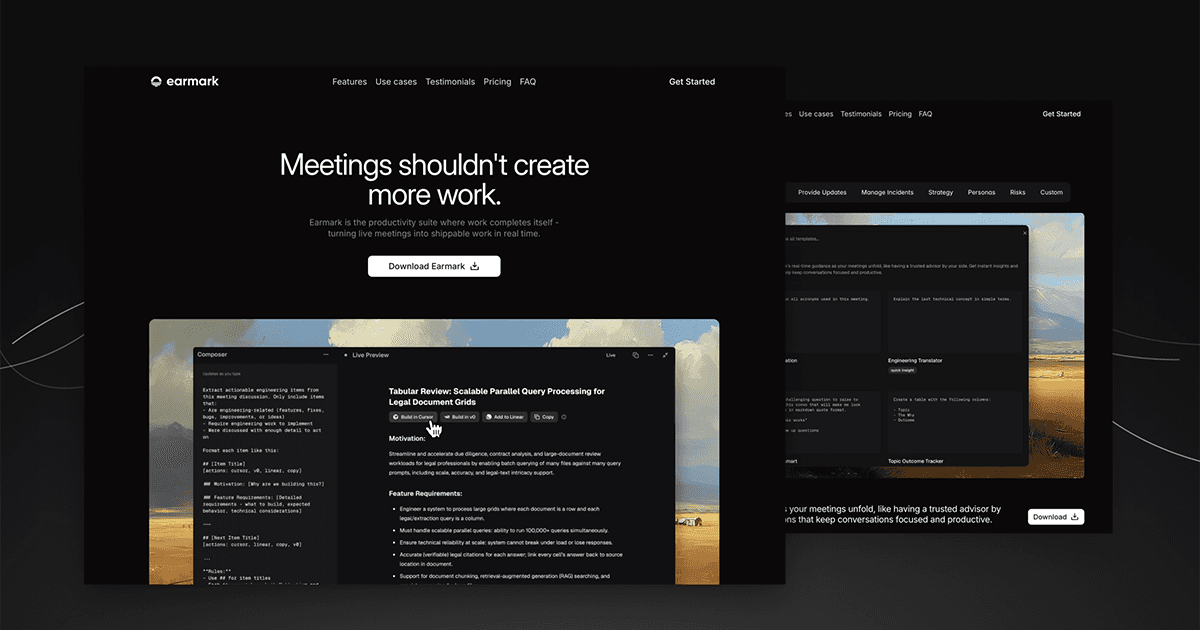
Earmark operates without joining meetings as a bot. It captures conversational insights from various platforms like Zoom, Google Meet, Teams, or in-person discussions by simply clicking record. This ensures privacy and avoids spamming participants, giving users complete control over its operation.
What kind of deliverables can Earmark produce from a meeting?
Earmark can produce a variety of finished work, including requirement documents, tickets (for Linear and Jira), decks, updates, and next steps. It also generates structured decision logs, technical constraints, acceptance criteria, and even prompts for tools like Cursor and v0.
Does Earmark train its AI models on user data?
No, Earmark emphasizes a privacy-first approach. It does not train its LLM models on your data. Users have control over data retention and can select strict security postures, ensuring customer data, strategy, and intellectual property remain private.
Can Earmark integrate with my existing knowledge base or project management tools?
Yes, Earmark integrates with several tools. It can push decisions and tasks directly to Linear and Jira. Additionally, it writes meeting output to local .md files, which can be opened directly in Obsidian, allowing for seamless integration with your knowledge base.
What is the difference between Earmark and a generic AI meeting transcription tool?
Unlike generic transcription tools that provide summaries, Earmark focuses on turning conversations into 'shippable work.' It generates specific deliverables like tickets, specs, and updates, capturing decisions and owners in real-time, rather than just transcribing or summarizing.