
AI Agents & Automation
Browsing page 76 of AI Frameworks & Infra in AI Agents & Automation. Sorted by confidence score — our independent quality rating.
Aideas
Aideas offers a private AI platform designed for building custom AI models and agents while prioritizing data security and privacy. Users can create an on-chain identity and a private agent, leveraging their own data or prebuilt models from a marketplace. The platform ensures privacy through end-to-end encrypted relays and computes on encoded data, making requests invisible even to Aideas. Cryptographic receipts provide verifiable evidence of rule adherence without revealing data, with usage settled in $AIDA on the blockchain. Aideas is accessible for individuals, teams, and organizations, simplifying agent creation and allowing deployment locally, in the cloud, or within their secure environment. Agents evolve automatically through self-learning, with all updates auditable on-chain.
aiko
aiko is an AI-native consulting firm established in 2023 to address the challenges of artificial intelligence, combining business model understanding, technological expertise, and a scientific approach. Founded by experienced digital transformation entrepreneurs and an AI researcher, aiko assists companies in integrating AI into their core strategy. Their services include AI Plan for identifying opportunities, AI Build for developing and implementing AI solutions, AI Run for operationalizing and scaling AI tools, and AI Change for training teams on new AI-driven processes. They offer comprehensive support from data architecture audits and roadmap definition to MVP creation, model development, and ongoing maintenance and re-training.

physicsnemo
NVIDIA PhysicsNeMo is an open-source deep-learning framework designed for building, training, fine-tuning, and inferring Physics AI models using state-of-the-art SciML methods. It provides Python modules to compose scalable and optimized training and inference pipelines, enabling real-time predictions by combining physics knowledge with data. The framework supports various model architectures like neural operators, GNNs, and transformers, and is optimized for NVIDIA GPUs, offering efficient scaling from single to multi-node GPU clusters. PhysicsNeMo is built on PyTorch, ensuring a familiar experience for users, and is highly extensible for customization and integration into existing workflows. It includes modules for models, data pipelines, distributed computing, data curation, and symbolic geometry/PDEs.
PINA
PINA is an open-source Python library designed to streamline and accelerate the development of Scientific Machine Learning (SciML) solutions. Built upon PyTorch, PyTorch Lightning, and PyTorch Geometric, it offers a modular and flexible framework for defining, experimenting with, and solving complex problems using various neural network architectures, including Physics-Informed Neural Networks (PINNs) and Neural Operators. PINA supports multi-device training for scalable performance and provides both high-level abstractions for quick model definition and granular control for expert users to fine-tune training and inference processes. It enables users to solve both data-driven and physics-informed problems efficiently.
Prophecis
Prophecis is a comprehensive, one-stop cloud-native machine learning platform developed by WeBank. It integrates various open-source machine learning frameworks and offers robust multi-tenant management capabilities for machine learning compute clusters. The platform provides full-stack container deployment and management services for production environments, supporting the entire machine learning lifecycle from data preprocessing and feature engineering to model training, evaluation, release, and deployment. Key components include Prophecis Machine Learning Flow for distributed modeling, MLLabis for development and exploration with Jupyter Lab integration, Model Factory for model storage and deployment, Data Factory for feature engineering, and Application Factory for CI/CD and DevOps tools.
Baseten
Baseten is an AI infrastructure platform designed for deploying and scaling AI models in production environments. It offers a comprehensive inference platform that includes dedicated inference for high-scale workloads, allowing users to serve open-source, custom, and fine-tuned AI models on purpose-built infrastructure. The platform provides pre-optimized Model APIs for testing new workloads and evaluating the latest AI models, alongside the capability to run training jobs on inference-optimized infrastructure. Baseten emphasizes bleeding-edge performance research, cross-cloud high availability, and seamless developer workflows, ensuring fast model runtimes and 99.99% uptime. It supports rapid scaling across any cloud provider, with options for single-tenant, self-hosted, and hybrid deployments, catering to various security and latency requirements.
pixeltable
pixeltable is an open-source Python library designed to provide declarative, transactional data infrastructure for building multimodal AI applications. It offers incremental storage, transformation, indexing, retrieval, and orchestration of data, ensuring full operational integrity. The tool bundles its own transactional database, orchestration engine, and a local dashboard, requiring only a `pip install` for setup without external services like Docker. It supports various media types including images, video, audio, and documents, and integrates with over 30 AI providers like OpenAI, Anthropic, and Gemini. Key features include declarative computed columns for automated processing, built-in vector search for embedding indexes, and robust version control for data persistence and time travel, making it suitable for both prototyping and production AI workflows.
pipeshub-ai
PipesHub is a fully extensible and explainable workplace AI platform designed for enterprise search and workflow automation. It addresses the challenge of scattered work data across various applications like Google Workspace, Microsoft 365, Slack, Jira, and Confluence by providing a natural language search interface. Users can quickly find information, get answers, and gain insights, with results properly cited using Knowledge Graphs and Page Ranking. Beyond search, PipesHub offers a No-Code interface for enterprises to build custom applications and AI agents. It supports flexible model integration, real-time or scheduled indexing, access-driven visibility, and secure deployments both on-premise and in the cloud.

BizzSoftware
BizzSoftware specializes in accelerating enterprise innovation by providing rapid, quality, secure, and affordable custom software solutions. They eliminate common IT department hurdles by offering end-to-end services including intuitive design, interactive prototyping, robust software engineering across various platforms, secure hosting and continuous monitoring, and proactive support. Their expertise extends to developing AI-powered platforms, as demonstrated by case studies in AI matchmaking for recruiting, AI-based lead generation and email marketing, and AI-driven inventory optimization for retail. BizzSoftware also revolutionized video content delivery for large enterprises and digitized project management processes with AI-powered feedback analysis. They are ISO 27001 certified, ensuring high standards of information security.
RLinf
RLinf is a flexible and scalable open-source reinforcement learning (RL) infrastructure specifically designed for Embodied and Agentic AI. It acts as a robust backbone for next-generation training, supporting open-ended learning, continuous generalization, and limitless possibilities in intelligence development. The platform offers high flexibility for diverse RL training workflows, including PPO, GRPO, and SAC, while abstracting the complexities of distributed programming. Users can easily scale RL training across numerous GPU nodes without code modification. RLinf integrates with multiple backends like FSDP, HuggingFace, SGLang, vLLM, and Megatron, catering to both rapid prototyping and large-scale, efficient training. It supports a wide array of embodied AI simulators, VLA models, world models, and real-world robotics data collection, making it a comprehensive solution for advanced RL research and development.
Qwen3-VL
Qwen3-VL is a multimodal large language model series developed by the Qwen team at Alibaba Cloud. This advanced model offers significant enhancements in text understanding and generation, visual perception and reasoning, extended context length, and improved spatial and video dynamics comprehension. It also features stronger agent interaction capabilities, including operating PC/mobile GUIs and generating code from images/videos. Available in Dense and MoE architectures, Qwen3-VL supports flexible deployment from edge to cloud, with Instruct and reasoning-enhanced Thinking editions. Key features include advanced spatial perception, long context and video understanding, enhanced multimodal reasoning for STEM/Math, upgraded visual recognition, and expanded OCR supporting 32 languages.
SINQ
SINQ (Sinkhorn-Normalized Quantization) is a novel, fast, and high-quality quantization method designed to make any Large Language Model smaller while preserving accuracy. It allows users to deploy models that would otherwise be too large, drastically reducing memory usage. SINQ offers both calibration-free (SINQ) and calibrated (A-SINQ) versions, providing state-of-the-art performance. It is integrated into Hugging Face Transformers for simplified use and supports saving and reloading quantized models. SINQ boasts significantly faster quantization speeds compared to alternatives like HQQ and AWQ, making it an efficient solution for LLM optimization.
solace-agent-mesh
Solace Agent Mesh is an open-source, event-driven framework designed to build and orchestrate multi-agent AI systems. It allows developers to create teams of specialized AI agents, each with distinct skills and access to specific tools, such as database agents or multimodal agents. The framework handles communication between agents automatically, leveraging the Solace Platform for true scalability and reliability. Built on the Solace AI Connector (SAC) and Google's Agent Development Kit (ADK), it provides a fully asynchronous, event-driven, and decoupled AI agent architecture ready for production deployment. Key features include multi-agent event-driven architecture, agent orchestration, flexible interfaces, and dynamic embeds for context-dependent information resolution.
serena
Serena is an advanced toolkit designed to function as an IDE for AI coding agents, offering semantic retrieval, editing, refactoring, and debugging capabilities. It integrates with any client/LLM via the Model Context Protocol (MCP), enabling agents to operate faster and more reliably, especially in large and complex codebases. Serena supports over 40 programming languages through its language server backend and leverages JetBrains IDEs' powerful code analysis via a paid plugin. Its agent-first tool design uses robust high-level abstractions, distinguishing it from approaches relying on low-level concepts. Serena also includes basic utilities like file search, shell command execution, and a memory management system for long-lived agent workflows.
service-streamer
Service Streamer is a middleware designed to optimize web services for deep learning applications, particularly by improving GPU utilization. It addresses the challenge of discrete user requests in web services versus the mini-batch processing typical of deep learning models, collecting requests into mini-batches to leverage parallel computing capabilities. This approach significantly enhances overall system performance and reduces latency for online inference. The tool is easy to use, requiring minor code changes to achieve substantial speed improvements, and offers good expandability for multi-GPU scenarios. It is compatible with various web and deep learning frameworks, making it a versatile solution for deploying and accelerating machine learning models in production environments. Service Streamer supports distributed GPU workers and web servers, and can be integrated with Redis for distributed setups.
rust-bert
rust-bert is a Rust-native library offering ready-to-use Natural Language Processing (NLP) pipelines and transformer-based models. It serves as a port of Hugging Face's Transformers library, leveraging `tch-rs` for Libtorch bindings or `onnxruntime` for ONNX support, and `rust-tokenizers` for preprocessing. The library supports a wide array of NLP tasks including question answering, named entity recognition, translation, summarization, text generation, conversational agents, and more. It features multi-threaded tokenization and GPU inference for efficient processing. Users can get started with tasks like question answering with just a few lines of code, making it a powerful tool for integrating advanced NLP capabilities into Rust applications.
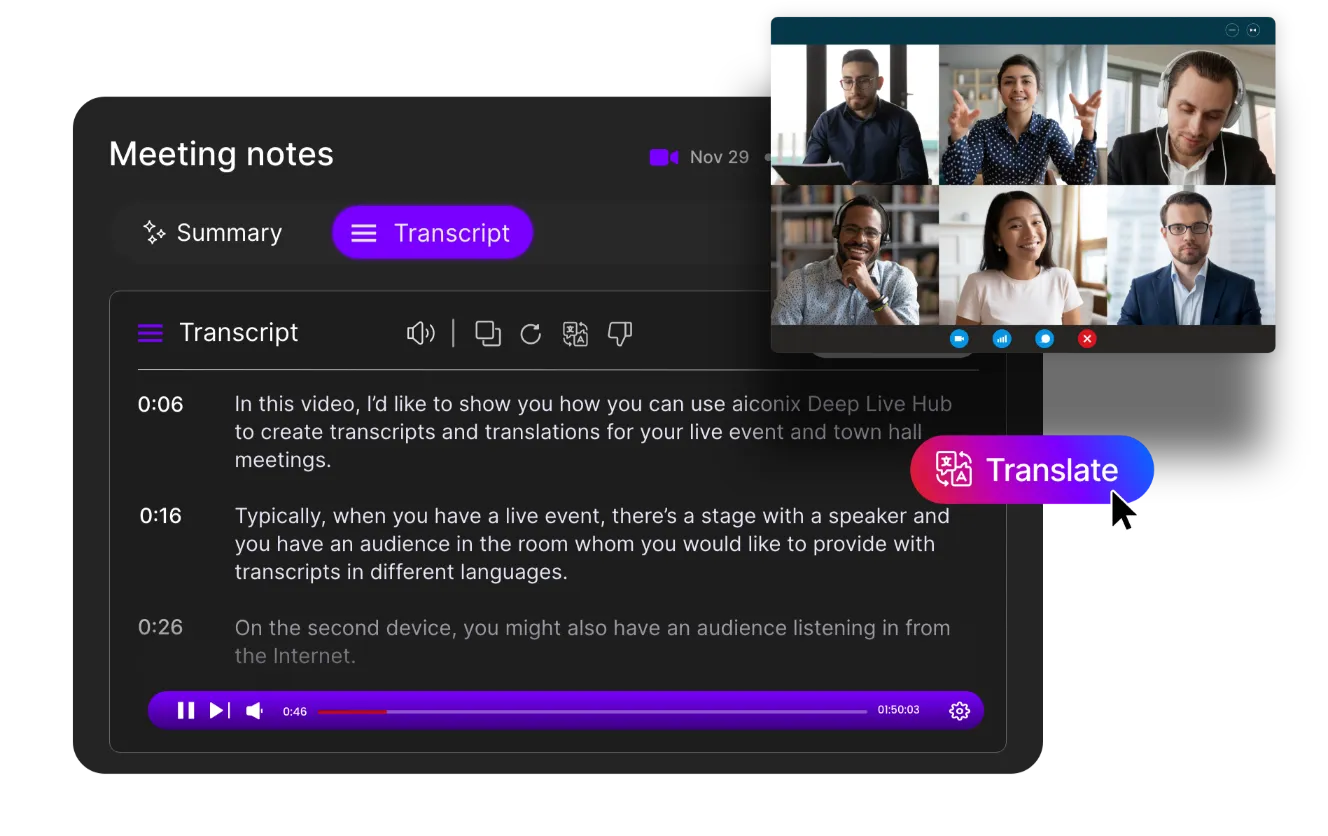
DeepVA
DeepVA is a composite AI platform designed for media companies to extract various types of information from images, videos, and live streams. It automates complex AI processes such as tagging, indexing, and searching, significantly enhancing content management, accessibility, and workflow efficiency. The platform supports both cloud and on-premises deployments, ensuring data sovereignty and compliance with regulations like GDPR and the AI Act. DeepVA allows users to train and utilize AI datasets with existing staff, offering a user-centric approach to custom model creation. It integrates seamlessly with existing workflows and third-party applications via an API-centric design, providing a future-proof solution with cutting-edge technology and a shorter time to market.
sre
The SmythOS Runtime Environment (SRE) is an open-source, cloud-native runtime and SDK specifically designed for production AI agents. It offers OS-level abstractions for various AI resources such as LLMs, vector databases, storage, and caching, all accessible through a unified API. This allows developers to write agent logic once and scale it across local, cloud, and edge environments without changing their business logic. SRE emphasizes built-in security, observability, and includes over 40 production-ready components. It provides a robust and scalable foundation for agent orchestration and lifecycle management, making it easier to ship production-ready AI agents.
SynapseML
SynapseML (previously known as MMLSpark) is an open-source library designed to simplify the creation of massively scalable machine learning (ML) pipelines. It offers simple, composable, and distributed APIs for a wide variety of ML tasks, including text analytics, computer vision, anomaly detection, and deep learning. Built on the Apache Spark distributed computing framework, SynapseML shares the same API as the SparkML/MLLib library, allowing seamless integration into existing Apache Spark workflows. It supports training and evaluating models on single-node, multi-node, and elastically resizable clusters, and is usable across Python, R, Scala, Java, and .NET. Its API abstracts over various databases, file systems, and cloud data stores, simplifying experiments regardless of data location.
Deep Vision AI (acquired by DFW Capital)
Deep Vision AI, acquired by DFW Capital and now operating under EPIC iO, provides advanced AIoT solutions tailored for critical infrastructure. The platform, including DeepVision™ as a centralized VMS & Unified Command Center, offers real-time analytics, robust wireless connectivity, and AI-driven insights to significantly enhance safety, operational efficiency, and decision-making. It supports diverse applications such as physical site security with features like perimeter security and license plate recognition, and site safety with PPE validation and fire monitoring. The system also includes environmental and equipment monitoring, leveraging AI-powered sensor intelligence. EPIC iO's solutions are designed for rapid deployment and offer secure, fast, and unbreakable 4G/5G wireless connectivity, making them ideal for distributed, remote, and high-risk environments across numerous industries.

Grayscale AI (NATO DIANA)
Grayscale AI specializes in advanced AI solutions for fully autonomous drones and robots, leveraging neuromorphic computing and AI. The company's technology is designed to mimic human neural networks, offering significant advantages in efficiency, safety, and speed. By circumventing traditional computing architecture, Grayscale AI's systems can achieve up to 500x less energy consumption, enabling complex AI operations without requiring a cloud connection. Their VUES methodology allows for strategy-focused optimization and human-like precision in responding to unforeseen events, analyzing edge cases in less than 100 ms. This approach results in safer, greener, and faster AI solutions for mobility and transport/logistics.
Icybit
Icybit is a scientific research, experimental development, and innovation company with expertise in artificial intelligence, distributed computing, and big data analytics. They are dedicated to creating advanced solutions in these fields, leveraging their deep knowledge to drive innovation. While the website provides a high-level overview of their capabilities, it emphasizes their role as experts in cutting-edge technologies. Their focus on research and development suggests they provide sophisticated, data-driven solutions for various industries, likely catering to complex analytical needs and large-scale data processing challenges.
texar-pytorch
Texar-PyTorch is a comprehensive toolkit designed to support a wide array of machine learning tasks, with a particular focus on natural language processing and text generation. It uniquely integrates many of TensorFlow's most effective features into the PyTorch framework, providing highly usable and customizable modules that often surpass native PyTorch offerings. The toolkit offers a rich library of ML modules and functionalities, enabling both researchers and practitioners to rapidly prototype and experiment with various models and algorithms. Key features include consistent interfaces across Texar-PyTorch and Texar-TF, versatile support for data processing, model architectures, loss functions, and training algorithms, as well as full customizability at multiple abstraction levels. It also provides rich pre-trained models like BERT, GPT2, and XLNet, along with extensive documentation and examples.
Vision-Agents
Vision-Agents is an open-source framework by Stream designed for building intelligent, low-latency voice and vision AI agents. It allows developers to integrate various models and video providers, leveraging Stream's edge network for ultra-low latency audio and video processing (under 30ms). The tool supports real-time video AI applications, combining models like YOLO and Roboflow with LLMs such as Gemini and OpenAI. Key features include pluggable processor pipelines for video, natural conversation flow with turn detection, tool calling, and integrations for phone calls via Twilio. It also offers RAG capabilities with TurboPuffer and Gemini FileSearch, memory across sessions, and production-ready features like HTTP server and Kubernetes deployment. SDKs are available for React, Android, iOS, Flutter, React Native, and Unity.