
AI Agents & Automation
Browsing page 86 of AI Frameworks & Infra in AI Agents & Automation. Sorted by confidence score — our independent quality rating.

FEDOT
FEDOT is an open-source framework designed for automated modeling and machine learning (AutoML) tasks. It leverages an evolutionary approach to automatically generate and optimize machine learning pipelines for diverse problems such as classification, regression, clustering, and time series prediction. A key feature is its graph-based representation, which effectively manages complex interactions between data preprocessing and model blocks. FEDOT supports widely used ML libraries like Scikit-learn, CatBoost, and XGBoost, and allows for the integration of custom models. It offers flexibility for various data types and tasks, extensibility through task-specific strategies, and customizability for managing model complexity. The framework also ensures reproducibility by allowing pipelines to be exported as JSON or ZIP archives.
PaddleMIX
PaddleMIX is a comprehensive multi-modal large model development suite built on PaddlePaddle, designed to integrate and explore various modalities including image, text, and video. It covers a wide range of multi-modal tasks such as visual language pre-training, fine-tuning, text-to-image generation, text-to-video generation, and multi-modal understanding. The platform provides an out-of-the-box development experience while also allowing for flexible customization to meet diverse needs, aiding in the exploration of general artificial intelligence. Key features include a rich library of multi-modal models, a full-lifecycle development experience from data processing to deployment, and high-performance distributed training and inference capabilities.
nekro-agent
Nekro-agent is a highly extensible, multi-platform AI agent framework designed for interactive scenarios. It integrates Claude Code sandbox execution, workspace orchestration, long-term memory, and structured MCP management with a visual console. The framework boasts high extensibility, multi-modal interaction, real-time status push, and automated operation capabilities. It supports a wide range of platforms including QQ, Discord, Telegram, Minecraft, BilibiliLive, WeChat, Email, and SSE(SDK), making it suitable for building intelligent chatbots. Nekro-agent can be extended into a general agent system with code execution, tool calling, plugin collaboration, and complex task processing abilities. It also offers a robust plugin system, cloud resource sharing, and a comprehensive WebUI for management and monitoring.
cogni-comfyui-openrouter-ai
cogni-comfyui-openrouter-ai is an all-in-one, open-source platform designed for managing ComfyUI workflows and AI models. It offers a comprehensive suite of features including load balancing, visual forms for parameter collection, a user system with credits, and a full admin panel for system management. The platform integrates login authentication, chat capabilities with OpenRouter for streaming LLM interactions, and ComfyUI workflow orchestration with task submission, status subscription, and retry policies. It also supports object storage via Alibaba Cloud OSS, email notifications, and system administration functions like user and credit management. Built with Vue 3 and Spring Boot 3, it's ready for self-hosting and provides detailed deployment guides for both backend and frontend.

Apixa
Apixa specializes in solving challenging computer vision problems, leveraging over 20 years of experience in the field. The company combines unique expertise in deep learning, imaging technologies, optical engineering, software development, and hardware development to deliver tailored services and solutions. Apixa's offerings include deep learning technology, visual AI, hyperspectral imaging, 3D vision, optical system design, calibration services, and edge & cloud computing. They cater to various industries such as building materials, rail, wood, security, agriculture, biomedical, recycling, and textiles, providing solutions for quality control, person detection, and advanced defect detection on materials.
Prisme.ai
Prisme.ai offers a robust low-code platform designed for the development, management, and scaling of Generative AI applications. The platform prioritizes reusability, allowing users to efficiently build and deploy AI solutions. It is distinguished by its open-source nature and its agnostic approach to both cloud providers and Large Language Models (LLMs), offering flexibility and avoiding vendor lock-in. This makes Prisme.ai a versatile choice for organizations looking to integrate Gen AI into their operations while maintaining control over their infrastructure and AI models. The platform aims to bridge the gap between business needs and IT requirements, facilitating the creation of scalable and adaptable AI solutions.
chatgpt-tool-hub
chatgpt-tool-hub is an open-source tool ecosystem designed to enhance ChatGPT's capabilities by integrating various tools. It allows users to leverage natural language to command ChatGPT for tasks such as internet access, search, mathematical operations, computer control, and code execution. The project aims to create an open-source LLM-OS, providing a flexible alternative to proprietary plugin systems. Key features include support for multiple tool calls, tree-like tool orchestration, context memory, proxy support, and both Chinese and English interaction. It can be used as a standalone LLM-OS demo, a plugin for chatgpt-on-wechat, or integrated into other projects via its PyPI package.

PanaceaLogics
PanaceaLogics is an award-winning AI company offering custom AI development solutions to businesses, with primary operations in the USA and Australia, and a back office in Pakistan. They focus on solving complex business problems, optimizing operational costs, and driving growth through AI-enabled web and mobile solutions. Their services include AI-enabled automation, custom software development, and specialized AI solutions for land-based aquaculture, which includes fish biomass estimation, feed optimization, and water quality management. PanaceaLogics also develops platforms like Boostifai.com for SEO optimization and Sperotec for automated plant growing operations.
Multiversal Ventures
Multiversal Ventures is a technology startup specializing in AI products tailored for regulated industries. Their core focus areas include healthcare, insurance, financial services, and sustainability. The company emphasizes the development of AI solutions that prioritize privacy, safety, and accuracy, crucial factors within these highly regulated environments. By leveraging artificial intelligence, Multiversal Ventures aims to provide innovative tools that meet stringent industry standards while driving efficiency and progress in critical sectors.
Zenbase
Zenbase is a universal application designed to connect various data sources, including apps, files, and website links, to AI. This integration enables users to uncover insights, ask questions about their data, generate unique content, summarize information, and automate tasks. It supports integrations with popular platforms like Notion, Google Drive, and Intercom, as well as various file types such as PDFs, Docs, and CSVs. Zenbase learns over time to provide personalized recommendations and insights, making it a powerful tool for data analysis, content creation, and business strategy development. It also offers 24/7 monitoring and alerts for relevant updates.

Wafer
Wafer is an advanced AI tool designed to deliver the fastest GPU inference in the world by autonomously profiling, diagnosing, and optimizing inference across the entire stack, from kernels to models and production pipelines. It helps developers and AI agents achieve superior performance for open-source models through a flat-rate API access. For enterprises, Wafer offers tailored inference optimization for custom models, hardware, workloads, and production constraints, promising setup in less than 24 hours. The platform boasts significant speed improvements, such as being 2.8x faster than base SGLang for specific models, ensuring efficient and high-throughput AI operations.
Velebit AI
Velebit AI is an AI solutions provider that specializes in building and deploying custom AI systems tailored to specific business needs. They offer comprehensive services ranging from AI and ML consultancy to data and ML engineering, guiding clients through every stage of their AI projects. Velebit AI also provides off-the-shelf AI products, particularly for e-commerce and marketplaces, including automatic tagging, color detection, fabric pattern detection, product categorization, and advanced search and discovery tools like visual search and recommender systems. Their expertise spans diverse domains, ensuring scalable, production-ready AI solutions that integrate seamlessly with existing tech stacks. They emphasize a Time & Materials pricing model for custom projects, offering flexibility as requirements evolve.
pyllms
PyLLMs is a Python library designed to simplify connections to a wide range of Large Language Models (LLMs) from providers like OpenAI, Anthropic, Google, Groq, Reka, Together, AI21, Cohere, Aleph Alpha, and HuggingfaceHub. It offers features such as multi-model support for simultaneous completions, asynchronous and streaming capabilities, and chat history management. A key differentiator is its built-in model performance benchmark, allowing users to evaluate LLMs based on quality, speed, and cost. The library also supports advanced configurations, including using OpenAI API on Azure, Google Vertex AI, and local Ollama models, even allowing for a mix of local and cloud models within the same session. Note: The project is deprecated, with pydantic-ai recommended as an alternative.
SimpleMem
SimpleMem is an advanced memory framework designed for LLM agents, offering efficient lifelong memory capabilities for both text and multimodal data. It employs semantic lossless compression to store, compress, and retrieve long-term memories, ensuring high information density and token utilization. The system features a three-stage pipeline: Semantic Structured Compression, Online Semantic Synthesis, and Intent-Aware Retrieval Planning. Omni-SimpleMem extends these capabilities to include image, audio, and video, achieving state-of-the-art performance on benchmarks like LoCoMo and Mem-Gallery. It supports cross-session memory, allowing agents to recall context and learnings across conversations, and integrates with platforms like Claude, Cursor, and LM Studio via MCP or Python.
HelloAgents
HelloAgents is a production-grade multi-agent framework built on OpenAI's native API, designed to simplify the development of complex intelligent agent applications. It offers 16 core capabilities, including a robust tool response protocol (ToolResponse), advanced context engineering with HistoryManager and TokenCounter, and reliable session persistence (SessionStore). The framework also features sub-agent mechanisms (TaskTool), optimistic locking for file editing, and a circuit breaker for fault tolerance. Developers benefit from externalized knowledge through Skills, progress management with TodoWrite, decision logging via DevLog, streaming output (SSE), asynchronous lifecycles, and observability with TraceLogger. HelloAgents supports various LLM providers through OpenAI-compatible, Anthropic, and Gemini adapters, automatically detecting the appropriate provider based on the base URL.
PyChatGPT
PyChatGPT is a Python client designed to interact with the ChatGPT API, providing features like conversation tracking, proxy support, and automatic login with token regeneration. It bypasses the need for a browser or manual access token retrieval by mimicking a real user login process using a TLS client. The tool enables developers to save and resume conversations, customize chat sessions with various options, and integrate a web demo via Huggingface Spaces. Although currently not maintained, it was developed to offer a robust way to programmatically access ChatGPT, addressing challenges like API changes and bot detection.
qkeras
QKeras is an open-source quantization extension for TensorFlow Keras, designed to simplify the creation of deep quantized neural networks. It offers drop-in replacements for standard Keras layers, particularly those involved in parameter creation and arithmetic operations, allowing users to easily convert existing models to quantized versions. The library emphasizes user-friendliness, modularity, and extensibility, aligning with Keras's design principles while being minimally intrusive. Key features include quantized versions of common layers like QDense, QConv2D, and QActivation, along with various activation functions such as `quantized_relu` and `quantized_tanh`. QKeras also includes QTools for data type map generation and energy consumption estimation, and AutoQKeras for automated quantization and rebalancing through hyperparameter search.
AI-RAN Alliance
The AI-RAN Alliance is a collaborative initiative dedicated to transforming telecommunications by integrating Artificial Intelligence with Radio Access Networks (RAN). This alliance unites industry leaders and academic institutions to drive innovation, enhance efficiency, and unlock new economic opportunities within the telecom ecosystem. Its core focus is on advancing mobile network performance through cutting-edge AI innovation, shaping the future of AI-native networks. The alliance explores research, publishes findings, and offers membership opportunities for organizations interested in contributing to this evolving field.
BReact GmbH
BReact GmbH is Austria's leading AI company, specializing in secure AI solutions for businesses. Their core offerings include private inferencing, AI agents, and process automation, all designed with 100% data control to ensure compliance with GDPR and the EU AI Act. BReact focuses on enterprise AI solutions, providing a robust framework for companies to leverage AI while maintaining data privacy and security. The company emphasizes seamless integration and scalable efficiency, aiming to prevent vendor lock-in. Their services are particularly beneficial for organizations operating in regulated industries or those with strict data governance requirements, offering a reliable path to AI adoption.
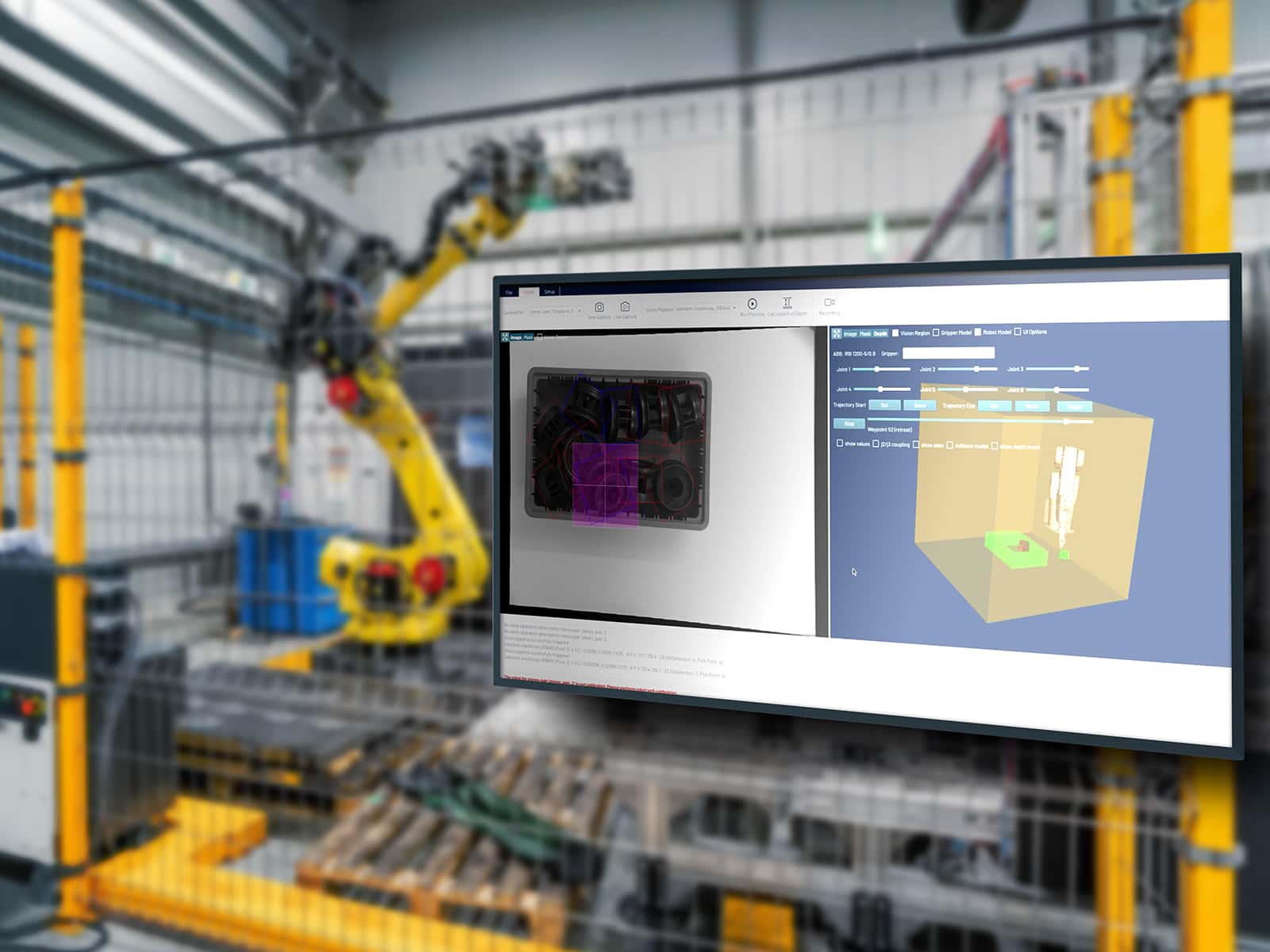
Apera AI
Apera AI offers advanced 4D Vision technology to significantly improve the reliability and productivity of vision-guided robotics in manufacturing. Their Apera Vue robotic vision software enables complete robotic guidance using AI, making manufacturing processes more efficient. The Forge Design Studio and Forge Lab provide AI training and simulation environments, simplifying the setup of vision-guided robotic systems. Apera AI's solutions are applicable across various industries, including automotive, medical devices, and metal fabrication, addressing challenging tasks like bin picking of complex parts, assembly, and machine tending, even in diverse lighting conditions. The technology is designed to be implemented faster and with less expertise required.

Athena Decision Systems
Athena Decision Systems specializes in creating advanced AI decision machines that combine generative AI with symbolic decision engines and business rules. The company offers comprehensive services including training, consulting, and implementation to help businesses design, architect, deploy, and maintain interactive hybrid AI assistants. These solutions are designed to ensure compliance with business policies, guidelines, regulations, and contracts by addressing the limitations of LLMs in reasoning. Athena's technology platform includes OwlAgent for developing intelligent chatbots and WisdomForge for accelerating decision service creation, grounded in neuro-symbolic AI research. Their approach emphasizes automated, transparent, auditable, explainable, maintainable, and scalable decision systems.
Sage
Sage is a comprehensive multi-agent system framework designed to tackle complex tasks through intelligent automation. It provides a production-ready platform that supports task execution, automation, browser workflows, and instant messaging (IM) delivery. Key features include built-in planning, execution, self-check, memory recall, and tool suggestion agents for robust task completion. Sage offers multiple entry points, including desktop, web, CLI, and a Chrome extension, catering to diverse workflow needs. It enables users to run scheduled jobs and long-running operational tasks with clear progress visibility, and integrates with various IM platforms like WeChat Personal, WeCom, Feishu, and DingTalk for message and file delivery. The platform also boasts a unified tooling system, combining built-in tools, skills, MCP servers, browser automation, search, and image generation within a single execution stack, all while ensuring safer agent runtime isolation through sandboxed execution options.
prompty
Prompty is an open-source tool developed by Microsoft, designed to streamline the creation, management, debugging, and evaluation of Large Language Model (LLM) prompts for AI applications. It introduces a `.prompty` markdown file format, serving as an asset class for LLM prompts, which significantly enhances observability, understandability, and portability for developers. The tool supports various runtimes including Python and TypeScript, allowing users to write a prompt once and execute it across different environments. Key features include live preview, connections management for various LLM providers like OpenAI and Anthropic, chat mode with tool calling, and detailed tracing of prompt execution. Prompty aims to accelerate the developer workflow by providing a structured and observable approach to prompt engineering.
semantic-kernel
Semantic Kernel is an open-source SDK designed for building intelligent AI agents and multi-agent systems. It provides a flexible framework for integrating large language models (LLMs) into applications, enabling developers to create sophisticated AI-powered solutions. The tool is model-agnostic, meaning it can work with various LLMs, and is enterprise-ready, supporting automated workflows and collaborative development. It empowers developers to build AI applications that can understand, reason, and interact with users and other systems, making it suitable for a wide range of AI development projects.