
AI Agents & Automation
Browsing page 84 of AI Frameworks & Infra in AI Agents & Automation. Sorted by confidence score — our independent quality rating.

test-tube
Test-tube is a Python library designed to streamline the logging and parallelization of hyperparameter searches for Deep Learning and Machine Learning experiments. It offers framework-agnostic compatibility, supporting popular libraries like TensorFlow, Keras, PyTorch, and Scikit-learn. Key features include the ability to log experiment hyperparameters and data, visualize results with TensorBoard, and optimize hyperparameters across multiple GPUs or CPUs. It also supports parallel hyperparameter optimization on HPC clusters using SLURM, making it suitable for large-scale research and development. The library is built on the Python argparse API, ensuring ease of use for developers.
TonY
TonY is an open-source framework designed to natively execute deep learning frameworks such as TensorFlow, PyTorch, MXNet, and Horovod on Apache Hadoop. It enables users to run both single-node and distributed training jobs as a Hadoop application, providing a robust and flexible environment for machine learning workflows. Key features include compatibility with Hadoop 2.6.0+ (CDH5.11.0+) and support for GPU isolation with newer Hadoop versions. Users can launch deep learning jobs either by utilizing a zipped Python virtual environment or by leveraging Docker containers within their Hadoop cluster. TonY offers extensive configuration options via XML files or command-line arguments, allowing for fine-grained control over job parameters like worker instances, memory, and GPU allocation. It also includes examples for distributed MNIST with various frameworks and integration with Google Cloud Platform and Azkaban.
tuui
TUUI is a desktop client designed for AI tool integration, accelerating AI adoption through the Model Context Protocol (MCP). It enables cross-vendor LLM API orchestration, offering a local AI playground experience. Key features include zero accounts, full control, and open-source availability. It supports dynamic configuration for LLM APIs, automated application testing, and multilingual support. TUUI is built with TypeScript and utilizes Pinia for global state management, making it a robust solution for developers and AI enthusiasts looking to experiment with and integrate various LLM backends like ChatGPT, Claude, and Qwen.
tpu-mlir
TPU-MLIR is an open-source machine learning compiler built on MLIR, specifically designed for Sophgo TPUs. It provides a comprehensive toolchain to convert pre-trained neural networks from various deep learning frameworks, including PyTorch, ONNX, TFLite, and Caffe, into optimized binary files (bmodel) that can run efficiently on TPUs. The project also supports compiling HuggingFace LLM models, with current support for Qwen2 and Llama series, and plans for more. It offers tools for model transformation, deployment, and calibration, enabling users to convert models to different quantization types like F16 and INT8, and provides auxiliary tools for model inference and bmodel manipulation.
dingtalk-openclaw-connector
The Dingtalk-openclaw-connector is an official OpenClaw plugin designed to integrate OpenClaw agents with DingTalk. This powerful connector allows OpenClaw agents to send and receive messages, manage documents, handle schedules, and coordinate to-do lists directly within the DingTalk platform. Key features include AI Card streaming responses for real-time updates, interactive cards for status changes and action confirmations, and flexible permission policies for private and group chats. It also supports multi-agent routing, rich media processing (images, audio, files), and session management to maintain conversation context. The plugin aims to enhance collaboration by bringing AI automation capabilities to DingTalk users.
VizLore LLC
VizLore LLC is a technology group focused on diverse research and innovation projects worldwide, serving global customers by designing, building, and operating advanced technology systems. Their core expertise lies in state-of-the-art Data Analytics (AI, ML), IoT, and Blockchain technology enablers. They offer various platforms including Bright Habitat for IoT, PulseNatura for EcoBio systems, and ChainRider for Blockchain as a Service. VizLore also provides solutions like FoodEye for AI-powered food safety testing, AI Eco Solutions for optimizing energy use, AI Digital Twins for performance prediction, Digital Asset Tokenization, Barter for automated crypto micropayments, and Smart Access 360 for virtual key management.
vllm-ascend
vllm-ascend is a community-maintained hardware plugin designed to integrate vLLM with Ascend NPUs, allowing for seamless execution of large language models on Ascend hardware. It adheres to a hardware-pluggable interface, decoupling the integration of Ascend NPUs with vLLM. This plugin supports various open-source models, including Transformer-like, Mixture-of-Experts (MoE), Embedding, and Multi-modal LLMs. It is the recommended approach for supporting the Ascend backend within the vLLM community, enhancing performance for fine-tuning, evaluation, reinforcement learning (RL), and deployment scenarios. The project provides detailed documentation for getting started and contributing, with active development branches and regular releases.
wren-engine
Wren Engine is an open-source context engine designed to provide AI agents with a semantic, governed, and agent-ready context layer for business data. It addresses the challenge of AI agents struggling with business context by allowing them to reason over definitions, metrics, relationships, permissions, and lineage. The engine enables agents to understand models instead of raw tables, use trusted metrics, follow relationships, and respect governance, transforming natural language into accurate, explainable data access. It supports over 15 data sources including Amazon S3, BigQuery, Snowflake, and PostgreSQL, and is built on Rust and Apache DataFusion. Wren Engine is particularly useful for agent builders creating natural-language analytics, AI copilots, and internal AI tools grounded in semantic models.
xla
XLA (Accelerated Linear Algebra) is an open-source machine learning compiler designed to boost the performance of ML models across various hardware platforms. It takes models developed in popular frameworks such as PyTorch, TensorFlow, and JAX, and optimizes them for high-performance execution on GPUs, CPUs, and specialized ML accelerators. This compiler is a critical tool for developers and researchers looking to achieve greater speed and efficiency in their machine learning workloads. While users can leverage XLA through their ML frameworks, the repository itself is primarily intended for XLA contributors and integrators who wish to develop the compiler or add support for new ML frontends and hardware backends.
hashbrown
Hashbrown is an open-source framework designed for building AI agents that operate directly within web browsers. It provides core and framework-specific packages for UI development, along with LLM SDK wrappers for Node.js backends. This framework simplifies the process of embedding intelligence into React or Angular components, enabling functionalities like generating user interfaces, converting natural language into structured data, and predicting user actions. Hashbrown supports a growing list of proprietary and open-weight LLM providers, including OpenAI, Azure OpenAI, Anthropic, Amazon Bedrock, Ollama, Google Gemini, and Writer, by wrapping their SDKs into a consistent API. It offers features such as input completions, structured completions, component selection, tool calling, and code generation/execution, all while maintaining flexibility in how AI interacts with application state and components.
llmtools
LLMTools is an open-source Python library designed for efficiently running and finetuning Large Language Models (LLMs) in low-resource environments, specifically on consumer-grade GPUs. It features advanced finetuning capabilities in 2-bit, 3-bit, and 4-bit precision, leveraging the innovative ModuLoRA algorithm. The library provides an easy-to-use Python API for various tasks including quantization, inference, and finetuning. A key differentiator is its modular support for multiple LLMs, quantizers, and optimization algorithms, allowing for flexibility and integration with the HuggingFace Hub for sharing finetuned models. Developed as a research project at Cornell University, LLMTools is based on cutting-edge publications like ModuLoRA and QuIP, making it a valuable tool for researchers and developers working with LLMs.
llm-sandbox
LLM Sandbox is an open-source Python library designed to securely execute code generated by Large Language Models (LLMs) within an isolated environment. It offers a lightweight and portable sandbox runtime, ensuring safety through features like isolated execution, custom security policies, resource limits (CPU, memory, time), and network isolation. The tool supports various container backends, including Docker, Kubernetes, and Podman, and provides comprehensive language support for Python, JavaScript/Node.js, Java, C++, Go, and R. It seamlessly integrates with popular LLM frameworks like LangChain and LlamaIndex, and includes advanced features such as artifact extraction, on-the-fly library management, file operations, and container pooling for performance optimization.
LLM-Engineers-Handbook
The LLM-Engineers-Handbook is an official repository and practical guide for building end-to-end LLM-based systems, developed by Paul Iusztin and Maxime Labonne. It covers essential aspects from data collection and generation to LLM training pipelines, simple RAG systems, and production-ready AWS deployment. The handbook emphasizes LLMOps best practices, including comprehensive monitoring, testing, and evaluation frameworks. It details the use of various tools and cloud services like HuggingFace, Comet ML, Opik, ZenML, AWS, MongoDB, Qdrant, and GitHub Actions. The repository provides actively maintained code, installation instructions, and guidance on setting up local development and cloud deployment environments.
MiniChain
MiniChain is a lightweight Python library designed for coding with large language models, offering a streamlined approach to prompt chaining. It enables developers to annotate Python functions for direct interaction with various language models and provides a visual graph of all calls for enhanced debugging and error handling. The library supports prompt engineering through Jinja templates, separating prompt text from code for better organization. MiniChain integrates with backends like OpenAI, Hugging Face, Google Search, and Python, and supports popular approaches such as Retrieval-Augmented QA, Chat with memory, and Chain-of-Thought. It also features a built-in visualization system using Gradio for interactive debugging and typed prompts for structured output generation.
Variational AI
Variational AI leverages advanced generative AI through its Enki™ platform to revolutionize early-stage drug discovery. Enki™ generates novel, synthesis-ready, lead-like compounds tailored to specific target product profiles, effectively eliminating the need for traditional hit identification and hit-to-lead phases. This allows biopharmaceutical partners to move directly into lead optimization with structures not discoverable by conventional methods. The platform optimizes across more than 50 parameters, including potency, selectivity, ADMET, and synthetic feasibility, for 760 pre-trained drug targets. By designing de novo molecular structures, Variational AI aims to provide better starting points for drug programs, leading to fewer costly iterations, faster timelines, and a higher probability of success.
Cognizen
Cognizen is a platform dedicated to leveraging artificial intelligence to enhance various industries and elevate different facets of life. The tool focuses on delivering cutting-edge AI solutions with a commitment to purpose, innovation, and integrity. It aims to create a future where AI acts as a powerful assistant, amplifying human potential rather than replacing it. While specific features are not detailed on the current website, the overarching goal is to provide advanced AI capabilities that drive progress and efficiency across diverse applications. Cognizen positions itself as a key player in the AI revolution, emphasizing responsible and impactful AI development.
muspy
MusPy is an open-source Python library designed to streamline the development of symbolic music generation systems. It offers a comprehensive suite of tools for various stages of the music generation pipeline, from data collection and preprocessing to model creation, training, and evaluation. Key features include a robust dataset management system with interfaces to PyTorch and TensorFlow, and extensive data I/O capabilities for common symbolic music formats like MIDI, MusicXML, and ABC. MusPy also provides implementations of various music representations, such as pitch-based, event-based, piano-roll, and note-based, catering to diverse generation approaches. Additionally, it includes model evaluation tools for audio rendering, score and piano-roll visualizations, and objective metrics, making it a valuable resource for researchers and developers in music AI.

Experts Vision Consulting | EVC
Experts Vision Consulting (EVC) is a leading Saudi company providing SAP consulting and digital transformation solutions. They aim to contribute to Saudi Arabia's Vision 2030 by supporting the digital transformation journey of government and private sectors. EVC offers specialized expertise in areas such as strategic planning, beneficiary experience, innovation, governance, risk, and compliance, enterprise platforms and solutions, artificial intelligence, data governance, and smart cities. Their services include SAP implementation, support, and training, as well as community engagement programs like digital vision camps and innovation camps to foster technological skills and innovation.
Model-Optimizer
NVIDIA Model Optimizer is an open-source library designed to accelerate deep learning models through various state-of-the-art optimization techniques. It supports quantization, pruning, distillation, speculative decoding, and sparsity to compress models and enhance inference speed. The tool accepts Hugging Face, PyTorch, or ONNX models as input and provides Python APIs for composing optimization techniques. Optimized checkpoints can be seamlessly exported for deployment in frameworks like SGLang, TensorRT-LLM, TensorRT, and vLLM, making it a crucial component within the NVIDIA AI software ecosystem for efficient model deployment.
Neuraxle
Neuraxle is an open-source Machine Learning (ML) library designed for building clean and production-ready deep learning pipelines. It emphasizes component-based design, allowing users to create encapsulated steps and compose them into complex pipelines. A core feature is its robust hyperparameter tuning capabilities, where each pipeline step can have its own hyperparameter space, facilitating optimization through AutoML algorithms like TPE. Neuraxle is highly compatible with popular ML libraries such as Scikit-Learn and TensorFlow, enabling seamless integration. It also supports evolving states within pipeline steps and offers streaming pipeline functionality for parallel data transformation using multiprocessing queues, making it suitable for scalable and efficient ML workflows.
Embermind Technologies
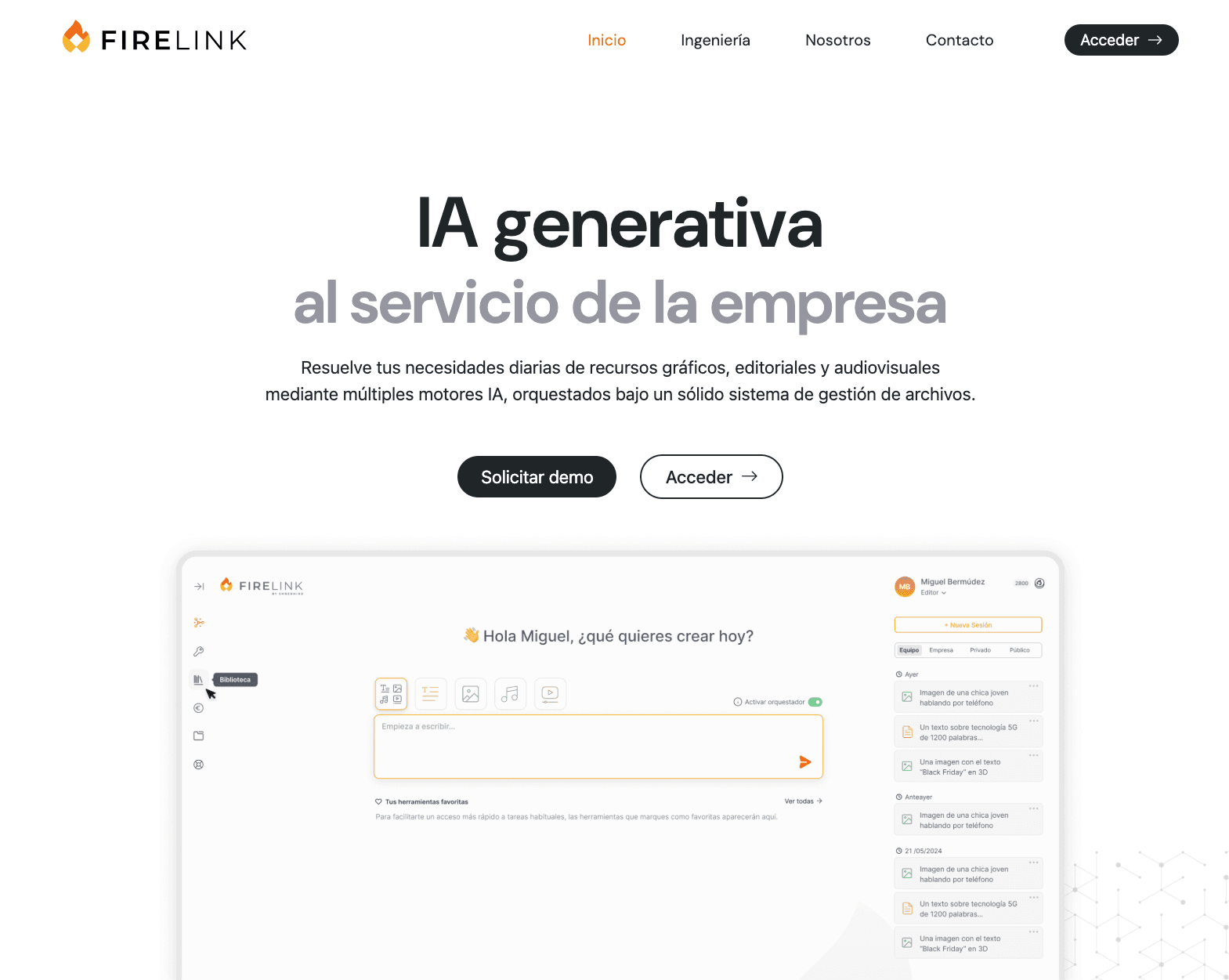
Embermind Technologies, through its Firelink platform, offers a comprehensive AI solution designed to enhance business efficiency, reduce operational costs, and facilitate scalability. It provides a white-label platform for consultancies to deliver AI-based solutions rapidly. The platform integrates over 80 generative AI models, allowing for flexible use between power and privacy. Firelink is designed for quick implementation, enabling teams to solve tasks in minutes that previously took hours. It features a collaborative workspace, robust privacy and governance controls, and hyper-personalization to integrate seamlessly into existing workflows. The platform is scalable without limits on users or solutions and offers dedicated support.

Ollama
Ollama provides an easy way to get started with and build applications using open large language models like gpt-oss, Gemma 3, and DeepSeek-R1. Users can run models on their own hardware for unlimited usage and data privacy, or leverage Ollama's cloud for faster access to larger models and parallel processing. The platform supports CLI, API, and desktop apps, offering over 40,000 community integrations. It's designed for automating tasks such as coding and document analysis, with a strong emphasis on keeping user data safe and never training on prompts or responses. Ollama also offers tiered cloud plans for increased model concurrency and usage, catering to various demands from light chatting to heavy, sustained agent tasks.
qdrant-client
qdrant-client is a Python client library designed for seamless interaction with the Qdrant vector search engine. It offers comprehensive type definitions for all Qdrant API methods, facilitating both synchronous and asynchronous requests. The library supports a local mode for development, prototyping, and testing without requiring a running Qdrant server, and can easily switch to server mode for scaling. Key features include REST and gRPC support, minimal dependencies, and extensive test coverage. Additionally, it provides an Inference API for creating embeddings locally with FastEmbed or remotely with Qdrant Cloud models, simplifying the process of generating and uploading vectors.
QMindLab
QMindLab guides businesses through their digital transformation journey by providing AI and data-centric solutions. Their offerings include QAI Growth, an AI-powered marketing platform for segmentation, churn analysis, and sales forecasting, and QAI Base, an intelligent customer support system that acts as a 24/7 personalized representative. QAI Tech provides a secure, on-premise or private cloud AI infrastructure, while QAI Digital Twin offers AI-trained consultants based on expert knowledge, such as Tunç Berkman, for training, content creation, or customer support. These solutions aim to reduce costs, increase operational efficiency, and support sustainable growth for businesses of all sizes.