
AI Agents & Automation
Browsing page 461 of AI Agents & Automation. Sorted by confidence score — our independent quality rating.

SpeedTorch
SpeedTorch is a Python library designed to optimize data transfer between CPU and GPU in PyTorch, particularly for deep learning applications. It achieves faster transfer speeds for pinned CPU to GPU tensors and GPU to CPU tensors, in some cases up to 410x faster for GPU to CPU transfers. The library is especially beneficial for training large numbers of embeddings by allowing them to be hosted on CPU RAM when idle, thereby sparing GPU RAM. It also enables the use of non-sparse optimizers like Adamax for sparse training, which is typically not supported. SpeedTorch leverages Cupy tensors and custom memory allocators to achieve its performance gains, making it a valuable tool for developers working with memory-intensive PyTorch models.

Autonodyne LLC
Autonodyne LLC is a Boston-based autonomous software company specializing in AI and smart software for command and control (C2) of unmanned vehicles. Their solutions support multi-vehicle swarming, allowing teams of unmanned vehicles to perform missions across air, sea, and land. The software also facilitates Manned and Unmanned Vehicle Teaming (MUM-T), reducing the cognitive burden on human operators and enhancing mission capabilities. Autonodyne's technology is hardware-agnostic, supporting over 60 makes/models of unmanned platforms, 15 communication protocols, and 16 datalink radios. They offer a library of autonomy behaviors for mission-specific maneuvers and provide services for counter-UAS and red-teaming.
Klavis AI
Klavis AI offers live, managed sandbox environments for training and evaluating AI agents, designed to solve common infrastructure problems like managing test accounts, setting up test data, and ensuring isolated, parallel runs. It provides full environment fidelity, seeded state data, and is ready for reinforcement learning and evaluation. The platform supports training agents on realistic, long-horizon, complex agentic tasks across various applications like browser sessions, computer actions, code repos, and SaaS tools. Klavis AI is building open-source infrastructure to simplify the use, building, and scaling of Model Context Protocols (MCPs), offering Slack/Discord clients, hosted MCP servers, and a simple web UI. It also includes security features like Secure Integration with built-in OAuth support.
Ava PLS
Ava PLS is an open-source desktop application designed to run language models directly on your computer, providing a local and private environment for AI experimentation. It features a batteries-included graphical user interface (GUI) for llama.cpp, simplifying the process of interacting with language models without needing cloud infrastructure. Users can easily download pre-built artifacts from GitHub Actions or compile the application themselves using Zig. The tool is built with a robust tech stack including Zig, C++, SQLite, Preact, Preact Signals, and Tailwind CSS, ensuring a stable and efficient local AI experience.

Prime Intellect
Prime Intellect offers an open superintelligence stack, providing a comprehensive compute and infrastructure platform for developing and deploying agentic AI models. The platform supports hosted reinforcement learning (RL) training, allowing users to run end-to-end RL jobs with managed infrastructure and integrated environments. It also facilitates hosted evaluations for benchmarking model performance and offers flexible deployment options including dedicated or serverless inference with support for custom LoRA adapters. Prime Intellect provides access to a rich Environments Hub with hundreds of open-source RL environments and offers robust compute solutions, from single-node to large-scale clusters, across various providers with features like multi-node on-demand access, SLURM/K8s orchestration, and Infiniband networking.
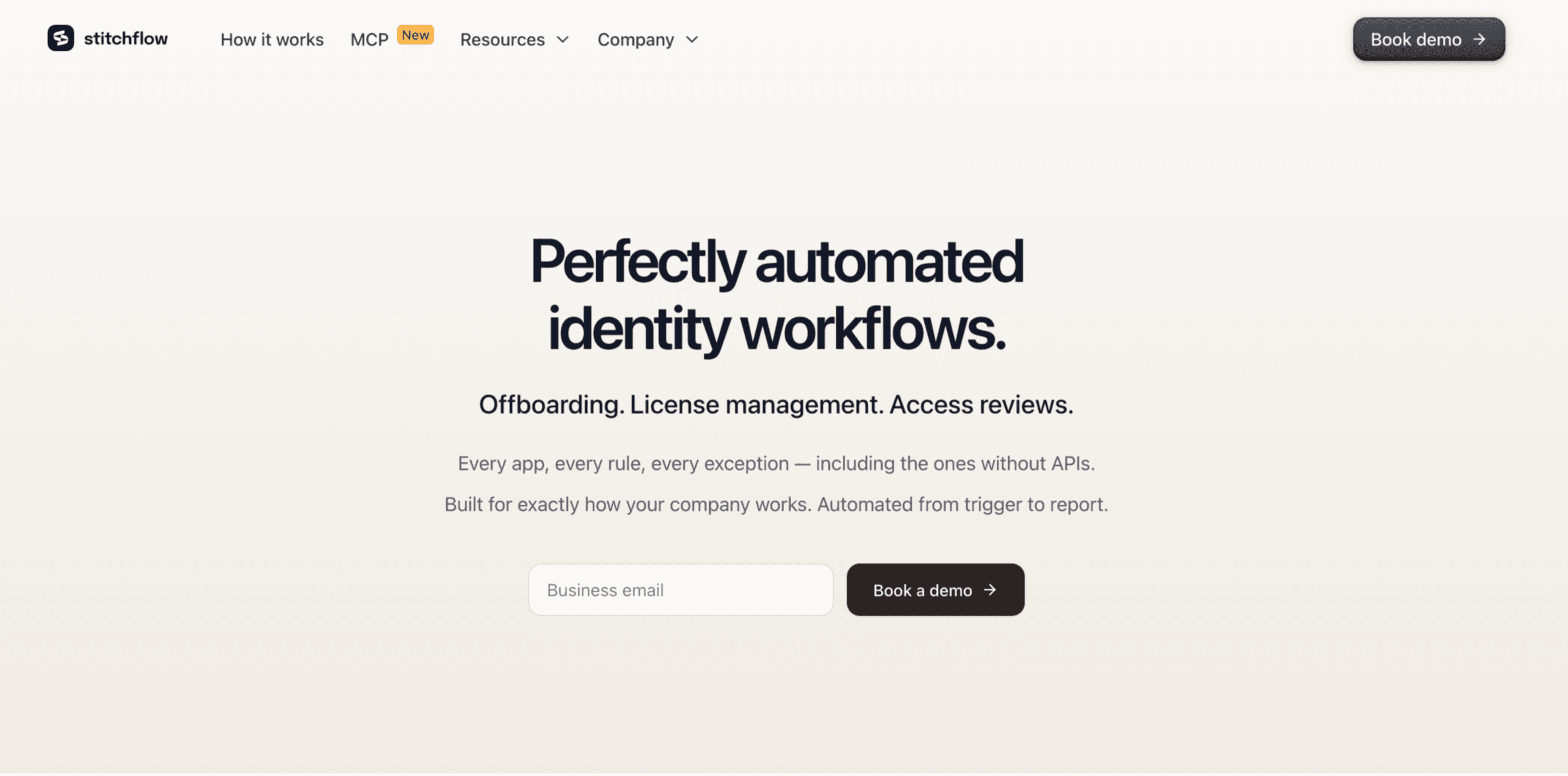
Stitchflow
Stitchflow is a managed IT automation service designed to streamline complex IT operations like offboarding, license cleanup, access reviews, and SaaS spend management. It integrates with over 60 apps via API and utilizes a local browser agent for applications without management APIs, ensuring 100% coverage of your app stack. Stitchflow learns your specific workflows, including rules and edge cases, and builds them using AI for rapid deployment, typically under a week. The workflows then run on deterministic logic, ensuring consistent execution without AI hallucinations. The service also provides spend intelligence by mapping users and apps with financial data to identify shadow IT and optimize SaaS spend. Stitchflow handles all maintenance, monitoring, and updates for integrations, allowing IT teams to focus on strategic tasks.

Nicolab
Nicolab accelerates stroke care with its AI-powered workflow and emergency platform, designed to give clinicians critical insights when seconds matter. The platform seamlessly links acute care teams across hospitals and regions, enabling real-time sharing of imaging, timelines, and decisions within a secure, cloud-based environment. Its intuitive mobile app, available for both Android and iPhone, offers clear patient timelines, instant access to clinical images, and secure messaging. StrokeViewer AI speeds up triage with accurate and fast decision-making, trusted by physicians and having assisted over 170,000 patients. Nicolab's solution is vendor-agnostic, integrating with CT scans from any manufacturer, and stores patient information securely in Google Cloud warehouses for a maximum of 30 days. The company provides 24/7 support via email, phone, and in-app channels.
SqueezeSeg
SqueezeSeg is a TensorFlow-based implementation of convolutional neural networks designed for real-time road-object segmentation from 3D LiDAR point clouds. This repository provides the code for SqueezeSeg, a model that processes LiDAR data to identify and segment objects in a scene, crucial for applications like autonomous driving. The project also references SqueezeSegV2, a follow-up work with improved performance, and provides links to download converted datasets for training and validation. It includes instructions for installation, running a demo, and training/evaluating the model, making it a valuable resource for researchers and developers in the field of autonomous vehicles and computer vision.
text_renderer
text_renderer is an open-source tool designed to generate synthetic text line images, primarily for training deep learning Optical Character Recognition (OCR) models like CRNN. It features a modular design, allowing users to easily add different components such as Corpus, Effect, and Layout. A key capability is its integration with Albumentations, providing a wide range of image augmentation effects to enhance dataset diversity. The tool supports rendering multiple corpora on a single image with varying effects, generating vertical text, and creating LMDB datasets compatible with PaddleOCR. It also includes a web-based font viewer and corpus sampler for character balance.
DI-drive
DI-drive is an open-source Decision Intelligence Platform specifically designed for Autonomous Driving simulation. It provides a unified entry point to apply Decision Intelligence across various driving simulation suits, supporting different simulators, datasets, and cases. The platform is built on DI-engine, a Reinforcement Learning platform, and currently integrates with popular simulators like Carla and MetaDrive. DI-drive enables users to run Imitation Learning, Reinforcement Learning, and GAIL experiments, offering a comprehensive environment for developing and evaluating autonomous driving policies. It includes a Model Zoo with pre-trained models and a Casezoo for scenario-based training and testing, making it a robust tool for advanced research and development in autonomous driving.

UNEE
UNEE is an interactive AI companion plush toy designed to provide 24/7 conversational engagement. More than just a toy, it acts as an AI friend that engages across senses with adaptive feedback and emotional understanding. Powered by Mission AI’s proprietary emotional model, UNEE uses a multi-layer memory model to gradually shape a long-term personality, anticipating user feelings and offering appropriate companionship. Its emotional resonance engine crafts replies that feel like true reflections, while proactive dialogue uses location and real-time updates for relevant conversations. UNEE features voice interaction, adaptive eye feedback, touch response, and a sleep mode, bringing companionship that feels truly alive.
Aisera
Aisera is an AI agent platform designed to deliver transformative work experiences, boost employee productivity, and reduce operational costs for enterprises. It features a unified AI agent platform that goes beyond simple assistance to provide autonomous execution, automate tasks, deliver answers, and transform workflows. Key components include Agent Composer for creating custom AI agents, Aisera Unify for integrating best-of-breed agents and tools, and Aisera Assistant and Agent Assist for executing complex, cross-domain actions. The platform also offers TRAPS (Trusted, Responsible, Auditable, Private, Security) for reliability and observability, and analytics for continuous learning and improvement. Aisera supports various domains and departments, including IT, HR, finance, sales, customer service, and procurement, across numerous industries.

Swooped
Swooped is an AI-powered job search platform designed to help job seekers land their dream roles faster. It offers a suite of AI tools including an AI Resume Builder that generates perfectly formatted and keyword-optimized resumes, and an AI Cover Letter Generator that creates compelling, job-specific cover letters. The platform also features ATS Optimization to ensure resumes pass digital gatekeepers, a Free Resume Grader for actionable feedback, and AI Interview Practice. Swooped streamlines the application process with One-Click Applications and a Job Application Tracker, and even includes a Networking AI to connect users with industry insiders. Trusted by over a million job seekers, Swooped aims to accelerate job searches, increase interview rates, and achieve high ATS pass rates.
Dyna.Ai
Dyna.Ai, a Singapore-based AI-as-a-Service leader, delivers advanced AI solutions tailored for finance and diverse business needs. The platform offers enterprise-grade solutions designed for security, compliance, and scalability, with an adaptable architecture that evolves with business demands. Key offerings include AI Employees for 24/7 digital workforce efficiency, an Agent Platform to build and deploy intelligent AI agents, and the FSI Suite for fast, secure, and compliant identity verification. Dyna.Ai's purpose-built AI models understand the complexities of industries like banking, lending, insurance, wealth management, telecom, and BPO, transforming customer and employee experiences with seamless integration into existing systems.

Book Bot
Book Bot is an innovative AI tool that converts books into interactive learning experiences. Users can upload various file types, including EPUB, PDF, DOC, DOCX, and TXT, to create a "BookBot." This AI-powered bot then allows readers to ask questions and receive customized responses, fostering a dynamic and adaptive learning environment. Authors and educators can utilize Book Bot to publish their works in an interactive format, with the option to embed these BookBots directly into their own websites. The platform emphasizes data privacy, ensuring that uploaded book source material is never exposed or used to train AI models, offering a secure way to engage with content.
InstantAPI Ai
InstantAPI Ai revolutionizes web scraping by leveraging AI to transform any webpage into a customizable API. This powerful tool automates complex tasks such as JavaScript rendering, CAPTCHA solving, and handling dynamic content updates, making data extraction seamless and efficient. Users can obtain structured data in various formats including JSON, HTML, or Markdown, enabling real-time data integration with existing systems. InstantAPI Ai is designed to simplify the process of gathering information from the web, providing a robust solution for developers and businesses needing reliable and automated data feeds without extensive coding.

NicheAI
NicheAI is an innovative platform that merges quantum-powered AI companions with the LUXBIN gasless blockchain, offering a unique blend of advanced technology. Users can interact with AI companions like Aurora, an emotionally intelligent AI, and Atlas, a strategic AI, for various applications including education, business strategy, and mental wellness. The platform boasts zero gas fees for transactions and smart contract deployments, leveraging a 6-second block finality. NicheAI integrates with IBM Quantum computers for real quantum computing capabilities and supports Coinbase Smart Wallets with ERC-4337 account abstraction. It also provides tools for deploying tokens and NFTs on the Base network with no gas fees, making it accessible for developers and innovators in the Web3 space.
desk-emoji
Desk-Emoji is a truly open-source AI desktop robot designed with an industrial-style aesthetic, making it a sleek desktop decoration. It boasts unparalleled cost-effectiveness, aiming to deliver the performance of more expensive desktop robots at a fraction of the price. Key features include a 2-degree-of-freedom gimbal and versatile head movements, enabling dynamic interactions. The robot is equipped with finely tuned emoji animations and motion algorithms for smooth and lively emotional expressions. It can respond with corresponding actions based on the emotional tone of replies and supports gesture recognition for interactive engagement. Furthermore, Desk-Emoji is compatible with large-scale model voice conversations, integrating LLM capabilities for comprehensive voice chat.

Chart AI - AI Assisted Trading
DCZT is a platform showcasing a diverse collection of mobile games and applications developed by an indie developer. The offerings range from utility apps like FoodCalAI, an AI-powered calorie counter, to various casual games such as LED Scroller, Antistress Games, and Decision Roulette. The website serves as a central hub for information about these apps, providing details on features, troubleshooting, and updates. Users can download these apps for free from their respective mobile app stores and engage with the developer for feedback or support. Planned updates include a rewritten codebase, UI/UX modernization, performance optimization, and the development of new web applications, indicating a continuous effort to enhance user experience and expand the product portfolio.

FormWise
FormWise provides the infrastructure for agencies and experts to transform their specialized knowledge and methodologies into branded AI products. Users can create custom SmartForms, CoPilots, and Toolsets that clients can pay to use, effectively productizing their expertise. This platform is designed to empower professionals to scale their services by offering AI-powered solutions tailored to specific client needs. It enables the development of unique AI tools without extensive coding, making advanced AI capabilities accessible for various business applications and client engagements.

Currents.one
Currents AI is an AI-powered social media intelligence platform designed to transform social media strategy through real-time insights. It enables users to discover trending topics, analyze competitors, and engage effectively with their audience across all major platforms. The platform offers a real-time social search engine to uncover long-tail conversations and user pain points from forums, Reddit, reviews, and social threads. Key features include semantic social search for context-rich results, user story extraction to auto-structure comments into actionable needs, and competitor intelligence to track reactions. Currents AI also provides Murmur Lab, an AI PM Workspace, to turn unfiltered user buzz into product clarity, focusing on minority group insights and product roadmapping intelligence.
software-agent-sdk
The OpenHands Software Agent SDK is a comprehensive toolkit featuring Python and REST APIs, designed for building AI agents that interact with code. It enables developers to create agents for a variety of tasks, from one-off actions like generating a README to routine maintenance such as updating dependencies, and even major refactors. A key differentiator is its flexibility, allowing agents to operate either on the local machine or within ephemeral workspaces like Docker or Kubernetes via the Agent Server. This SDK also powers the OpenHands CLI and OpenHands Cloud, providing a robust foundation for new developer experiences. It includes examples for standalone SDK usage, remote agent server interactions, and GitHub Workflows integration.
QuizMate
QuizMate is an AI-powered study tool designed to enhance academic performance and drastically reduce study time. It offers instant, accurate answers and detailed, step-by-step explanations for questions across various subjects and academic levels. The tool integrates directly into school portals via a Chrome Extension, allowing for seamless access to its features. Additionally, QuizMate provides a mobile app where users can snap photos of questions to receive immediate answers and explanations. The QuizMate Tutor feature acts as an AI-powered study hub, capable of summarizing lectures into concise notes, assisting with essay writing, and transforming study material into flashcards and practice quizzes. This comprehensive suite of tools aims to help students work smarter, not harder.
Qwen-Audio
Qwen-Audio (Qwen Large Audio Language Model) is an open-source multimodal AI tool from Alibaba Cloud, serving as a foundational audio-language model. It processes various audio types, including human speech, natural sounds, music, and songs, alongside text inputs, to generate text outputs. The tool is built on a multi-task learning framework, enabling knowledge sharing across over 30 tasks and supporting diverse audio-oriented scenarios. Qwen-Audio-Chat, an instruction fine-tuned version, offers multi-turn dialogues, flexible interaction with multiple audio inputs, and creative capabilities. It excels in benchmarks like Automatic Speech Recognition, Speech-to-text Translation, and Audio Question & Answer, making it a powerful tool for audio understanding and processing.