
AI Agents & Automation
Browsing page 604 of AI Agents & Automation. Sorted by confidence score — our independent quality rating.
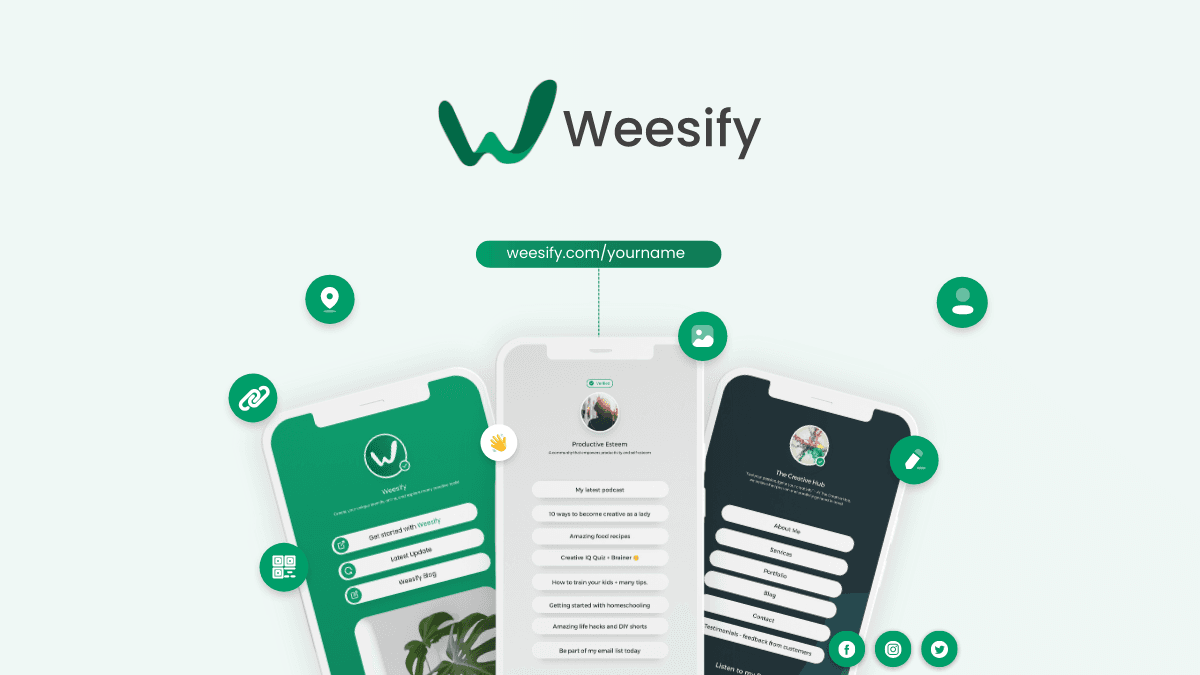
Weesify
Weesify is an AI-powered platform designed to streamline and enhance online presence. It provides a suite of tools including link shortening for cleaner URLs and custom bio-link building to consolidate multiple links into one accessible page. The platform also features AI writing capabilities for generating content and AI image generation. Additionally, Weesify offers access to over 140 web tools, covering functionalities like image editing and SEO optimization, to further assist users in managing and improving their digital footprint.

Mistral Graph
Mistral Graph is an AI chatbot specifically designed to streamline task automation. It offers capabilities for generating diverse content, making it useful for creators and marketers. Additionally, the tool provides educational assistance, suggesting its utility for students or educators. It is currently available on Hugging Face and is free to use, making it accessible for individuals and small teams looking for AI-powered automation and content support.
Chat Answer
Chat Answer is an open-source AI dialogue client specifically designed to facilitate problem-solving on mobile devices. It integrates an AI assistant directly into the user's mobile experience, aiming to offer quick and easily accessible solutions to a wide range of problems. The tool's open-source nature suggests community-driven development and transparency, focusing on bringing AI assistance to users wherever they are.
fast-voice-assistant
fast-voice-assistant is an open-source project available on GitHub, designed to help developers create highly responsive AI voice assistants. The repository provides the necessary tools and framework to achieve response times under 500 milliseconds. It integrates several advanced technologies, including LiveKit for transport, Deepgram for Speech-to-Text (STT) conversion, Cerebras for Large Language Model (LLM) processing, and Cartesia for Text-to-Speech (TTS) generation. This combination allows developers to build and experiment with cutting-edge, low-latency voice assistant applications.
SketchAPI
SketchAPI is the official JavaScript plugin library embedded within the Sketch Mac application, designed to empower developers to extend and customize Sketch's capabilities. It offers a stable JavaScript interface for writing scripts and creating robust plugins, ensuring compatibility across Sketch releases. The API is built using JavaScript/CocoaScript and is bundled as part of Sketch's build process. Developers can leverage SketchAPI to automate tasks, create custom tools, and integrate with other systems, enhancing their design workflow. The project includes core modules, comprehensive documentation, and examples, making it accessible for those familiar with JavaScript development. It supports local development, testing, and integration with Sketch installations, providing a flexible environment for plugin creation.
FaceMyAI
FaceMyAI is an AI tool dedicated to generating highly realistic digital humans. These digital humans are equipped with advanced natural language processing capabilities and emotional intelligence, allowing for more natural and engaging interactions. The platform provides customizable digital assistants that can be tailored to specific needs. FaceMyAI operates on a subscription model and also offers licensing options for seamless enterprise integration. Its applications span across diverse sectors including customer service, education, healthcare, and entertainment, providing versatile solutions for businesses looking to leverage AI-powered digital human technology.

Mockmate
Mockmate is an artificial intelligence tool designed to streamline the job interview process for both candidates and companies. For job seekers, it acts as an interview simulator, offering immediate feedback to help them practice and improve their interviewing skills. Companies can leverage Mockmate to automate initial interview stages and efficiently shortlist candidates. It utilizes natural language processing (NLP) to analyze responses, making the candidate selection process more objective and scalable.
Mistral 8x7B
Mistral 8x7B is an AI chatbot specifically designed to streamline and automate various tasks. Its capabilities extend to content generation, allowing users to create diverse forms of written material. Additionally, it serves as a valuable tool for educational assistance, providing support and resources for learning. The chatbot is accessible on Hugging Face, making it readily available to a broad audience. Currently, users can leverage its features without any cost.
Openclaw.new
Openclaw.new facilitates the deployment of personal AI assistants, offering support for leading large language models such as Claude, ChatGPT, and Gemini. The platform automates critical setup processes, including server configuration and model selection. It also provides seamless integration with widely used communication channels like Telegram, Discord, and WhatsApp. This tool is designed to streamline the creation of AI-powered solutions for various applications, including customer support, efficient inbox management, and concise meeting summaries. By automating complex setup tasks, Openclaw.new significantly reduces the time and infrastructure overhead typically associated with chatbot deployment.
DiffusionHub
DiffusionHub is a cloud-based platform designed for generating AI-powered images and videos through stable diffusion. It boasts a fast server launch time of just 10 seconds and provides users with 300GB of storage. The platform supports well-known web user interfaces such as Automatic1111, ComfyUI, and Kohya, making it accessible for a wide range of users, regardless of their technical expertise. It aims to offer a reliable and efficient environment for AI content creation.
LocalhostAI
LocalhostAI, previously described as an AI assistant for Chrome and Gemini Nano, is currently inaccessible. The domain 'localhostai.xyz' is listed for sale, indicating that the tool is not operational or available for use. Consequently, there is no live website content detailing its features, pricing, or any other relevant information. Users interested in this tool will find only a domain sale page, preventing any interaction with or understanding of its intended capabilities or how it might enhance productivity within the Chrome browser or with Gemini Nano.
NextThreeBooks.com
Jalalive is a free online platform dedicated to live football streaming, offering a convenient and accessible way for fans to watch matches without the hassle of subscriptions or registrations. The service provides HD quality streams and multiple alternative links to ensure a stable viewing experience, minimizing buffering even during high traffic. Users can access Jalalive directly through their web browser on various devices, including smartphones, tablets, and laptops, or opt for the dedicated Jalalive APK for a more integrated mobile experience. It covers a wide range of top global leagues and competitions, with regularly updated schedules, making it a comprehensive solution for football enthusiasts who want to stay updated with their favorite teams and matches without any cost.
Next Three Books
Jalalive is a free live streaming platform dedicated to football, offering users access to a wide array of top global leagues and competitions. It stands out by providing a hassle-free viewing experience, requiring no registration or login. Users can enjoy matches in HD quality with minimal buffering, thanks to stable servers and multiple alternative links. The platform supports various devices, including smartphones, tablets, and laptops, accessible directly through a web browser or via dedicated APKs for mobile users. Jalalive aims to be a convenient and cost-effective solution for football fans who want to stay updated with their favorite teams and matches without the commitment of paid subscriptions.
Llama 2: Open Foundation and Fine-Tuned Chat Models
Llama 2 is a suite of open-source large language models developed by Meta. This collection includes both foundational models and fine-tuned chat models, making it a versatile resource for developers and researchers. These models are engineered to handle a broad spectrum of natural language understanding and generation tasks. Llama 2 supports both academic research and commercial applications, offering a powerful and accessible platform for creating innovative generative AI solutions.
育児記録 - コロネ colone
育児記録 - コロネ colone is a dedicated childcare application designed to streamline the process of recording a child's daily activities and development. It offers features that help parents and caregivers track various aspects of their child's routine, from feeding and sleeping patterns to growth milestones. A key differentiator of colone is its integration of support from sleep specialists, providing guidance to help optimize children's sleep. The app aims to reduce the burden of record-keeping, allowing parents to focus more on positive interactions with their children while still maintaining comprehensive and organized childcare logs.
TempestV0.1 GPU Demo
TempestV0.1 GPU Demo is a demonstration of AI capabilities, specifically designed to showcase the TempestV0.1 model. Hosted on Hugging Face Spaces, this tool leverages GPU processing to provide a platform for users to explore and test the model's functionalities. While currently paused, it aims to offer insights into advanced AI applications. Users interested in utilizing this Space are encouraged to contact the author through the community tab to request its restart, indicating its potential for academic research and educational purposes.
AS-One
AS-One is a comprehensive, open-source Python wrapper designed for computer vision tasks, providing an easy and modular interface for object detection, segmentation, tracking, and pose estimation. It supports a wide range of YOLO models, including YOLOv9, v8, v7, v6, v5, R, and X, enabling users to implement these advanced models in under 10 lines of code. The library integrates various tracking algorithms like ByteTrack, DeepSORT, and NorFair, and supports models in ONNX, PyTorch, and CoreML formats. AS-One also includes capabilities for text detection and recognition using models like CRAFT and EasyOCR, and pose estimation with YOLOv8 and YOLOv7-w6. It is ideal for developers and researchers looking for a unified and efficient solution for their computer vision projects.
sirix
SirixDB is an embeddable, bitemporal, append-only database system and event store designed to keep the full history of each resource. Unlike traditional databases that overwrite data, SirixDB stores immutable lightweight snapshots, ensuring that every revision is a first-class citizen. It uses structural sharing, where only changed pages are written, and unchanged data is shared between revisions via copy-on-write, leading to efficient storage. SirixDB tracks both transaction time (when committed) and valid time (when true in the real world), providing a robust audit trail. It offers various page versioning strategies, including FULL, INCREMENTAL, DIFFERENTIAL, and SLIDING SNAPSHOT, to balance storage cost and read performance. The system is embeddable as a single JAR or can run as a REST server, and provides CLI tools for database operations.
ML-GCN
ML-GCN is a PyTorch implementation of Multi-Label Image Recognition with Graph Convolutional Networks, as presented in a CVPR 2019 paper. This open-source project provides researchers and developers with the code and pre-trained models necessary to apply GCNs to multi-label image recognition tasks. The implementation highlights improvements achieved by replacing Global Average Pooling (GAP) with Global Max Pooling (GMP) for feature aggregation, demonstrating enhanced performance on datasets like COCO, NUS-WIDE, and VOC2007. It includes detailed instructions for setting up requirements, downloading models, and running demos for VOC 2007 and COCO 2014 datasets, making it a valuable resource for academic research and practical application in computer vision.
vedadet
vedadet is a single-stage object detection toolbox built on PyTorch, offering a modular design that re-engineers MMDetection for enhanced flexibility and deployment. It decomposes the detector into four key parts: data pipeline, model, postprocessing, and criterion, making it straightforward to convert PyTorch models into TensorRT engines. This design facilitates efficient deployment on NVIDIA devices such as Tesla V100, Jetson Nano, and Jetson AGX Xavier. The toolbox supports several popular single-stage detectors, including RetinaNet and FCOS, right out of the box. Its friendly integration with TensorRT allows for easy model conversion and deployment through both Python and C++ front-ends, making it a powerful tool for developers working on object detection tasks.
psmoveapi
Psmoveapi is a versatile, cross-platform library designed for 6DoF (six degrees of freedom) tracking of the PlayStation Move Motion Controller. It integrates advanced sensor fusion and computer vision techniques to provide precise positional and rotational tracking. The library also extends its functionality to include ambient display control through the PS Move's LED orb, enhancing user feedback and immersion. Developers can utilize psmoveapi to gain direct PC access to the PS Move controller, facilitating communication via both Bluetooth and USB connections. This makes it an ideal tool for creating custom applications, games, or research projects that leverage the unique input capabilities of the PS Move controller on various computing platforms.
Trends for GPTs
Trends for GPTs is a specialized tool developed for ChatGPT users who wish to extend the capabilities of their chatbots. It facilitates the creation of custom actions by allowing seamless integration with GPT-4 models. The platform provides access to more than 50 free APIs, enabling users to unlock a wide array of functionalities. Users can easily import links and configure specific tasks for their GPT-4 models, empowering them to perform diverse actions and automate processes within their custom chatbots.
Microsoft Phi-3-Vision-128k
Microsoft Phi-3-Vision-128k is an AI chatbot developed to support a variety of tasks, particularly in the fields of education and content creation. Users can leverage its capabilities for coding assistance, obtaining answers to general knowledge questions, and facilitating creative writing endeavors. This versatile tool aims to provide broad support across different user needs.
PANet
PANet (Path Aggregation Network) is an open-source computer vision tool primarily designed for instance segmentation and object detection tasks. Originally developed for the CVPR 2018 Spotlight paper, it achieved 1st place in the COCO Instance Segmentation Challenge 2017 and 2nd place in the COCO Detection Challenge 2017. The repository provides a re-implementation of PANet based on PyTorch, building heavily on Detectron.pytorch. It offers configurations and scripts for training and testing models on datasets like COCO, demonstrating strong performance metrics for both box and mask AP. Researchers and developers can leverage PANet for advancing their work in computer vision.