
Coding & Development
Browsing page 351 of AI tools for Coding & Development. Sorted by confidence score — our independent quality rating.
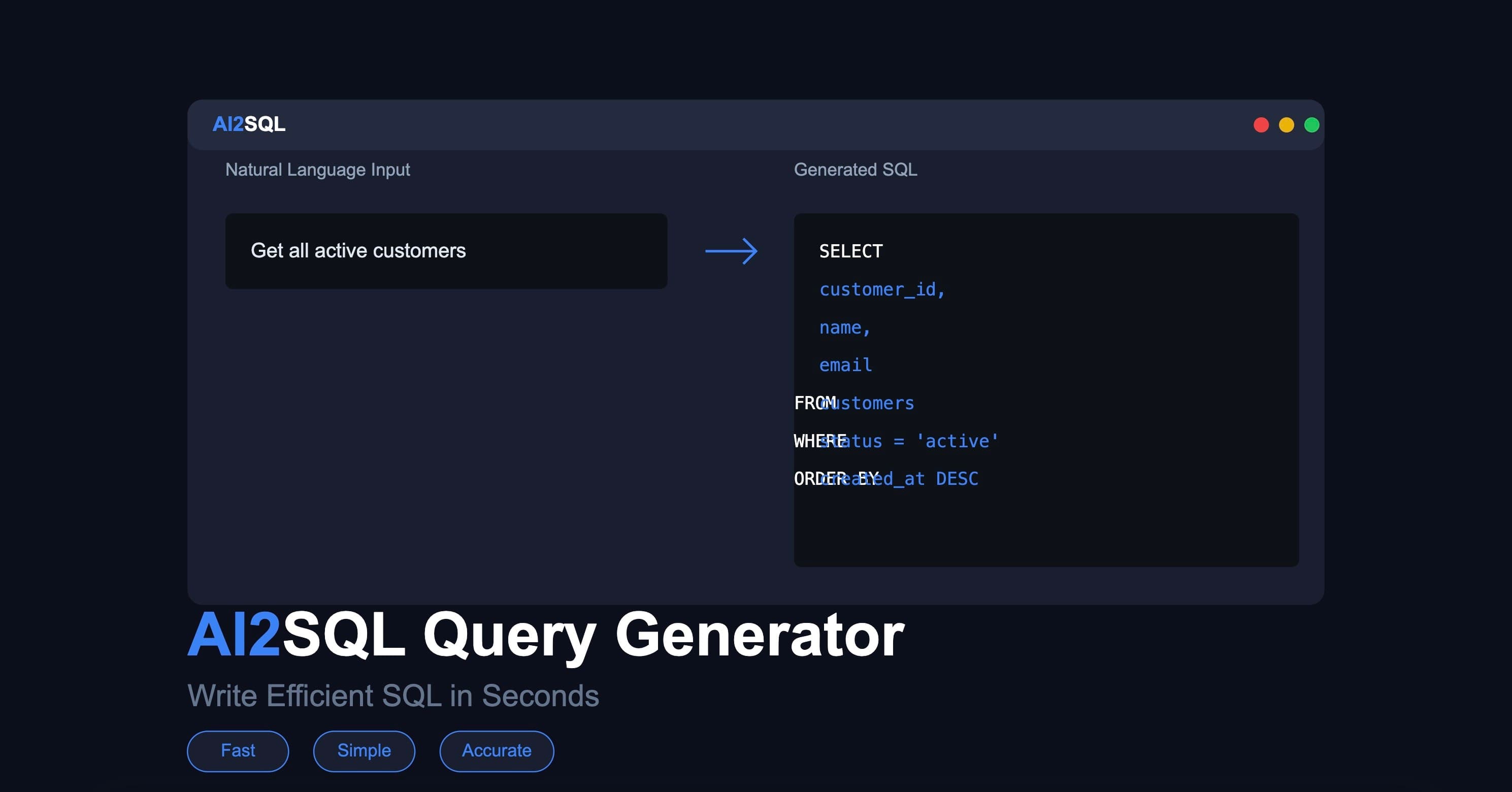
AI2sql
AI2sql is an AI-powered SQL query builder designed to simplify database interactions for both beginners and experienced developers. It allows users to generate complex SQL and NoSQL queries from natural language descriptions, eliminating the need for extensive coding knowledge. The tool offers various features including a SQL Query Generator, SQL Bot for conversational database interaction, Text2SQL for automatic SQL generation, ERD AI for simplified database design, and tools for fixing, explaining, and optimizing SQL queries. AI2sql supports multiple databases like MySQL, PostgreSQL, Oracle, MongoDB, BigQuery, MariaDB, Redshift, and SnowSQL, and provides capabilities such as converting natural language to SQL, explaining SQL for insights, optimizing query performance, and formatting SQL code. It also includes a Formula Generator, Data Insight Generator, SQL Validator, and the ability to query CSV data.

deep-ctr-prediction
deep-ctr-prediction is an open-source GitHub repository dedicated to deep learning models for click-through rate (CTR) prediction. It provides implementations of several popular deep neural network (DNN) models, including Wide & Deep, DeepFM, ESMM, Deep Interest Network, ResNet, xDeepFM, AFM, Transformer, and FiBiNET. The code is built using the TensorFlow Estimator API, ensuring compatibility with industrial-grade applications. It utilizes tfrecord format for data storage and the tf.Dataset API for accelerated I/O. A key feature is the separation of feature engineering and model definition, allowing users to easily modify input functions for feature engineering and model functions for model architecture. The repository also supports data storage in Hadoop, with options for local storage.
TensorFlow-VAE-GAN-DRAW
TensorFlow-VAE-GAN-DRAW is an open-source collection of generative methods implemented using TensorFlow. This repository offers implementations of Deep Convolutional Generative Adversarial Networks (DCGAN), Variational Autoencoders (VAE), and DRAW: A Recurrent Neural Network For Image Generation. It allows users to experiment with and run these different generative models, providing a foundation for research and development in image generation. The project highlights that DCGANs produce decent results after 10 epochs with default parameters and outlines future enhancements like more complex data integration and replacing the current attention mechanism with a Spatial Transformer Layer.
transformer-xl-chinese
transformer-xl-chinese is an open-source project that leverages the Transformer-XL model for advanced Chinese text generation. This tool allows users to generate various forms of Chinese text, including novels, ancient poetry, and general conversational topics. Key functionalities include the ability to perform inference, visualize attention mechanisms within the model, and examine candidate words for generated text. The project builds upon existing Transformer-XL implementations, with specific modifications to support Chinese text generation and enhance usability through added inference capabilities and visualization tools. It provides scripts for data preparation, training, and inference, making it accessible for developers and researchers interested in exploring and applying Transformer-XL to Chinese language tasks.
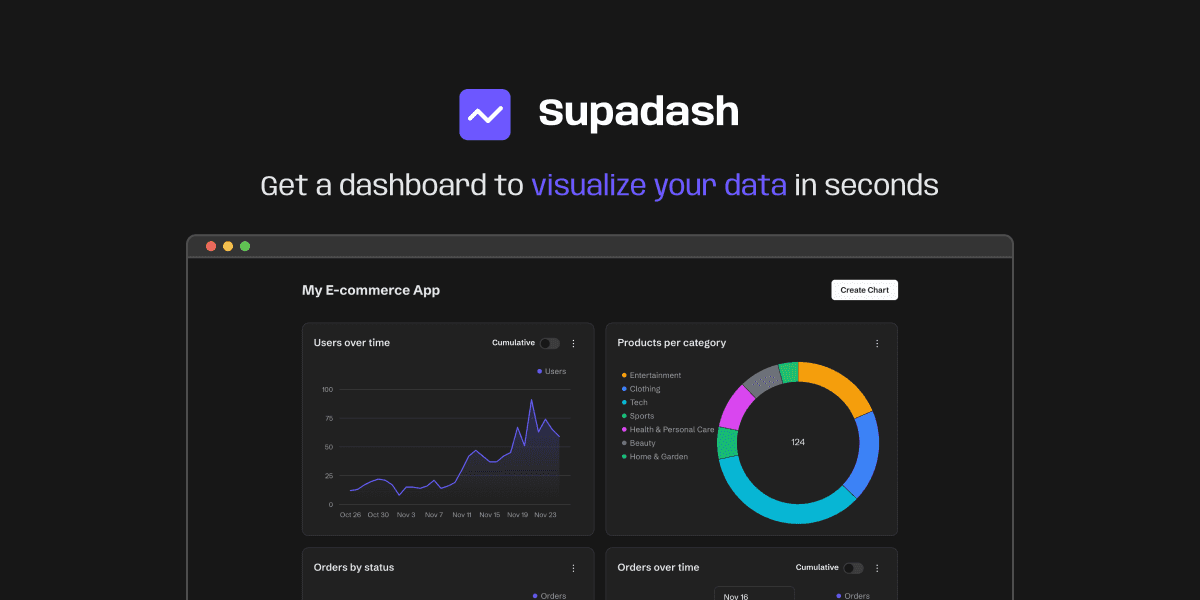
Supadash
Supadash allows users to connect their database and instantly generate AI-powered charts and dashboards to visualize their data and analytics. This no-code solution eliminates the need for periodically running SQL queries to track metrics, as Supadash automatically creates time series charts and other visualizations. It transforms raw database tables into insightful and visually appealing dashboards in seconds, making data analysis accessible and efficient for users who need to understand their data better without extensive technical knowledge.
Tank War 3D GAME
Tank War 3D GAME is an engaging first-person tank combat game, created by the AI Coding Autonomous Agent MOUSE-I. Players control a tank using W, A, S, D for movement, the mouse for aiming, and left-click to fire. The primary objective is to survive against enemy forces for 180 seconds to complete the game. This game is hosted on Hugging Face Spaces, making it easily accessible for users. It provides a straightforward and interactive gaming experience, showcasing the capabilities of AI-generated content in the gaming domain. The tool is designed for entertainment and can also serve educational purposes by demonstrating AI's role in game development.
DeepSeekSelfTool
DeepSeekSelfTool is an open-source AI cybersecurity toolkit developed by DeepSeek, designed to assist security professionals and developers with various tasks. Its capabilities include traffic analysis to identify malicious network activity, JavaScript code auditing to pinpoint vulnerabilities and risks, and process analysis for both Windows and Linux/macOS systems to detect suspicious processes. The tool also features HTTP to Python conversion for generating POC/EXP code, text processing for data reformatting, and regular expression generation. A standout feature is its robust WebShell detection, capable of identifying both traditional WebShells and memory-resident ones. Additionally, it offers AI-powered translation and code auditing, making it a comprehensive solution for cybersecurity operations and reporting.
ms-swift
ms-swift is a comprehensive, open-source framework developed by the ModelScope community, designed for fine-tuning and deploying large language models (LLMs) and multimodal large models (MLLMs). It supports over 600 text-only LLMs and 400 MLLMs, offering full-pipeline capabilities from training to inference, evaluation, quantization, and deployment. The framework integrates advanced training technologies, including Megatron parallelism (TP, PP, CP, EP) for acceleration and a rich family of GRPO reinforcement learning algorithms. ms-swift also supports various fine-tuning methods like LoRA, QLoRA, and DoRA, and provides memory optimization techniques such as Flash-Attention 2/3. It offers a Web-UI interface for simplified training, inference, evaluation, and quantization workflows, making it accessible for a wide range of users.
files-to-prompt
files-to-prompt is an open-source command-line tool designed to streamline the process of preparing context for Large Language Models (LLMs). It concatenates the contents of multiple files or entire directories into a single output, which can then be used as a prompt for an LLM. The tool offers flexible options for filtering files by extension, ignoring specific patterns, and including hidden files. It also supports outputting in specialized formats like Claude XML for optimal structuring with Anthropic's models, or Markdown with fenced code blocks for easy integration into documents. This utility is particularly useful for developers and prompt engineers who need to provide extensive codebases or documentation as context to AI models.
OMG
OMG is an advanced open-source framework designed for occlusion-friendly personalized multi-concept generation within diffusion models, as presented at ECCV 2024. It allows users to generate complex images featuring multiple characters and styles, integrating seamlessly with LoRAs from Civitai.com and InstantID for single-image ID personalization. The tool also supports ControlNet for layout control and various style LoRAs. OMG is built on Python 3.10.6 with PyTorch 2.0.1 and torchvision 0.15.2, requiring specific model downloads for its functionality, including Stable Diffusion XL and various ControlNet and LoRA checkpoints. It offers flexible usage through command-line inference scripts for both LoRA and InstantID workflows.
Zenvault
Zenvault is a CLI-first project control plane designed to streamline developer experience by centralizing repositories, environment variables, and resources. It allows for one-command onboarding to any project, eliminating the need for manual setup documentation and fragile .env files. Zenvault ensures that code runs correctly and consistently across all environments and machines, improving team productivity and reducing setup friction. Key features include secure secrets management with AES-256 encryption, environment variables per service, and audit logging. It integrates seamlessly into existing workflows, providing a single source of truth for project configuration and enabling secure team collaboration with granular access control.
InstantAPI Ai
InstantAPI Ai revolutionizes web scraping by leveraging AI to transform any webpage into a customizable API. This powerful tool automates complex tasks such as JavaScript rendering, CAPTCHA solving, and handling dynamic content updates, making data extraction seamless and efficient. Users can obtain structured data in various formats including JSON, HTML, or Markdown, enabling real-time data integration with existing systems. InstantAPI Ai is designed to simplify the process of gathering information from the web, providing a robust solution for developers and businesses needing reliable and automated data feeds without extensive coding.
BlockCertsAI
BlockCertsAI offers a patented AI platform designed for users who prioritize control, privacy, and decentralization. Operating within a 'Secure Virtual Space' and leveraging 'Web4AI' technology, the platform emphasizes user ownership of data and intelligence. It features an ownership architecture and private intelligence capabilities, aiming to disrupt traditional SaaS models. The platform utilizes BCERT tokens for transactions, smart contracts, and identity verification (KYC/AML), enabling a range of decentralized applications (DApps) and services. BlockCertsAI provides a framework for secure digital transformation, allowing users to manage their AI-driven cloud and engage in blockchain-based transactions.
phycv
PhyCV is the first Physics-inspired Computer Vision Python library developed by Jalali-Lab at UCLA. It introduces a new class of computer vision algorithms that simulate the propagation of light through physical mediums with diffractive properties, followed by coherent detection. Unlike traditional empirical algorithms, PhyCV leverages physical laws as blueprints, making these algorithms potentially implementable in real physical devices for fast and efficient computation. The library currently includes Phase-Stretch Transform (PST) for edge and texture detection, Phase-Stretch Adaptive Gradient-field Extractor (PAGE) for directional edge detection, and Vision Enhancement via Virtual diffraction and coherent Detection (VEViD) for low-light and color enhancement. Both CPU and GPU versions are available for each algorithm, with GPU versions depending on PyTorch and torchvision.
aios-core
aios-core is an open-source framework designed for AI-orchestrated full-stack development, empowering users to build AI-powered applications with greater control. It emphasizes a "CLI First" architectural premise, ensuring that all execution, decisions, and automation happen directly within the command-line interface. The framework introduces two key innovations: agentic planning, where specialized agents collaborate to create detailed PRD and architecture documents, and contextualized development, where a Scrum Master agent transforms these plans into hyper-detailed development stories for the `dev` agent. This approach aims to eliminate planning inconsistency and context loss, providing a comprehensive understanding for the development process. It supports various IDEs and CLIs, offering different levels of integration and automation.
dask-ml
Dask-ML is an open-source Python library designed for scalable machine learning, leveraging the power of Dask for parallel computing. It allows data scientists and machine learning engineers to efficiently process large datasets and execute complex ML tasks across distributed environments. The library seamlessly integrates with established machine learning frameworks such as Scikit-Learn and XGBoost, extending their capabilities to handle larger-than-memory datasets and distributed computations. This makes Dask-ML an invaluable tool for developing and deploying machine learning models in scenarios requiring high scalability and performance, facilitating robust and efficient data science workflows.

JetBrains
JetBrains AI offers a suite of intelligent coding assistance and AI solutions designed to transform software development. It integrates seamlessly into JetBrains' popular IDEs, providing developers with advanced tools to improve code quality, accelerate development workflows, and enhance overall productivity. The platform leverages AI to offer features such as smart code completion, debugging assistance, and refactoring suggestions. JetBrains AI aims to empower developers with cutting-edge technology, enabling them to write better code faster and more efficiently. This includes a focus on intelligent features that adapt to individual coding styles and project requirements, making it an invaluable asset for modern software teams.
DeepCL
DeepCL is an open-source OpenCL library designed for training deep convolutional neural networks. It offers C++, Python, and command-line APIs, allowing developers to implement and train deep learning models efficiently. The library supports various layer types including convolutional, max-pooling, normalization, activation, and dropout, alongside loss functions like softmax cross-entropy and square loss. DeepCL also incorporates multiple trainers such as SGD, Anneal, Nesterov, Adagrad, Rmsprop, and Adadelta. It is compatible with OpenCL-enabled GPUs or APUs and provides installation procedures for Windows and Linux, including Python wrappers. The project is actively maintained on GitHub, with recent updates focusing on compatibility and performance enhancements.
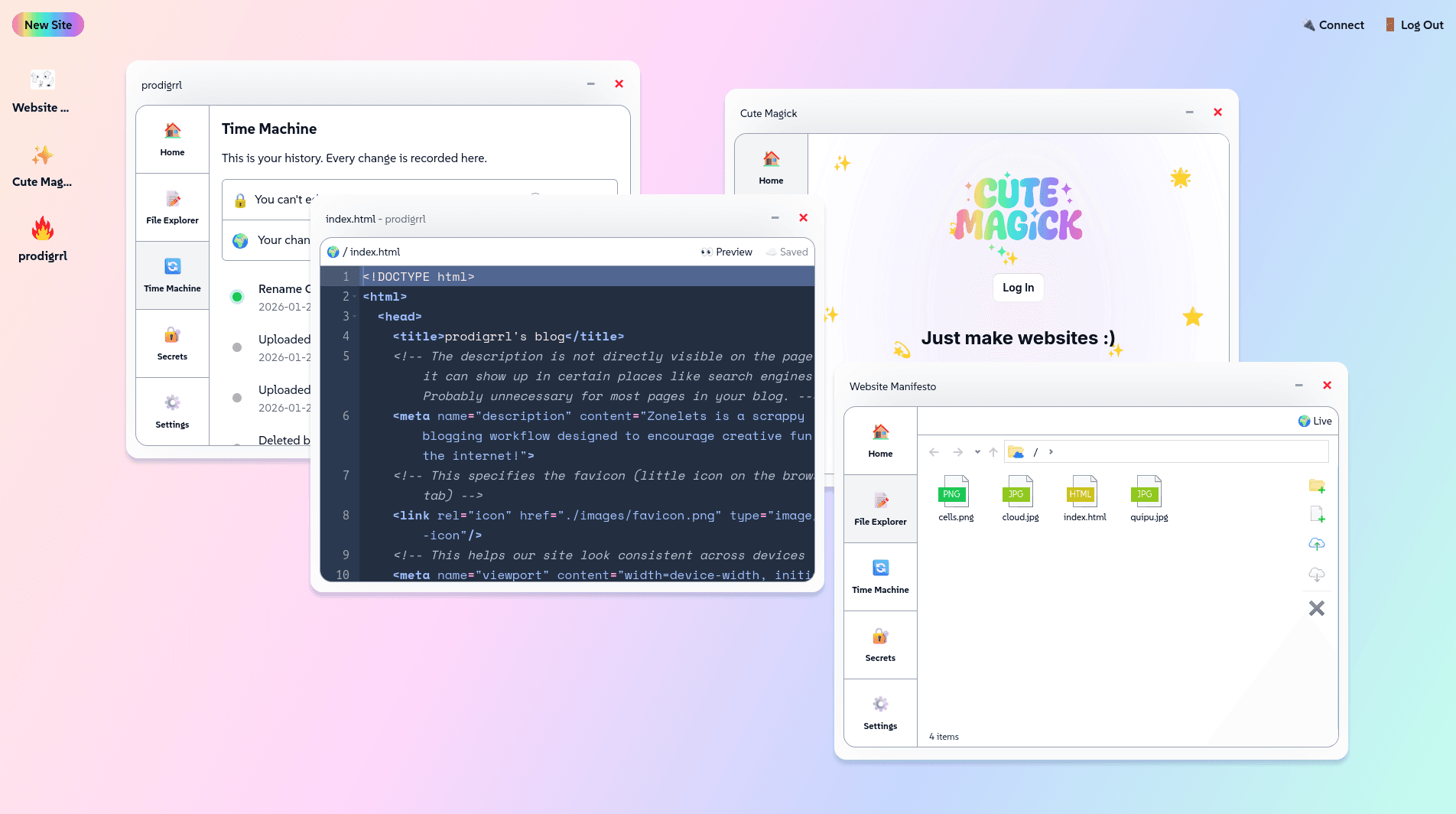
Cute Magick
Cute Magick offers a simple yet powerful open-source web hosting solution designed for developers and creative coders. It provides an interactive workspace where users can build, preview, and publish websites using various languages like HTML, CSS, PHP, Python, Lua, and Node.js. A key differentiator is its "Time Machine" feature, which saves every file change as a snapshot, allowing users to rewind to any previous version, preview past states, and restore earlier configurations. The platform emphasizes ownership and portability, with sites stored as plain files and standard Git history, enabling easy export and self-hosting options. It caters to those who want to build real, server-powered websites without the complexities of traditional infrastructure.
k8m
k8m is a lightweight, cross-platform Mini Kubernetes AI Dashboard designed to streamline cluster management. Built on AMIS and using kom as a Kubernetes API client, it integrates AI capabilities like Qwen2.5-Coder-7B and DeepSeek-R1-Distill-Qwen-7B for intelligent analysis, YAML translation, and log AI diagnostics. It supports multi-cluster management with heart-beat detection, automated reconnection, and granular permission control for users and groups. Key features include a plugin-based architecture, MCP integration for large model tool calls, and advanced security with MCP permission integration. It also offers Pod file and running management, API access, cluster inspection, k8s Event forwarding, CRD management, and a Helm market. The tool is fully open-source, supports multiple architectures and databases, and can be deployed as a single executable, making it highly efficient and easy to use for Kubernetes operations.
AI Prompt Studio
AI Prompt Studio is a free, privacy-focused desktop application designed to help users organize, refine, and master their AI prompts. This tool is ideal for anyone working with AI image generation or other AI models, providing a dedicated environment to manage and improve prompt workflows. Its focus on privacy ensures that user data and prompts remain secure on their local machine. By offering a structured way to store and iterate on prompts, AI Prompt Studio empowers users to achieve more consistent and higher-quality outputs from their AI models.
mlops-python-package
mlops-python-package offers a robust Python package template designed to kickstart and standardize MLOps initiatives and data pipelines. It integrates various tools and best practices to enhance flexibility, robustness, and productivity in MLOps. The package can be utilized as a core component of an MLOps platform, supporting functionalities like Model Registry, Experiment Tracking, and Realtime Inference. It includes features for configuration management, execution automation, and workflow orchestration, leveraging tools such as GitHub Actions, MLflow, and Pydantic for data validation. This comprehensive template is ideal for developers and data scientists looking to implement scalable and maintainable machine learning operations.
robustmq
RobustMQ is a unified messaging engine built with Rust, designed as a communication infrastructure for the AI era. It operates as a single binary, one broker, and one storage layer, eliminating external dependencies and allowing deployment from edge devices to cloud clusters. It natively supports MQTT, Kafka, NATS, AMQP, and its own mq9 protocol on a shared storage layer, meaning a message written once can be consumed by any protocol. The mq9 protocol is specifically designed for AI Agent asynchronous communication, offering features like agent mailboxes with persistent store-first delivery, priority levels, and public mailbox discovery. RobustMQ emphasizes minimal operations, multi-tenancy, and ultra-low-latency dispatch, making it suitable for diverse messaging needs from IoT to streaming data pipelines.
deepdow
deepdow is a Python package designed for portfolio optimization using deep learning techniques. It aims to bridge the gap between forecasting market evolution and solving optimization problems by constructing a pipeline of differentiable layers. The tool allows for the creation of networks where the final layer performs asset allocation, with preceding layers acting as feature extractors. The entire network is fully differentiable, enabling optimization via gradient descent algorithms. deepdow is not focused on active trading strategies but rather on finding allocations to be held over a specific horizon. It integrates differentiable convex optimization via `cvxpylayers`, offers various dataloading strategies, and supports integration with MLflow and TensorBoard. It also provides a range of loss functions, including Sharpe ratio and maximum drawdown, and is extensible for customization with both CPU and GPU support.