
Coding & Development
Browsing page 341 of AI tools for Coding & Development. Sorted by confidence score — our independent quality rating.

SimGNN
SimGNN is a PyTorch implementation of a novel neural network approach designed for fast graph similarity computation, as detailed in the WSDM 2019 paper. It addresses the computational burden of traditional methods like Graph Edit Distance (GED) and Maximum Common Subgraph (MCS) while maintaining high performance. The tool employs a learnable embedding function to map graphs into embedding vectors, providing a global summary. A key feature is its attention mechanism, which emphasizes important nodes for specific similarity metrics. Additionally, SimGNN includes a pairwise node comparison method to supplement graph-level embeddings with fine-grained node-level information. This approach leads to better generalization on unseen graphs and offers quadratic time complexity in the worst case. Experimental results demonstrate its effectiveness and efficiency, achieving smaller error rates and significant time reductions compared to existing baselines.

Deci AI (Acquired by NVIDIA)
NVIDIA, which acquired Deci AI, is a world leader in artificial intelligence computing, inventing the GPU and driving significant advancements across numerous fields. Their platform provides a vast array of software tools and solutions, including cloud services like BioNeMo for life sciences research, DGX Cloud for AI factories, and NVIDIA APIs for deploying AI models. For creators, NVIDIA Studio offers high-performance PCs and AI-enhanced apps like Broadcast. Data centers benefit from platforms like DGX and HGX, while embedded systems leverage Jetson and DRIVE AGX for autonomous machines and vehicles. Gaming is enhanced with GeForce RTX graphics cards, DLSS, and cloud gaming via GeForce NOW. NVIDIA also provides extensive software for Agentic AI, Data Science, Robotics, and various industries, making it a comprehensive ecosystem for AI development and deployment.

Hooking Coding Agents with the Cedar Policy Language
This article details a method for securing autonomous AI coding agents by implementing a reference monitor based on a trajectory event model. It highlights the increasing autonomy of coding agents and the associated security risks, proposing the Cedar Policy Language as a robust solution for adjudicating agent actions. The approach emphasizes building layered defenses at event boundaries, ensuring the monitor is always invoked, tamper-proof, and verifiable. The article covers mapping threat models like the lethal trifecta and OWASP Top 10 for Agentic Applications to the trajectory model, and how Cedar policies can formalize security intent, block destructive commands, and prevent data exfiltration. It also discusses the architecture of a hook-based harness and the future direction of agent security, including policy generation scalability and multi-turn, stateful policies.
sumo-rl
sumo-rl is an open-source tool designed to simplify the creation and management of Reinforcement Learning (RL) environments for Traffic Signal Control using SUMO. It offers a straightforward interface, ensuring compatibility with widely used RL libraries and frameworks such as Gymnasium, PettingZoo, stable-baselines3, and RLlib. The tool supports both single-agent and multi-agent RL scenarios, allowing for flexible experimentation. Users can easily customize observation spaces and reward functions to suit their specific research or application needs. sumo-rl is particularly useful for developers and researchers focused on advancing AI agents for traffic management and optimization, providing a robust platform for simulating and evaluating different control strategies.

Goless extension automation
Goless is a powerful browser automation tool designed to streamline web-based tasks without requiring any coding knowledge. Users can create custom workflows using a Chrome extension with a drag-and-drop interface, or leverage a marketplace of pre-built workflows. It enables a wide range of automations, including filling out forms, navigating websites, extracting data to CSV or Google Sheets, and even integrating with ChatGPT for generating responses. Goless also features anti-CAPTCHA capabilities, triggers for scheduled automations, and the ability to share workflows with team members. It's ideal for optimizing data collection, automating data entry, testing websites, and managing social media interactions efficiently.
xoul.ai
xoul.ai is an innovative entertainment and storytelling platform powered by AI, designed for users to create, explore, and share AI characters (Xouls) and scenarios. The platform emphasizes freedom of expression and unfettered creativity, aiming to provide intentional and meaningful experiences rather than an endless stream of content. Users can chat with AI characters, generate images and voice messages, and even create entire worlds. It offers various subscription plans with different energy allowances, cell allocations for premium features, and enhanced streak rewards. The platform supports community engagement through Discord and Reddit, and offers referral bonuses for new sign-ups.
aiXbrain GmbH
aiXbrain GmbH specializes in developing, integrating, and monitoring AI agents for complex industrial applications. As an RWTH Aachen spin-off, the company provides a robust AI platform designed to ensure reliable, secure, and controlled AI operations. Their solutions, including MachineGPT for industrial dialogues and Dataray for domain-specific data intelligence, address common challenges in real-world AI deployment such as unpredictable behavior and integration issues. aiXbrain emphasizes continuous monitoring and optimization to deliver consistent performance, reduce errors, and provide predictable AI behavior, ensuring quality and accountability in operational settings.
YubHub
YubHub is an AI-powered platform designed to automate the scraping and enrichment of live job listings directly from company career pages. It provides a comprehensive solution for job boards, programmatic buyers, and recruitment tooling by offering structured data on salary, skills, location, and work arrangements. The platform updates daily, ensuring fresh inventory and eliminating the need for manual intervention. YubHub offers various plans, including a free tier for testing, and supports XML and JSON feeds, making it highly adaptable for integration into existing systems. It's built for the AI era of hiring, providing valuable insights for job seekers, developers, and businesses looking to analyze hiring trends or build custom job feeds.
Pose-Transfer
Pose-Transfer is an open-source project providing the code for person image generation, implementing the Progressive Pose Attention method detailed in a CVPR19 paper. This tool allows users to transfer poses from one image to another, and also supports generating videos from a single input image. It offers functionalities for data preparation, including dataset splitting and keypoint annotation for datasets like Market1501 and DeepFashion. Users can train and test models, and evaluate performance using metrics such as SSIM, IS, DS, and PCKh. The project is built on PyTorch and provides pre-trained models for convenience.
Watcher
Watcher is an open-source AI-powered cyber threat intelligence and hunting platform developed with Django and React JS. It empowers security operations with comprehensive threat detection and monitoring capabilities, including AI-driven threat intelligence that transforms raw data into actionable insights with automated weekly digests and real-time breaking news alerts. The platform also features emerging threat detection via RSS feeds, legitimate domain management, information leak monitoring across various platforms, and malicious domain surveillance with automatic RDAP/WHOIS checks. Watcher can be deployed on web servers or quickly run via Docker, and integrates with tools like TheHive and MISP for collaborative threat intelligence sharing.
DeepBeliefSDK
DeepBeliefSDK is an open-source framework developed by Jetpac for deep belief image recognition, specifically designed to run efficiently on mobile and low-power devices. It implements a convolutional neural network architecture, similar to that described by Alex Krizhevsky, Ilya Sutskever, and Geoffrey Hinton. The SDK is highly optimized, capable of analyzing an image in under 300ms on an iPhone 5S and around 650ms on a Samsung Galaxy S5. It supports various platforms including iOS, Android, Linux, and OS X, and can be integrated with OpenCV. The framework allows for retraining networks for custom object recognition, making it adaptable for specific applications like identifying logos or distinguishing scene types.
SolidGPT
SolidGPT is an AI searching assistant specifically designed for developers, facilitating efficient code and workspace semantic search. It helps developers quickly find relevant information within their codebase and Notion documents, eliminating the need for constant context switching. The tool is available as a VSCode Extension, offering a seamless integration into the development workflow. Users can onboard their codebase and Notion pages, then ask questions to get instant answers, saving time on hunting for code or documentation. SolidGPT emphasizes data safety, stating it does not collect user data and uses OpenAI series models, requiring users to agree to OpenAI's terms of use.
NeuralNetwork.NET
NeuralNetwork.NET is a .NET Standard 2.0 library for building neural networks, inspired by TensorFlow and developed entirely in C# 7.3. It enables developers to create sequential and computation graph neural networks with customizable layers. The library offers simple APIs for rapid prototyping, allowing users to define and train models using stochastic gradient descent, as well as save and load network models. A key feature is its GPU support via cuDNN, which significantly enhances performance for training and using neural networks. While no longer actively maintained, it serves as a robust foundation for .NET developers looking to implement machine learning models and custom AI applications, particularly those familiar with C# and .NET environments.
xmanager
XManager is an open-source platform developed by Google DeepMind designed for managing machine learning experiments. It simplifies the process of packaging, running, and tracking ML experiments, whether executed locally or on Google Cloud Platform (GCP). The platform offers Python APIs that allow users to interact with experiments through launch scripts, providing a structured approach to ML development. Key features include defining executable specifications for binaries, containers, and Python modules, as well as executor specifications for running jobs on various platforms like local machines, Vertex AI, or Kubernetes. XManager supports both single jobs and JobGroups for gang scheduling, making it suitable for complex, multi-component experiments. It also facilitates the management of hyperparameters and resource requirements for each job.
deep-ctr-prediction
deep-ctr-prediction is an open-source GitHub repository dedicated to deep learning models for click-through rate (CTR) prediction. It provides implementations of several popular deep neural network (DNN) models, including Wide & Deep, DeepFM, ESMM, Deep Interest Network, ResNet, xDeepFM, AFM, Transformer, and FiBiNET. The code is built using the TensorFlow Estimator API, ensuring compatibility with industrial-grade applications. It utilizes tfrecord format for data storage and the tf.Dataset API for accelerated I/O. A key feature is the separation of feature engineering and model definition, allowing users to easily modify input functions for feature engineering and model functions for model architecture. The repository also supports data storage in Hadoop, with options for local storage.
text-summarization-tensorflow
text-summarization-tensorflow is an open-source project providing a TensorFlow implementation of text summarization. It utilizes a seq2seq library with an encoder-decoder model, incorporating an attention mechanism for improved performance. The tool initializes word embeddings using Glove pre-trained vectors and employs LSTM cells for both encoding and decoding processes. It supports training with custom datasets and offers options for configuring hyperparameters such as network size, depth, beam width, and learning rate. Users can also test the model with pre-trained weights and evaluate performance using ROUGE metrics. This tool is ideal for researchers and students looking to understand and experiment with text summarization techniques.
watermark-removal
Watermark-removal is an open-source project that leverages machine learning for image inpainting, effectively removing watermarks from images. The methodology is designed to produce results that are virtually indistinguishable from the original, ground truth images. This project draws inspiration from advanced techniques like Contextual Attention (CVPR 2018) and Gated Convolution (ICCV 2019 Oral), showcasing a sophisticated approach to image manipulation. It provides instructions for running via Docker or Google Colab, making it accessible for developers and researchers interested in image processing and computer vision tasks.
deepdow
deepdow is a Python package designed for portfolio optimization using deep learning techniques. It aims to bridge the gap between forecasting market evolution and solving optimization problems by constructing a pipeline of differentiable layers. The tool allows for the creation of networks where the final layer performs asset allocation, with preceding layers acting as feature extractors. The entire network is fully differentiable, enabling optimization via gradient descent algorithms. deepdow is not focused on active trading strategies but rather on finding allocations to be held over a specific horizon. It integrates differentiable convex optimization via `cvxpylayers`, offers various dataloading strategies, and supports integration with MLflow and TensorBoard. It also provides a range of loss functions, including Sharpe ratio and maximum drawdown, and is extensible for customization with both CPU and GPU support.
AppSteer
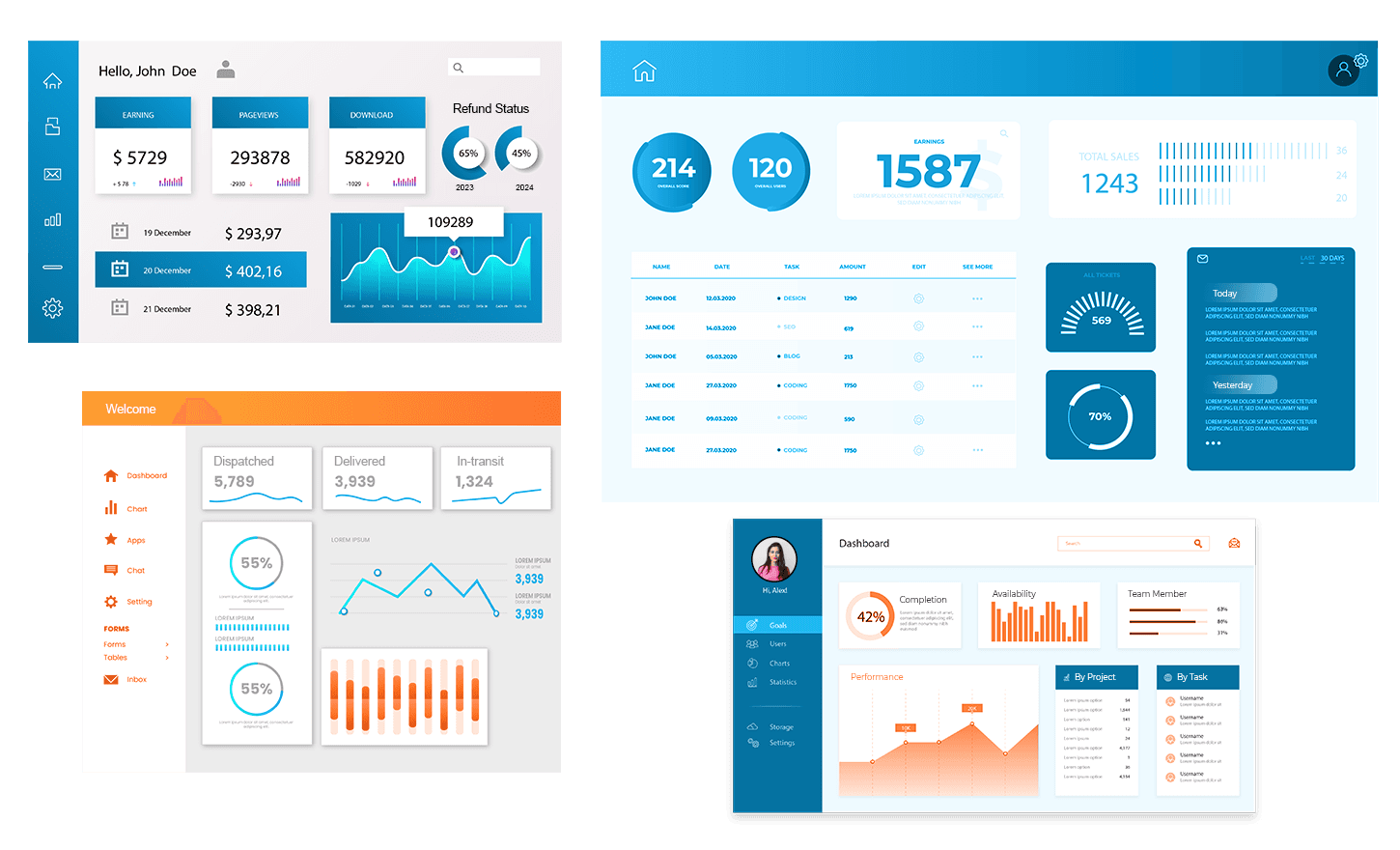
AppSteer is a powerful low-code/no-code platform designed for building enterprise-grade applications quickly and efficiently. It integrates Agentic AI to transform data into actionable insights, automate tasks, and generate powerful dashboards, helping businesses make smarter, faster decisions. The platform offers a library of pre-customized applications and pre-built templates, along with 100 hours of free assistance to streamline development. AppSteer supports seamless integration with existing APIs and various third-party services, making it adaptable to diverse business needs. It caters to businesses of all sizes, from startups to large enterprises, providing scalable and reliable solutions for various industries including healthcare, education, FinTech, and retail.
UER-py
UER-py (Universal Encoder Representations) is an open-source framework designed for pre-training on general-domain corpora and fine-tuning on downstream NLP tasks using PyTorch. It emphasizes model modularity, allowing users to combine various embedding, encoder, decoder, and target modules to construct custom pre-training models. The toolkit supports CPU, single GPU, and distributed training modes, making it versatile for different computational environments. UER-py also provides a comprehensive model zoo with pre-trained models of diverse properties, facilitating their direct use in various applications. It has been tested for reproducibility against original implementations of models like BERT, GPT-2, ELMo, and T5, and offers solutions for numerous NLP competitions.

OmniScience
OmniScience introduces Vivo, an AI-native control tower designed to transform clinical trial operations. Vivo unifies disparate data sources across trials, sites, and participants, providing real-time insights and continuous monitoring. It acts as a cognitive partner for clinical teams, interpreting signals, surfacing critical information, and identifying risks early to accelerate decision-making. Vivo is built to improve outcomes at scale, reducing manual effort and helping teams deliver therapies to patients faster. Key features include 'Ask Vivo' for instant, explainable insights from trial data, portfolio intelligence for cross-trial oversight, dynamic participant profiles, on-demand lab insights, and continuous monitoring with alerts. The platform is designed for various roles within clinical development, operations, research, data management, safety monitoring, and CROs, and supports multiple therapeutic areas including Oncology, CNS, Immunology & Inflammation, Rare Disease, and Obesity. Vivo is a validated system engineered to comply with global clinical trial and AI regulations, ensuring data security, privacy, and quality.
Open CoWork
Open CoWork is a free, open-source AI agent designed to empower users with advanced automation capabilities. This versatile tool allows for seamless control over web browsers and local applications, making it an ideal solution for a wide range of automation tasks. Its open-source nature means it can be extended with custom skills, providing developers and technical users with the flexibility to tailor its functionality to specific needs. Available for macOS, Windows, and Linux, Open CoWork offers a robust platform for creating and customizing AI agents, enabling efficient automation and enhanced productivity across various operating environments.
keras-cv
KerasCV is a comprehensive open-source library offering modular computer vision components designed for seamless integration with Keras 3, supporting TensorFlow, JAX, and PyTorch backends. It provides a rich collection of models, layers, metrics, and callbacks for common computer vision tasks such as data augmentation, classification, object detection, segmentation, and image generation. Developers can leverage KerasCV to quickly assemble production-grade, state-of-the-art training and inference pipelines. The library ensures the same level of polish and backward compatibility as the core Keras API, maintained by the Keras team. While KerasCV is transitioning to KerasHub for new vision model development, existing functionalities remain robust and supported.
stellargraph
StellarGraph is a comprehensive Python library designed for machine learning on various types of graphs and networks. It provides a rich collection of state-of-the-art algorithms, including GraphSAGE, GCN, GAT, Node2Vec, and Metapath2Vec, enabling users to perform tasks such as representation learning for nodes and edges, classification of nodes or entire graphs, and link prediction. The library supports diverse graph structures, from homogeneous to heterogeneous and knowledge graphs, and integrates seamlessly with TensorFlow 2, Keras, Pandas, and NumPy. This makes it user-friendly, modular, and extensible, allowing for smooth interoperability with existing machine learning workflows and easy augmentation of its core algorithms.