
Coding & Development
Browsing page 338 of AI tools for Coding & Development. Sorted by confidence score — our independent quality rating.
Text2SQL.AI
Text2SQL.AI is an AI-powered tool designed to simplify the generation of SQL queries from natural language. It allows users to effortlessly create optimized SQL code for a wide range of databases, including MySQL, PostgreSQL, Oracle, and Microsoft SQL Server. The platform offers features like schema integration for accurate queries, an API for custom tool development, and a desktop application for maximum privacy and local execution. It also includes an 'Insights' feature that provides SQL queries, results, visualizations, and explanations in a unified view, streamlining data analysis from question to chart in seconds.
RankClaw
RankClaw offers a critical safety layer for the rapidly evolving AI agent ecosystem by scanning and scoring AI agent skills for potential malicious content. It evaluates skills from multiple MCP servers, including ClawHub, Smithery, and Manus, assigning a safety score from 0 to 100. This allows users to quickly determine if an AI skill is safe to install, protecting against threats and ensuring a more secure AI agent experience. With 1 in 14 AI agent skills identified as malicious, RankClaw provides an essential service for maintaining trust and security in AI agent deployments.

ai-reference-models
Intel® AI Reference Models is a repository that provides Intel optimizations for running deep learning workloads on Intel® Xeon® Scalable processors and Intel® Data Center GPUs. It includes links to pre-trained models, sample scripts, best practices, and step-by-step tutorials for popular open-source machine learning models. The project aims to quickly replicate complete software environments that demonstrate the best-known performance of various model/dataset combinations, showcasing the AI capabilities of Intel platforms. While the project has reached the end of its active development, with v3.4.0 being the last release with new features, it will be archived in March 2026, with critical vulnerability fixes until then. Users can refer to Intel® Extension for PyTorch* and Intel® Extension for OpenXLA* projects for alternatives.
athas
athas is a lightweight, cross-platform code editor designed for developers, built using Tauri with Rust and React. It offers a comprehensive set of features including integrated Git support for version control, AI agents to assist with coding tasks, and customizable vim keybindings for efficient navigation and editing. The editor also provides syntax highlighting for various languages, Language Server Protocol (LSP) support for intelligent code completion and error checking, and an integrated terminal for command-line operations. Additionally, athas includes a SQLite viewer and supports external editor integration, making it a versatile tool for various development workflows. Enterprise policy controls, such as managed mode and extension allowlists, are also available.
candle-vllm
candle-vllm offers an efficient and easy-to-use platform for inference and serving local Large Language Models (LLMs), featuring an OpenAI-compatible API server. Its highly extensible trait-based system allows for rapid implementation of new module pipelines, and it supports streaming during generation. Key capabilities include efficient management of key-value cache with PagedAttention, continuous batching for incoming requests, and in-situ quantization (including GPTQ/Marlin 4-bit formats). The platform supports various hardware, including Mac/Metal devices, and offers multi-GPU and multi-node inference. It also features chunked prefilling, CUDA Graph support, and an OpenAI-compatible tool calling API, making it a versatile solution for deploying and managing LLMs.
recurrentshop
recurrentshop is an open-source framework designed to simplify the construction of complex recurrent neural networks (RNNs) using Keras. It addresses common challenges in deep learning libraries, such as the lack of reusable RNN cells and the complexity of managing RNN states. The framework allows users to define RNN logic for a single timestep using Keras's functional API, then converts this into a Recurrent instance capable of processing sequences. Key features include the ability to synchronize states across RNN layers, feed back outputs, implement decoders, and utilize teacher forcing. It also supports nested RNNs and flexible state initialization, making it ideal for machine learning engineers and researchers who need to rapidly iterate on novel RNN architectures.
AgentBench
AgentBench is a comprehensive benchmark designed to evaluate Large Language Models (LLMs) as agents across a diverse spectrum of environments. It encompasses 8 distinct environments, including 5 newly created domains like Operating System (OS), Database (DB), Knowledge Graph (KG), Digital Card Game (DCG), and Lateral Thinking Puzzles (LTP), alongside 3 recompiled from published datasets (House-Holding, Web Shopping, Web Browsing). The platform offers both Dev and Test splits for each dataset, requiring LLMs to generate responses thousands of times for thorough evaluation. AgentBench also introduces VisualAgentBench for evaluating and training visual foundation agents based on large multimodal models (LMMs), covering embodied, GUI, and visual design environments. It supports quick setup using Docker Compose and provides benchmarking results via a leaderboard.
claudish
Claudish (Claude-ish) is a command-line interface (CLI) tool designed to enhance the flexibility of Claude Code by enabling its use with a wide array of AI models. It functions by proxying requests through a local Anthropic API-compatible server, allowing users to leverage their existing AI subscriptions from providers like Anthropic Max, Gemini Advanced, ChatGPT Plus/Codex, Kimi, GLM, and OllamaCloud. Additionally, it supports over 580 models via OpenRouter and various local models for complete privacy. Claudish emphasizes cost control by utilizing existing API keys and offers features like multi-provider support, native auto-detection, direct API access, and a 100% offline option for sensitive code.
say.js
say.js is a Node.js library designed for text-to-speech (TTS) capabilities, allowing developers to integrate voice output into their applications. It provides methods to speak text using the system's default voice or a specified voice, with adjustable speed. The library also supports stopping currently spoken text and exporting spoken audio to WAV files, though the export feature is primarily available on MacOS and Windows. While macOS and Windows offer full functionality, Linux support requires Festival and has limitations, such as the inability to export audio or list available voices. This open-source tool is ideal for developers looking to add basic TTS features to their Node.js projects across different operating systems.
PageLlama
The website for PageLlama, pagellama.com, currently displays content for "yl9193永利集团(中国)股份有限公司," which translates to a Chinese university or college. The site details academic activities, research, faculty, student affairs, and partnerships related to political science and public administration. It features news articles, announcements, academic forums, and information about various research centers. There is no indication on the live website that this is an AI tool for converting web pages to Markdown, as suggested by the previous description. The site seems to be a legitimate academic portal for a Chinese institution.
skypilot
SkyPilot is a comprehensive system designed to run, manage, and scale AI workloads across diverse infrastructure environments. It offers a simple interface for AI teams to execute jobs on any infrastructure, including Kubernetes, Slurm, over 20 cloud providers, and on-premise setups. For infrastructure teams, SkyPilot acts as a unified control plane, enabling advanced scheduling, scaling, and orchestration of AI compute resources. Key features include flexible provisioning of GPUs, TPUs, and CPUs with smart failover, multi-cloud and multi-cluster support, and intelligent scheduling to maximize GPU fleet utilization through autostop and binpacking. It supports existing GPU, TPU, and CPU workloads without requiring code changes, making it a versatile solution for accelerating AI/ML velocity and optimizing resource management.
simple_dqn
simple_dqn is an open-source deep Q-learning agent developed to replicate the results from DeepMind's paper "Human-level control through deep reinforcement learning." While the repository is noted as outdated with better codebases available, it serves as a foundational tool for understanding the basics of deep Q-learning. It is designed for simplicity, speed, and extensibility, utilizing the ALE native Python interface and supporting training and testing with OpenAI Gym. The project also integrates with the Neon deep learning library for fast convolutions and minimizes array conversions for efficient minibatch sampling. It includes scripts for training, testing, visualizing filters, and recording gameplay videos.
Nilo
Nilo is a comprehensive game development tool designed to streamline the creation of 3D assets for Roblox. It enables users to generate models from sketches, images, or text prompts, and then refine details, optimize polycount, rig, and animate with ease. The platform supports the creation of custom Roblox-ready avatars and asset packs, allowing users to design entire environments or characters efficiently. Nilo operates entirely in the browser, eliminating the need for complex installations, and offers real-time collaborative playtesting with friends. Users can export their creations with a single click for direct upload to Roblox Studio, making it an accessible solution for both new and experienced builders looking to accelerate their game development workflow.
sentencepiece
SentencePiece is an unsupervised text tokenizer and detokenizer primarily designed for Neural Network-based text generation systems where the vocabulary size is predetermined. It implements subword units such as byte-pair-encoding (BPE) and unigram language models, uniquely allowing direct training from raw sentences. This eliminates the need for language-specific pre-tokenization tools like Moses or MeCab, making it purely data-driven and language-independent. SentencePiece treats sentences as sequences of Unicode characters, including whitespace as a basic symbol, which ensures reversible tokenization and detokenization. It also supports subword regularization and BPE-dropout to enhance the robustness and accuracy of NMT models, and offers fast, lightweight segmentation with direct vocabulary ID generation.
shell-ai
Shell-AI (shai) is a command-line interface (CLI) utility designed to simplify shell command generation and execution through natural language understanding. Users can describe their desired action in plain English, and shai will suggest single-line commands to fulfill the request. Built on LangChain for large language model integration and InquirerPy for an interactive CLI experience, it supports Linux, macOS, and Windows. The tool offers features like natural language input, command suggestions, and compatibility with various API providers including OpenAI, Azure OpenAI, Groq, and Ollama, making it a versatile assistant for developers and technical users.

Paper Design
Paper Design is a modern and powerful design tool designed to help teams create, share, and ship their best work. It functions as a connected canvas, integrating teams, AI agents, code, and data within a unified design environment built on web standards. Key features include Paper Desktop for a new design workflow connecting visual work with apps, agents, and repositories, and the ability to sync design tokens, styles, and components between codebase and canvas. The tool supports connecting any IDE or CLI agent, allowing for a shared layer between code and design. It also enables users to bring real content and data from various apps and databases, facilitating design with actual information rather than placeholders. Paper Design leverages AI agents to handle repetitive tasks like responsive layouts and style variations, freeing designers to focus on creative decisions.
Meshcapade
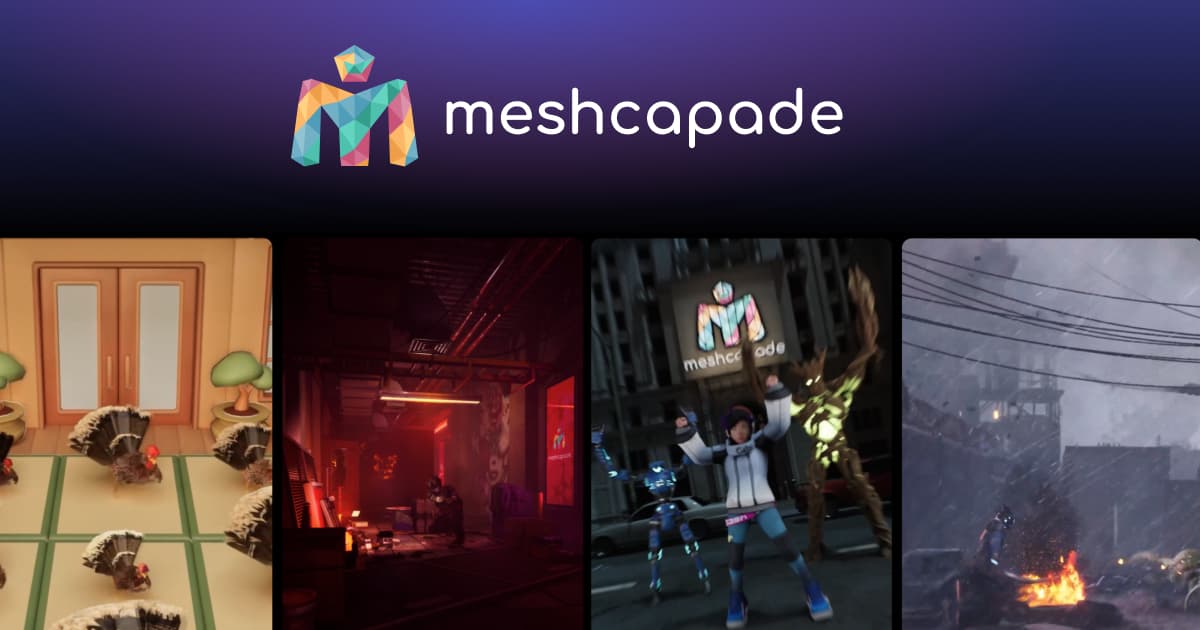
Meshcapade offers a comprehensive AI toolkit for markerless motion capture, motion generation, and human-understanding. It allows users to capture full body and hand movements with unmatched quality using any camera, from phones to professional setups, without the need for suits or markers. The platform supports various export formats like FBX and GLB, making it compatible with diverse workflows. Built on the SMPL foundation model, Meshcapade's technology adapts to industries such as gaming, fashion, and robotics, providing accurate 3D bodies and motion. It also offers features like realistic 3D hair estimation (coming soon) and is enterprise-proven, privacy-first, and EU/GDPR compliant.
SLM-Lab
SLM-Lab is a comprehensive and modular deep reinforcement learning (RL) framework built using PyTorch. It is designed to facilitate RL research and application, serving as the companion library for the book "Foundations of Deep Reinforcement Learning." The framework offers a suite of ready-to-use algorithms such as PPO, SAC, CrossQ, DQN, A2C, and REINFORCE, all validated across more than 70 environments. Users can easily configure experiments using JSON spec files, eliminating the need for code changes. SLM-Lab emphasizes reproducibility by saving each run's specification and git SHA, and provides automatic analysis with training curves, metrics, and TensorBoard logging. It also integrates with dstack for GPU training and HuggingFace for sharing results, supporting various environments including Classic Control, Box2D, MuJoCo, and Atari.
SqueezeSeg
SqueezeSeg is a TensorFlow-based implementation of convolutional neural networks designed for real-time road-object segmentation from 3D LiDAR point clouds. This repository provides the code for SqueezeSeg, a model that processes LiDAR data to identify and segment objects in a scene, crucial for applications like autonomous driving. The project also references SqueezeSegV2, a follow-up work with improved performance, and provides links to download converted datasets for training and validation. It includes instructions for installation, running a demo, and training/evaluating the model, making it a valuable resource for researchers and developers in the field of autonomous vehicles and computer vision.
SRCNN-pytorch
SRCNN-pytorch offers a PyTorch implementation of the 'Image Super-Resolution Using Deep Convolutional Networks' model (ECCV 2014). This tool is designed to enhance the resolution of images, providing a practical solution for super-resolution tasks. Key differences from the original implementation include the addition of zero-padding, the use of the Adam optimizer instead of SGD, and the removal of specific weight initialization. Users can train the model with custom datasets or utilize provided pre-trained weights for various scales. It supports datasets like 91-image and Set5, allowing for training and evaluation of image upscaling capabilities.
SRCNN-Tensorflow
SRCNN-Tensorflow is an open-source implementation of Super-Resolution Convolutional Neural Networks (SRCNN) using TensorFlow. This tool is designed to enhance the resolution of images by applying deep learning techniques, specifically convolutional neural networks. It provides a practical way to reproduce the results described in the original research paper, offering a robust solution for image upscaling. The implementation requires TensorFlow, Scipy (version > 0.18), h5py, and matplotlib. Users can train the model with their own datasets or use the provided pre-trained model for testing. The project details the training process and provides example results, demonstrating its capability to produce super-resolved images comparable to reference papers.
Ava PLS
Ava PLS is an open-source desktop application designed to run language models directly on your computer, providing a local and private environment for AI experimentation. It features a batteries-included graphical user interface (GUI) for llama.cpp, simplifying the process of interacting with language models without needing cloud infrastructure. Users can easily download pre-built artifacts from GitHub Actions or compile the application themselves using Zig. The tool is built with a robust tech stack including Zig, C++, SQLite, Preact, Preact Signals, and Tailwind CSS, ensuring a stable and efficient local AI experience.

Pagen
Pagen.so is an AI-powered landing page creator designed to help users quickly build high-converting landing pages. It specializes in transforming content from YouTube video transcripts into structured and persuasive landing page copy. The tool guides users through a process that includes fetching and cleaning transcripts, organizing content, selecting a suitable landing page structure, and adapting the copy for web presentation. Pagen.so emphasizes the use of existing video content to save time and maintain an authentic voice, making it ideal for marketers and content creators looking to repurpose their video assets efficiently. It also provides guidance on visual assets and design principles to ensure effective and aesthetically pleasing landing pages.
EASYChatGPT
EASYChatGPT is an open-source desktop application project designed to facilitate developer access to ChatGPT. It provides a straightforward way for users to interact with ChatGPT's interface directly from their desktop environment, requiring only a personal API key. The project emphasizes ease of use, with a two-step setup process for installation and conversation initiation. It's particularly useful for developers who want to experiment with ChatGPT functionalities without needing to rely on web interfaces or complex setups. The tool currently supports single-turn conversations and requires users to replace the API key in the configuration file. It's important to note that this is a personal project and not an official OpenAI product.