
Coding & Development
Browsing page 334 of AI tools for Coding & Development. Sorted by confidence score — our independent quality rating.

ogb
OGB (Open Graph Benchmark) offers a comprehensive suite of benchmark datasets, data loaders, and evaluators specifically designed for graph machine learning. It supports a wide array of graph ML tasks, including predictions at the node, link, and graph levels, and covers diverse real-world applications. The platform provides datasets of varying scales, from those processable on a single GPU to large-scale graphs requiring advanced techniques. OGB's data loaders are fully compatible with leading graph deep learning frameworks like PyTorch Geometric and Deep Graph Library (DGL), offering automatic dataset downloading, standardized splits, and unified performance evaluation. This ensures reliable comparison of different methods and facilitates research in graph machine learning.
SLM-Lab
SLM-Lab is a comprehensive and modular deep reinforcement learning (RL) framework built using PyTorch. It is designed to facilitate RL research and application, serving as the companion library for the book "Foundations of Deep Reinforcement Learning." The framework offers a suite of ready-to-use algorithms such as PPO, SAC, CrossQ, DQN, A2C, and REINFORCE, all validated across more than 70 environments. Users can easily configure experiments using JSON spec files, eliminating the need for code changes. SLM-Lab emphasizes reproducibility by saving each run's specification and git SHA, and provides automatic analysis with training curves, metrics, and TensorBoard logging. It also integrates with dstack for GPU training and HuggingFace for sharing results, supporting various environments including Classic Control, Box2D, MuJoCo, and Atari.
Supadex
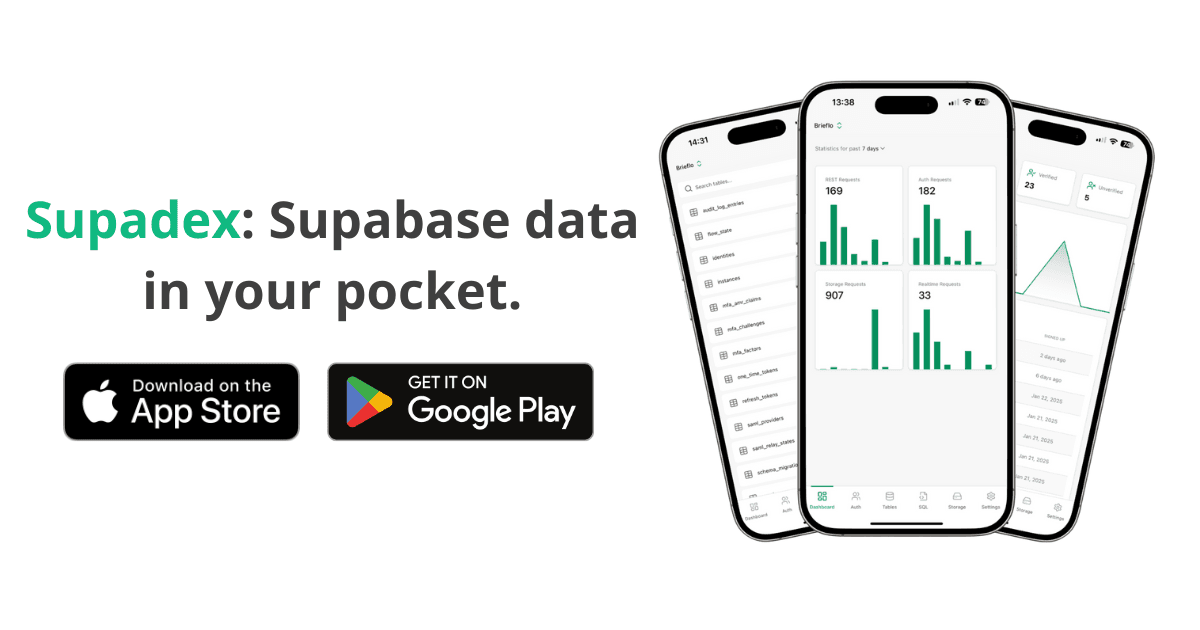
Supadex is a mobile application designed to provide a comprehensive dashboard for Supabase projects. It enables users to manage databases, track key metrics, and monitor project performance from anywhere, anytime. The tool offers real-time statistics, including requests count, authentication statistics, and storage usage. Users can browse schemas, tables, and storage buckets, explore detailed views of tables and rows, and preview files. Supadex also features a SQL Editor for writing and executing queries, along with the ability to save favorite Supabase queries. It ensures data security by storing API tokens encrypted on the user's device only, never transmitting them to external servers. The app supports managing multiple Supabase projects, allowing easy switching between them.
Meshcapade
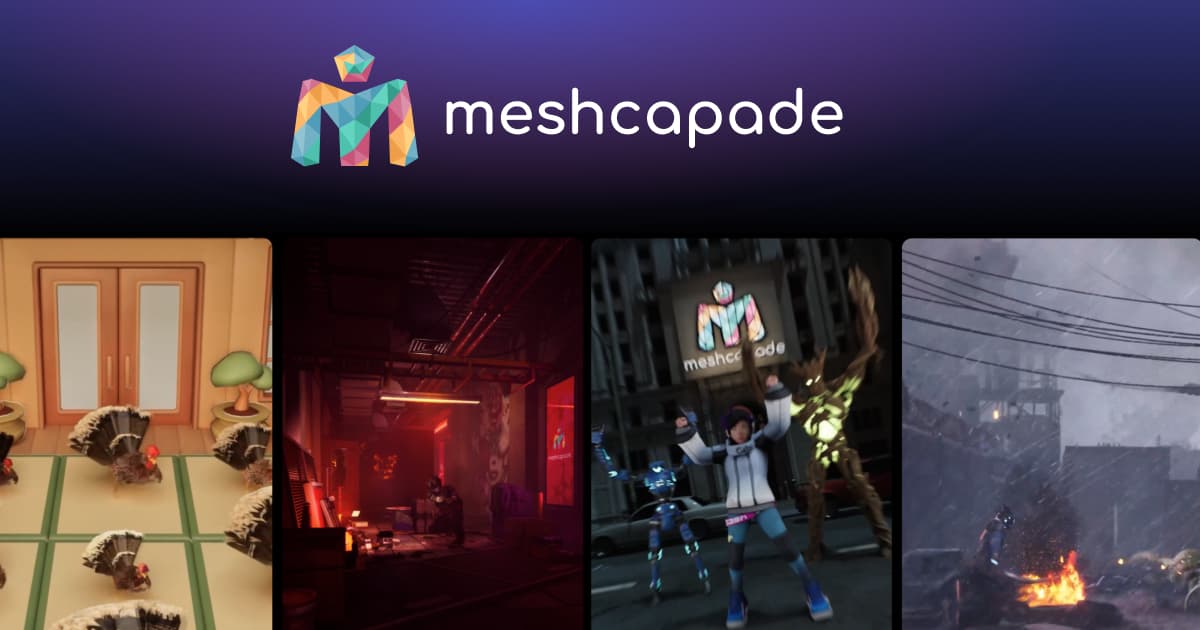
Meshcapade offers a comprehensive AI toolkit for markerless motion capture, motion generation, and human-understanding. It allows users to capture full body and hand movements with unmatched quality using any camera, from phones to professional setups, without the need for suits or markers. The platform supports various export formats like FBX and GLB, making it compatible with diverse workflows. Built on the SMPL foundation model, Meshcapade's technology adapts to industries such as gaming, fashion, and robotics, providing accurate 3D bodies and motion. It also offers features like realistic 3D hair estimation (coming soon) and is enterprise-proven, privacy-first, and EU/GDPR compliant.
Moreh
Moreh offers full-stack inference software designed to unlock peak LLM inference performance across a range of hardware, including AMD GPUs, Tenstorrent chips, and heterogeneous GPU clusters. Its MoAI Inference Framework handles routing, scheduling, auto-scaling, and SLO-driven optimization, while Moreh vLLM provides state-of-the-art model optimization, quantization, and graph execution. The platform also includes native vLLM Moreh Libraries with custom kernels for GEMM/Attention/MoE and communication. Moreh aims to unify GPUs across vendors and generations, maximize tokens per dollar through chip-level and cluster-level optimization, and significantly reduce inference costs and latency, as demonstrated by benchmarks showing substantial improvements over existing solutions.

Nilo
Nilo is a comprehensive game development tool designed to streamline the creation of 3D assets for Roblox. It enables users to generate models from sketches, images, or text prompts, and then refine details, optimize polycount, rig, and animate with ease. The platform supports the creation of custom Roblox-ready avatars and asset packs, allowing users to design entire environments or characters efficiently. Nilo operates entirely in the browser, eliminating the need for complex installations, and offers real-time collaborative playtesting with friends. Users can export their creations with a single click for direct upload to Roblox Studio, making it an accessible solution for both new and experienced builders looking to accelerate their game development workflow.
simple_dqn
simple_dqn is an open-source deep Q-learning agent developed to replicate the results from DeepMind's paper "Human-level control through deep reinforcement learning." While the repository is noted as outdated with better codebases available, it serves as a foundational tool for understanding the basics of deep Q-learning. It is designed for simplicity, speed, and extensibility, utilizing the ALE native Python interface and supporting training and testing with OpenAI Gym. The project also integrates with the Neon deep learning library for fast convolutions and minimizes array conversions for efficient minibatch sampling. It includes scripts for training, testing, visualizing filters, and recording gameplay videos.
skypilot
SkyPilot is a comprehensive system designed to run, manage, and scale AI workloads across diverse infrastructure environments. It offers a simple interface for AI teams to execute jobs on any infrastructure, including Kubernetes, Slurm, over 20 cloud providers, and on-premise setups. For infrastructure teams, SkyPilot acts as a unified control plane, enabling advanced scheduling, scaling, and orchestration of AI compute resources. Key features include flexible provisioning of GPUs, TPUs, and CPUs with smart failover, multi-cloud and multi-cluster support, and intelligent scheduling to maximize GPU fleet utilization through autostop and binpacking. It supports existing GPU, TPU, and CPU workloads without requiring code changes, making it a versatile solution for accelerating AI/ML velocity and optimizing resource management.

PerfAI
PerfAI is an AI-agent platform designed to enhance app privacy, security, and governance. It automates the testing and fixing processes for applications, ensuring they meet industry standards and remain secure. The platform leverages AI agents to conduct comprehensive security testing, quality testing, and privacy testing. It also focuses on app governance and compliance, including automated app contract testing and service leak detection. PerfAI aims to help CTOs and development teams deliver secure and compliant applications efficiently, improving the developer experience while maintaining high standards for privacy and security. It supports compliance with regulations like GDPR and CCPA through its automation capabilities.
robustmq
RobustMQ is a unified messaging engine built with Rust, designed as a communication infrastructure for the AI era. It operates as a single binary, one broker, and one storage layer, eliminating external dependencies and allowing deployment from edge devices to cloud clusters. It natively supports MQTT, Kafka, NATS, AMQP, and its own mq9 protocol on a shared storage layer, meaning a message written once can be consumed by any protocol. The mq9 protocol is specifically designed for AI Agent asynchronous communication, offering features like agent mailboxes with persistent store-first delivery, priority levels, and public mailbox discovery. RobustMQ emphasizes minimal operations, multi-tenancy, and ultra-low-latency dispatch, making it suitable for diverse messaging needs from IoT to streaming data pipelines.
claudish
Claudish (Claude-ish) is a command-line interface (CLI) tool designed to enhance the flexibility of Claude Code by enabling its use with a wide array of AI models. It functions by proxying requests through a local Anthropic API-compatible server, allowing users to leverage their existing AI subscriptions from providers like Anthropic Max, Gemini Advanced, ChatGPT Plus/Codex, Kimi, GLM, and OllamaCloud. Additionally, it supports over 580 models via OpenRouter and various local models for complete privacy. Claudish emphasizes cost control by utilizing existing API keys and offers features like multi-provider support, native auto-detection, direct API access, and a 100% offline option for sensitive code.
ClipBERT
ClipBERT is an official PyTorch code implementation for an efficient framework designed for end-to-end learning across image-text and video-text tasks. Recognized with a CVPR 2021 Best Student Paper Honorable Mention, ClipBERT processes raw videos/images and text inputs to generate task predictions. It leverages 2D CNNs and transformers, incorporating a sparse sampling strategy to enable efficient multimodal learning. The framework supports end-to-end pretraining and finetuning for tasks such as image-text pretraining on COCO and VG captions, text-to-video retrieval on MSRVTT, DiDeMo, and ActivityNet Captions, video-QA on TGIF-QA and MSRVTT-QA, and image-QA on VQA 2.0. Its modular design allows for easy integration of additional image-text or video-text tasks.
dask-ml
Dask-ML is an open-source Python library designed for scalable machine learning, leveraging the power of Dask for parallel computing. It allows data scientists and machine learning engineers to efficiently process large datasets and execute complex ML tasks across distributed environments. The library seamlessly integrates with established machine learning frameworks such as Scikit-Learn and XGBoost, extending their capabilities to handle larger-than-memory datasets and distributed computations. This makes Dask-ML an invaluable tool for developing and deploying machine learning models in scenarios requiring high scalability and performance, facilitating robust and efficient data science workflows.
Kodezi
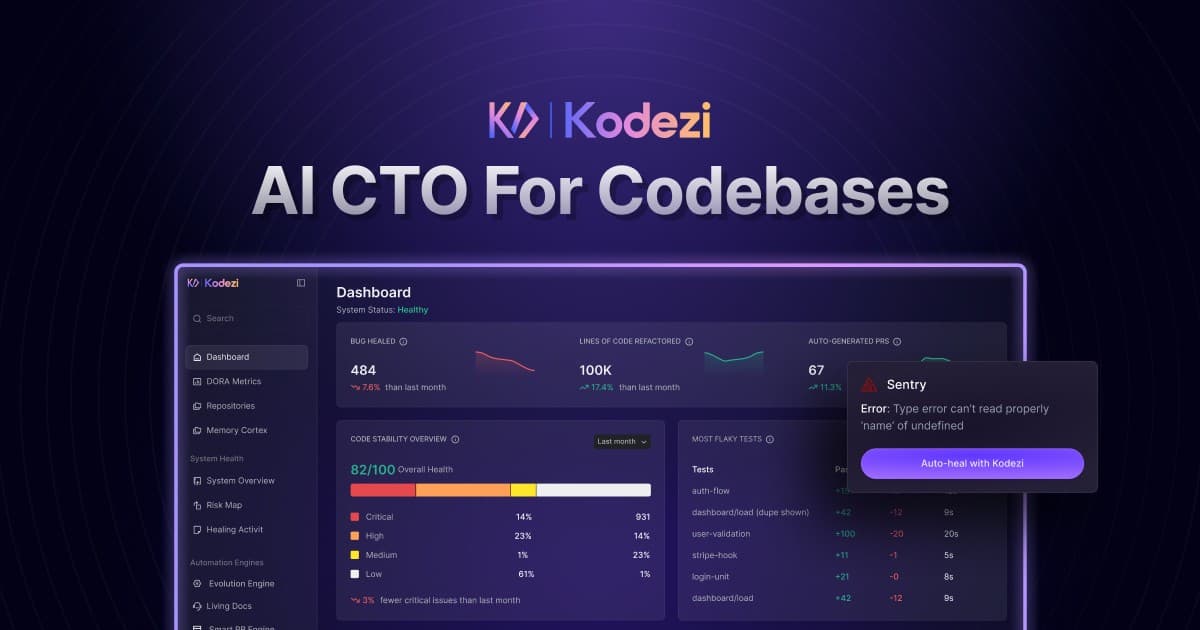
Kodezi functions as an AI CTO, providing an autonomous operating system for modern codebases. It is designed to maintain, evolve, and govern software, ensuring it remains healthy, scalable, and always ready to ship. The platform seamlessly integrates across your development stack, offering features like autonomous bug fixing, real-time code refinement, and automatic enforcement of best practices. Kodezi also includes vulnerability detection and error recovery, proactively identifying and healing security risks before code reaches production. Additionally, it intelligently generates code, API definitions, and test coverage, ensuring every update is complete and reliable. This comprehensive approach helps developers streamline their workflow and improve code quality.
recurrentshop
recurrentshop is an open-source framework designed to simplify the construction of complex recurrent neural networks (RNNs) using Keras. It addresses common challenges in deep learning libraries, such as the lack of reusable RNN cells and the complexity of managing RNN states. The framework allows users to define RNN logic for a single timestep using Keras's functional API, then converts this into a Recurrent instance capable of processing sequences. Key features include the ability to synchronize states across RNN layers, feed back outputs, implement decoders, and utilize teacher forcing. It also supports nested RNNs and flexible state initialization, making it ideal for machine learning engineers and researchers who need to rapidly iterate on novel RNN architectures.
self-attention-cv
Self-attention-cv is an open-source repository offering implementations of diverse self-attention mechanisms specifically tailored for computer vision applications. Built in PyTorch, it leverages `einsum` and `einops` for efficient and flexible module creation. The repository serves as an ongoing collection of building blocks, enabling developers to integrate advanced attention models into their projects. It supports a range of computer vision tasks, including image recognition and segmentation, with examples for Multi-head attention, Axial attention, Vision Transformers (ViT), and TransUnet. It also includes various positional embedding implementations.
candle-vllm
candle-vllm offers an efficient and easy-to-use platform for inference and serving local Large Language Models (LLMs), featuring an OpenAI-compatible API server. Its highly extensible trait-based system allows for rapid implementation of new module pipelines, and it supports streaming during generation. Key capabilities include efficient management of key-value cache with PagedAttention, continuous batching for incoming requests, and in-situ quantization (including GPTQ/Marlin 4-bit formats). The platform supports various hardware, including Mac/Metal devices, and offers multi-GPU and multi-node inference. It also features chunked prefilling, CUDA Graph support, and an OpenAI-compatible tool calling API, making it a versatile solution for deploying and managing LLMs.
Chapa- Developer Impact, Decoded.
Chapa redefines how developers quantify their impact in the era of AI-assisted coding, moving beyond simple commit counts. It analyzes 12 months of development activity across core dimensions such as Delivery, Quality, Consistency, and Breadth, with an optional Craft dimension for AI tool mastery. The tool generates a live, embeddable SVG badge that showcases a developer's archetype (e.g., Builder, Quality Champion, Marathoner) and an adjusted composite impact score. This badge updates daily from fresh data, ensuring it always reflects current contributions. Chapa also offers cryptographic verification for scores, an activity timeline visualization, and dynamic radar charts. For enterprise users, it can merge GitHub Enterprise Managed Users (EMU) contributions into a unified badge, providing a comprehensive view of a developer's impact.
spacy-models
spacy-models offers a collection of pre-trained models specifically designed for use with the spaCy Natural Language Processing (NLP) library. These models are essential for data scientists and machine learning engineers who are building applications that require advanced text processing capabilities. The models support a wide range of NLP tasks, including efficient text analysis, named entity recognition, and dependency parsing. By leveraging these pre-trained models, users can significantly accelerate their NLP development workflows, reducing the need for extensive custom training. The integration with spaCy ensures high performance and ease of use for various linguistic tasks.

NetNewsWire 7
NetNewsWire 7 is a free and open-source RSS reader designed for Mac, iPhone, and iPad, offering a streamlined way to consume news and blog content. It allows users to subscribe to their favorite blogs and news sites via RSS feeds, consolidating articles into a single, easy-to-manage interface. The application tracks read articles, ensuring users don't miss new content and can easily pick up where they left off. Key features include a Safari extension for adding feeds, syncing capabilities with various services like iCloud, Feedbin, and Feedly, customizable article themes, and a reader view. It also supports easy keyboard navigation, dark mode, starred articles, smart feeds, and background refreshing, providing a fast, stable, and accessible reading experience.
Multilabel-timeseries-classification-with-LSTM
Multilabel-timeseries-classification-with-LSTM offers a TensorFlow implementation for performing multilabel time series classification, drawing inspiration from the research paper "Learning to Diagnose with LSTM Recurrent Neural Networks." This open-source project is designed for developers and researchers working with time series data and deep learning models. It requires Python 3.5, along with the essential libraries TensorFlow, NumPy, and Pandas for its operation. The tool is noted to be compatible with a cleaned version of the MIMIC-III dataset, although it's important to note that this is not the original dataset used by the paper's authors. Users are encouraged to contribute through pull requests for improvements, suggestions, or to provide alternative datasets for training and testing the model.

Famous AI - Idea to app
Famous AI is an innovative mobile application designed to streamline the process of creating and deploying websites and mobile apps. Leveraging artificial intelligence, the tool allows users to build projects directly from their mobile devices, offering a highly accessible development experience. It provides real-time previews, enabling immediate feedback and adjustments during the design and development phases. The platform also boasts instant deployment capabilities, allowing users to quickly launch their creations. This tool is ideal for individuals looking to rapidly prototype and publish web and mobile applications without needing extensive coding knowledge or traditional development environments, empowering them to bring their digital ideas to life efficiently.
Productive.ai Call Assistant
Productive.ai Call Assistant is an AI-powered tool designed to automate note-taking, CRM logging, and call recording for cell phone conversations. It allows users to conduct business hands-free, ensuring all important information from calls is captured and organized. The assistant generates AI notes, tasks, and events, and automatically logs data into integrated CRM systems. Users can toggle AI functionality on or off at any time and benefit from compliant call recordings. Productive.ai works with existing phone numbers, maintaining call quality and offering features like enhanced caller ID, spam filtering, and custom voicemail greetings. It aims to save professionals time on data entry and improve follow-ups by centralizing call details.
DeepBrain Chain
DeepBrain Chain is positioned as the world's first public artificial intelligence chain, aiming to create a decentralized AI infrastructure. The platform leverages blockchain technology to address the computational demands of AI by utilizing idle computing resources globally. This approach is designed to offer a more cost-effective solution for AI development while simultaneously enhancing data privacy through the implementation of smart contracts. By decentralizing AI computing, DeepBrain Chain seeks to provide a robust and secure environment for developers and organizations working on AI projects, ensuring both efficiency and data protection.