
Coding & Development
Browsing page 345 of AI tools for Coding & Development. Sorted by confidence score — our independent quality rating.

Domain Specific Seed
Domain Specific Seed is a tool designed to streamline the creation of domain-specific datasets within the Hugging Face ecosystem. It automates the setup of essential resources, including dataset repositories and configuration spaces, making it easier for users to initiate new data projects. By providing a project name and Hugging Face user details, the tool facilitates the initial groundwork for data labeling and annotation tasks. This helps users quickly get started with building specialized datasets for various AI applications, leveraging the collaborative environment of Hugging Face.
PaddleViT
PaddleViT, or PPViT, is an open-source collection of state-of-the-art Visual Transformer and MLP Models specifically designed for PaddlePaddle 2.0+. It goes beyond traditional convolutional neural networks by offering a wide array of vision models based on Visual Transformers, Visual Attentions, and MLPs. The tool integrates popular layers, utilities, optimizers, schedulers, data augmentations, and training/validation scripts to facilitate the reproduction of cutting-edge ViT and MLP models. PaddleViT supports multiple vision tasks including image classification, object detection, semantic segmentation, and GANs, with each model architecture defined in a standalone Python module for easy modification and research. It also provides pretrained weights for fine-tuning on custom datasets and includes tools for customized datasets, data preprocessing, performance metrics, and DDP for high-performance training.

Rails Blocks update (ViewComponents are finally available)
Rails Blocks offers a comprehensive library of UI components designed for modern Ruby on Rails web applications. These components are built with Rails conventions in mind, ensuring seamless integration with Turbo Drive, Turbo Frames, and Turbo Streams. Each component is fully responsive and supports both light and dark modes out of the box. The library leverages Stimulus controllers for interactivity, allowing developers to build dynamic web applications without extensive JavaScript. All components are provided in a copy-and-paste format, giving users full control to customize styles, behavior, and markup to fit their specific needs while maintaining consistency across their application. Recent updates include the availability of Shared Partials and ViewComponents for all component sets, along with Markdown documentation.
flops-counter.pytorch
flops-counter.pytorch is an open-source tool designed to calculate the theoretical number of multiply-add operations (FLOPs) and parameters within neural networks built using the PyTorch framework. It offers two backends: 'pytorch' for legacy nn.Modules with better per-layer analytics for CNNs, and 'aten' for broader coverage of model architectures, including transformers, by considering aten operations. The tool can also print per-layer computational costs and allows for ignoring specific modules during counting. It supports various layers like Conv1d/2d/3d, BatchNorm, Activations, Linear, Upsample, and Poolings, with experimental support for RNNs, LSTMs, GRUs, and MultiheadAttention. Users can customize input tensors for complex models and view verbose output for unconsidered operations.
grenade
Grenade is an Open Source deep learning library implemented in Haskell, designed for developers to create sophisticated neural networks. It emphasizes composability and dependent typing, allowing for precise and concise specifications of complex network architectures, including recurrent neural networks. The library supports backpropagation and gradient application for network training, with layers represented as Haskell classes for easy customisation. Grenade facilitates the creation of networks as heterogeneous lists of layers, where types include both layers and data shapes. It also supports parallel layer execution and merging outputs, enabling the construction of series-parallel graphs and residual networks. The library is backed by hmatrix, BLAS, and LAPACK for performance, with critical functions optimized in C.

NoDocs
NoDocs is an intuitive no-code documentation builder designed for makers and teams to create sleek, professional documentation quickly. It features a Notion-like editor, making the content creation process familiar and straightforward, without requiring any coding knowledge. Users can structure their documentation across multiple pages, ensuring comprehensive and organized content. The platform supports custom domains for branded documentation and offers one-click publishing for instant deployment. NoDocs aims to simplify the documentation process, allowing users to focus on content rather than technical complexities. Upcoming features include AI-powered suggestions and AI Autocomplete to further enhance the writing experience.

The9 AI-Generate Games with AI
The9 AI-Generate Games with AI is an innovative platform that revolutionizes game development by making it accessible to everyone, regardless of technical background. Users can simply describe their game idea in natural language, and the AI will generate a complete, playable game in seconds, eliminating the need for coding. The platform also fosters a global community where creators can publish their games, share them with millions of players worldwide, and receive feedback. Additionally, users can discover, clone, and modify games created by others, promoting learning and collaborative creativity. Powered by cutting-edge AI models, The9 AI delivers stunning visuals and engaging gameplay experiences, transforming ideas into reality instantly.
Meshcapade
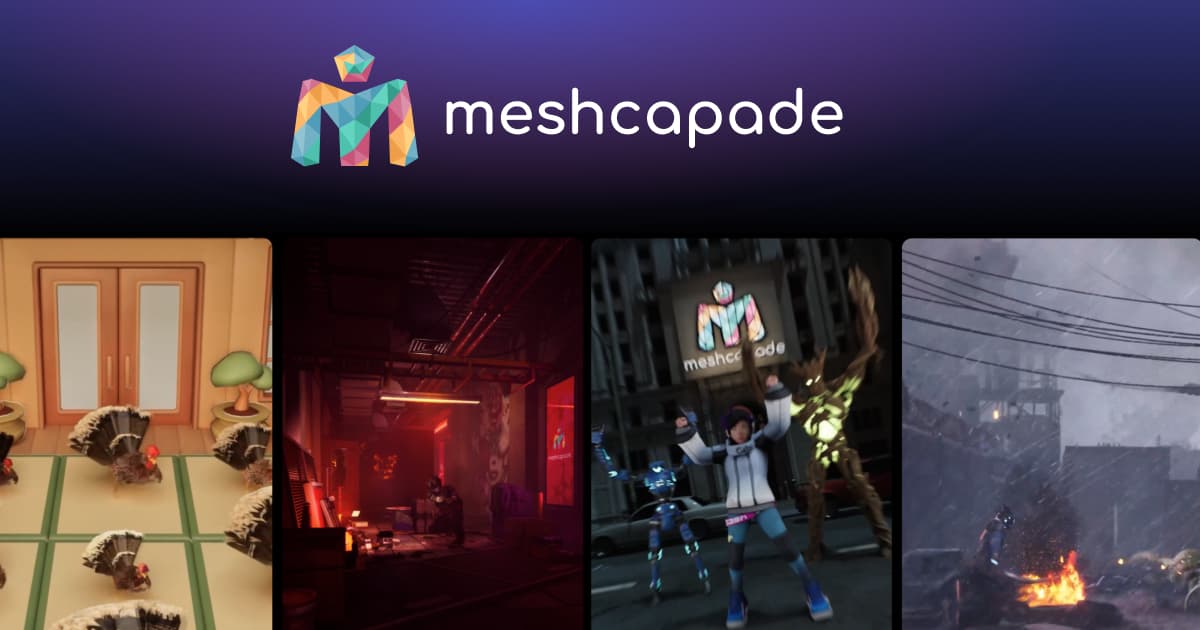
Meshcapade offers a comprehensive AI toolkit for markerless motion capture, motion generation, and human-understanding. It allows users to capture full body and hand movements with unmatched quality using any camera, from phones to professional setups, without the need for suits or markers. The platform supports various export formats like FBX and GLB, making it compatible with diverse workflows. Built on the SMPL foundation model, Meshcapade's technology adapts to industries such as gaming, fashion, and robotics, providing accurate 3D bodies and motion. It also offers features like realistic 3D hair estimation (coming soon) and is enterprise-proven, privacy-first, and EU/GDPR compliant.

EchoMark
EchoMark protects private information by embedding invisible forensic watermarks into documents, images, and email, personalized for each recipient. This allows organizations to immediately identify the source of information leaks, whether through email, printout, or photo. The solution is enterprise-proven, requires no client software, and is imperceptible to the recipient. EchoMark offers dynamic image watermarking with Chroma and Luma marks for different leak scenarios, and secure communication features with AI-rephrasing for email privacy. It also provides SecureView links to replace attachments, augmenting Data Loss Prevention (DLP) strategies, and offers detailed analytics on file viewing. The platform simplifies the process of watermarking, uploading leaked content, and tracing the source using computer vision, providing a report within minutes.
pipelines
Kubeflow Pipelines is a core component of the Kubeflow platform, designed to simplify and scale machine learning (ML) workflows on Kubernetes. It provides end-to-end orchestration capabilities, making it easier to build, deploy, and manage complex ML pipelines. The service focuses on enabling easy experimentation, allowing users to quickly iterate on ideas and manage various trials. Furthermore, it promotes re-use of components and pipelines, accelerating the development of ML solutions without constant rebuilding. Kubeflow Pipelines leverages Argo Workflows for orchestrating Kubernetes resources and offers a Python SDK for defining pipelines, along with comprehensive API documentation.
Humanizer.me
Humanizer.me is a prompt manager and design tool designed to assist users in generating and customizing prompts for AI chatbots. The platform aims to streamline the often time-consuming process of finding, tweaking, and managing effective prompts. By providing tools to organize and refine prompts, Humanizer.me enhances productivity for creative professionals and anyone working with AI models. It helps users eliminate repetitive prompt searches and ensures consistency in their AI interactions, making it easier to achieve desired outputs from various AI chatbots.
.png&w=3840&q=75)
Barbara
Barbara is an Edge AI platform designed for industrial companies to deploy, run, and monitor Edge Applications and AI models directly on-site. It offers a simplified approach to managing industrial infrastructure compared to traditional cloud solutions. The platform provides container orchestration, industrial connectors for various assets, and ecosystem integration, allowing users to deploy Docker-based apps and integrate with existing development environments. For AI/ML developers, Barbara facilitates model deployment to Edge Nodes and offers an Apps Marketplace for off-the-shelf tools. Edge Infrastructure Managers benefit from effortless device lifecycle management, professional-grade network connectivity, and zero-touch provisioning for faster deployments. The platform emphasizes cybersecurity, IT/OT convergence, and MLOps capabilities to optimize and package trained models for efficient inference.
SeeAct
SeeAct is a system designed for generalist web agents, allowing them to autonomously execute tasks across various websites. It primarily utilizes large multimodal models (LMMs) such as GPT-4V(ision) to power its capabilities. The system features a robust code execution environment and a sophisticated grounding mechanism, ensuring effective and reliable interactions with web interfaces. SeeAct is particularly well-suited for researchers and developers who are focused on advancing the field of web automation and creating intelligent agents that can navigate and operate within complex online environments. Its focus on LMMs provides a cutting-edge approach to web agent development.
Keras-Project-Template
Keras-Project-Template is an open-source project template designed to streamline the development and training of deep learning models with Keras. It offers a clear, structured architecture, including predefined folders for models, trainers, data loaders, and configurations, simplifying project organization. The template supports checkpointing and TensorBoard visualization for monitoring training progress. A key feature is its integration with Comet.ml, enabling comprehensive experiment tracking, including hyper-parameters, metrics, and graphs, with real-time updates. This allows developers to easily manage and compare different model iterations and configurations, enhancing the efficiency of deep learning research and development.
recurrentshop
recurrentshop is an open-source framework designed to simplify the construction of complex recurrent neural networks (RNNs) using Keras. It addresses common challenges in deep learning libraries, such as the lack of reusable RNN cells and the complexity of managing RNN states. The framework allows users to define RNN logic for a single timestep using Keras's functional API, then converts this into a Recurrent instance capable of processing sequences. Key features include the ability to synchronize states across RNN layers, feed back outputs, implement decoders, and utilize teacher forcing. It also supports nested RNNs and flexible state initialization, making it ideal for machine learning engineers and researchers who need to rapidly iterate on novel RNN architectures.
image_captioning
image_captioning is an open-source TensorFlow implementation of a neural image caption generation system, based on the "Show, Attend and Tell" paper. This tool takes an image as input and outputs a descriptive sentence. It leverages a convolutional neural network (CNN) to extract visual features from the image, which are then decoded into a sentence by an LSTM recurrent neural network (RNN). A soft attention mechanism is integrated to enhance the quality and relevance of the generated captions. The project supports end-to-end training of both CNN and RNN components, allowing for fine-tuning with datasets like COCO train2014. Users can evaluate models, generate captions for new images, and monitor training progress with TensorBoard.
AnimeBackgroundGAN
AnimeBackgroundGAN is an AI tool designed for generating anime-style backgrounds. It leverages generative adversarial networks (GANs) to produce visual assets suitable for various creative projects, including games and anime art. The tool is hosted as a demo on Hugging Face Spaces, indicating its accessibility for users to experiment with its capabilities. However, at the time of review, the application is encountering a build error, preventing its current functionality. It is built using Gradio, a popular framework for creating user interfaces for machine learning models.

StackSage — AWS Audit in GitHub Actions
StackSage provides a privacy-first AWS audit solution that integrates directly into your GitHub Actions workflow. It scans your AWS environment for cost savings opportunities, security posture improvements, and guardrail adherence. The tool runs locally on your machine or within your CI/CD pipeline, ensuring AWS credentials never leave your environment. It generates comprehensive reports including a summary, HTML report, and machine-readable JSON/CSV artifacts, complete with estimated savings and remediation commands. StackSage supports over 40 checks across 13 AWS services, covering areas like EC2, RDS, EBS, IAM, and network waste, making it an essential tool for maintaining cloud hygiene and optimizing AWS spend.

SharpAPI
SharpAPI offers pre-built AI API endpoints designed for developers across various domains including e-commerce, HR, content creation, travel, and SEO. The platform provides clean JSON responses and SDKs for every major programming language, simplifying the integration of AI functionalities into applications. Key features include product description generation, resume parsing, content automation, and sentiment analysis. SharpAPI operates on a credit-based pricing model, where each credit covers a monthly quota of processed words, API calls, and plan features. Users can add or remove credits at any time, with prorated billing adjustments. The tool also offers custom plans for high-volume users and enterprises, ensuring scalability and dedicated support.
nnstreamer
nnstreamer is an open-source project offering a collection of GStreamer plugins designed to simplify the integration and efficient processing of neural network models within multimedia pipelines. It allows both GStreamer developers to easily adopt neural network models and neural network developers to manage pipelines effectively. The tool supports various neural network frameworks like TensorFlow and Caffe, and provides connectivity for efficient streaming in AI projects. It enables the use of neural network models as media filters, facilitates composite models within a single stream pipeline, and supports multi-modal intelligence. nnstreamer is compatible with multiple platforms including Tizen, Ubuntu, Android, Yocto, and macOS, and offers API support for C/C# and Java.
RTNeural
RTNeural is a lightweight, open-source C++ library engineered for real-time neural network inferencing, with a strong emphasis on applications requiring low latency, particularly in real-time audio processing. It enables users to export trained neural network weights from popular Python frameworks like TensorFlow or PyTorch into a JSON format that RTNeural can then read. The library supports a range of common layers including Dense, GRU, LSTM, Conv1D, Conv2D, MaxPooling, BatchNorm1D, and BatchNorm2D, along with various activation functions such as tanh, ReLU, Sigmoid, SoftMax, ELu, and PReLU. RTNeural offers both dynamic run-time model creation and a compile-time API for enhanced performance when the model architecture is fixed. It supports multiple backends like Eigen, xsimd, or the C++ STL, allowing for optimization based on specific performance needs and target platforms. The project is actively maintained and welcomes contributions for further improvements.
HashtagCashtag
HashtagCashtag is an open-source project that implements a big data processing pipeline based on a lambda architecture. It aggregates Twitter and US stock market data to perform user sentiment analysis and correlate it with stock price fluctuations. The pipeline utilizes Apache Kafka for data ingestion, Apache Spark and Spark Streaming for both batch and real-time processing, and Apache Cassandra for data storage. A Flask-based frontend, incorporating Bootstrap and HighCharts, provides visualization of trending stocks, historical data, and sentiment over time. This project demonstrates a comprehensive approach to real-time and batch data processing for financial market insights.
WOV.APP
WOV.APP is an AI-based solution designed to help businesses create and monetize Android and iOS shopping apps quickly and without coding. The platform features an intuitive drag-and-drop interface, allowing users to easily design and customize their apps in real-time. It supports various e-commerce platforms like Shopify, WooCommerce, Magento, and BigCommerce, enabling a seamless integration process. Users can preview their app designs instantly before publishing to the Play Store or App Store. WOV.APP aims to simplify the app building process, providing all the necessary tools for creating a successful mobile app with 24/7 expert support.

CloudSoul
CloudSoul is a comprehensive full-stack platform designed to help European mid-market companies achieve NIS2 security and compliance without needing to build a dedicated security team. It integrates security operations and compliance automation into a single, turn-key solution. Key features include automated vulnerability management with prioritised risks and remediation tracking mapped to NIS2 Article 21, and SIEM with real-time alerting and built-in NIS2 incident reporting. The platform ensures EU-sovereign infrastructure, aligning with GDPR, Schrems II, and NIS2 data residency requirements. CloudSoul also offers continuous compliance evidence mapping to NIS2 and ISO 27001, providing audit-ready reports and dashboards for boards and regulators. It supports integrations with major cloud providers like Amazon, Google, and Microsoft.