
Coding & Development
Browsing page 399 of AI tools for Coding & Development. Sorted by confidence score — our independent quality rating.
Clockworks
Clockworks is an AI development company with over a decade of experience in applied AI, dedicated to delivering practical and effective AI solutions. They focus on transforming cumbersome, manual, time-consuming, and error-prone business processes into efficient and enjoyable workflows. Clockworks emphasizes user-friendliness, building solutions that adapt to human behavior and changing situations. Their custom-built AI solutions are designed for accuracy, consistently outperforming existing processes, and are scalable to handle varying data and traffic loads. Utilizing their proprietary Clockworks OS, they aim to build solutions quickly and efficiently while managing cloud costs, making AI accessible and affordable for businesses.

kubedl
KubeDL is a CNCF sandbox project designed to simplify and optimize the execution of deep learning workloads on Kubernetes. It provides a unified controller for managing training and inference tasks across frameworks like TensorFlow, PyTorch, and Mars. Key features include advanced scheduling, acceleration through caching, metadata persistence, file synchronization, and service discovery for host network training. KubeDL also integrates with Morphling for automatic tuning of ML model deployment configurations and allows for native tracking of model lineage using Kubernetes CRDs. This tool aims to make the deployment and scaling of deep learning models within a Kubernetes environment more accessible and efficient for developers and data scientists.
PIP Labs
PIP Labs is an R&D company dedicated to advancing Story, a Layer 1 network designed to transform intellectual property (IP) into a programmable asset class. The company develops AI-native infrastructure for IP, addressing the challenge of over $80 trillion in IP locked in outdated systems and the AI industry's need for rights-cleared data. PIP Labs enables programmable licensing, IP tokenization, and onchain enforcement of IP rights. Key initiatives include the Proof of Creativity Protocol for out-of-the-box IP features like royalties and licensing, the Programmable IP License (PIL) for clear and enforceable creative rights, and Poseidon for structured datasets with enshrined ownership and provenance.
steel-browser
Steel Browser is an open-source browser API designed for AI agents and applications, offering a comprehensive browser sandbox to automate web interactions without the need for complex infrastructure management. It enables developers to build live web agents and browser automation tools with ease, providing full control over Chrome instances via Puppeteer and CDP. Key features include robust session management, proxy support for IP rotation, extension loading, and anti-detection capabilities. The tool also offers debugging tools, resource management, and APIs for quick page conversions to markdown, readability, screenshots, or PDFs. It supports both Node.js and Python SDKs, making it versatile for various development environments.
x
Ant Design X is an open-source project focused on simplifying AI interface development, offering a rich set of atomic components for various interaction stages based on the RICH interaction paradigm. It helps developers build excellent AI interfaces and pioneer intelligent new experiences. The tool includes `@ant-design/x-sdk` for managing AI application data streams, `@ant-design/x-markdown` for a streaming-friendly Markdown renderer, `@ant-design/x-card` for dynamic card rendering based on the A2UI protocol, and `@ant-design/x-skill` for an intelligent skill library to improve development efficiency. It is widely used in AI-driven user interfaces within Ant Group.
feature-engineering-book
feature-engineering-book is the official GitHub code repository accompanying the book "Feature Engineering for Machine Learning" by Alice Zheng and Amanda Casari, published by O'Reilly in 2018. This resource is invaluable for students, researchers, and practitioners looking to implement the feature engineering techniques discussed in the book. The repository contains various Jupyter Notebooks covering topics such as binning, count features, log and Box-Cox transformations, interaction features, text processing (TF-IDF, chunking), regression on categorical variables, feature hashing, PCA, K-means clustering for featurization, and HOG image features. It also includes end-to-end recommender system examples, providing practical code for a deeper understanding of machine learning concepts.
botflow
botflow is a Python Fast Dataflow programming framework engineered for building robust data pipelines. It excels in diverse applications such as web crawling, machine learning, and quantitative trading. The framework emphasizes decoupling data and functionality, making it easy to reuse components and maintain complex data flows. Botflow provides core concepts like Pipes and Routes to construct intricate data flow networks, supporting parallel computation through coroutines and ThreadPools. It also features a replay mode for efficient debugging, allowing developers to restart from the nearest completed node after an exception. With built-in nodes for HTTP loading, file I/O, and data manipulation, botflow simplifies the creation of powerful and efficient data processing workflows.
BuildingMachineLearningSystemsWithPython
BuildingMachineLearningSystemsWithPython is an open-source repository containing the complete source code for the book "Building Machine Learning Systems with Python" by Luis Pedro Coelho and Willi Richert. This resource is invaluable for students, teachers, and professionals looking to understand and implement machine learning systems using Python. The code corresponds to the second edition of the book, published in 2015, and provides practical, hands-on examples for various machine learning concepts. It serves as a direct companion to the book, allowing users to explore, run, and modify the code to deepen their understanding of the topics covered. The repository is hosted on GitHub, making it easily accessible for anyone interested in learning or teaching machine learning with Python.
ml4a-ofx
ml4a-ofx is an open-source collection of openFrameworks applications designed for real-time interactive machine learning. It includes a variety of apps and associated Python scripts for tasks like feature extraction and t-SNE analysis. The applications require openFrameworks to run and can be built and compiled using its project generator. Many apps are coupled with Python scripts for media analysis, with results imported via JSON for further processing. The collection also features OSC modules for communication with other applications, such as Wekinator, and supports working with image, audio, and text datasets, including example datasets and pre-trained models. A comprehensive list of required openFrameworks addons is provided, making it a robust toolkit for developers interested in integrating machine learning into creative coding projects.
Hello Person
Hello Person offers a no-code platform designed for the creation, personalization, and monetization of AI agents. This tool is built to empower users to develop sophisticated AI agents without needing extensive coding knowledge. Key features include built-in memory for persistent conversations, multimodal support for diverse interactions, and a system for integrating skill plug-ins to extend agent capabilities. The platform is versatile, catering to various use cases such as enhancing customer support, providing executive assistance, and even facilitating life coaching. Its focus on ease of use and comprehensive agent management makes it accessible for a wide range of applications.
ShallowCodeResearch
ShallowCodeResearch is a coding research assistant designed to generate secure Python code. It takes user requests and context to produce functional code, with a strong emphasis on security. The tool actively prevents the use of dangerous functions and modules, ensuring the generated code is safe for deployment. Additionally, it incorporates print statements within the code to enhance readability and aid in understanding its execution flow. This makes it a valuable resource for developers and researchers looking for secure and understandable Python code solutions.
tiktoken-go
Tiktoken-go is a Go port of OpenAI's tiktoken library, designed for efficient Byte Pair Encoding (BPE) tokenization. This tool allows Go developers to seamlessly integrate tokenization capabilities into their applications, particularly when working with OpenAI's various language models like GPT-3.5, GPT-4, and embedding models. It features a cache mechanism, similar to the original Python library, which can be configured via the TIKTOKEN_CACHE_DIR environment variable to store token dictionaries and avoid repeated downloads. For scenarios requiring offline operation or custom dictionary loading, Tiktoken-go supports alternative BPE loaders, including an offline loader that uses embedded files. The library also provides utility functions for counting tokens in chat API calls, adapting to different model versions and their specific token calculation rules.
InstantCharacter
InstantCharacter is an AI tool hosted on Hugging Face that allows users to generate new character designs and poses. By simply uploading a photo of a character, the tool automatically removes the background, preparing it for further manipulation. Users can then provide a short text description detailing the desired action or pose for the character, and optionally select an art style to influence the output. The application then creates a new image of the character performing the described action in the chosen style, making it a quick and intuitive way to visualize character concepts for various creative projects.
Jules.Google
Jules is an autonomous coding agent designed to streamline development workflows by taking on tasks developers often don't want to do. It integrates directly with GitHub, allowing users to select repositories and branches, then provide detailed prompts for tasks such as bug fixing, version bumping, or feature building. Jules utilizes the latest Gemini 3 Pro model to develop plans, fetches repositories to a Cloud VM, and provides a diff of proposed changes for quick review and approval. Once approved, Jules creates a pull request, enabling developers to easily merge changes. This allows developers to focus on more complex or preferred coding tasks while Jules handles the routine or less desirable work.
Buzzy Ai
Buzzy Ai is a semantic application platform designed for governed AI app delivery, significantly reducing maintenance, security risks, and AI-generated technical debt. Instead of generating fragile codebases, Buzzy creates a semantic application definition that runs on a governed core engine. This approach allows users to define applications once and deploy them across multiple platforms (web and mobile) with centralized updates. The architecture separates application definition from execution, ensuring scalability, consistent governance, and maintainability. It supports starting from prompts, Figma designs, or existing APIs, making it versatile for various development needs. Buzzy aims to help teams ship faster, lower maintenance burdens, and control enterprise risk by maintaining consistent security and compliance across applications.
CodeConvert AI
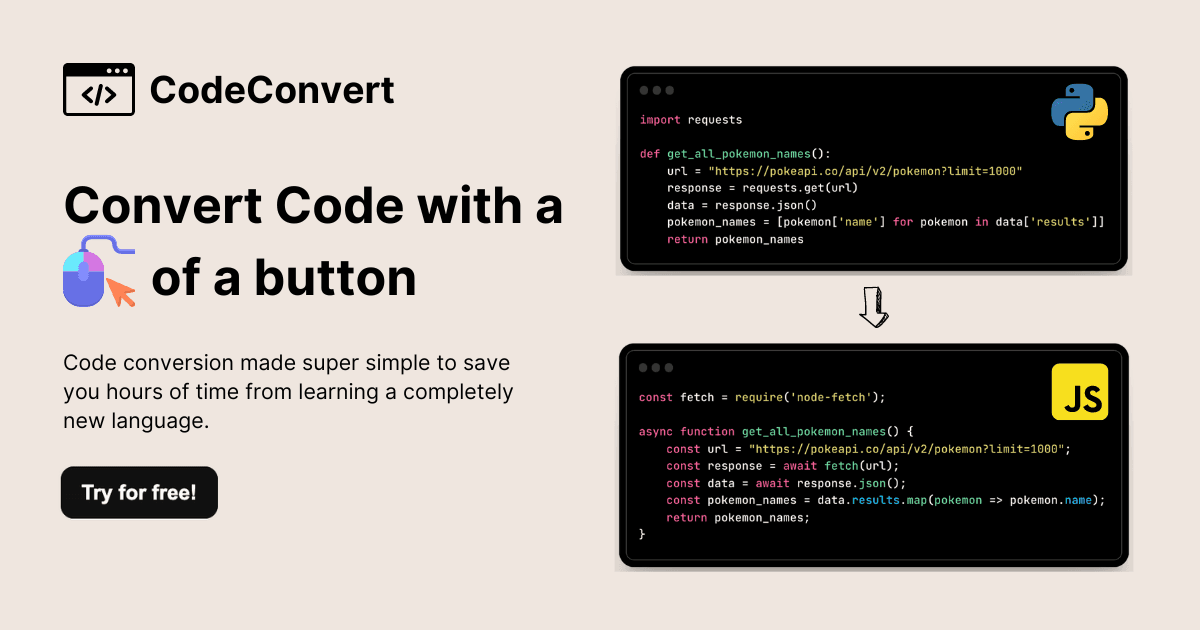
CodeConvert AI offers a straightforward solution for converting code between more than 50 programming languages, including popular ones like Python, Java, JavaScript, and C++. The platform leverages advanced AI models to deliver high-quality and accurate code transformations, saving developers significant time and effort that would otherwise be spent on manual rewriting or learning new languages. It requires no setup or installation; users simply paste their code and initiate the conversion. CodeConvert AI emphasizes privacy and security, stating that it does not retain user input or generated output code. Beyond conversion, the platform also provides free tools for code generation, explanation, comment removal, and checking, making it a comprehensive assistant for various coding tasks.
Web Scraper
Web Scraper is an AI tool designed to simplify data extraction from websites. Users can input a web address, and the application automatically pulls the main text content from that page. It then cleans up the extracted text and converts it into a markdown file, which can be easily viewed or downloaded. Additionally, the tool can identify and list all links present on the specified web page, also presenting them in a markdown format. This functionality makes it suitable for quickly gathering information, content analysis, or building link directories from various online sources.
WebGPU MobileNet
WebGPU MobileNet is an AI tool designed for real-time image classification and object detection using your device's webcam. This application allows users to instantly see what objects are detected in their camera feed, eliminating the need for image uploads. By leveraging WebGPU technology, it processes visual data directly on your screen, offering a seamless and interactive experience. It's particularly useful for quick, on-the-fly image analysis and demonstrating AI-powered computer vision capabilities in a live environment. The tool is accessible through a web browser, making it easy to use without any complex setup or installation.

TERBINE
TERBINE is developing STRATA, a next-generation mobility infrastructure platform designed for consumer, commercial, and governmental applications. This platform leverages AI/ML, IoT, and cloud computing to provide real-time orchestration and synchronization for intelligent machines, including electric vehicles, drones, delivery robots, and bipedal robots. STRATA aims to improve safety, efficiency, and unlock new functionalities by enabling these machines to interact seamlessly with each other and their physical environments. A key use case is accelerating EV adoption by applying STRATA as a supervisory layer above charging network management systems, addressing issues like the high percentage of inoperable public chargers. For fleet operators, STRATA can provide real-time synchronization between vehicles and equipment in the field.
screenclip.fast
screenclip.fast is a browser extension designed for retroactive screen capture, allowing users to instantly save the last 2 minutes of their screen activity. It runs silently in the background, continuously buffering your screen, so you never miss a moment worth sharing. The tool prioritizes privacy by keeping all recordings and processing local to your device, with no account required for core features. Clips are automatically saved as WebM files to your downloads folder, ready for immediate sharing. It offers features like speed control, frame-by-frame scrubbing, and is built to be lightweight, ensuring minimal impact on browser performance. The extension is currently available for Chrome, with Edge support in progress.
Chub
Chub is a dynamic platform designed for discovering, sharing, and interacting with a vast array of AI characters and models. It fosters a community where users can explore diverse AI personalities and engage in unique conversational experiences. This tool helps users connect with AI creations from various developers and enthusiasts, providing a central hub for AI model exploration and interaction. The platform aims to democratize access to AI models and characters, allowing for a broad range of applications from casual conversation to more specialized interactions. It serves as a bridge between AI developers and end-users, promoting innovation and accessibility within the AI ecosystem.
Tango2
Tango2 is an AI tool developed by declare-lab that allows users to convert text descriptions into audio recordings. It functions by taking text prompts, which can describe various sounds or scenes, and then generating the corresponding audio. This application is hosted on Hugging Face Spaces, making it accessible for users to experiment with text-to-audio generation. The generated audio outputs are versatile, as they can be downloaded in either WAV or MP3 format, catering to different user needs for quality and file size. Tango2 provides a straightforward interface for exploring the capabilities of AI in sound synthesis from textual input.
Bloom Stories
Bloom Stories provides a platform for cultivating sensual wellness through a wide variety of spicy audio stories and audiobooks. The content, including fictional narratives, guided self-touch sessions, and relaxation aids, is 100% human-made by compensated creators, ensuring ethical crafting without AI for writing, recording, or editing. Additionally, Bloom Stories features "Bloom Chat," an innovative AI-powered roleplaying experience where users can interact with characters via text and voice messages. This chat feature uses advanced AI technology with the explicit permission and compensation of voice actors, offering a unique and immersive personalized conversation experience. The platform is available on the web and as an app for Apple and Android devices, with a free membership tier and premium subscription options.
LockMemo
LockMemo is a robust security tool designed for creating and sharing private, code-sealed notes with granular access control. Users can write a note, lock it with a code, and share a link, maintaining full control over who can read the content. It integrates with email services like Gmail, allowing users to send sensitive messages without attaching files directly. This feature helps prevent accidental sharing of confidential information and allows for setting expiration times on notes. Access can be revoked or managed at any time, and notes are protected with server-side encryption. LockMemo offers a simple three-step workflow: create and seal, share the link, and validate access, with options for manual approval or auto-acceptance after 48 hours.