
Coding & Development
Browsing page 405 of AI tools for Coding & Development. Sorted by confidence score — our independent quality rating.

SvgTrace
SvgTrace transforms raster images like JPG and PNG into scalable vector graphics (SVG) with unlimited colors. The tool leverages AI for enhanced upscaling, converting low-resolution images into high-quality SVG files effortlessly. It specializes in creating color-layered SVG files, which are ideal for multi-layer SVGs, cut files, 3D layers, plywood cutting, paper cutting, and 3D mandala projects. SvgTrace also provides a powerful manual editor, allowing users to adjust and modify each layer with options like cutting, erasing, and copying. It caters to both individuals with a free web-based converter and professionals with Pro plans and an email conversion service for production workflows.
DeepLearningTutorials
DeepLearningTutorials is a valuable resource for anyone looking to delve into the field of deep learning. It provides detailed tutorial notes and corresponding Python code, specifically designed to introduce users to some of the most important deep learning algorithms. The tutorials emphasize learning multiple levels of representation and abstraction, crucial for processing data like images, sound, and text. A key feature is its integration with Theano, a Python library that simplifies deep learning model development and offers the capability to train models efficiently on a GPU. The project is hosted on GitHub, ensuring accessibility to its code and documentation, and encourages users to browse the tutorials online for an optimal learning experience.
deep-fonts
deep-fonts is an open-source project available on GitHub that leverages deep learning to generate unique fonts. This tool provides a platform for users to explore and create new typefaces, offering a novel approach to font design. It includes scripts for creating datasets, training models, and generating fonts, making it a comprehensive solution for those interested in the intersection of AI and typography. The project also features examples of generated fonts and visualizations, demonstrating its capabilities in producing diverse and experimental typographic styles. It's ideal for researchers, developers, and designers looking to experiment with AI-driven font creation.
document-cn-translation-of-skywalking
Document-cn-translation-of-skywalking was a community-driven GitHub repository offering a Chinese translation of the Apache SkyWalking documentation. This resource aimed to make the technical documentation more accessible to Chinese-speaking users. However, the project has been archived and is no longer updated, with a clear directive for users to refer to the official Apache SkyWalking website for the most current AI-powered documentation. While it served as a valuable translation effort, its content is now considered outdated, and users seeking up-to-date information should consult the official source.
imbalanced-learn
imbalanced-learn is an open-source Python package designed to address the common challenge of imbalanced datasets in machine learning. It offers a variety of re-sampling techniques to balance the class distribution, which is crucial for optimizing the performance of most classification algorithms. The package is fully compatible with scikit-learn, making it a seamless addition to existing machine learning workflows. It supports essential dependencies like NumPy, SciPy, and scikit-learn, with optional support for Pandas, TensorFlow, and Keras for broader data handling and model integration. The tool is part of the scikit-learn-contrib projects and provides comprehensive documentation, installation guides, and examples to help users effectively implement its functionalities.
LangChain-Chinese-Getting-Started-Guide
The LangChain-Chinese-Getting-Started-Guide is an open-source tutorial designed to help Chinese speakers learn and utilize the powerful LangChain framework. It covers essential concepts such as LLM invocation, prompt management, document loaders, text splitters, vector stores, chains, and agents. The guide provides practical examples, including performing Q&A with OpenAI models, integrating with Serpapi for internet searches, and summarizing long texts. It also addresses common challenges like API token limits and offers solutions using LangChain's features. The tutorial is actively maintained on GitHub, with updates and code examples available for hands-on learning.
machine-learning-engineering-for-production-public
Machine-learning-engineering-for-production-public serves as the official public repository for DeepLearning.AI's Machine Learning Engineering for Production Specialization. This resource is designed to support students and professionals in understanding the intricacies of deploying machine learning models into real-world production environments. The repository contains various materials, including course content, labs, and other public resources relevant to the specialization's curriculum. While it provides valuable learning assets, the repository is currently not accepting pull requests for contributions. It is an essential companion for anyone undertaking the DeepLearning.AI MLEP Specialization, offering practical insights and foundational knowledge for machine learning engineering.
named_entity_recognition
named_entity_recognition is an open-source project dedicated to Chinese named entity recognition (NER), offering practical implementations of several prominent models. It includes Hidden Markov Model (HMM), Conditional Random Field (CRF), Bi-directional Long Short-Term Memory (BiLSTM), and a hybrid BiLSTM+CRF model. The project utilizes a resume dataset for training and evaluation, providing detailed accuracy, recall, and F1 scores for each model. It serves as a valuable resource for researchers and developers interested in NLP, particularly in the context of Chinese NER, allowing for direct comparison and understanding of different algorithmic approaches.
PyHealth
PyHealth is a comprehensive, open-source deep learning Python toolkit designed to support clinical predictive modeling for both ML researchers and medical practitioners. It aims to make healthcare AI applications easier to develop, test, and deploy, offering flexibility and customizability. Key features include a modular 5-stage pipeline, a healthcare-first approach with support for medical codes and clinical datasets like MIMIC and eICU, and over 33 pre-built models with production-ready trainers and metrics. The toolkit supports more than 10 healthcare tasks and datasets, providing fast data processing for quick experimentation. PyHealth also includes independent modules for medical code mapping (pyhealth.medcode) and medical code tokenization (pyhealth.tokenizer), enhancing its utility for complex healthcare data.
machine_learning_with_python_jadi
machine_learning_with_python_jadi is an open-source GitHub repository offering a collection of Jupyter notebooks specifically designed for a machine learning course. The repository includes various practical examples covering topics such as classification (Decision Trees, K-Nearest Neighbors, Logistic Regression, SVM), clustering (DBSCAN, Hierarchical, K-Means), regression (Linear, Non-Linear, Polynomial), and recommender systems (Collaborative and Content-Based Filtering). It also provides several datasets like ChurnData.csv, FuelConsumption.csv, and movies.csv, which are used within the notebooks for hands-on exercises. This resource is ideal for students and developers looking to learn and practice machine learning concepts using Python.
AVALTAR
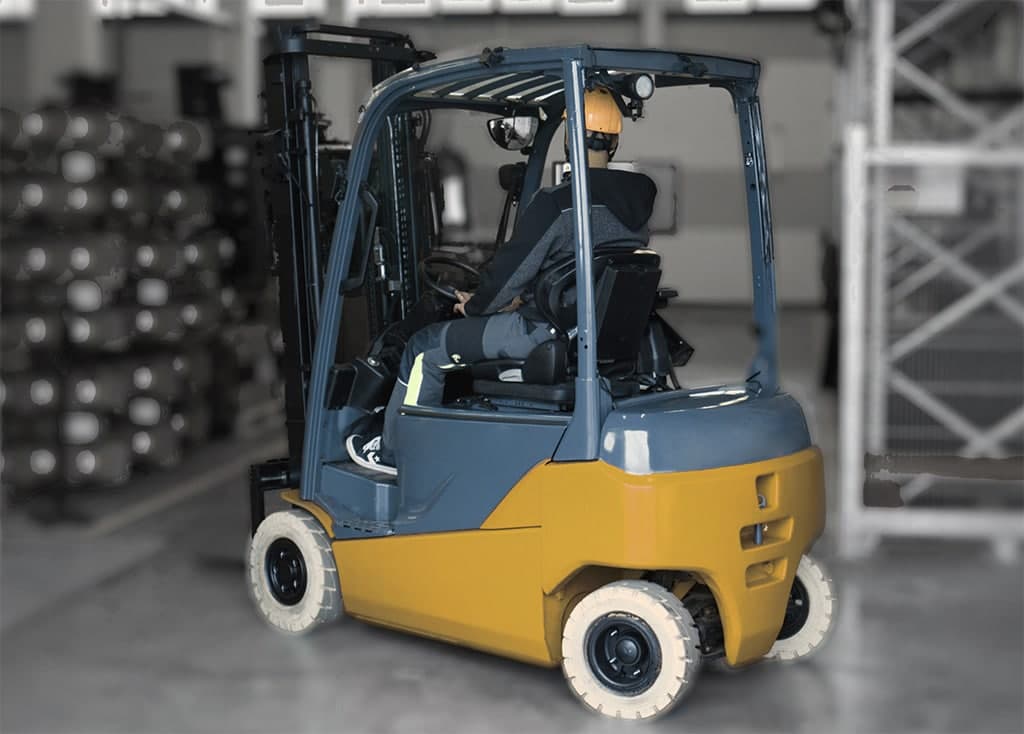
AVALTAR offers AI-driven safety solutions, specializing in intelligent camera systems for workplace safety and Industry 4.0. Their adaptable solutions, such as AVA Collision avoidance system for forklifts and SPARK One monitoring system, are designed to prevent accidents, enhance safety, and optimize processes. AVALTAR's technology focuses on preventing hazards from human-machine interactions using AI, IoT connectivity, and industry expertise. The systems provide precision with minimal false alarms, learn and improve with every detection, and are seamlessly integrated and customizable. They offer robust hardware and innovative software to protect employees, assets, and data, with flexible and fast development to meet specific requirements.
braindecode
Braindecode is an open-source Python toolbox specifically designed for decoding raw electrophysiological brain data using deep learning models. It offers a comprehensive suite of functionalities, including dataset fetchers, robust data preprocessing tools, and visualization capabilities. The toolbox also features implementations of various deep learning architectures and data augmentations, making it suitable for in-depth analysis of EEG, ECoG, and MEG signals. It caters to both neuroscientists interested in applying deep learning and deep learning researchers looking to work with neurophysiological data, providing a powerful platform for advanced brain signal analysis.
UnSQL AI
UnSQL AI simplifies data analysis for traditional and legacy enterprises by allowing users to ask questions in plain English, eliminating the need for data engineering skills. It features a text-to-SQL model that supports 24 different SQL databases and facilitates seamless syntax conversion, simplifying analysis and migration. The tool offers a personal data concierge, allowing users to engage with their data via phone calls, removing the need for internet connectivity or extended screen time. UnSQL AI also provides automated insights, identifying key metrics like customer churn and upsell opportunities, and supports legacy databases. It emphasizes data security with on-premise analysis options, audit logs, role-based access control, and is on track for SOC 2 Type II compliance.
Avala AI
Avala AI is a comprehensive platform designed to eliminate data entropy in Physical AI and frontier model pipelines. It serves as a unified data engine, fusing sensors, labels, and feedback into traceable ground truth. The platform connects ingestion, labeling, and deployment, allowing users to trace any model behavior back to its originating data. Avala offers a Python SDK, REST API, and CLI for programmatic management of datasets, annotation triggering, and results export. It supports various data types including 4D Point Cloud & LiDAR, 4D Video, 2D Image, 2D Video, Text, and specialized formats like Medical Imaging. The tool emphasizes glass-box traceability from sensor to deployment, ensuring data quality and compliance with standards like SOC 2 Type II, GDPR, ISO 27001, and TISAX.

Compyle
Compyle is an AI platform designed to automate the production work involved in Phase I Environmental Site Assessments (ESAs). It streamlines the entire workflow, from data collection to draft report generation, enabling Environmental Professionals (EPs) to increase project capacity without extending work hours. The platform offers same-day historical data collection, eliminating the typical 3-10 day wait associated with services like EDR or ERIS. Compyle ensures auditability by providing source-linked claims, tracing every finding back to its original record. It also drafts reports in the firm’s template and voice, allowing EPs to review and approve AI-generated content directly, maintaining full control over the final output. This automation significantly reduces the manual effort in historical research and initial drafting.
99AI
99AI is a commercial AI Web platform designed to offer a comprehensive artificial intelligence service solution. It supports private deployment, allowing businesses, teams, or individuals to maintain control over their data and infrastructure. The platform includes built-in multi-user management, making it suitable for organizations that need to manage access and usage for multiple team members. With its full Node.js packaging and Docker deployment support, 99AI is ready for immediate use. It integrates mainstream AI capabilities, offers deep thinking models, real-time internet search, and intelligent chart generation, providing a versatile tool for various AI applications.
Nuraform
Nuraform is an AI-powered form builder designed to create stunning, intelligent, and high-converting forms quickly. Users can describe their form needs with a single prompt, and AI generates a complete form with questions, input types, and logic. The platform allows for easy customization of appearance, including layouts, backgrounds, and animated intro/outro screens. Nuraform stands out by offering AI-driven insights, such as summaries per submission and per form, live analytics (views, drop-off rates, time spent), and auto-generated follow-up questions. It aims to be a free alternative to Google Forms and a more affordable option than Typeform, providing unlimited submissions even on its free plan. Nuraform is suitable for freelancers, founders, creators, consultants, educators, and community leads looking to enhance data collection and user engagement.

DeepKlarity
DeepKlarity is an AI engineering studio specializing in building reliable, production-grade AI systems. They focus on engineering intelligence that works, avoiding impressive demos that fail on real data or research that never ships. Their services include developing agentic systems for autonomous AI, multimodal workflows, composable architecture, self-healing systems, sovereign deployment, and evaluation frameworks. DeepKlarity emphasizes cost optimization, provider-agnostic solutions, built-in security, and maintainable code. They test with actual production data and provide post-deployment support to ensure systems are genuinely ready to run and adapt to unforeseen issues.

DSG.AI
DSG.AI is a leading AI GRC platform designed for enterprise AI governance, risk management, and regulatory compliance. It provides comprehensive solutions to help organizations scale their AI power safely and securely, ensuring alignment with critical frameworks such as the EU AI Act, ISO 42001, and NIST AI RMF. The platform offers products like manageAI Portfolio for AI asset management, manageAI Monitoring for performance oversight, assessAI for literacy and risk assessment, and assureIQ TPRM for third-party risk management. DSG.AI aims to provide business management oversight, enabling faster and more informed business-critical decisions related to AI adoption and deployment.
training_extensions
OpenVINO™ Training Extensions is a low-code transfer learning framework designed for computer vision tasks. It enables users to train, infer, optimize, and deploy models easily and quickly, even with limited deep learning expertise. The tool supports diverse combinations of model architectures, learning methods, and task types based on PyTorch and OpenVINO™ toolkit. Key features include support for classification, object detection, semantic segmentation, instance segmentation, and anomaly recognition. It also provides usability features like native Intel GPUs (XPU) support, Datumaro data frontend for various dataset formats, distributed training, mixed-precision training, class incremental learning, and model deployment to OpenVINO™ IR and ONNX formats. The framework offers both API and CLI-based training for flexibility and ease of use.
tf_unet
tf_unet is an open-source project offering a generic U-Net implementation developed with TensorFlow, specifically designed for image segmentation tasks. Originally used for Radio Frequency Interference mitigation, this tool is highly adaptable and can be applied to diverse imaging data, from detecting circles in noisy images to identifying galaxies and stars in wide-field imaging. The project provides Jupyter notebooks for toy problems and RFI mitigation, making it accessible for both learning and practical applications. While the project is discontinued in favor of a TensorFlow 2 compatible version, it remains a valuable resource for understanding and implementing U-Net architectures.
SF Tensor
SF Tensor, also known as The San Francisco Tensor Company, is dedicated to reinventing the software and infrastructure stack for modern AI and High-Performance Computing (HPC). The platform provides automatic kernel optimization and cross-cloud, cross-vendor compute capabilities, ensuring code runs faster, cheaper, and is portable across various platforms. It supports a heterogeneous future where CPUs, GPUs, TPUs, and domain-specific accelerators are treated as first-class citizens. SF Tensor offers two main options: Tensor Cloud for experiments and medium-scale training jobs, and Forward-Deployed for scaling training runs with dedicated infrastructure support. Pricing is aligned with the savings delivered to customers.
Python-and-Machine-Learning
Python-and-Machine-Learning is an open-source GitHub repository maintained by Devtown-India, offering a collection of educational resources focused on Python programming and Machine Learning concepts. The repository, last updated on February 6th, 2021, primarily consists of Jupyter Notebook files. These notebooks cover fundamental topics such as data types, operators, and important Python concepts, alongside dedicated sections for the NumPy library. It serves as a valuable learning and development resource for individuals looking to understand and implement machine learning techniques using Python.
mlbot_tutorial
mlbot_tutorial provides a comprehensive, open-source tutorial for developing an algorithmic trading bot powered by machine learning. This resource is specifically designed to help users automate cryptocurrency trading strategies using Python. The tutorial includes detailed instructions for environment setup, leveraging Docker and Jupyter Notebooks for an accessible development experience. Users can follow along to implement machine learning models for market analysis and automated trade execution. It's an excellent resource for developers and quantitative traders looking to apply AI to financial markets, offering practical guidance from setup to deployment of a trading bot.