
Research & Education
Browsing page 33 of AI tools for Academic Research in Research & Education. Sorted by confidence score — our independent quality rating.

ArXivChatGuru
ArXivChatGuru is an open-source Streamlit application designed to facilitate interaction with research papers from arXiv. It functions by allowing users to specify a topic and the number of papers to load. The app then retrieves these papers, splits them into manageable chunks, and generates OpenAI embeddings for each chunk. These chunks and embeddings are stored in a topic-scoped Redis vector index, which also acts as a semantic cache. Utilizing LangChain, the tool retrieves the most relevant chunks for user questions, providing context to a chat model for grounded Q&A. This project is intentionally simple, serving as a valuable learning resource for understanding Retrieval Augmented Generation (RAG) workflows in an academic context, rather than a production-ready research assistant.
bert_score
BERTScore is an automatic evaluation metric for text generation, leveraging pre-trained contextual embeddings from BERT to compare candidate and reference sentences. It calculates precision, recall, and F1 scores based on cosine similarity, offering a robust method for assessing the quality of generated text. The tool supports approximately 130 models, with `microsoft/deberta-xlarge-mnli` currently offering the best correlation with human evaluation. It is compatible with Huggingface's transformers library and provides both a Python function and a command-line interface for ease of use. BERTScore also supports multiple reference sentences and offers options for rescaling scores with baselines and using inverse document frequency (idf) for weighted word importance.
Kompas AI
Kompas AI is a personal knowledge management tool designed to help users capture, organize, and leverage their thoughts and research. It integrates AI sessions that use past notes and reading to ask better questions, fostering a deeper engagement with content. The tool builds a graph of your thinking, where every session becomes nodes and edges, connecting decisions, memories, and retrieved passages. This graph then aids in retrieval-first writing, allowing users to pull sessions and fragments into their drafts, ensuring their unique voice and context are preserved. Kompas emphasizes data ownership, with content stored locally in a SQLite file, and offers both a free desktop app and a forthcoming Pro cloud tier with included AI.

Stream Ocean
Stream Ocean is an environmental technology company launched in 2022, dedicated to making the invisible visible in our oceans. It offers an AI-powered solution for real-time marine life monitoring, utilizing easy-to-deploy underwater camera systems and advanced AI-driven data analytics. This innovative approach delivers continuous high-definition video and daily data points, transforming how we understand and engage with marine environments. The system supports various sectors including coastal hospitality, marine industries, coral restoration, and scientific research, empowering users with tools to effectively monitor the underwater world. By providing unique monitoring and engagement opportunities, Stream Ocean aims to accelerate ocean health and science.

ZenoX AI
ZenoX AI offers the Vydar Threat Intelligence platform, an AI-powered solution designed to help organizations proactively identify, prioritize, and prevent cyberattacks. It specializes in real-time monitoring and analysis of vast amounts of threat data from sources like the dark web, Telegram channels, and specialized forums. The platform utilizes the Tellyu AI engine for advanced pattern recognition, natural language understanding of fraudster terminology, and interactive data search. Key features include cyber threat intelligence, dark web monitoring, brand protection, supply chain intelligence, phishing detection, and fraud mitigation. ZenoX AI helps companies protect against leaked credentials, stolen cards, and fraudulent domains, ensuring a strong security posture.

The LLM Data Company
The LLM Data Company specializes in training frontier models for critical domains, with a current emphasis on medical applications. Their approach addresses the limitations of generalist models by developing specific intelligence for areas where ambiguity, resistance to sycophancy, and robust verification are paramount. They are currently developing the Kos series of medical models, with Kos-1 Lite achieving SOTA (State-Of-The-Art) performance on HealthBench Hard. The company focuses on post-training curricula to ensure models handle complex, sensitive data effectively, distinguishing itself from models optimized for coding or general tool-use.

CAIRNE
CAIRNE, formerly CLAIRE, is an international non-profit association established by the European AI community. Its core mission is to strengthen European excellence in AI research and innovation, with a strong focus on human-centered AI. CAIRNE achieves this by representing the interests of its members, promoting European AI through media and events, fostering cross-border collaborations, and participating in EU Horizon calls to facilitate community building. It does not provide AI services or products but rather supports a pan-European Confederation of Laboratories for Artificial Intelligence Research in Europe, including Research, Innovation, and Rising Researchers Networks.
GraphGen
GraphGen is a comprehensive framework designed to enhance supervised fine-tuning (SFT) for Large Language Models (LLMs) through knowledge-driven synthetic data generation. It operates by first constructing detailed knowledge graphs from source texts, then identifying knowledge gaps in LLMs using calibration error metrics. This process prioritizes the generation of high-value, long-tail knowledge QA pairs. GraphGen further incorporates multi-hop neighborhood sampling to capture complex relational information and employs style-controlled generation to diversify the resulting QA data. After data generation, users can leverage tools like LLaMA-Factory and xtuner for LLM fine-tuning. The framework supports various LLM inference servers, API servers, inference clients, and input/output data formats, including PDF, JSON, and CSV, as well as databases like UniProt and NCBI.
Asteria
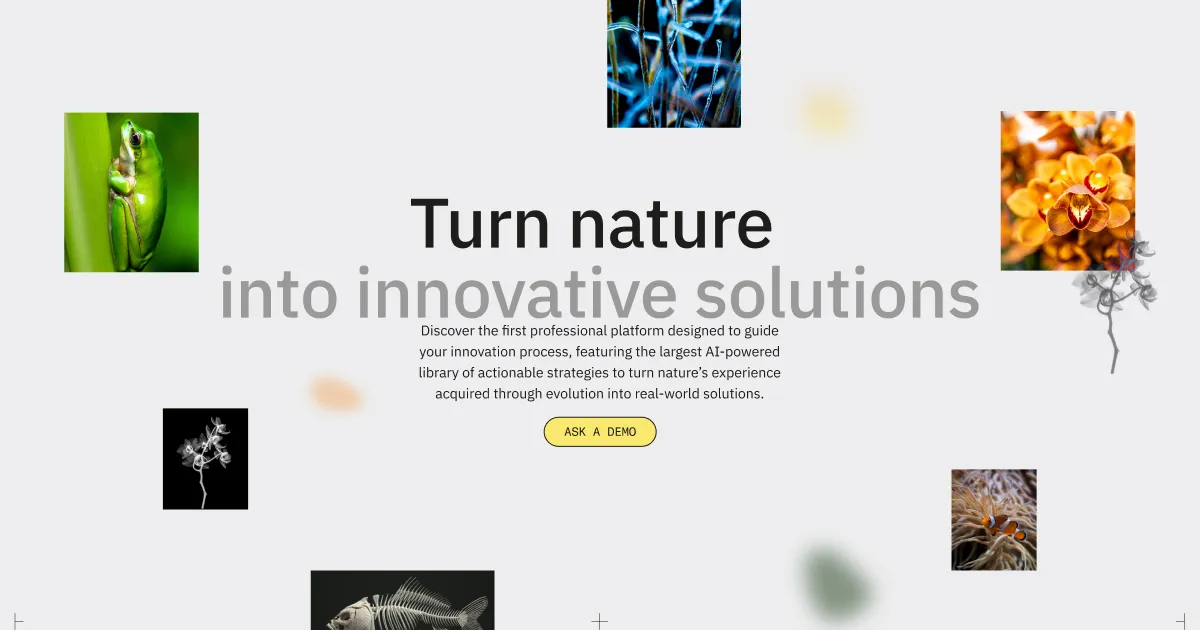
Asteria is a science-based, AI-powered platform designed to accelerate research and development by translating biological strategies into practical, real-world solutions. It offers a curated library of over 680,000 nature-inspired strategies and connects to more than 4,000,000 scientific articles relevant to biomimicry. The platform guides users through the biomimetic innovation process, ensuring scientific rigor and transparency with in-depth verification based on analyzed scientific literature. Asteria enables users to manage projects, frame challenges with a project map, and collaborate with teams by sharing, annotating, and co-building projects. It is ideal for R&I engineers, innovation managers, industrial designers, and project managers looking to embed sustainability into their innovation strategy across various industries like materials, transport, cosmetics, energy, recycling, and fashion.
kan-gpt
kan-gpt is an open-source project offering a PyTorch implementation of Generative Pre-trained Transformers (GPTs) integrated with Kolmogorov-Arnold Networks (KANs) for language modeling. This tool provides a flexible framework for researchers and developers to explore and experiment with novel neural network architectures in the context of large language models. Key features include the ability to train and prompt models, with usage examples provided for easy adoption. It supports various datasets like Tiny Shakespeare, MNIST, and WebText, and allows for comparison between KAN-GPT and traditional MLP-GPT models. The project is actively developed with a clear roadmap for future enhancements, including integration with minGPT and pykan, improved dataset parsing, and comprehensive testing.
Image-Super-Resolution-via-Iterative-Refinement
Image-Super-Resolution-via-Iterative-Refinement offers an unofficial PyTorch implementation of the SR3 (Image Super-Resolution via Iterative Refinement) model. This tool focuses on enhancing image resolution through an iterative refinement process, utilizing ResNet blocks and channel concatenation similar to vanilla DDPM. It supports conditional generation tasks like upscaling 16x16 to 128x128 and 64x64 to 512x512 on datasets like FFHQ-CelebaHQ, as well as unconditional generation for face generation. The project provides pre-trained models and scripts for training, evaluation, and inference, making it suitable for researchers and developers working with diffusion models and image super-resolution.
long_llama
LongLLaMA is a large language model specifically designed to manage and process exceptionally long contexts, up to 256k tokens or more. Built upon the OpenLLaMA foundation and enhanced with the innovative Focused Transformer (FoT) method, it allows language models to handle extensive inputs while training on shorter sequences. The FoT method uses contrastive learning to enable attention layers to access a memory cache, significantly extending the effective context length. LongLLaMA is available in several variants, including a 3B base model under an Apache 2.0 license, and instruction-tuned versions like LongLLaMA-Instruct-3Bv1.1. A LongLLaMA Code 7B model, based on Code Llama, is also provided for code-related tasks. The project offers inference code, instruction tuning, and FoT continued pretraining code, making it a valuable resource for researchers and developers working with large language models and context scaling.
miniDiffusion
miniDiffusion is a reimplementation of the Stable Diffusion 3.5 model, built entirely in pure PyTorch with a focus on minimal dependencies. This tool is specifically designed for educational, experimental, and hacking purposes, aiming to recreate Stable Diffusion 3.5 from scratch with the least amount of code necessary. The project encompasses approximately 2800 lines of code, covering components from VAE to DiT, as well as training and dataset scripts. Key features include implementations of VAE, CLIP, and T5 Text Encoders, Byte-Pair & Unigram tokenizers, the Multi-Modal Diffusion Transformer Model, Flow-Matching Euler Scheduler, Logit-Normal Sampling, and Joint Attention. It also provides scripts for training and inference for SD3.
open-deep-research
Open Deep Research is an open-source AI agent designed to perform deep web research by cloning Open AI's Deep Research experiment. Unlike its inspiration, it utilizes Firecrawl's extract and search capabilities to gather large amounts of web data, which is then processed by a reasoning model for analysis. Key features include real-time data feeding to the AI via search, structured data extraction from multiple websites, and advanced routing with Next.js App Router. It integrates with the AI SDK for generating text and structured objects, supporting various LLM providers like OpenAI, Anthropic, and Cohere. The tool also offers data persistence with Vercel Postgres and secure authentication via NextAuth.js, making it a robust solution for comprehensive web data analysis.
physicsnemo
NVIDIA PhysicsNeMo is an open-source deep-learning framework designed for building, training, fine-tuning, and inferring Physics AI models using state-of-the-art SciML methods. It provides Python modules to compose scalable and optimized training and inference pipelines, enabling real-time predictions by combining physics knowledge with data. The framework supports various model architectures like neural operators, GNNs, and transformers, and is optimized for NVIDIA GPUs, offering efficient scaling from single to multi-node GPU clusters. PhysicsNeMo is built on PyTorch, ensuring a familiar experience for users, and is highly extensible for customization and integration into existing workflows. It includes modules for models, data pipelines, distributed computing, data curation, and symbolic geometry/PDEs.
PINA
PINA is an open-source Python library designed to streamline and accelerate the development of Scientific Machine Learning (SciML) solutions. Built upon PyTorch, PyTorch Lightning, and PyTorch Geometric, it offers a modular and flexible framework for defining, experimenting with, and solving complex problems using various neural network architectures, including Physics-Informed Neural Networks (PINNs) and Neural Operators. PINA supports multi-device training for scalable performance and provides both high-level abstractions for quick model definition and granular control for expert users to fine-tune training and inference processes. It enables users to solve both data-driven and physics-informed problems efficiently.
runx
runx is an open-source deep learning experiment management tool designed to automate common tasks in AI research. It facilitates hyperparameter sweeps, logging (including TensorBoard integration), and robust checkpoint management. The tool also provides experiment summarization capabilities with `sumx` and ensures code checkpointing for reproducibility. It automatically creates unique, per-run directories to prevent data overwrites and allows for easy submission of batch jobs to a farm. While the project is no longer maintained and contains security vulnerabilities, it offers a foundational approach to managing complex deep learning experiments.
Qwen3-VL
Qwen3-VL is a multimodal large language model series developed by the Qwen team at Alibaba Cloud. This advanced model offers significant enhancements in text understanding and generation, visual perception and reasoning, extended context length, and improved spatial and video dynamics comprehension. It also features stronger agent interaction capabilities, including operating PC/mobile GUIs and generating code from images/videos. Available in Dense and MoE architectures, Qwen3-VL supports flexible deployment from edge to cloud, with Instruct and reasoning-enhanced Thinking editions. Key features include advanced spatial perception, long context and video understanding, enhanced multimodal reasoning for STEM/Math, upgraded visual recognition, and expanded OCR supporting 32 languages.
RoboticsDiffusionTransformer
RoboticsDiffusionTransformer (RDT-1B) is a 1-billion parameter diffusion foundation model specifically designed for bimanual robotic manipulation. It is pre-trained on an extensive dataset of over 1 million multi-robot episodes, making it the largest to date. RDT-1B can predict the next 64 robot actions based on language instructions and RGB images from up to three views. The model is compatible with various modern mobile manipulators, supporting single-arm to dual-arm configurations, joint to EEF control, and position to velocity commands, including wheeled locomotion. This repository provides the official PyTorch implementation, including model checkpoints, training and sampling scripts, and an example for real-robot deployment on the ALOHA dual-arm robot, where it has achieved state-of-the-art performance in dexterity, zero-shot generalizability, and few-shot learning.
Czech National AI Platform (CNAIP)
The Czech National AI Platform (CNAIP) serves as a central hub for artificial intelligence collaboration in the Czech Republic. It actively fosters the growth and development of the Czech AI ecosystem by connecting academic institutions, businesses, government bodies, and non-profit organizations. CNAIP's mission is to elevate Czechia to a leading position in European AI. The platform showcases AI in practice through case studies across various sectors like transportation, smart cities, public administration, and financial services. It also organizes educational and networking events, including the annual AI Awards, which recognizes significant contributions to AI development in Czechia, and the Days of AI festival, the largest domestic AI festival.

Basecamp Research
Basecamp Research is an AI company dedicated to solving complex challenges in the life sciences sector. The platform leverages artificial intelligence to explore and expand beyond current biological understanding, focusing on the discovery and design of novel proteins. By training its AI models on a proprietary knowledge graph derived from natural biological data, Basecamp Research enables the creation of highly tailored proteins. These custom-designed proteins are intended for specific applications across various industries, including pharmaceuticals, food, and industrial sectors, offering innovative solutions where traditional biological approaches may fall short.

Icybit
Icybit is a scientific research, experimental development, and innovation company with expertise in artificial intelligence, distributed computing, and big data analytics. They are dedicated to creating advanced solutions in these fields, leveraging their deep knowledge to drive innovation. While the website provides a high-level overview of their capabilities, it emphasizes their role as experts in cutting-edge technologies. Their focus on research and development suggests they provide sophisticated, data-driven solutions for various industries, likely catering to complex analytical needs and large-scale data processing challenges.
texar-pytorch
Texar-PyTorch is a comprehensive toolkit designed to support a wide array of machine learning tasks, with a particular focus on natural language processing and text generation. It uniquely integrates many of TensorFlow's most effective features into the PyTorch framework, providing highly usable and customizable modules that often surpass native PyTorch offerings. The toolkit offers a rich library of ML modules and functionalities, enabling both researchers and practitioners to rapidly prototype and experiment with various models and algorithms. Key features include consistent interfaces across Texar-PyTorch and Texar-TF, versatile support for data processing, model architectures, loss functions, and training algorithms, as well as full customizability at multiple abstraction levels. It also provides rich pre-trained models like BERT, GPT2, and XLNet, along with extensive documentation and examples.
Vchitect-2.0
Vchitect-2.0 is an open-source parallel transformer designed to scale up video diffusion models, facilitating advanced video generation techniques. This tool allows users to generate videos with resolutions up to 720x480 at 8 frames per second. It also includes VEnhancer, which can upscale resolutions to 2K and interpolate frame rates to 24fps. The project provides inference code and checkpoints, making it accessible for researchers and developers. It supports custom configurations for denoising steps, guidance scale, and output video dimensions (width, height, frames). Vchitect-2.0 is released under an Apache-2.0 license, permitting both academic research and free commercial usage, with a strong disclaimer regarding responsible use and prohibited content generation.