
Research & Education
Browsing page 38 of AI tools for Academic Research in Research & Education. Sorted by confidence score — our independent quality rating.
Synature
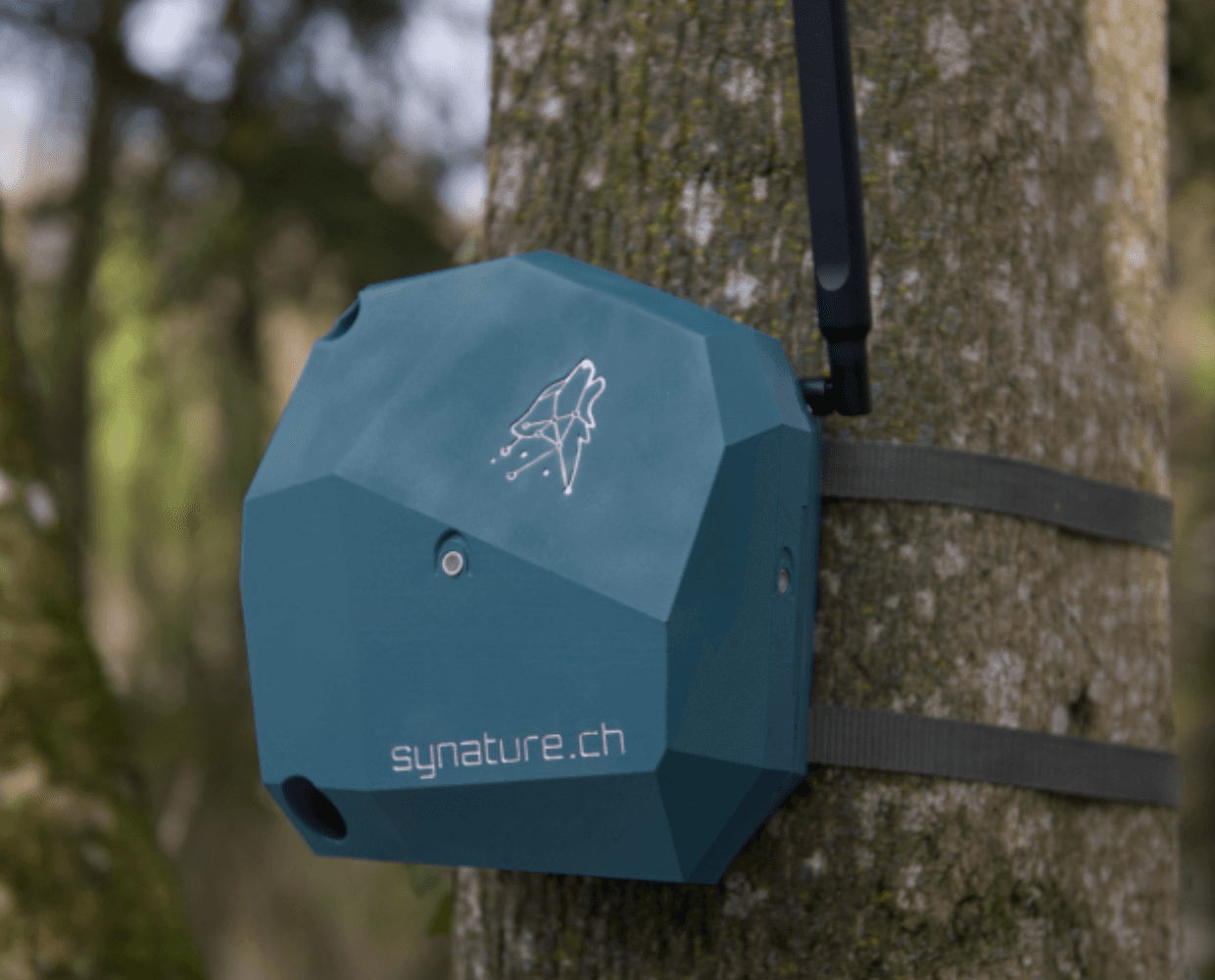
Synature is a deep-tech startup dedicated to making biodiversity measurable through advanced passive acoustic monitoring. The platform utilizes smart microphones and AI to continuously record and analyze animal sounds, offering actionable insights into ecosystem health. Its smart microphones are solar-powered, weatherproof, and maintenance-free, automating data collection that previously required complex fieldwork. The SynApp, a cloud-based dashboard, processes this sound data into verified biodiversity insights, capable of detecting over 15,000 species of birds, bats, frogs, insects, and mammals in real-time. Users can monitor species detections, acoustic trends, and ecosystem health indicators, listen to recordings, and verify results. This system supports applications in nature conservation, regenerative agriculture, and ecotourism, enabling users to generate reports, track restoration progress, and receive alerts for critical biodiversity changes.

char-rnn-tensorflow
char-rnn-tensorflow is an open-source implementation of multi-layer Recurrent Neural Networks (LSTM, RNN) designed for character-level language models. Developed in Python using Tensorflow, it provides a foundational framework for researchers and developers interested in text generation and language modeling experiments. The tool is inspired by Andrej Karpathy's char-rnn and offers basic usage for training models with default parameters on datasets like tinyshakespeare, with options to sample from checkpointed models. Users can supply any plain text file as input, making it highly flexible for various text-based projects. It also includes guidance on tuning models, using Tensorboard for visualization, and contributing to its development, making it a comprehensive resource for those working with RNNs.
HIA (Health Insights Agent)
HIA (Health Insights Agent) is an AI-powered tool designed to analyze blood reports and deliver comprehensive health insights. It utilizes an agent-based architecture, featuring an Analysis Agent for in-context learning and a built-in knowledge base, alongside a Chat Agent for RAG-powered follow-up Q&A. The system employs a multi-model cascade via Groq with automatic fallback for robust AI processing. Users can upload PDF reports (up to 20MB, 50 pages) or use a sample report, with daily analysis limits. It includes secure Supabase Auth, session validation, and history management, all presented through a modern, responsive Streamlit UI.

Radical AI
Radical AI is at the forefront of materials innovation, leveraging artificial intelligence to accelerate the research and development of new materials. The platform employs a closed-loop discovery process, starting with screening billions of material compositions to predict structures and properties. It then optimizes chemical synthesis through computational adaptive experimentation, active learning, and self-guided literature review. For the most promising candidates, high-throughput experiments are conducted in a self-driving laboratory. This entire process generates valuable data that feeds back into the prediction engine, continuously refining and improving the discovery cycle. Radical AI aims to remove bottlenecks in scientific progress, enabling breakthroughs for mission-critical industries.
Intellegens
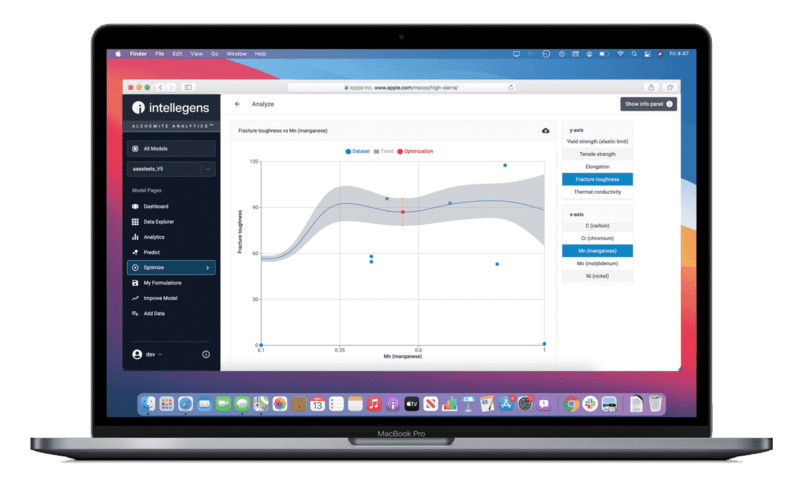
Intellegens offers the Alchemite™ Suite, a machine learning platform designed to accelerate research and development across various industries including chemicals, materials, FMCG, life sciences, and manufacturing. The suite includes specialized applications like Alchemite™ for DOE (Design of Experiments), Alchemite™ for Formulations, and Alchemite™ for R&D Insights, which help users cut experimental workloads by 50-80%, optimize formulations, and unlock hidden value in data. The platform is particularly effective with sparse or noisy data and provides high-quality uncertainty quantification for reliable predictions, enabling virtual experiments and informed decision-making.
Profundo
Profundo is an AI-powered research platform designed to redefine the research process by making it more efficient and effective. It automates data collection from hundreds of web sources and libraries, performs deep analysis using sophisticated algorithms to identify patterns and trends, and generates customized, comprehensive reports. The platform emphasizes accelerated learning and unparalleled accuracy, minimizing errors and maximizing productivity. With a user-friendly interface, Profundo integrates seamlessly into existing workflows, catering to individuals, academics, and industry professionals for tasks like self-study, content creation, market research, and grant proposals. It also supports bringing your own data for comprehensive analysis and offers pre-built templates for targeted insights.

SFI Visual Intelligence
SFI Visual Intelligence is a Norwegian Centre for Research-based Innovation at UiT The Arctic University of Norway, dedicated to unlocking the potential of deep learning and AI for extracting knowledge from complex image data. Through long-term research and collaboration with industry, public institutions, and research partners, the center drives innovation, technology transfer, and researcher training. It researches next-generation deep learning methodologies for visual data, producing solutions for consortium partners across key innovation areas including medicine and health, marine science, energy, and earth observation. The center addresses research challenges such as limited training data, context and dependencies, confidence and uncertainty, and explainability and reliability in AI systems.
PseudoLab
PseudoLab (가짜연구소) is a non-profit community dedicated to fostering AI research and learning, aiming to transform the world for the better. It brings together individuals passionate about 'accidental revolution' through artificial intelligence. The community emphasizes practical projects and global collaboration, providing a supportive environment where beginners can grow and learn from failures. PseudoLab prioritizes a 'togetherness' mindset over perfection, offering a warm journey for members to develop their skills and contribute to AI advancements. It's an ideal platform for those looking to engage in real-world AI applications and collaborative learning.

Quillminds
QuillMinds is a comprehensive academic operating system designed to streamline the research, writing, and citation process for students and researchers. This AI-powered platform integrates research library management, AI writing assistance, and guided essay creation into a single workflow, replacing the need for multiple tools like Zotero, Google Docs, and separate citation generators. Key features include auto-citing sources in various academic styles (APA, MLA, Harvard), an AI writing assistant that provides research-aware autocomplete suggestions, and a research chat function to understand PDFs instantly. It also offers smart research library management with AI-powered search and tagging, allowing users to import PDFs, DOIs, and web sources for easy access while writing.
CiTIUS - Research Centre on Intelligent Technologies
CiTIUS, the Research Centre on Intelligent Technologies at the University of Santiago de Compostela, is dedicated to achieving excellence in knowledge generation and its transfer to the market, citizens, and Public Administrations. The center actively participates in and leads European research projects, collaborating with other local R&D agents. Its work spans various Intelligent Technologies fields, including Computer Vision, Trustworthy AI, High Performance Computing, Language Technologies, Robotics, Data and Process Science and Engineering, Machine Learning and Reasoning, Electronic Design of Intelligent Devices, and Virtual and Augmented Reality. CiTIUS also promotes initiatives like 'DigiTrack,' an open tool to understand the evolution of digital rights online.
FastReadi
FastReadi is a comprehensive speed reading and AI study application designed to help users significantly increase their reading speed and improve retention. Utilizing RSVP (Rapid Serial Visual Presentation) technology, the app displays words one at a time to eliminate eye movement, allowing users to read up to 3x faster. It supports various file formats including EPUB, MOBI, and PDF, enabling users to upload their textbooks and articles for an enhanced reading experience. Beyond speed reading, FastReadi integrates AI-powered study tools such as automatic flashcard generation, spaced repetition for optimal review, and AI-generated chapter summaries. The app also features gamification elements like XP, levels, and daily quests to keep users motivated, along with detailed progress analytics and an offline mode for studying anywhere.

Reserif
Reserif is an AI-powered tool designed to convert academic papers and research materials into interactive and engaging experiences. It aims to make complex scientific and academic content more accessible and dynamic for various audiences. By leveraging AI, Reserif facilitates the transformation of static documents into formats that encourage deeper interaction and understanding. This tool is particularly beneficial for students, researchers, and academics looking to present their work in innovative ways, moving beyond traditional paper formats to create more immersive educational and research content.
Corpy&Co.
Corpy&Co. is an AI research and development company with roots in both Japan and France, specializing in advanced AI technologies. The company's core focus is on eXplainable AI (XAI) and Quantum-inspired AI (QAAI), aiming to integrate these cutting-edge solutions into mission-critical domains. Their mission is to leverage AI to address complex challenges, potentially saving human lives and promoting equality. Corpy&Co. is comprised of a diverse team of researchers, bringing expertise from various fields of artificial intelligence to develop robust and reliable AI systems for critical applications.
ASReview
ASReview is an open-source AI-powered tool designed to significantly accelerate the process of systematic reviews. Coordinated at Utrecht University, it leverages active learning to screen abstracts and titles, reducing the workload by up to 95%. The platform offers features like AI Screen for seamless screening, Simulate for testing and comparing model performance, and Crowdscreen for parallel screening with multiple experts. ASReview is fully open-source, ensuring transparency and user control over data, and is compliant with GDPR and AI regulations. It is trusted by universities, governments, and institutions worldwide, providing continuous security updates and no tracking cookies.
RETFound
RETFound is an open-source vision foundation model project hosted on GitHub, dedicated to medical AI applications, particularly for retinal image analysis. It provides a series of foundation models, including its namesake RETFound, as well as integrations with DINOv2 and DINOv3 from Meta. The project emphasizes self-supervised learning, having been pre-trained on 1.6 million retinal images, and has demonstrated effectiveness in various disease detection tasks. Key features include its ability to be efficiently adapted to customized tasks and its generalizability for disease detection. The repository offers detailed instructions for environment setup, fine-tuning with pre-trained weights available on HuggingFace, and evaluation procedures, making it a valuable resource for researchers and developers in medical imaging AI.

Escuela de Datos Vivos
Escuela de Datos Vivos provides specialized online bootcamps designed to launch or advance careers in data and artificial intelligence. Their curriculum covers Data Science, Data Engineering, Data Analysis, and MLOps, delivered through live online sessions with expert instructors. Students engage in real-world projects to gain practical experience. The bootcamps are structured for 3 months, with classes twice a week and access to recorded materials for 6 months. While the Data Analysis bootcamp is suitable for beginners, Data Science and Data Engineering require basic programming knowledge. The institution aims to equip students with the skills needed for the data-driven job market.
small-text
small-text is a Python library designed for active learning in text classification, enabling efficient labeling of training data for supervised learning, especially when labeled data is scarce. It provides unified interfaces for active learning, allowing users to easily combine various query strategies with classifiers from popular libraries like sklearn, PyTorch, and transformers. The tool supports GPU-based PyTorch models and integrates with transformers for state-of-the-art text classification. It includes multiple scientifically evaluated components such as query strategies, initialization strategies, and stopping criteria, which can be mixed and matched for building active learning experiments or applications. The library is open-source and requires Python 3.9 or newer.
skrl
skrl is an open-source, modular Reinforcement Learning (RL) library implemented in Python, supporting PyTorch, JAX, and NVIDIA Warp. It is designed with a focus on modularity, readability, simplicity, and transparency of algorithm implementation, making it suitable for both research and development. The library supports a wide range of environment interfaces, including OpenAI Gym, Farama Gymnasium, PettingZoo, and ManiSkill. Additionally, it allows for loading and configuring NVIDIA Isaac Lab and MuJoCo Playground environments, enabling simultaneous training of agents by scopes within the same run. skrl is under active continuous development, with the latest updates available on its develop branch.
Text2Video-Zero
Text2Video-Zero is an innovative tool that leverages text-to-image diffusion models to perform zero-shot video generation. This means users can create dynamic video content directly from textual descriptions without the need for extensive training or fine-tuning of the model. It's particularly useful for AI research, allowing for rapid prototyping and experimentation with video synthesis from text. Beyond research, it serves as a powerful asset for video content creation, enabling users to quickly visualize concepts and generate initial video drafts based on simple text inputs, significantly streamlining the production workflow.
tensorspace
TensorSpace is a neural network 3D visualization framework built using TensorFlow.js, Three.js, and Tween.js. It offers Keras-like APIs for constructing deep learning layers, loading pre-trained models, and generating interactive 3D visualizations directly in the browser. This framework makes it intuitive to understand model structures, internal feature abstractions, intermediate data manipulations, and final inference generations. TensorSpace supports visualizing pre-trained models from TensorFlow, Keras, and TensorFlow.js after a preprocessing step, which can be done using the TensorSpace Converter. It aims to involve front-end developers in the deep learning ecosystem by providing an accessible visualization tool.
torchdistill
torchdistill is a modular, configuration-driven, and coding-free framework built on PyTorch, designed to facilitate reproducible deep learning studies. It integrates various state-of-the-art knowledge distillation methods, allowing users to design and conduct experiments by simply editing declarative YAML configuration files, rather than writing Python code. The framework also supports general deep learning experiments without teachers. It provides tools like ForwardHookManager for extracting intermediate representations from models without modifying their interfaces. torchdistill has officially joined the PyTorch Ecosystem and offers trained models, training logs, and configurations to ensure reproducibility and benchmarking. It supports importing models from PyTorch Hub and Hugging Face Model Hub, making it versatile for various research and development tasks.
PastaGPT
PastaGPT is an AI-powered chat tool specifically designed for Italian speakers, offering academic and problem-solving assistance. Utilizing the advanced capabilities of GPT-4, it aims to support users with their research, learning processes, and general inquiries, all within the Italian language context. This tool is tailored to provide a conversational AI experience that understands and responds effectively in Italian, making it a valuable resource for students, teachers, and anyone needing AI assistance in their native language. Its focus on Italian language support differentiates it from more general AI chatbots.
FragDasPDF
FragDasPDF is an AI writing assistant designed to significantly accelerate reading, writing, and research tasks. It allows users to interact directly with PDFs, asking questions and receiving instant answers without needing to read the entire document. The platform also features an AI-powered literature research tool that can find relevant sources from over 200 million scientific articles based on simple queries. Additionally, its intelligent AI editor assists in efficient text writing and editing, improving overall writing quality. FragDasPDF emphasizes data privacy, being fully GDPR compliant with advanced data protection features and servers located in Europe. It aims to provide a comprehensive solution for academic and professional writing needs, distinguishing itself from generic AI chatbots by offering specialized document interaction and research capabilities.

UpCodes
UpCodes Copilot is an AI-powered compliance research assistant designed to streamline the process of navigating and understanding building codes and regulations. It allows users to ask project-specific questions and receive intelligent, context-aware answers, significantly reducing the time spent on manual research. This tool is particularly beneficial for professionals in architecture, engineering, and construction, helping them to quickly identify relevant code sections and ensure compliance. By automating the discovery of insights, UpCodes Copilot enhances efficiency and accuracy in compliance research, making complex regulatory frameworks more accessible.