
Research & Education
Browsing page 37 of AI tools for Academic Research in Research & Education. Sorted by confidence score — our independent quality rating.

Rivista.AI
Rivista.AI is a digital hub offering comprehensive news and analysis on Artificial Intelligence, with a particular focus on its implications for foreign policy, economics, and international relations. The platform covers a wide range of topics including AI in defense, industry, ethics, and business, providing articles, podcasts, and white papers. It delves into the transformative force of AI, exploring its influence on global systems and societal structures. Rivista.AI aims to deliver rigorous research and advanced understanding of AI innovations, making complex topics accessible to a broad audience interested in the intersection of technology and global affairs.

#ai_berlin
#ai_berlin serves as Berlin's official platform for the AI ecosystem, powered by Berlin Partner for Business and Technology. It aims to connect individuals and organizations actively building AI within Berlin, making expertise visible and fostering collaboration among key actors. The platform highlights news, events, and success stories from Berlin's international AI hub, providing insights into how AI is developed and applied. It also offers services such as orientation, networking, communication, funding, and SME support, alongside a directory of companies, research institutions, startups, and hubs. With 283 AI startups and €2.4bn revenue from AI companies, #ai_berlin plays a crucial role in strengthening Berlin's position as a leading AI hub in Europe.

RoboCup Federation
The RoboCup Federation is an international scientific initiative dedicated to advancing the state of the art in intelligent robots and artificial intelligence. Established in 1997, its original mission was to develop a team of robots capable of defeating human soccer champions by 2050. The federation organizes various competitive leagues, including RoboCupSoccer, RoboCupRescue, RoboCup@Home, RoboCupIndustrial, and RoboCupJunior, fostering research and development in diverse robotic applications. Beyond competitions, RoboCup hosts symposiums, publishes research papers, and offers awards to recognize significant contributions to the field. It serves as a platform for international collaboration, bringing together researchers, students, and enthusiasts to push the boundaries of robotics and AI.

Google Scholar Explorer
VuAgain is a versatile Chrome extension designed to transform your web browsing into a searchable, AI-assisted knowledge base. Powered by OpenAI, it can generate concise summaries and suggest relevant tags for webpages, making it quick and easy to save and organize the content you care about. For users who prefer a simpler approach, VuAgain also functions seamlessly as a basic bookmark tool without requiring AI features. A key differentiator is its commitment to data privacy: VuAgain stores all notes and bookmarks in a private Google Sheet on your own Google Drive, ensuring no external servers or third parties are involved. It also supports collaboration, allowing users to invite others to access curated collections of “Vupoints” for group projects or shared interests. As a new project, VuAgain is continuously improving and welcomes user feedback.
Meta AI Demos
Meta AI Demos is a platform designed to provide users with direct access to experimental AI demonstrations and research developed by Meta. It serves as a showcase for the company's latest advancements in artificial intelligence, allowing individuals to interact with and explore various AI models and applications. The platform is ideal for AI researchers, developers, and technology enthusiasts who wish to understand the practical capabilities and potential of new AI technologies. By offering hands-on experiences, Meta AI Demos facilitates learning and exploration of the evolving AI landscape, directly from one of the leading research institutions.
Scisummaryv1.3.0
SciSummary is an AI-powered tool designed to simplify the understanding and summarization of complex scientific articles and research papers. It extracts abstracts, figures, and references, highlighting key findings in a structured format that aligns with how researchers read. The platform offers features like multi-document synthesis, comparison, figure analysis, citation generation, and interactive chat with papers. Users can organize their research library with folders, tags, and color-coding, and perform semantic searches across up to 1,000 documents. SciSummary is trusted by researchers and students at leading universities, making it an invaluable partner for academic tasks and literature review.
The Checker AI
The Checker AI is a robust AI content detection platform designed to identify text generated by over 40 artificial intelligence models, such as Claude 3, GPT-5, and Gemini Ultra, boasting 93% accuracy. It offers real-time analysis, providing detection scores and identifying the likely source model. Primarily built for academic integrity, it's trusted by over 10,000 educators and 500+ educational institutions to verify student submissions. The tool ensures content privacy, as submitted text is analyzed in real-time and not permanently stored. It also offers sentence-level and paragraph-level detection, and can integrate with learning management systems for a streamlined workflow.
Time-LLM
Time-LLM is an official implementation of a reprogramming framework designed to repurpose Large Language Models (LLMs) for general time series forecasting, while keeping the backbone language models intact. It posits that time series analysis can be effectively treated as a language task for off-the-shelf LLMs. The framework consists of two main components: reprogramming input time series into text prototype representations suitable for LLMs, and augmenting input context with declarative prompts, including domain expert knowledge and task instructions, to guide LLM reasoning. The tool supports various LLMs, including Llama-7B, GPT-2, and BERT, and has been adopted for solar, wind, and weather forecasting by XiMou Optimization Technology Co., Ltd. (XMO).

Yasna.ai
Yasna.ai is an AI assistant designed to streamline the research process by automating in-depth interviews. It supports market, UX, and CX research by engaging with real people through text, voice, and video in over 45 languages. The platform offers AI-assisted setup for defining research objectives and drafting questions, along with built-in respondent recruitment. Yasna conducts hundreds of conversations daily, probing naturally to uncover motivations and feelings, much like an expert qualitative researcher. All interviews are instantly transcribed, summarized, and analyzed, providing insights through pre-built or custom reports. Its adaptive interviewing capabilities ensure human-like moderation and empathetic interaction, making complex research accessible and efficient.
AI Utah
AI Utah is a dedicated AI user group based in Utah, focused on fostering a community around artificial intelligence. The organization provides a platform for individuals and companies interested in AI to connect, share knowledge, and stay updated on the latest trends and events. It highlights AI companies within Utah and organizes various events to engage its members. Through its online presence, AI Utah offers daily updates on events and encourages participation via platforms like Slack, Instagram, LinkedIn, and Twitter, aiming to build a robust local AI ecosystem.

Power Electronics & Power Quality Laboratory at Texas A and M University
The Power Electronics & Power Quality Laboratory at Texas A&M University is dedicated to cutting-edge research in power converter systems and power quality. Their work encompasses the design and optimization of power electronic converters, exploring the integration of artificial intelligence in power systems for enhanced efficiency and reliability. The lab also investigates Vehicle-to-Everything (V2X) technologies, which are crucial for future smart grids and autonomous vehicles, and addresses cybersecurity challenges within power networks. This research contributes significantly to the development of a more efficient, intelligent, and secure energy future, fostering innovation in both academic and industrial applications.

Rice Ken Kennedy Institute
The Rice Ken Kennedy Institute is a prominent research institute at Rice University dedicated to advancing the fields of artificial intelligence and computing. It serves as a hub for innovative research, supporting both faculty and students in exploring cutting-edge technologies. The institute actively promotes interdisciplinary collaboration across various schools and departments within the university, fostering an environment where diverse perspectives can contribute to complex problem-solving. Beyond research, it plays a crucial role in education by integrating AI and computing into academic programs. The institute also provides seed funding for promising AI-related projects, hosts conferences and workshops to disseminate knowledge, and partners with industry and the community to translate research into real-world applications.
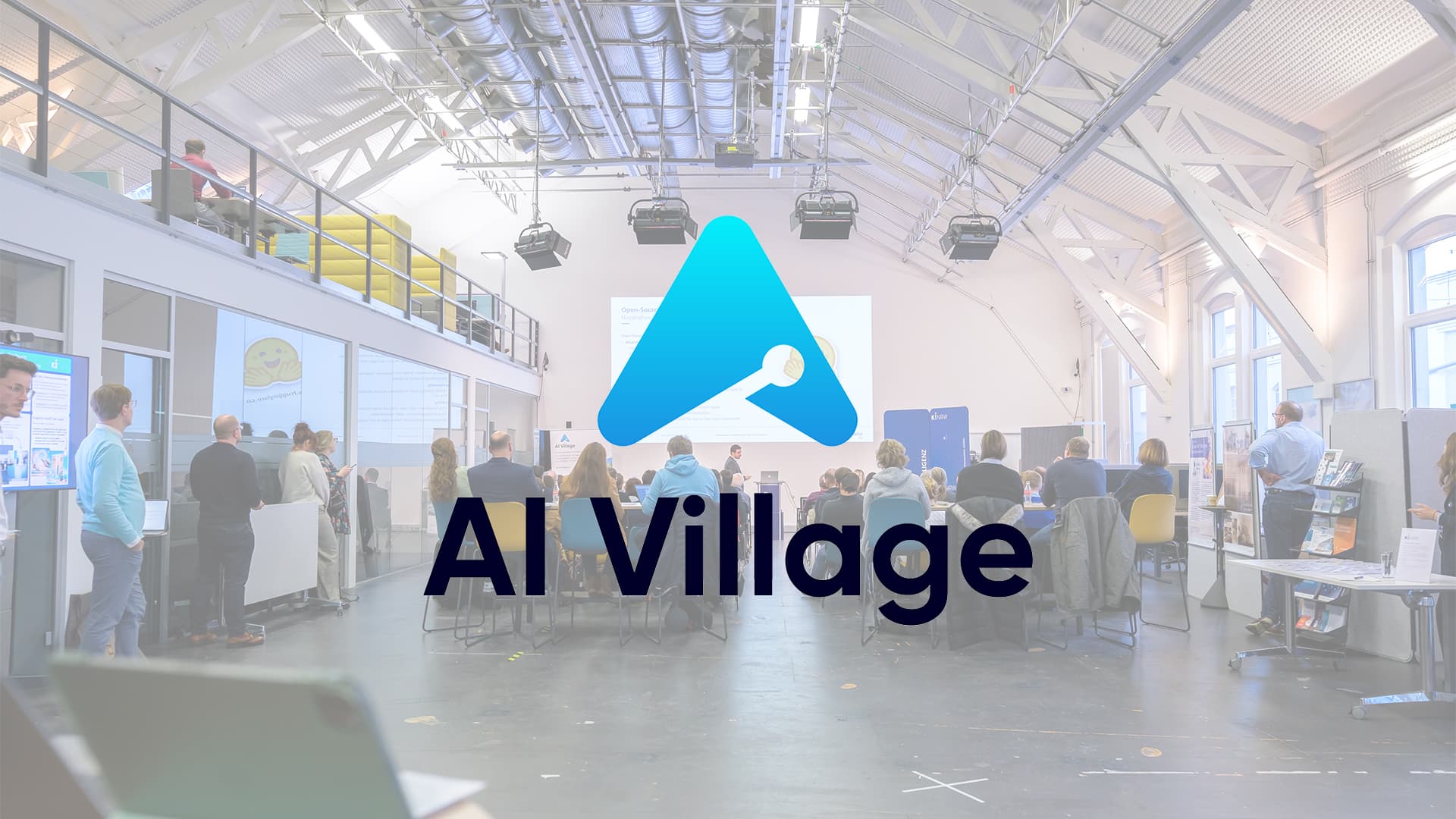
AI Village
AI Village is an innovation campus dedicated to Artificial Intelligence and Robotics, strategically located in the Rheinish region of Germany. It functions as a central hub for fostering AI advancements, offering a comprehensive platform for education, events, and the practical application of AI solutions within businesses. The campus provides interactive demonstrators to experience AI in practice, workshops and vocational training to learn effective AI implementation, and project development support from idea to realization. AI Village aims to bridge the gap between theoretical AI knowledge and real-world business challenges, assisting companies with efficiency improvements, addressing skilled labor shortages, and exploring new business opportunities through AI.

Purdue AI Racing
Purdue AI Racing is a program at Purdue University dedicated to fostering research and education in artificial intelligence. The initiative provides a platform for students and faculty to delve into various AI applications, particularly within the fields of engineering and robotics. It offers essential resources for the research and development of autonomous vehicle technology, contributing significantly to the university's broader mission of innovation in science and technology. The program aims to push the boundaries of AI knowledge and practical implementation through academic exploration and hands-on projects.
uniem
Uniem is an open-source project dedicated to developing and refining universal text embedding models, with a strong focus on the Chinese language. The project offers comprehensive code for training, fine-tuning, and evaluating these models, making it a valuable resource for researchers and developers. All models and associated datasets are made publicly available on the Hugging Face community, promoting accessibility and collaboration. Uniem supports fine-tuning for various models, including M3E, sentence_transformers, text2vec, and even GPT series models using SGPT methods and Prefix Tuning. It also features MTEB-zh, a standardized evaluation benchmark for Chinese embedding models, allowing for rigorous comparison across different models and tasks.

SPE GCS: Data Science Convention
The SPE GCS: Data Science Convention is an annual event organized by the Society of Petroleum Engineers’ Gulf Coast Section. It aims to enhance technical knowledge among members, promote camaraderie and networking within the industry, and educate the community. The convention focuses on mainstreaming AI in the energy sector, making it relevant for Upstream Oil & Gas professionals, academia scholars, and students interested in data science, machine learning, and AI applications. Beyond technical sessions, the organization also provides scholarships to students entering the oil and gas industry, demonstrating a commitment to future talent development.
Goddard - Discovery
Goddard - Discovery offers an intelligent research assistant called Inventia AI, designed to empower researchers by augmenting their capabilities. This platform helps users find and organize research articles, discover latent knowledge within their field, and identify collaboration opportunities. Beyond Inventia AI, Goddard - Discovery also provides services in Artificial Intelligence, Data Science, and Web & App Development. The team is committed to advancing research communities by integrating AI into research processes, enabling breakthroughs and elevating work to unprecedented levels. They are actively shaping the future of research by providing tools and services that enhance scientific investigation across diverse domains.
vibesort
Vibesort is an AI-powered tool designed for sorting arrays using GPT, leveraging OpenAI's API for structured output. This open-source project allows developers to integrate intelligent sorting capabilities into their Python applications. It's an experimental tool, not intended for production use, and requires users to set their OpenAI API key as an environment variable. The project is hosted on GitHub, providing a clear installation process via `pip install vibesort` and usage examples. Its core functionality revolves around the `vibesort` function, which takes an array and returns a sorted version, demonstrating the practical application of large language models in data manipulation tasks.
Safe Stable Diffusion
Safe Stable Diffusion is an AI image generation tool hosted on Hugging Face Spaces by AIML-TUDA. It is designed to facilitate the creation of safe images through stable diffusion technology. While the tool's primary purpose is image generation, the current live website indicates a build error, preventing access to its full functionality. The project is associated with the Artificial Intelligence & Machine Learning Lab at TU Darmstadt and operates under a CreativeML Open RAIL-M license. It is intended for use as a web application.

PubHive Ltd.
PubHive Navigator is an AI-powered platform designed to streamline scientific literature and safety workflows for life science companies. It offers a comprehensive enterprise solution for R&D, pharmacovigilance, library, knowledge management, clinical affairs, medical affairs, regulatory affairs, medical devices, and medical writing. The platform centralizes end-to-end workflows for literature review, curation, annotation, collaboration, searching, reporting, citing, and managing research. Key features include AI-powered Smart Workspaces, collaborative research writing, document delivery integrations, and out-of-the-box workflows for various operational units. PubHive Navigator helps teams eliminate workarounds and friction when working with scholarly journal content from sources like PubMed, offering solutions for systematic reviews, post-market PV literature surveillance, safety signal surveillance, and full-text journal article access.

ScienceOne
ScienceLeadR is an evidence-based AI platform designed to connect life science experts, academic institutions, and organizations to foster collaborations and amplify scientific impact. The platform utilizes Symbolic AI and a comprehensive medical ontology to analyze millions of publicly available scientific outputs, accurately linking publications, clinical trials, patents, grants, and congress contributions to the correct authors. It generates a unique Science Leader Reputation (SLR) score, co-developed with leading Key Opinion Leaders, which reflects an expert’s complete scientific footprint and identifies top experts across various disease areas. ScienceLeadR also features an advanced algorithm to detect 'Rising Stars' by analyzing early scientific activity. Medical experts can claim a free profile, sync publications, generate an AI-powered CV, gain visibility on expert maps, and access tools to explore literature and connect with projects.
DeepAA
DeepAA is an open-source project that leverages convolutional neural networks to generate ASCII art from images. While still under development, it provides a functional framework for transforming visual inputs into text-based artistic representations. The project was accepted by the NIPS 2017 Workshop on Machine Learning for Creativity and Design, highlighting its innovative approach to AI-driven art generation. Users can convert grayscale line images into ASCII art by running a Python script, with options to select a light model for faster processing. The repository includes requirements for TensorFlow, Keras, NumPy, and other libraries, along with instructions for setting up and using the model.
ChatAINet
ChatAINet enables users to build personalized chatbots by training them with a variety of data sources, effectively creating a 'ChatGPT' tailored to their specific needs. This tool is designed to enhance customer service efficiency by automating interactions and delivering quick, high-quality responses. It supports integration with PDFs, Notion, websites, text documents, and Gitbook for comprehensive knowledge base creation. Ideal for SaaS companies, infoproduct creators, and website owners, ChatAINet helps maximize efficiency, elevate support, and transform user interactions without increasing staff. The platform also plans to support additional data sources like API, JSON, and CSV in the future.
DistillerSR
DistillerSR is an AI-enabled software designed to automate systematic literature reviews and evidence synthesis. It assists researchers in efficiently analyzing large volumes of scientific literature, accelerating the research process. The platform features advanced GenAI capabilities for extracting evidence, new library services to streamline literature search strategies for regulatory submissions, and agentic AI capabilities to eliminate evidence silos. DistillerSR supports various industries including academic, medical devices, pharmaceuticals, and public sector, providing modules and AI solutions to manage and triage scientific literature effectively.