
Research & Education
Browsing page 30 of AI tools for Scientific Computing in Research & Education. Sorted by confidence score — our independent quality rating.

super-gradients
Super-gradients is an open-source training library designed to simplify the process of building, training, and fine-tuning state-of-the-art computer vision models. It provides ready-to-deploy pre-trained models, including the high-performance YOLO-NAS and YOLO-NAS-POSE architectures, which outperform other YOLO versions in accuracy and speed. The library supports various computer vision tasks such as classification, semantic segmentation, object detection, and pose estimation. Users can easily load and fine-tune models with validated hyper-parameters, and all models are production-ready, compatible with deployment tools like TensorRT and OpenVINO. Super-gradients also offers advanced features like Quantization Aware Training (QAT) and Knowledge Distillation, along with support for Distributed Data Parallel (DDP) for efficient multi-GPU training.
deeppy
deeppy is an open-source deep learning framework designed for Python, leveraging NumPy for its core operations and offering CUDA acceleration to enhance computational performance. This makes it suitable for researchers and developers working on deep learning projects that require efficient processing. The framework aims to provide a Pythonic interface, allowing users to build and experiment with deep learning models using familiar Python constructs. Its foundation on NumPy ensures compatibility and ease of integration with the broader Python scientific computing ecosystem, while CUDA support addresses the need for high-speed parallel processing in deep learning tasks.
ZenteiQ.ai
ZenteiQ.ai is an advanced AI platform designed to revolutionize engineering design by integrating physics-native AI with Scientific Foundation Models. It specializes in transforming complex simulation and experimental data into actionable intelligence, accelerating discovery, design, and industrial innovation across various sectors. The platform's capabilities are highlighted by its ability to handle intricate equations like the Heat Equation, Wave Equation, Navier-Stokes, and Schrödinger, indicating its application in highly technical and scientific domains. ZenteiQ.ai aims to provide intelligent surrogates for engineering design, enabling more efficient and accurate development processes.
qwen600
qwen600 is a static, suckless single batch CUDA-only mini inference engine specifically designed for the QWEN3-0.6B instruct model. Developed for educational purposes, it allows users to learn about Large Language Models (LLMs) and transformers while practicing CUDA programming. The engine boasts significant performance improvements, claiming to be approximately 8.5% faster than llama.cpp and 292% faster than Hugging Face with flash-attn in tokens/sec. It features compile-time optimization, minimal dependencies (CUDA, cuBLAS, CUB, std IO), efficient memory management, and zero-cost pointer-based weight management on GPU, making it suitable for systems with limited VRAM like an RTX 3050 8GB.
Laplace
Laplace is an open-source Python package designed to simplify the application of Laplace approximations within deep learning. It supports various configurations, including approximations for entire neural networks, specific subnetworks, or just their last layer. The package provides functionalities for posterior approximations, marginal-likelihood estimation, and a range of posterior predictive computations. It is accompanied by a research paper, "Laplace Redux—Effortless Bayesian Deep Learning," which introduces the library and demonstrates its versatility. Users are encouraged to experiment with different options like Hessian factorization and prior precision tuning methods to optimize its performance for specific applications.
solo-learn
solo-learn is an open-source library dedicated to self-supervised methods for unsupervised visual representation learning, built on PyTorch Lightning. It aims to offer state-of-the-art techniques within a consistent and comparable framework, while also incorporating various training optimizations. The library is self-contained, allowing for flexible integration of its models into other projects. Key features include a wide array of self-supervised methods like Barlow Twins, BYOL, DINO, MAE, MoCo V2+, SimCLR, and VICReg, alongside support for various backbones such as ResNet, ViT, and ConvNeXt. It also boasts increased data processing speed with Nvidia Dali, flexible augmentations, and comprehensive evaluation methods including online/offline linear evaluation and K-NN evaluation. The tool is ideal for machine learning researchers and developers working on visual representation learning tasks.
Process-Energy-Environmental Systems Engineering (PEESE) Lab
The Process-Energy-Environmental Systems Engineering (PEESE) Lab, led by Fengqi You at Cornell University, is an interdisciplinary research group dedicated to pushing the boundaries of systems engineering, artificial intelligence, and data science. The lab develops innovative computational models, optimization algorithms, statistical machine learning techniques, and multi-scale systems analytics tools. These methodologies are applied across a variety of domains, including materials informatics, smart manufacturing, digital agriculture, energy systems, and sustainability. PEESE Lab emphasizes the seamless integration of theoretical frameworks, computational methods, and real-world applications, with research featured in prestigious journals like Science Advances and Nature Communications.
FLUX.1 [dev]-De-Distill
FLUX.1 [dev]-De-Distill is an AI tool hosted on Hugging Face, specifically designed for AI model development and machine learning research. It caters to the needs of AI researchers and developers, providing a platform for their work. The tool operates under the MIT license, promoting open access and collaboration within the AI community. Currently, the Space is paused, and users interested in utilizing it are directed to the community tab to request its restart from the author(s). This indicates a community-driven approach to its availability and maintenance.

Inverted AI
Inverted AI develops cutting-edge AI solutions for creating highly realistic and reactive non-playable characters (NPCs) for various simulation environments. These NPCs are designed to mimic human-like behaviors, offering behavioral diversity crucial for testing and developing autonomous vehicles (AV/ADAS), autonomous robots, and smart city applications. The platform offers products like Planner and Verify, alongside Cloud API and Logs for integration. It supports different AV development stages (AV 1.0, AV 2.0, AV 3.0) and provides solutions for onboard, post-perception, and V&V (Verification & Validation) processes. Developer documentation and client libraries for C++, Python, and REST API are available, along with TorchDriveSim and TorchDriveEnv.
FBPINNs
FBPINNs provides a robust framework for solving complex forward and inverse problems involving partial differential equations (PDEs). It leverages finite basis physics-informed neural networks (FBPINNs), which combine the strengths of PINNs with domain decomposition, individual subdomain normalization, and flexible training schedules. This approach significantly outperforms traditional PINNs in accuracy and computational efficiency, especially for problems with high frequencies or multi-scale solutions. The library has been re-engineered in JAX, enabling 10-1000X faster execution by parallelizing subdomain computations. Users can define custom problem domains, PDEs, domain decompositions, and neural network architectures, making it highly flexible for various scientific computing tasks. It also supports solving inverse problems and integrating arbitrary boundary/data constraints.
perception_models
Perception Models is a comprehensive repository offering state-of-the-art AI models for image, video, and audio perception. It features the Perception Encoder (PE) for robust encoding across various modalities, including core vision-language tasks, LLM-aligned vision-language modeling, and spatially-tuned dense prediction. Additionally, it provides the Perception Language Model (PLM) for decoding, facilitating research in vision-language modeling with open and reproducible models. The repository also includes PE Audio-Visual and PE Audio-Frame models, expanding its capabilities to joint audio-visual embedding and audio event localization. With extensive benchmarks and clear getting started guides, Perception Models is an invaluable resource for developers and researchers working on advanced multimodal AI applications.

GeologicAI
GeologicAI innovates tools, technologies, and solutions for the mining industry, enabling critical and complex decision-making without compromising confidence. It is the only company combining high-fidelity data, robust analytics, and domain expertise at every stage of the mining cycle. The platform offers core scanning and logging, utilizing advanced multi-sensor technology like RGB, XRF, hyperspectral, and LiDAR for accurate datasets. It also provides resource modeling solutions, integrating with industry-standard software like RMSP and DHO to guide data from scanning to mine planning. GeologicAI aims to enhance resource knowledge, improve logging consistency, and quantify uncertainty for risk-optimized decision-making, ultimately accelerating projects and providing faster turnaround times.
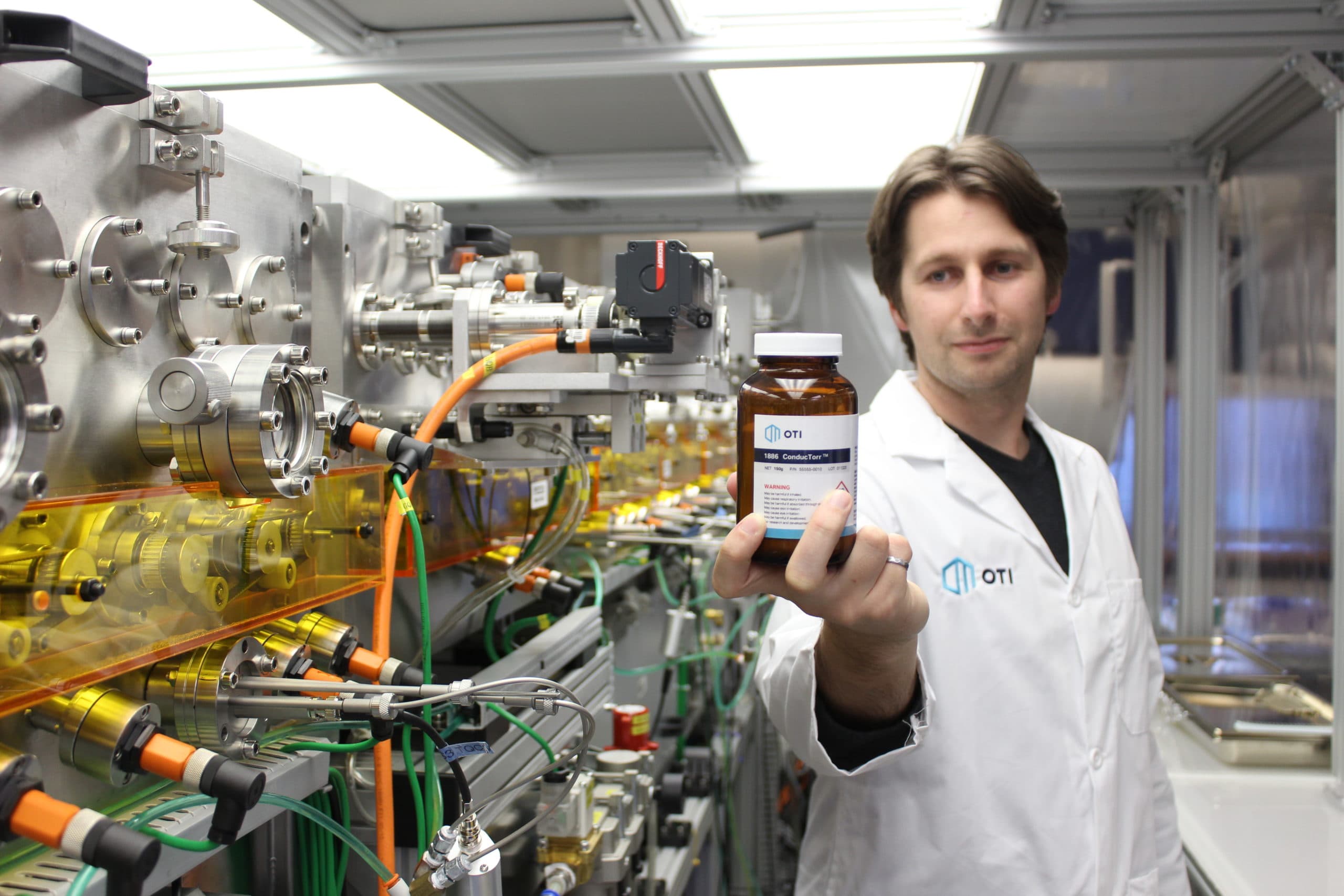
OTI Lumionics
OTI Lumionics specializes in developing production-ready advanced materials for electronics, leveraging quantum simulations, AI, and pilot testing. Their primary focus is on key enabling materials for OLED displays, which are crucial for next-generation consumer electronics and automotive applications. The company's advanced electrode materials and manufacturing technology are used to create transparent displays and lighting. They utilize a computational Materials Discovery Platform to rapidly iterate and design new materials without a wet-lab, ensuring mass-production readiness. OTI Lumionics also applies quantum computing to enhance the accuracy and speed of their computational chemistry simulations, offering capabilities in computational materials design, synthesis, scale-up, and pilot production testing.
Preferred Computational Chemistry, Inc.
Matlantis is an atomic-level AI simulator that provides fast, accurate insights for experimental discovery in materials science. It leverages a fusion of materials science and AI to enable atomistic simulations with accuracy comparable to quantum chemical calculations, but at significantly higher speeds. Matlantis can simulate chemically and structurally complex materials without restrictions on elemental composition or arrangement. This tool transforms materials research by operating ahead of experiments, drastically reducing development time from months to seconds. Key features include its core AI model PFP, applied technologies like LightPFP and Matlantis CSP, and comprehensive support for implementation and utilization.
awesome-deepbio
awesome-deepbio is a curated, open-source list of deep learning applications specifically tailored for the field of computational biology. This GitHub repository serves as an invaluable resource for researchers, academics, and practitioners seeking to explore the intersection of deep learning and biological problems. It meticulously compiles research papers, often including links to their implementations, covering a wide array of topics from protein homology detection and contact map prediction to genetic variant annotation and drug discovery. The list is organized chronologically by publication date, making it easy to track the evolution and advancements in the field. It is freely available and constantly updated, providing a dynamic overview of cutting-edge deep learning techniques applied to biological data.

SimWorx Eng. R&D
SimWorx is an engineering, research, and development company founded in 2007 by postgraduate researchers from the State University of Campinas (UNICAMP). It specializes in innovative numerical modeling solutions, leveraging cutting-edge technology and AI to optimize oil, gas, and various engineering projects. SimWorx offers custom-built solutions tailored to specific industry needs, including computational vision, high-performance simulation, and AI-driven engineering. Key offerings include StimBR for acid stimulation analysis, WellWorx for production optimization, and Scope, an AI-based drilling NPT reduction tool. The company focuses on boosting performance and reducing costs through advanced simulation tools, enhancing engineering and decision-making processes for its clients.
shapiq
shapiq is a Python package designed for machine learning explainability, specifically focusing on Shapley Interactions and Shapley Values. It provides tools for approximating any-order Shapley interactions, benchmarking game-theoretical algorithms, and explaining feature interactions within model predictions. The library extends the functionality of the well-known SHAP package, offering a more comprehensive view of machine learning models by quantifying synergy effects between features, data points, or weak learners. It supports various interaction indices like k-SII, SV, FBII, and FSII, and includes functionalities for visualizing feature interactions through network plots. shapiq is intended for Python 3.12 and above, and can be installed via uv or pip.
Crepe
Crepe offers a robust implementation of character-level convolutional networks for text classification, built on Torch 7. This open-source project allows users to reproduce the experimental results from the "Character-level Convolutional Networks for Text Classification" article published in NIPS 2015. It includes data preprocessing scripts to convert CSV datasets into a Torch 7 binary format and a training program. The tool is designed for technical users and researchers, providing a foundation for advanced text classification tasks. While it requires a specific environment, including Torch 7 and potentially a powerful GPU, it serves as a valuable resource for understanding and applying character-level CNNs.
finetune-transformer-lm
finetune-transformer-lm provides the code and model for the research paper "Improving Language Understanding by Generative Pre-Training." This open-source project is designed for researchers and developers interested in replicating and experimenting with the generative pre-training techniques described in the paper. Specifically, it includes an implementation for the ROCStories Cloze Test, allowing users to run experiments and analyze results. While the code is provided as-is with no expected updates, it serves as a valuable resource for understanding the foundational concepts of generative pre-training and language understanding models. The repository also notes that the code is currently non-deterministic due to various GPU operations, with a median accuracy slightly lower than the paper's reported single run.
Leaderboard
Leaderboard serves as a robust and comprehensive benchmarking platform specifically designed for Automatic Speech Recognition (ASR). It addresses the critical need for measurable performance in ASR systems by offering three core components: a TestSet Zoo, a Model Zoo, and a Benchmarking Pipeline. The TestSet Zoo includes a wide range of academic and SpeechIO-curated datasets covering various speech recognition tasks and scenarios in both English and Chinese. The Model Zoo comprises a collection of commercial APIs and open-source models for comparison. The platform provides a simple and well-specified pipeline for data preparation, recognition, post-processing, and error rate evaluation, enabling researchers and developers to easily benchmark, reproduce, and examine ASR systems.
LightNet
LightNet is an open-source project offering a collection of light-weight neural networks specifically designed for semantic image segmentation. It focuses on achieving high segmentation accuracy while maintaining computational efficiency, making it suitable for embedded devices often found in autonomous driving systems. The repository includes implementations of several architectures such as MobileNetV2Plus, RF-MobileNetV2Plus, MobileNetV2Vortex, MobileNetV2Share, Mixed-scale DenseNet, SE-WResNetV2, and ShuffleNetPlus. These models incorporate techniques like Spatial-Channel Squeeze & Excitation (SCSE), Receptive Field Block (RFB), and Vortex Pooling. LightNet provides code in PyTorch and supports training and evaluation on Cityscapes and Mapillary Vistas Datasets, along with data augmentation using GANs.
ml-workspace
ml-workspace is a comprehensive web-based Integrated Development Environment (IDE) designed specifically for machine learning and data science tasks. It offers a streamlined deployment process, allowing users to quickly set up and begin building ML solutions on their own machines. The workspace comes pre-loaded with a wide array of popular data science libraries such as Tensorflow, PyTorch, Keras, and Scikit-learn, alongside essential development tools like Jupyter, VS Code, and Tensorboard. These tools are perfectly configured, optimized, and integrated to provide a productive environment. Key features include web-based access to Jupyter, JupyterLab, and Visual Studio Code, a full Linux desktop GUI via web browser, seamless Git integration optimized for notebooks, and integrated hardware and training monitoring via Tensorboard and Netdata. It supports easy deployment on Mac, Linux, and Windows via Docker.
pymarl
PyMARL is a Python-based, open-source framework developed by WhiRL for deep multi-agent reinforcement learning. It provides implementations of several prominent algorithms, including QMIX for monotonic value function factorisation, COMA for counterfactual multi-agent policy gradients, VDN for value-decomposition networks, IQL for independent Q-learning, and QTRAN for learning to factorize with transformation. The framework is built using PyTorch and integrates with SMAC (StarCraft Multi-Agent Challenge) as its environment, specifically using SC2.4.6.2.69232 for the results in the SMAC paper. PyMARL supports saving and loading trained models, as well as watching StarCraft II replays, making it a comprehensive tool for researchers and developers in the multi-agent RL domain.
Reproducible-Deep-Compressive-Sensing
Reproducible-Deep-Compressive-Sensing is a comprehensive collection of source code dedicated to deep learning-based compressive sensing (DCS). This repository categorizes and provides access to numerous research works, offering links to their respective source code, PDF papers, and DOIs. The collection is organized based on key characteristics such as sampling matrix type (frame-based/block-based), sampling scale (single scale, multi-scale), and the deep learning platform used. It also includes code for image and video reconstruction, as well as other related applications. This resource is invaluable for researchers and developers looking to explore, reproduce, or build upon existing deep learning models in compressive sensing.