
Research & Education
Browsing page 31 of AI tools for Scientific Computing in Research & Education. Sorted by confidence score — our independent quality rating.

swin2sr
swin2sr is an open-source AI tool leveraging the SwinV2 Transformer for advanced image super-resolution and restoration. It excels at reducing JPEG compression artifacts and upscaling images, offering state-of-the-art performance in classical, lightweight, and real-world image super-resolution. The tool is particularly effective for compressed input scenarios, addressing common issues like training instability and resolution gaps in transformer vision models. It provides code, pre-trained models, and demos, making it suitable for both research and practical applications in image processing and low-level vision. Demos are available on platforms like Kaggle, Google Colab, and Huggingface Spaces.
sonata
Sonata is the official project repository for "Sonata: Self-Supervised Learning of Reliable Point Representations," a CVPR'25 Highlight paper. This open-source tool provides self-supervised pre-trained Point Transformer V3 models specifically designed for various 3D point cloud downstream tasks. Users can leverage Sonata for quick inference and visualization, with easy-to-use installation options for both standalone and package modes. The repository includes pre-trained models, inference code, and visualization demos, making it accessible for researchers and developers. It supports custom data integration and offers a flexible data transformation pipeline, along with options for loading models from Huggingface or local paths, even accommodating environments without FlashAttention.
Texygen
Texygen is an open-source benchmarking platform designed to support research in open-domain text generation models. It offers a comprehensive suite of implemented text generation models, alongside a diverse set of metrics for evaluating the diversity, quality, and consistency of generated texts. The platform aims to standardize research in the field of text generation, fostering reproducibility and reliability in future work. By facilitating the sharing of fine-tuned open-source implementations among researchers, Texygen helps advance the development and understanding of text generation technologies. It supports Python 3.6+ and popular libraries like TensorFlow, Numpy, Scipy, and NLTK.
tiny-cuda-nn
tiny-cuda-nn is a high-performance C++/CUDA neural network framework designed for speed and efficiency in training and querying neural networks. It incorporates a lightning-fast "fully fused" multi-layer perceptron and a versatile multiresolution hash encoding, as detailed in its technical papers. The framework supports various input encodings, losses, and optimizers, making it adaptable for diverse neural network applications. It also offers JIT fusion for significant performance boosts, particularly on newer NVIDIA GPUs, and provides PyTorch bindings for integration into Python workflows, though native CUDA performance remains superior for large batch sizes. The framework is ideal for developers and researchers working on demanding AI tasks requiring optimized computational performance.
Transformer-SSL
Transformer-SSL is an open-source project offering the official implementation for "Self-Supervised Learning with Swin Transformers." This codebase is notable for including Swin Transformer as one of its backbones, enabling the evaluation of learned representations' transferring performance on downstream tasks like object detection and semantic segmentation. It features MoBY, a self-supervised learning approach combining MoCo v2 and BYOL, achieving high accuracy on ImageNet-1K linear evaluation with significantly fewer tricks than previous works. The project provides models and code for self-supervised learning, linear evaluation, and demonstrates strong performance when transferring to object detection and semantic segmentation tasks.

Industrial Engineering & Innovation Sciences at TU/e
Eindhoven University of Technology (TU/e) is a leading research university dedicated to engineering science and technology. The Industrial Engineering & Innovation Sciences department focuses on effective and value-driven innovation, researching the responsible implementation of advanced technologies like AI and robotics. The program uniquely combines social sciences, humanities, and technical sciences to address complex challenges. Key research themes include the interaction between humans and technology, supply chain management, sustainability, and data-driven intelligence. TU/e offers bachelor's and master's programs, conducts extensive research, and fosters cooperation with industry, providing a comprehensive environment for academic and professional growth.
Pixstart
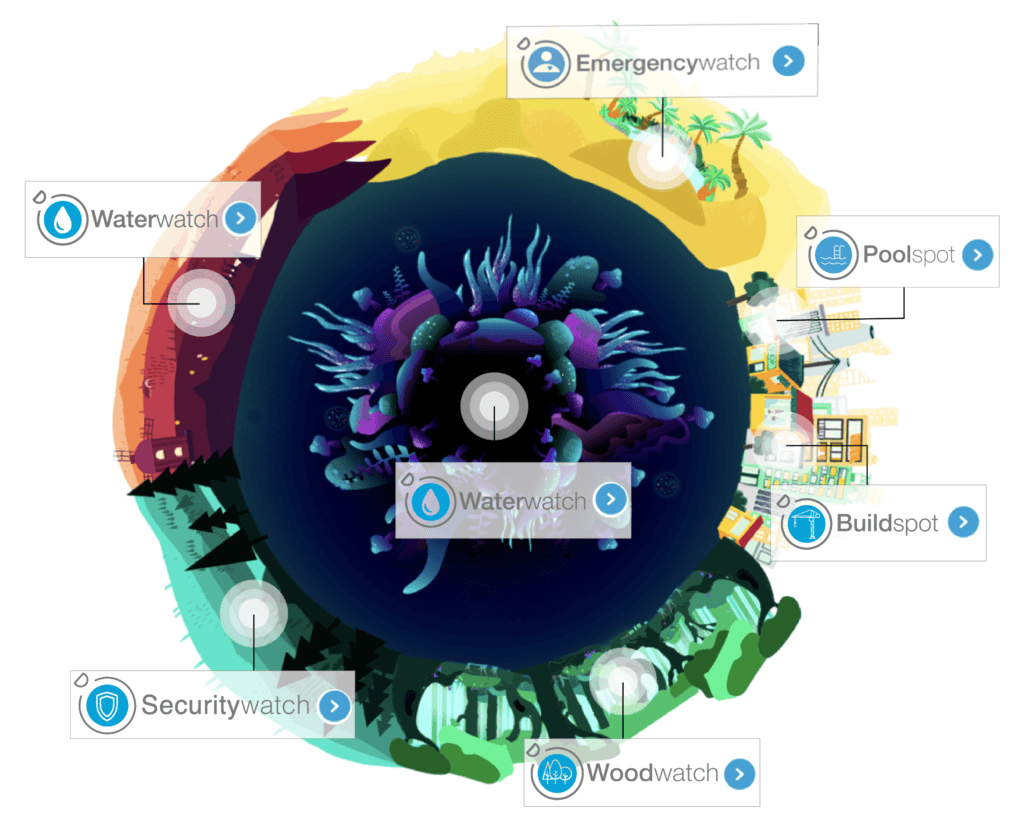
Pixstart offers innovative solutions for public and private actors to better manage and monitor the ecology of territories using satellite data and AI. The tool helps track the evolution of environments, providing insights into water quality, forest health, and complex environmental zones. It enables users to monitor natural resources and exploitation infrastructures, conduct comprehensive environmental diagnostics, and receive advice on actions to take. Pixstart's tools assist in identifying and adjusting best practices to support and improve ecosystems, addressing challenges posed by climate change and human activities with significant economic and health repercussions.

RoadGauge Ltd
RoadGauge Ltd offers an innovative solution for 3D road analysis, leveraging AI technology and readily available hardware like GoPro cameras. Users can mount a camera, record a drive, and upload the video to RoadGaugeAI for processing. The platform then reconstructs the road in 3D, providing sectional profiles with defects measured and geotagged to millimeter accuracy. It identifies safety hazards, profiles road surfaces, and helps locate, classify, and manage transport assets. This cost-effective system allows users to own their hardware, reduce inspection capital expenses, and receive survey results in various formats like PDF, KML, GPX, and CSV, with fast delivery times.
SWARM Biotactics
SWARM Biotactics specializes in creating Biobots and autonomous cyborg swarms capable of entering, sensing, and reporting in environments where traditional technology cannot operate. Their system, SWARM OS, provides mission control, swarm autonomy, and sensor fusion, enabling persistent presence and real-time intelligence gathering. This technology is designed for critical applications in defense, security, police, and search & rescue, offering solutions for GPS-denied, cluttered, and high-risk terrains. SWARM Biotactics focuses on providing low-signature, always-on ground truth, reducing risk and protecting personnel and infrastructure.

Valo Health
Valo Health is a technology company revolutionizing drug discovery and development by integrating human and machine intelligence. Their approach combines real-world data, AI, advanced causal inference techniques, and predictive chemistry to create a powerful engine for accelerating life-changing cures. Valo harnesses AI to find patterns in large-scale human data, identify novel disease targets, and rapidly engineer novel small molecules through human causal biology and closed-loop chemistry. This deep integration across biology, chemistry, and engineering disciplines allows them to explore vast chemical spaces and advance promising lead series into candidates, ultimately aiming to reduce costs and failure rates in drug development.
DirectML
DirectML is a high-performance, hardware-accelerated DirectX 12 library designed for machine learning tasks. It offers GPU acceleration for common machine learning operations across a wide array of supported hardware and drivers, including all DirectX 12-capable GPUs from major vendors. While DirectML is currently in maintenance mode, it remains supported on previous Windows releases and continues to ship with future Windows versions, receiving security and compliance fixes. It is distributed as a system component of Windows 10 and is also available as a standalone redistributable package for applications requiring a fixed version or running on older Windows 10 versions. DirectML exposes a native C++ DirectX 12 API and integrates as a backend for frameworks like Windows ML, ONNX Runtime, PyTorch, and TensorFlow, making it suitable for high-performance, low-latency applications such as frameworks, games, and other real-time applications.
Machine-learning-for-proteins
Machine-learning-for-proteins is a comprehensive and collaborative listing of academic papers focused on the application of machine learning in protein research. This resource aims to keep pace with the rapidly evolving field of protein engineering and analysis, offering a broader scope beyond engineering-specific applications. Papers are categorized by application and model type, such as reviews, tools and datasets, generative models, and various prediction tasks (stability, structure, sequence, interactions). Within each category, papers are listed in reverse chronological order, providing the most up-to-date information. It encourages community contributions through pull requests or issues, making it a dynamic and continuously updated resource for anyone interested in the intersection of machine learning and protein science.
MiniMax-M1
MiniMax-M1 is the world's first open-weight, large-scale hybrid-attention reasoning model, powered by a hybrid Mixture-of-Experts (MoE) architecture combined with a lightning attention mechanism. Developed based on the MiniMax-Text-01 model, it features 456 billion parameters with 45.9 billion parameters activated per token. A key differentiator is its native support for a context length of 1 million tokens, significantly larger than competitors. The lightning attention mechanism ensures efficient scaling of test-time compute, consuming 25% of the FLOPs compared to DeepSeek R1 at a generation length of 100K tokens. MiniMax-M1 is trained using large-scale reinforcement learning (RL) on diverse problems, including mathematical reasoning and software engineering. It offers two versions with 40K and 80K thinking budgets, outperforming other strong open-weight models on complex software engineering, tool-using, and long-context tasks. It also supports function calling capabilities and provides a chatbot and API for general use and evaluation.
Metrics
Metrics is an open-source toolbox offering implementations of various supervised machine learning evaluation metrics across multiple programming languages. Developers and researchers can utilize this tool to assess model performance in Python, R, Haskell, and MATLAB/Octave environments. It includes a wide array of metrics such as Absolute Error, Area Under the ROC, F1 Score, Log Loss, Mean Absolute Error, Mean Squared Error, and Root Mean Squared Error. The project is currently in a beta release, focusing on ensuring compatibility and functionality across its supported language repositories. It aims to provide a comprehensive suite for evaluating machine learning models.
neurodiffeq
neurodiffeq is an open-source Python library built on PyTorch, designed for solving ordinary and partial differential equations (ODEs and PDEs) using neural networks. It provides a flexible framework for implementing existing techniques of using artificial neural networks (ANNs) to approximate solutions. Unlike traditional numerical methods, neurodiffeq aims to compute continuous and differentiable solutions. The library supports various features including solving systems of ODEs and PDEs, handling initial and boundary conditions, and customizing network architectures. It also offers tools for monitoring training progress, implementing transfer learning, and defining custom sampling strategies for training points. Additionally, neurodiffeq supports solving solution bundles and inverse problems, making it suitable for complex scientific and engineering applications.
Neural-Network-Visualisation
Neural-Network-Visualisation offers an interactive web-based visualization for a compact multi-layer perceptron, specifically trained on the MNIST handwritten digit dataset. Users can draw digits on a 28x28 grid and observe in real-time how activations propagate through the 3D network. The tool also displays prediction probabilities, providing a clear understanding of the neural network's decision-making process. It highlights the strongest incoming connections per neuron and uses color-coding to represent activation sign and magnitude. The project is open-source and provides Python helper scripts for training the MLP and exporting weights, supporting Apple Metal, CUDA, or CPU acceleration. It also includes a timeline export feature, allowing users to scrub through different training checkpoints.
OpenChem
OpenChem is a deep learning toolkit specifically designed for computational chemistry and drug design research, built with a PyTorch backend. Its primary goal is to simplify the application of deep learning models for researchers in these fields. Key features include a modular design with a unified API, allowing for easy combination of different modules, and the ability to build new models using only a configuration file. The toolkit supports fast training with multi-GPU capabilities and provides utilities for data preprocessing. It also integrates with Tensorboard for visualization. OpenChem handles various tasks such as classification, regression, multi-task learning, and generative models, supporting data types like character sequences (SMILES, amino acids) and molecular graphs, with automatic conversion of SMILES to graphs.

Reliant AI
Reliant AI is an applied AI tool designed for the life sciences industry, simplifying the labor-intensive process of collecting, organizing, and inspecting vast amounts of complex data. It combines a standardized AI engine with customized solutions to work alongside biopharma teams, from portfolio strategy to launch success prediction. The platform offers high-confidence planning and insights by transforming commercial decision-making with advanced ML and reinforcement learning models tailored to life sciences data. Key features include automated ingestion with expert annotation for high precision, life-science-specific AI that makes fewer errors than general tools, and the ability to connect current assets to commercial outcomes through densified Knowledge Graphs. It accelerates systematic reviews by screening and extracting data from full-text PDFs and conference documents, ensuring total accountability by tracing findings back to original sources.
RLzoo
RLzoo is a comprehensive open-source reinforcement learning zoo designed for simple usage, implemented with TensorFlow 2.0 and leveraging the neural network layer APIs of TensorLayer2.0+. It offers a hands-on approach for reinforcement learning practices and benchmarks, supporting basic toy-tests like OpenAI Gym and DeepMind Control Suite with minimal configuration. Additionally, RLzoo supports robot learning environments such as RLBench. The platform provides both implicit and explicit configuration interfaces for running learning algorithms, making it flexible and convenient for users. It also supports distributed training across multiple computational nodes using the Kungfu package, catering to more realistic and large-scale scenarios.
SkyFi
SkyFi is an Earth intelligence platform offering instant access to satellite imagery and geospatial analytics. Users can order and task satellite imagery and SAR from top providers, access a vast archive of data, and download geospatial data and analytics through a unified platform. Key features include advanced analytics like object detection and hyperspectral signature analysis, commercial imagery tasking, and access to open data. SkyFi also provides specialized access to constellations like Vantor and Planet SkySat, as well as Maritime AIS data and ICEYE US Direct SAR intelligence, catering to diverse needs from agriculture to military and defense.
TencentPretrain
TencentPretrain is a powerful PyTorch-based framework designed for pre-training and fine-tuning AI models, supporting various data modalities including text and vision. Its modular architecture facilitates the use of existing pre-training models and provides clear interfaces for users to further develop and customize their own models. This makes it an ideal solution for researchers and developers looking to experiment with or deploy advanced AI models. The framework emphasizes flexibility and extensibility, allowing for adaptation to diverse research and application needs in the AI domain.
UniDetector
UniDetector is an open-source computer vision tool designed for universal object detection, providing the code release for the CVPR 2023 paper "Detecting Everything in the Open World: Towards Universal Object Detection." Built upon mmdetection v2.18.0 and requiring CLIP, this tool facilitates both single-dataset and multi-dataset training, as well as open-world inference. It supports end-to-end and decoupled training/inference workflows, including probability calibration. UniDetector is ideal for researchers and developers working on advanced object detection tasks, offering robust capabilities for preparing datasets, language CLIP embeddings, and pre-trained RegionCLIP parameters.

SID.ai
SID.ai is an AI research lab dedicated to advancing retrieval models. The company specializes in training models that offer superior accuracy, reduced cost, and increased speed compared to traditional methods. By focusing on these key areas, SID.ai aims to significantly improve the performance and efficiency of AI systems that rely on data retrieval. Their work is geared towards making advanced AI capabilities more accessible and practical for various applications, pushing the boundaries of what's possible in AI research and development.

Vellex Computing
Vellex Computing provides a complete hardware and software stack for real-time AI training at the edge, addressing the challenge of static AI models on devices like satellites, drones, and industrial robots. Unlike conventional iterative AI training that consumes significant power and time, Vellex utilizes a physics-based optimization approach. This allows its analog IP block to deliver optimal model weights at milliwatt power and nanosecond-scale speed, integrating seamlessly with standard ARM or RISC-V cores. The platform includes Vellex Train (software optimization), Vellex Board (developer kit), Vellex Core (licensable silicon), and a Code-to-Circuit compiler compatible with ML frameworks like PyTorch and JAX, requiring no analog expertise from engineers. This innovation enables continuous on-device learning, making AI models adaptive and responsive to changing real-world conditions.