
Research & Education
Browsing page 29 of AI tools for Scientific Computing in Research & Education. Sorted by confidence score — our independent quality rating.

micronet
Micronet is an open-source library designed for AI model compression and efficient deployment on various hardware platforms. It provides a comprehensive suite of techniques including quantization-aware training (QAT) and post-training quantization (PTQ) for both high-bit and low-bit scenarios, as well as pruning methods like normal, regular, and group convolutional channel pruning. The library also supports batch-normalization fusion for quantization, enhancing model efficiency. For deployment, Micronet integrates with TensorRT, enabling optimized inference in fp32, fp16, and int8 formats with features like op-adapt and dynamic shape support. This makes it an invaluable tool for developers looking to reduce model size and accelerate inference speed.
pyannote-audio
pyannote-audio is an open-source Python toolkit designed for speaker diarization, a process that identifies 'who spoke when' in an audio recording. Built on the PyTorch machine learning framework, it offers robust capabilities for speech activity detection, speaker change detection, and speaker embedding. The toolkit includes pretrained models and pipelines, allowing users to quickly implement and experiment with audio analysis tasks. Furthermore, it supports fine-tuning of these models, enabling users to optimize performance on their specific custom datasets. This makes pyannote-audio a versatile tool for researchers and developers working with audio data.
siggraph2016_colorization
siggraph2016_colorization is an open-source tool offering code for automatic image colorization, leveraging deep learning techniques. It specifically implements a method for joint end-to-end learning of global and local image priors, allowing for nuanced and context-aware colorization. A key feature is its ability to perform simultaneous classification during the colorization process of grayscale images, which can enhance the accuracy and quality of the output. This tool is ideal for researchers, developers, and enthusiasts interested in computer vision and image processing, providing a foundational codebase for further experimentation and application in image restoration and enhancement.
TensorFlow-VAE-GAN-DRAW
TensorFlow-VAE-GAN-DRAW is an open-source collection of generative methods implemented using TensorFlow. This repository offers implementations of Deep Convolutional Generative Adversarial Networks (DCGAN), Variational Autoencoders (VAE), and DRAW: A Recurrent Neural Network For Image Generation. It allows users to experiment with and run these different generative models, providing a foundation for research and development in image generation. The project highlights that DCGANs produce decent results after 10 epochs with default parameters and outlines future enhancements like more complex data integration and replacing the current attention mechanism with a Spatial Transformer Layer.
TTS
TTS is a comprehensive open-source library developed by Mozilla for advanced Text-to-Speech generation. It leverages the latest research to provide a balance of ease-of-training, speed, and quality, making it suitable for various applications. The library includes pretrained models and tools for measuring dataset quality, supporting over 20 languages. It features high-performance deep learning models for Text2Spec tasks like Tacotron and Glow-TTS, as well as various vocoder models such as MelGAN and WaveRNN. TTS supports multi-speaker TTS, efficient multi-GPU training, and the ability to convert PyTorch models to Tensorflow 2.0 and TFLite for inference. It also provides a demo server for model testing and notebooks for extensive benchmarking.
UniPic
UniPic is an open-source multi-image editing model developed by SkyworkAI, focusing on image editing, generation, and understanding tasks. The tool is built around three distinct modeling paradigms, offering flexibility and advanced capabilities for manipulating and interpreting images. It is particularly well-suited for AI researchers and developers who are actively working on or interested in multimodal models, providing a robust platform for experimentation and application development in the field of artificial intelligence and computer vision.
Algoryx
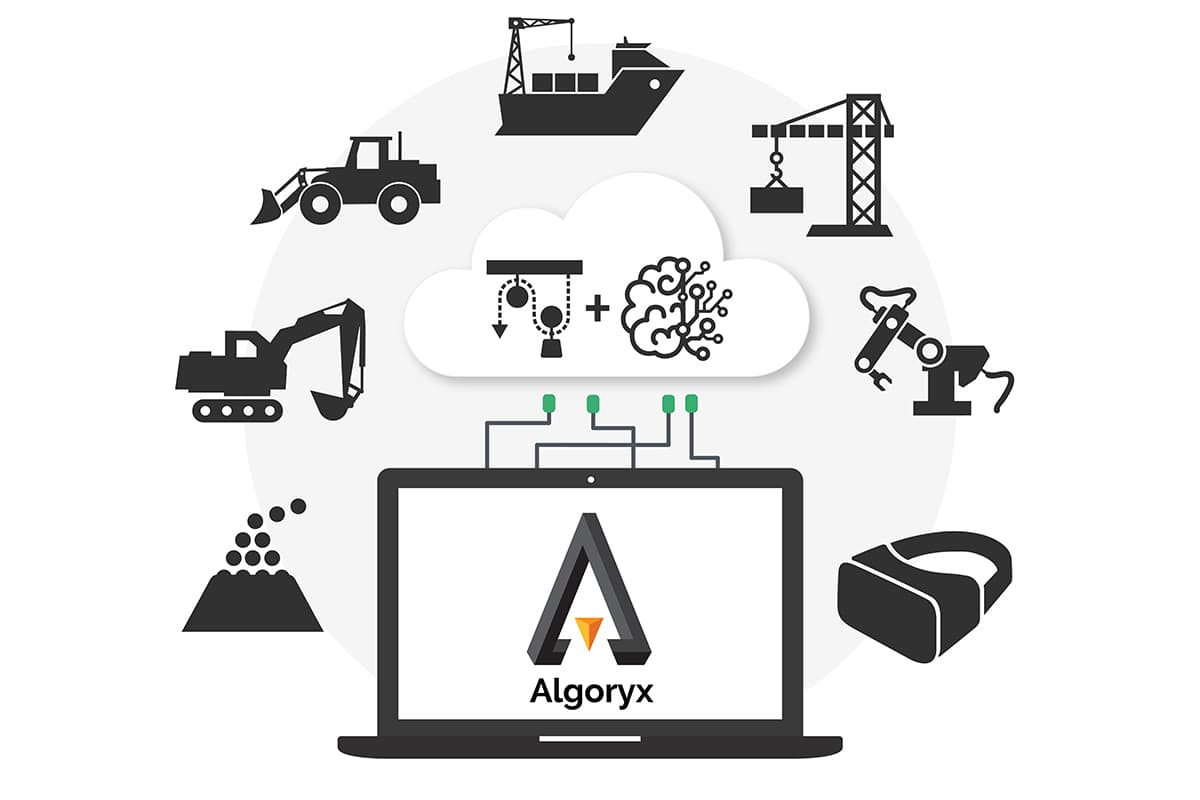
Algoryx specializes in high-fidelity physics simulation, offering physical AI and physics-based digital twins. Its core product, AGX Dynamics, is a powerful physics engine capable of real-time multibody dynamics simulation, handling frictional contacts, non-ideal joints, flexible objects, and more. Algoryx Momentum, a plugin for SpaceClaim CAD software, enables interactive design and rapid prototyping, with an extension for granular material handling. The company also provides AGX Dynamics for Unity and is developing a version for Unreal Engine, combining state-of-the-art visualization with industrial-grade simulations. Algoryx's solutions are crucial for developing autonomous systems, virtual prototyping, and creating accurate VR training simulators, ensuring reliable transfer of simulated data to real-world applications.
Waveye
Waveye specializes in AI-driven imaging radars, delivering ultra high-resolution Lightweight Imaging Radar (LIR) technology with deeply-integrated radar AI. This advanced perception system is designed to enable robust autonomy at scale across multiple industries. Key performance indicators include a native angular resolution of 0.5 / 0.9 in azimuth and elevation, a wide 160-degree field of view in azimuth and 40 degrees in elevation, and an operating range exceeding 200 meters. The technology is capable of over 5000 detections in typical urban scenes, making it suitable for demanding applications. Waveye's solutions are particularly relevant for off-road autonomy, robotics, and automotive sectors, providing enhanced object detection and environmental understanding.
enercast
enercast is a leading technology provider specializing in weather-based artificial intelligence for the digital transformation of renewable energy. Its self-learning SaaS products deliver accurate power generation forecasts for wind and solar plants, enabling their efficient operation, ensuring grid stability, and increasing trading margins. The platform processes large amounts of weather data, combining numerical weather prediction models with site-specific measurement data to learn individual plant behavior. Founded in 2011, enercast delivers 400 million forecast data points daily to customers in 30 countries, covering 240 GW of installed capacity, supporting the emerging decentralized energy system.

Cosmo Tech
Cosmo Tech offers an AI-Simulation platform designed to tackle complex industrial challenges and enhance enterprise decision-making. The platform enables organizations to simulate intricate scenarios, capture interdependencies across the value chain, and generate high-fidelity synthetic data. This approach helps in developing resilient strategies, accelerating time-to-value, and unifying organizations around a single model of truth. It's particularly useful for asset management and supply chain optimization, allowing users to anticipate disruptions, improve decision-making, and balance sustainability with profitability. The cloud-native platform supports deep-system modeling and simulation, providing a scalable and open framework for visualizing operations and projecting future outcomes.
Profluent Bio
Profluent Bio is at the forefront of authoring new biology, leveraging advanced AI to design and engineer proteins. The platform aims to revolutionize fields like medicine and agriculture by creating novel biological solutions. A key innovation is OpenCRISPR, the world's first AI-designed gene editor, showcasing the company's capability in authorship. Profluent's AI can design proteins from scratch or inspired by natural scaffolds, addressing complex challenges in protein design. The company collaborates with partners to drive innovation and applies its AI-authored proteins across various industries, from new therapeutics to industrial enzymes. Their expert team combines machine learning and biology to unlock these solutions.

Prime Intellect
Prime Intellect offers an open superintelligence stack, providing a comprehensive compute and infrastructure platform for developing and deploying agentic AI models. The platform supports hosted reinforcement learning (RL) training, allowing users to run end-to-end RL jobs with managed infrastructure and integrated environments. It also facilitates hosted evaluations for benchmarking model performance and offers flexible deployment options including dedicated or serverless inference with support for custom LoRA adapters. Prime Intellect provides access to a rich Environments Hub with hundreds of open-source RL environments and offers robust compute solutions, from single-node to large-scale clusters, across various providers with features like multi-node on-demand access, SLURM/K8s orchestration, and Infiniband networking.

Subconscious AI
Subconscious AI is a behavioral simulation platform designed for product and strategy teams, offering action models to predict human decisions with 93% accuracy. Unlike traditional AI that predicts words, Subconscious focuses on predicting actions that drive desired outcomes. The platform allows users to connect their data, define decisions, and run live market simulations within 8 hours, with experiments taking under 5 minutes. It helps optimize pricing, messaging, and product decisions by modeling what people do, not just what they say. Key features include decision models, 93% accuracy validated against human studies, rapid deployment, and the ability to use proprietary market data for compounding intelligence. It is SOC 2 Type I certified and GDPR & CCPA compliant, ensuring enterprise-grade privacy and zero fraud surface.
Zeus AI
Zeus AI is an AI platform dedicated to empowering people and organizations to address environmental challenges using sophisticated models for Earth data. The platform transforms raw, multi-modal, and multi-resolution data into complete, timely, and high-resolution global information. Its models are designed to integrate observations from various sources like sounders, imagers, and in-situ sensors, learning efficiently from increasing data volumes. A key capability is filling gaps in incomplete observations by learning across different modalities. Zeus AI also allows for fine-tuning custom models with specific user data, making it a versatile partner for climate sustainability initiatives and the creation of new scientific knowledge.

Bioptimus
Bioptimus is dedicated to building the world model of biology by training foundation models natively across various modalities and scales. This allows it to learn the dynamics of human biology to predict future outcomes, which is crucial for research, clinical trials, and patient life. The platform integrates multimodal and multi-scale data, from cell to tissue to organ, to uncover cross-modal patterns that influence drug responses. Bioptimus also features STELA, a multi-institutional initiative to generate deeply profiled, clinically linked, multimodal patient data at scale. Their models, such as H-Optimus and M-Optimus, are validated by independent benchmarks and are used by leading pharmaceutical companies and institutions for applications like drug target discovery, indication expansion, diagnostics, and treatment response prediction.
Process-Energy-Environmental Systems Engineering (PEESE) Lab
The Process-Energy-Environmental Systems Engineering (PEESE) Lab, led by Fengqi You at Cornell University, is an interdisciplinary research group dedicated to pushing the boundaries of systems engineering, artificial intelligence, and data science. The lab develops innovative computational models, optimization algorithms, statistical machine learning techniques, and multi-scale systems analytics tools. These methodologies are applied across diverse domains including materials informatics, smart manufacturing, digital agriculture, energy systems, and sustainability. PEESE emphasizes the seamless integration of theoretical frameworks, computational methods, and real-world applications, publishing impactful articles in prestigious journals like Science Advances and Nature Communications.
evodiff
EvoDiff is a general-purpose diffusion framework developed by Microsoft for controllable protein generation in sequence space. It combines evolutionary-scale data with discrete diffusion models to produce high-fidelity, diverse, and structurally-plausible proteins. A key differentiator is its ability to generate proteins inaccessible to structure-based models, such as those with intrinsically disordered regions (IDRs), while also designing scaffolds for functional structural motifs. EvoDiff offers both sequence and Multiple Sequence Alignment (MSA) models, EvoDiff-Seq and EvoDiff-MSA, which can be used for unconditional generation, conditional sequence generation, and evolution-guided protein generation. The tool is open-source and provides documentation for installation and running models, including examples for Azure AI Foundry and Hugging Face.

Lunit Oncology
Lunit Oncology develops advanced medical AI software designed to transform cancer care through earlier detection and precision oncology. Their platform includes Lunit INSIGHT for cancer screening, offering AI-powered analysis for mammography (2D and 3D) and chest X-rays to improve detection rates and streamline workflows. For precision oncology, Lunit SCOPE provides AI-driven insights for tumor microenvironment analysis, IHC quantification, and genotype prediction, aiding in treatment decisions and drug development. The modular platform integrates seamlessly into existing clinical workflows, connecting multimodal data and interoperable solutions. Lunit's technology is built on diverse global datasets, ensuring scalability and driving precision care across various stages of cancer management, from screening to treatment and drug development.
tape
tape (Tasks Assessing Protein Embeddings) is an open-source project from the Song Lab at UC Berkeley, designed to benchmark and assess protein embeddings across various domains of protein biology. It offers a comprehensive suite of resources including a pretraining corpus, five supervised downstream tasks, pretrained language model weights, and benchmarking code. The tool has been updated to use PyTorch, providing an API for loading pretrained models like BERT, UniRep, and trRosetta. Users can embed proteins from FASTA files, train language models, and evaluate both language and downstream models. While the training code is provided, the developers recommend using frameworks like PyTorch Lightning or Fairseq for future compatibility and ease of use, focusing their efforts on maintaining model availability.
UniverSeg
UniverSeg is an official implementation of the "UniverSeg: Universal Medical Image Segmentation" paper, accepted at ICCV 2023. This tool addresses the challenge of medical image segmentation for scientists and clinical researchers who may lack machine learning expertise and computational resources. UniverSeg enables users to perform new segmentation tasks without the need to train or fine-tune a model, adapting a single global model at inference based on an input example set. It simplifies the process by removing the requirement for extensive ML experience and computational burden, making advanced medical image analysis more accessible.
deep-image-matching
deep-image-matching is a powerful open-source tool designed for multiview image matching, leveraging both state-of-the-art deep learning and traditional hand-crafted local features. It is specifically built to integrate with Structure from Motion (SfM) software like COLMAP, OpenMVG, MICMAC, and Agisoft Metashape. The tool supports high-resolution image formats and handles images with rotations, making it suitable for complex photogrammetry scenarios. Users can benefit from its compatibility with various feature extractors and matchers, including RIPE, XFeat, DISK, SuperPoint, LightGlue, and RoMa. deep-image-matching offers both a Command Line Interface (CLI) and a Graphical User Interface (GUI), providing flexibility for different user preferences. It also supports image retrieval with deep-learning local features and graph-based clustering, and can run SfM directly within the tool.
OpenHGNN
OpenHGNN is an open-source toolkit designed for Heterogeneous Graph Neural Networks (HGNNs), built upon the Deep Graph Library (DGL) and PyTorch. It aims to facilitate research and development in heterogeneous graph-based machine learning by integrating state-of-the-art HGNN models. The toolkit offers easy-to-use interfaces for conducting experiments and supports various tasks including node classification, link prediction, and recommendation. Key features include extensibility for user-defined tasks, models, and datasets, efficiency through DGL's backend, and tools for hyperparameter optimization and visualization. It also supports mini-batch training and distributed training for large-scale graphs.
codespaces-jupyter
codespaces-jupyter offers a ready-to-use development environment within GitHub Codespaces, specifically tailored for machine learning and data science projects. It comes pre-configured with Python and Jupyter notebooks, allowing users to immediately dive into their work without extensive setup. This tool provides a blank canvas for new projects, enabling users to explore and experiment with data science concepts. The environment is self-contained within a single codespace, offering flexibility for development. Users can choose to publish their work to a GitHub repository when ready or simply delete the codespace if it was for exploration, making it ideal for quick prototyping and learning.
ogb
OGB (Open Graph Benchmark) offers a comprehensive suite of benchmark datasets, data loaders, and evaluators specifically designed for graph machine learning. It supports a wide array of graph ML tasks, including predictions at the node, link, and graph levels, and covers diverse real-world applications. The platform provides datasets of varying scales, from those processable on a single GPU to large-scale graphs requiring advanced techniques. OGB's data loaders are fully compatible with leading graph deep learning frameworks like PyTorch Geometric and Deep Graph Library (DGL), offering automatic dataset downloading, standardized splits, and unified performance evaluation. This ensures reliable comparison of different methods and facilitates research in graph machine learning.