
Coding & Development
Browsing page 39 of AI tools for DevOps & Infrastructure in Coding & Development. Sorted by confidence score — our independent quality rating.

Paddle-Lite
Paddle-Lite is a high-performance, lightweight, flexible, and extensible deep learning inference framework designed for mobile, embedded, and edge hardware platforms. It is widely used within Baidu and by external users for production tasks. The framework supports models from PaddlePaddle, and offers an X2Paddle tool for converting models from other frameworks like Caffe, Tensorflow, and PyTorch. Key features include model optimization techniques such as quantization, subgraph fusion, and kernel selection, which result in lighter, faster, and more resource-efficient models. Paddle-Lite provides pre-compiled libraries for various platforms (Android, iOS, x86, macOS) and supports compilation from source. It offers C++, Java, and Python APIs with comprehensive examples for integration into diverse projects.
sagemaker-python-sdk
The SageMaker Python SDK is an open-source library designed to streamline the process of training and deploying machine learning models on Amazon SageMaker. It supports popular deep learning frameworks like Apache MXNet and PyTorch, as well as Amazon's optimized algorithms. The SDK also allows users to leverage custom algorithms built into SageMaker-compatible Docker containers. Version 3.0.0 introduces a modernized, modular architecture with separate PyPI packages for core, training, and serving capabilities. Key benefits include unified ModelTrainer and ModelBuilder classes, replacing multiple framework-specific classes, and an object-oriented API aligned with AWS APIs, reducing boilerplate and simplifying workflows for developers.
plano
Plano is an AI-native proxy and data plane designed to simplify the development and deployment of agentic applications. It centralizes critical infrastructure concerns such as agent routing and orchestration, rich agentic signals for continuous improvement, guardrail filters for safety and moderation, and smart LLM routing APIs for model agility. By moving this 'hidden middleware' into a unified, out-of-process dataplane, Plano decouples developers from brittle framework abstractions, allowing them to use any language or AI framework and deliver agents faster to production. It provides low-latency orchestration, model agility through semantic routing, zero-code capture of agentic signals and OpenTelemetry traces, and consistent moderation and memory hooks via Filter Chains.
polyaxon
Polyaxon is an open-source MLOps platform designed to manage and orchestrate the entire machine learning lifecycle. It focuses on solving reproducibility, automation, and scalability challenges for deep learning applications. The platform supports major deep learning frameworks like TensorFlow, MXNet, Caffe, and PyTorch, and can be deployed in any data center, cloud provider, or hosted by Polyaxon. Key features include experiment tracking, distributed job management, hyperparameter tuning with algorithms like Grid Search and Bayesian Optimization, parallel executions, and DAGs for managing complex machine learning pipelines. Polyaxon provides a dashboard for monitoring projects and experiments, making it faster and more efficient to develop and deploy ML models.
Sciforium
Sciforium offers a serverless AI infrastructure platform designed for scale, providing access to a wide range of state-of-the-art AI models through a simple, fast, and reliable API. Developers can deploy production-ready AI applications quickly, leveraging models for text, image, video, and audio modalities. The platform emphasizes low cost through a vertically integrated stack and AMD GPUs, and features a multimodal API compatible with the OpenAI API format, supporting streaming, tool use, and structured outputs. Sciforium also highlights its own AMD hardware infrastructure for enhanced privacy, lower cost, and predictable performance, making it suitable for building, evaluating, and shipping AI applications efficiently.

Orchid
Orchid is an AI infrastructure specifically designed for institutional investors, including hedge funds, family offices, and allocators. It provides a private LLM and a comprehensive research platform, ensuring institutional-grade compliance, grounding guarantees, and private deployment where data never leaves the user's perimeter. The platform addresses the challenges of fragmented intelligence and compliance gaps often associated with consumer AI tools. Orchid offers two access methods: the orchid01 API for developers and quant teams, and the Orchid Platform, an all-in-one research environment for investment teams. Key features include document-grounded analysis, automated research workflows, live dashboards, and native integration of proprietary models and data feeds. The underlying orchid01 model is finance-native, trained to understand complex financial concepts, and provides response grounding against source materials to prevent hallucinations.
CleanSweep
CleanSweep is an AI agent designed to optimize cloud spending by identifying and terminating unused cloud resources across AWS and Azure. This desktop application automatically detects orphaned snapshots, unused IP addresses, and idle instances, helping users reduce their cloud bills by up to 30%. The tool operates with a strong emphasis on safety, initially running in a "Read-Only" mode where it identifies potential deletions without executing them. Users must approve every termination, ensuring control and preventing accidental data loss. Key features include a "Zombie Resource Killer" for EC2 instances and Load Balancers with zero traffic, and a "Snapshot Cleanup" function for old AWS EBS snapshots no longer attached to active volumes. CleanSweep also boasts zero-data retention and read-only access for enhanced security.
Spear AI
Spear AI specializes in advanced maritime AI and edge data solutions, focusing on transforming operations through AI-powered sensing, software, and services. The company builds AI solutions that enable maritime operators to make faster decisions and see farther, bridging the gap between advanced AI technology and practical, real-world use in challenging maritime defense environments. Their offerings include affordable, expendable maritime sensors optimized for real-time data collection, software that transforms raw sensor data into actionable insights and strategic planning, and services that enhance situational awareness, threat assessment, and mission success. Spear AI supports various organizations including the CDAO, ONR, IC, PEO UWS, COMSUBFOR, and AUKUS.
K8Studio
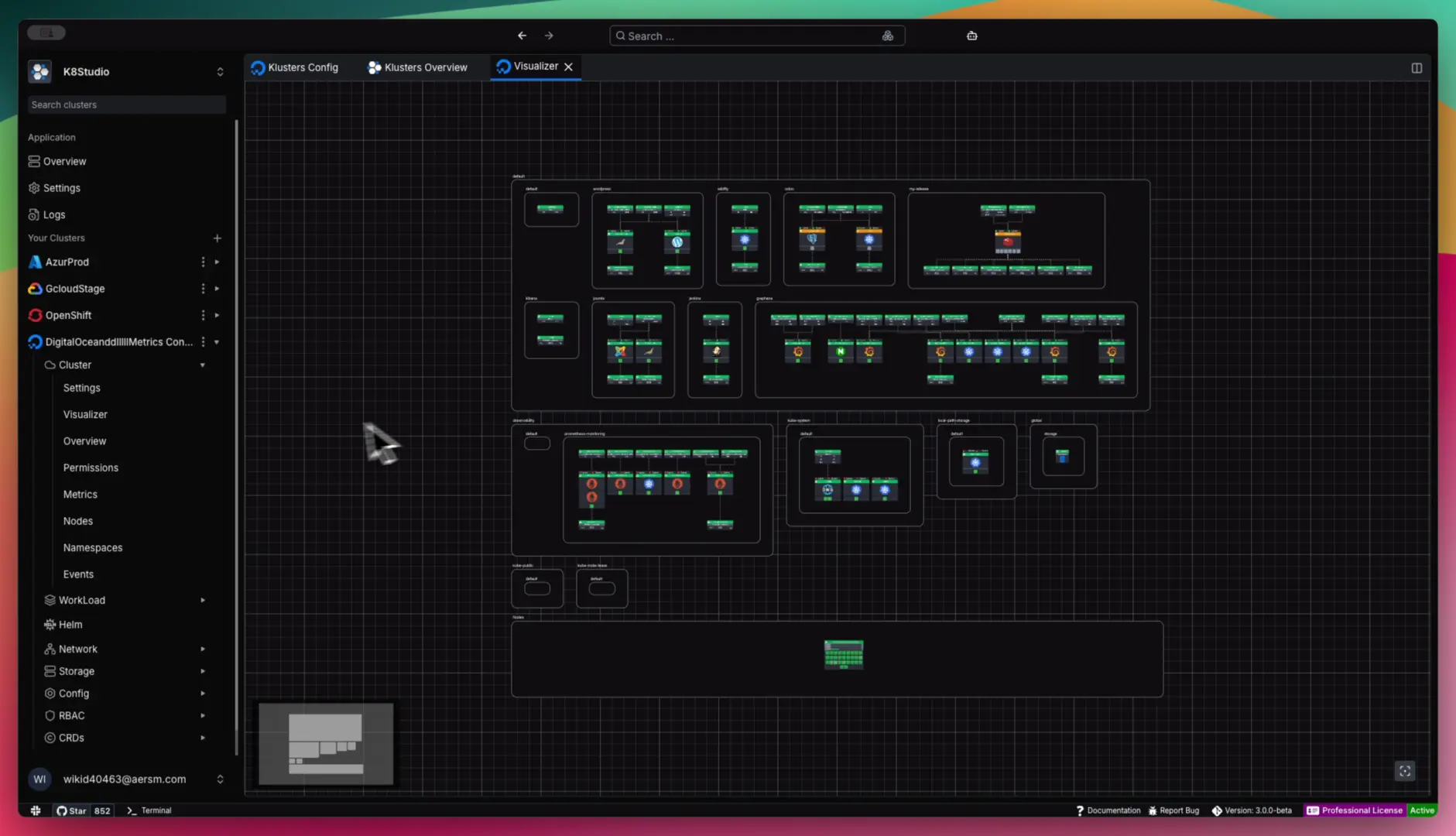
K8Studio is a comprehensive Kubernetes IDE designed to simplify the management, monitoring, and security of Kubernetes clusters for DevOps, DevSecOps, and developers. It features an intuitive CloudMaps GUI that offers real-time visualization of nodes, workloads, and namespaces, along with heatmaps and color coding for enhanced observability. The tool includes an AI Copilot for intelligent assistance, troubleshooting, and YAML editing, and a DevSec View for visualizing security, tracing attack paths, and identifying vulnerabilities. K8Studio supports multi-cluster management from a single dashboard, provides advanced log viewing, and integrates a terminal for kubectl commands. It is agent-free, ensuring secure operation in air-gapped environments without data exfiltration.
ai.deploy.box
ai.deploy.box is a comprehensive, open-source toolbox designed for deep learning model deployment using C++. It abstracts various mainstream deep learning inference frameworks, including ONNXRUNTIME, MNN, NCNN, TNN, PaddleLite, and OpenVINO, into unified interfaces for ease of use. The project supports multiple operating systems such as Linux, MacOS, and Android, with Windows 64-bit support coming soon. It offers deployment demos for diverse scenarios and languages, including PC (Qt), Android (Kotlin), Lua, Go (Zeros), and Python (FastAPI). The toolbox also provides calling instances for Python, Lua, and Go, making it versatile for different development environments.
ml-compiler-opt
ml-compiler-opt provides an open-source infrastructure for Machine Learning Guided Optimization (MLGO) within LLVM. This framework systematically integrates machine learning techniques into LLVM, replacing traditional human-crafted optimization heuristics with machine-learned models. Currently, MLGO supports two key optimizations: inlining-for-size and register-allocation-for-performance. The repository contains the training infrastructure and related tools for MLGO, specifically supporting Policy Gradient training with Evolution Strategies planned for future release. It also offers pretrained models that can be directly used with LLVM, simplifying deployment for developers looking to leverage ML-guided compiler optimizations.
Sesterce Cloud
Sesterce Cloud provides a robust platform for renting high-performance GPUs, catering to demanding AI training, inference, and High-Performance Computing (HPC) workloads. Users can instantly deploy a wide range of GPUs, including the latest B200, H200, H100, RTX4090, and more, with transparent hourly pricing. The platform supports both on-demand virtual machines and bare-metal servers, offering flexibility for different project needs. It features a comprehensive selection of GPU configurations with varying vRAM, vCPU, and RAM options, allowing users to select the optimal setup for their specific computational requirements. Sesterce Cloud aims to deliver an efficient and scalable infrastructure solution for developers and organizations working with intensive AI and machine learning tasks.
Free OpenClaw Installation Service
Free OpenClaw Installation Service offers an automated solution for deploying the OpenClaw AI assistant on a Virtual Private Server (VPS) in approximately two minutes, requiring no coding. This service is designed for users who want a self-hosted AI assistant for various automation tasks, ensuring 24/7 uptime and data isolation. It supports high-performance retrieval and autonomous tasking, making it suitable for everyday automations like inbox triage, data synthesis, complex scheduling, and deployment monitoring. The service recommends an unmanaged VPS with root access, such as Verpex, and provides free setup guides. Users maintain full control over their data, as everything remains within their controlled VPS environment. An optional skills pack is available for purchase, adding capabilities like email management, calendar integration, web search, task automation, and file organization.
Sintra
Sintra offers a team of specialized AI employees designed to automate various business functions around the clock. These AI workers can manage social media, customer support, data analysis, email marketing, sales, and more, without requiring additional headcount. Each AI employee is tailored for a specific role, allowing businesses to delegate tasks and scale operations efficiently. Sintra integrates with existing tools and systems, learning from brand context, workflows, and goals to ensure consistent, on-brand outputs. The platform supports multiple workspaces and collaboration, and its AI employees can work in over 100 languages, enabling global operations without needing local teams or multiple tools. Getting started is simple, with minimal configuration required.
Techbros
Techbros is a technology company focused on pioneering the future of connectivity, AI, and digital transformation within the telecommunication sector. They offer end-to-end telecom solutions, including 5G RAN engineering, network design, IoT integration, network optimization, and advanced analytics. Their services encompass engineering consulting, drive and field testing, benchmarking and performance analysis, network deployment, and managed services. Techbros emphasizes data-driven precision, proven reliability, and engineering-led solutions to enhance connectivity, boost performance, and drive efficiency for telecom operators, infrastructure providers, and industry stakeholders.
Spark Tech AI
Spark Tech AI specializes in delivering custom AI, machine learning, and cloud solutions designed to help businesses extract meaningful insights and drive real business impact from their data. The platform focuses on providing compliant, scalable, and secure solutions tailored to specific organizational needs. Beyond core AI and ML capabilities, Spark Tech AI also emphasizes user-friendly interfaces and integrates IoT-enabled systems, ensuring that advanced technology is accessible and actionable for its clients. This comprehensive approach aims to transform raw data into strategic assets, fostering innovation and efficiency across various business functions.
Rootly
Rootly is an AI-powered incident management platform designed to help organizations detect, manage, and resolve incidents faster. It offers comprehensive solutions for incident response, on-call management, and AI SRE (Site Reliability Engineering). Key features include AI Chat for response, AI Similar Incidents, AI Scribe Meeting Bot, and AI Retrospectives. Rootly integrates with various tools like Datadog, GitHub, and Jira, and supports both Slack and Microsoft Teams for communication. The platform aims to reduce downtime, improve reliability, and automate incident resolution processes through intelligent agents that identify root causes, correlate alerts, and draft remediation steps.
ramalama
RamaLama is an open-source developer tool designed to simplify the local serving and use of AI models for inference. It leverages familiar OCI containers, allowing engineers to apply container-centric development patterns to AI use cases. The tool eliminates the need for complex host system configurations by automatically detecting GPUs and pulling appropriate accelerated container images. RamaLama supports multiple AI model registries, including OCI Container Registries, HuggingFace, and Ollama, treating models similarly to how Podman and Docker handle container images. It enables secure model execution in rootless containers with no network access by default, ensuring data privacy and temporary data removal upon exit. Users can interact with models via REST API or as a chatbot.
serve
Jina-Serve is a robust, open-source framework designed for building and deploying multimodal AI applications using a cloud-native stack. It facilitates communication via gRPC, HTTP, and WebSockets, allowing developers to scale their AI services efficiently from local development environments to full production. Key features include native support for major ML frameworks and data types, high-performance service design with scaling, streaming, and dynamic batching, and LLM serving with streaming output. Jina-Serve also offers built-in Docker integration, an Executor Hub, and one-click deployment to Jina AI Cloud, making it enterprise-ready with Kubernetes and Docker Compose support. It provides advantages over tools like FastAPI through DocArray-based data handling, native gRPC support, and seamless microservice scaling.
Tengine
Tengine, developed by OPEN AI LAB, is a high-performance, modular inference engine specifically designed for embedded devices. It facilitates the rapid and efficient deployment of deep learning neural network models across various AIoT applications. The core modules are developed in C language, with deep framework trimming to suit the limited resources of embedded systems. Tengine features a completely separated front-end and back-end design, which simplifies the porting and deployment to heterogeneous computing units like CPUs, GPUs, and NPUs, thereby reducing evaluation and migration costs. It supports various models and offers tools for conversion and quantization, making it a versatile solution for AI deployment on edge devices.
LatticeWork
LatticeWork is a cloud and AI innovations company dedicated to making cutting-edge technology accessible to everyone. Through its Amber brand, LatticeWork provides consumer-focused solutions that offer the convenience of cloud services while prioritizing privacy and freedom. Amber products, such as Amber X and AmberPRO, enable individuals, families, and small businesses to host their own private cloud for media, photo storage, and data management, freeing up space on mobile devices. For businesses, the VAISense line offers hardware, software, and cloud infrastructure to deploy AI at the edge, processing data where it's gathered for faster, more reliable results and enhanced privacy protection. VAISense solutions cater to various industries, including public safety, healthcare, construction, and retail, providing powerful insights through visual AI processing and security tools like OptiView, Security, and Track.
meldCX
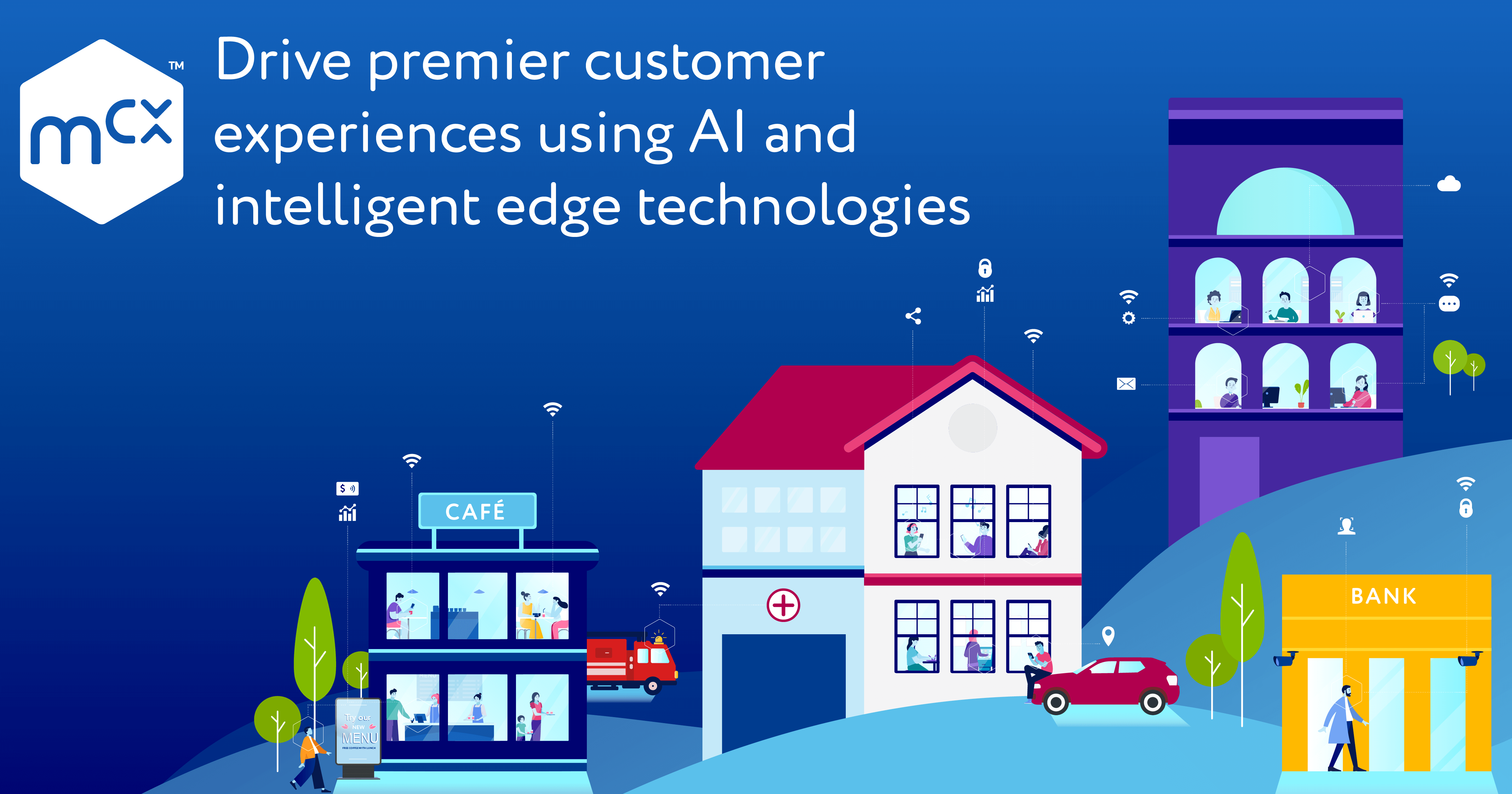
meldCX is a comprehensive platform designed to drive premier customer experiences through AI and intelligent edge technologies. It offers solutions for deploying commercial devices up to 6x faster and provides a simple, scalable platform for easy device and app management. The platform features products like meldCX Core for building applications, VIANA for measuring physical and digital interactions, and COATRO for smart, adaptive signage. meldCX enables businesses to consume machine vision and AI data without needing developers, and offers an emulator for building apps in a near-native environment. It caters to various industries including retail, hospitality, education, government, healthcare, and finance, providing solutions for visual experiences, interactive self-service, machine vision & AI, custom kiosks, and advertising.
APIPark
APIPark is an open-source, cloud-native AI gateway and API developer portal designed to simplify the management, integration, and deployment of AI services for developers and enterprises. It offers ultra-high performance and supports over 100 mainstream AI models, including OpenAI, Azure, Anthropic Claude, Google Gemini, and many others, unifying API requests and responses. Key functionalities include combining AI models and prompt templates into custom APIs, standardizing data formats to reduce switching costs, and providing a developer portal for team collaboration. APIPark also features robust security with application and API key management, detailed usage monitoring, and advanced capabilities like load balancing and multi-model disaster recovery. It is designed for easy, one-command deployment, making it accessible for quickly building AI products and agents.
cml
CML (Continuous Machine Learning) is an open-source command-line interface (CLI) tool designed for continuous integration and continuous delivery (CI/CD) within Machine Learning Operations (MLOps). It automates various development workflows, such as machine provisioning, model training, and evaluation. CML enables users to compare ML experiments across project history and monitor changing datasets. It can automatically train and evaluate models, then generate visual reports with results and metrics on every pull request. CML supports GitFlow for data science, allowing management of ML experiments and tracking of model training or data modifications using GitLab or GitHub. It integrates with DVC for codifying data and models and offers functions to package ML workflow outputs into markdown reports for CI systems.